A beginner's guide to BitTorrent

Stories

UltraNewb

utorrent.png
Despite the fact that BitTorrent has been around for a good 6 years now, the lightning fast file sharing protocol hasn’t completely taken off in the mainstream. Since we post a decent amount about BitTorrent around here, we figured it was just time we put out a beginner’s guide to BitTorrent. This is the guide you can send to your friend next time he gets that glassy look in his eyes when you mention BitTorrent and how quick and easy it makes downloading albums educational, public domain videos and other large files.

Without going into too much detail, here’s a crash course in the file sharing protocol that is BitTorrent (feel free to skip to the How to find and download a file with BitTorrent section if you’re not all that interested in the details).

What is it

BitTorrent is not a program. [1] It’s a method of downloading files using a distributed peer-to-peer file sharing system. The programs that you use to download files via the BitTorrent protocol are called BitTorrent clients.

BitTorrent is not like Limewire/Kazaa/Napster/other P2P programs you’ve used in the past. This is often the biggest source of confusion for people new to BitTorrent. It’s not difficult to use, it’s just different. As soon as you forget about your old file-sharing program (and you will once you start using BT), the easier it will be to start using BitTorrent.

How does it work

how-bittorrent-works.pngWhat makes the BitTorrent protocol unique is that it distributes the sharing of files across all users who have downloaded or are in the process of downloading a file. Because BitTorrent breaks up and distributes files in hundreds of small chunks, you don’t even need to have downloaded the whole file before you start sharing. As soon as you have even a piece of the file, you can start sharing that piece with other users. That’s what makes BitTorrent so fast; your BitTorrent client starts sharing as soon as it downloads one chunk of the file (instead of waiting until the entire download has been completed).

In order to download a file like the educational public domain video we mentioned above, you have to find and download a torrent file (which uses the .torrent file extension) and then open it with your BitTorrent client. The torrent file does not contain your files. Instead, it contains information which tells your BitTorrent client where it can find peers who are also sharing and downloading the file.

How to find and download a file with BitTorrent

Now that you’ve got a better idea of the terminology and process behind BitTorrent, let’s jump right into using BitTorrent.

First you need to download a BitTorrent client (the program that manages your BitTorrent downloads). I’d recommend:

  • uTorrent for Windows
  • Transmission for Mac
  • Azureus or KTorrent for Linux (Actually, Azureus is cross platform, meaning it will work on Windows and Mac, but on those platforms it’s not nearly as lightweight as the alternatives listed above.)

Search for a good torrent. There are a handful of really good web sites for downloading torrents (that’s right, you search for torrents on the internet). The sites I’d recommend (in no particular order) are:mininova.png

seeders-health-files.pngTry out whichever one you like. One might fit your tastes better than another, but I’ve had good experiences with all of these. From this point, search the site using their search box like you’re using Google—just type in the name of what you’re looking for. You’ll likely get several results, but you want to choose the torrent with the highest number of seeders (indicated in most BitTorrent search results under a field labeled ‘S’). Seeders are people who have already downloaded and are sharing the entire file. The more seeders, the faster your download will be. Some sites also provide you with a health meter, which is generally a measure of seeders vs. active downloaders.

open-with-client.pngDownload the torrent. Once you’ve found a good and healthy torrent, find the download link and download the torrent. Your browser will ask you what you want to do with the file, so be sure to tell it to open the torrent in the BitTorrent client you downloaded above.

save-as.pngYour BitTorrent client will open and (possibly) ask you where you want to save the file(s). Pick your save location, hit OK, and that’s it; your file will begin downloading. If you’re not impressed with the speed at first, be patient. It can sometimes take a minute or two before the download ramps up to full speed. If you’re still not happy, try searching for another torrent with more seeders.

That’s it?

Yep, that’s it. That, in a nutshell, is how to download files using BitTorrent. There can be more to it, of course, if you want to dive in a bit deeper. For example, you can run through the Speed Guide in uTorrent to improve your download speeds (the guide is fairly self explanatory—just go to Options -> Speed Guide to get started), download select files from the torrent rather than every file, throttle your bandwidth, and so on, but this basic guide should get you started.

ratio.pngAlso, to ensure you stay in good standing in the BitTorrent community (and aren’t labeled a leecher), you should always try to upload as much as you download. Most BitTorrent clients keep track of your upload/download ratio, and you should generally continue sharing a file until your ratio reaches 1, after which you can feel free to remove it from your client (the file will remain on your computer—you just stop sharing it).

If you’re ready to move on to even more advanced BitTorrent business or you want to try out alternate methods of downloading files via BitTorrent, check out the following posts:

Since I’m sure many of our readers are experienced with BitTorrent from way back, I’d love to hear your suggestions for BitTorrent newbs in the comments. Also, if you’re new to BitTorrent and you have any questions, let’s hear ’em.

[1] Well, there is a BitTorrent client specifically called BitTorrent, but we’re talking about the BitTorrent protocol. Most of the time you hear someone talking about BitTorrent, they’re talking about the protocol and not the program. [back up]

Feature

12:00 PM ON FRI AUG 3 2007
BY ADAM PASH
39,240 views

Read More:

Powered by ScribeFire.

Gebrselassie Wins NYC Half Marathon

Stories

NEW YORK

Haile
Gebrselassie already showed he can make it anywhere; he can add New
York to his list. Running in the Big Apple for the first time, the
34-year-old Ethiopian won the New York City Half Marathon in 59
minutes, 24 seconds Sunday – the second-fastest time in the United
States and his eighth win in eight half marathons.

“I was
dreaming just to run in New York City. The dream has come true this
morning,” said Gebrselassie, probably the world’s greatest distance
runner. “Wow, I’m so happy!”

Abdi Abdirahman of the United States
was second, more than a minute behind. Two-time Boston Marathon
champion Robert Cheruiyot of Kenya was third in the second running of
the race.

Hilda Kibet of Kenya won the women’s race in 1:10:32,
outsprinting defending champion Catherine Ndereba by 1.15 seconds. Nina
Rillstone of New Zealand, a surprise leader until the final
quarter-mile when the two Kenyans passed her, was 2.60 back in third.

Gebrselassie,
a two-time Olympic gold medalist, emerged from Central Park after the
7-mile mark, along with Cheruiyot Abdirahman. Gebrselassie and
Abdirahman dropped Cheruiyot when the Kenyan went for water, and before
the American knew it, he was in Gebrselassie’s wake, too.

“I
thought I was going to recover my surge and then just maintain the pace
but it wasn’t that way,” Abdirahman said. “I didn’t give up, no way. We
know Haile’s the greatest, but at the same time, this is sports.”

Gebrselassie didn’t see it quite the same way.

“Right after the park, I just said ‘OK, this is my race,'” he said.

All
that was left was a Sunday morning jog. He took a moment to gawk at
Times Square, like any tourist would, as he breezed through, then he
trotted down the West Side of Manhattan to Battery Park, occasionally
looking back to see if anyone was gaining on him.

Of course, no
one was, even though Abdirahman’s time of 1:00:29 was a personal best.
Cheruiyot was taken to a hospital as a precaution after he finished in
1:00:58. In October, the Kenyan slipped while crossing the finish line
of the Chicago Marathon and spent two days in the hospital with a
concussion.

The women’s race wasn’t decided until Kibet turned it
on at the finish. The Kenyan, who said she will probably compete for
the Netherlands in the 2008 Olympics, discovered her finishing kick
this year in a race when she had to beat her sister over the final 100
meters or so.

“You know when it comes to sprinting, when you’re
just a few meters from someone, then you feel very strong,” Kibet said.
“You’re just fighting to win.”

Ndereba was confused by marshals
pointing to different routes at the finish for men and women, and
didn’t see a sign indicating how close the runners were until 200
meters remained. It wasn’t enough to catch Kibet, who also beat Ndereba
by more than 30 seconds in a 10-kilometer race in July.

“I didn’t
know who to go with,” Ndereba said. “I’m not disappointed. I never get
disappointed for this kind of thing. … I count it as something to
work on.”

The temperature was a comfortable 70 degrees after a
week of oppressive heat and humidity, helping Gebrselassie set the
course record.

Gebrselassie, who holds world records in the 10K
and 20K, won gold in the 10,000 meters in Atlanta in 1996 and Sydney in
2000. His time Sunday (a half-marathon is slightly more than 21
kilometers) was second-best in the U.S. only to his own 58:55 in Tempe,
Ariz., last year. It was the 16th-fastest half marathon.

In the
days before the race, Gebrselassie soaked up the bustle of the city. On
Sunday morning, he ran through mostly deserted streets.

“Yesterday, I was in Times Square. I was there,” he said. “It was very busy. Today, nobody. Amazing.”

Does this mean he’ll run the New York City Marathon?

“Not
this year,” Gebrselassie said. “I’m thinking 2008 or 2009. I’m thinking
I’ll run the New York Marathon before I stop running, surely.”


Study: Some office printers emit dangerous particles

Stories

A new study suggests that some printers emit dangerous particles that could make office workers sick.

Researchers at Queensland University of Technology
in Australia found that 17 of the 62 printers they tested were “high
particle emitters” that posed a threat to humans. They say 37 of the
printers didn’t emit any particles, but one gave off particles at the
same rate as a burning cigarette.

“These [printer] particles are tiny like cigarette smoke particles
and, when deep inside the lung, they do the same amount of damage. The
health effects from inhaling ultra-fine particles depend on particle
composition, but the results can range from respiratory irritation to
more severe illness such as cardiovascular problems or cancer,”
Professor Lidia Morawska, the study’s author, tells The Age.

Her research showed that particle levels were five times higher
during working hours because of the emissions from printers. She says
the printers were more likely to emit dangerous particles when the
toner cartridge was new or the machines was being used to print
detailed images.

“Printers should operate in environments where there is as much
ventilation as possible and as far as possible from where people’s
desks are located.” she tells tells Australian Broadcasting Corporation.

ABC Science has an extensive report on the findings.

USATODAY.com

Powered by ScribeFire.

The New Republic VS. The Weekly Standard

Stories

The New Republic VS. The Weekly Standard

The war in Iraq has sparked a parallel war between two of Washington’s most prominent partisan political publications, The New Republic and the Weekly Standard. The war has been akin to the ongoing seige of Baghdad’s Green Zone, with the Standard playing the role of Iraqi insurgents, lobbing mortars over the Green Zone gates while TNR rushes to shore up its defenses.

The war began on July 13, when The New Republic published a “Baghdad Diary”
by “Scott Thomas,” an Army private writing under a pseudonym about U.S.
atrocities in Iraq. Thomas described his participation in the mockery
of a female soldier disfigured by an IED, claimed he witnessed
troops
intentionally running over dogs in a Bradley Fighting Vehicle, and
alleged that another soldier played with the skulls of dead Iraqi
children.

In attempt to challenge the wild notion that atrocities could occur amidst a violent occupation, the neoconservative Weekly Standard‘s Matthew Goldfarb published an article declaring that TNR‘s
Baghdad Diary was “looking more like fiction.” Goldfarb’s piece relied
on a series of letters supposedly sent to him by active-duty soldiers
that raised questions about the veracity of TNR’s story.

As a result of intensifying attacks from the Standard and rightwing blogs — attacks amplified by the Washington Post‘s Howard Kurtz — Thomas was forced to reveal his identity:
Pvt. Scott Thomas Beauchamp. According to Foer, the Army punished
Beauchamp by revoking his cellphone and email privileges. Right-wing
bloggers subsequently seized on TRN editor-in-chief Franklin Foer’s disclosure that Beauchamp is engaged to TNR reporter and researcher Elspeth Reeve.

Beauchamp has placed his career in extreme jeopardy and subjected
his private life to the scrutiny of right-wing trolls, all to confirm
his published account of U.S. atrocities in Iraq. TNR for its part has just completed a review
of Beauchamp’s diary and found only one minor error. Now it is up to
Goldfarb and his allies to back up their incendiary charges. Who are
the Standard‘s sources? Are they reliable? And if they are, why did the Standard omit key details about their backgrounds?

Among all the active duty soldiers used by Goldfarb to undermine Beauchamp, only one is cited by name: Matt Sanchez, a corporal in the Marine reserves. “Frankly, I don’t believe ANY of this story,” Sanchez proclaimed in the Standard about Beauchamp’s diary. Who is Sanchez? According to Goldfarb, he is simply a soldier “who stands behind his work.”

But Sanchez is more than a mere man in uniform. As I reported for Media Matters today, Sanchez is also a conservative pro-war activist whose bio includes a stint as the gay porn actor Rod Majors, (star of such filmic classics as “Beat Off Frenzy”) and an illustrious part-time job as a male prostitute — facts he has acknowledged “leaving … off my curriculum vitae.”

More importantly, Sanchez has been under investigation by the Marine Corps for fraud. According to an April 1 Marine Corps Times article,
Sanchez was informed in a March 22 email from Reserve Col. Charles
Jones, a staff judge advocate, that he was under investigation for
lying “‘to various people, including but not limited to,
representatives of the New York City United War Veterans Council [UWVC]
and U-Haul Corporation’ about deploying to Iraq at the commandant’s
request.” The email added: “‘Specifically, you wrongfully solicited
funds to support your purported deployment to Iraq’ by coordinating a
$300 payment from the UWVC and $12,000 from U-Haul.”

There is no excuse for Goldfarb’s omission of these facts about Sanchez. They were easily accessible through a simple Google search of Sanchez’s name, and have been the talk of the blogosphere for some time. I wrote extensively about Sanchez for the Huffington Post in March and appeared on a segment of Countdown with Keith Olbermann to discuss his strange double life. Sanchez has also been profiled by Radar and by numerous bloggers. He even penned a long auto-apologia
for Salon.com about his path from porn to the conservative movement.
Couldn’t Goldfarb find a better on-the-record source? Apparently not.

The efforts of Sanchez and right-wing bloggers to take Beauchamp down were allegedly supported by a TNR staffer with a bizarre background. I just received a letter from a source close to TNR. The source wrote:

One reason Beauchamp had to go public was that
conservative bloggers were tracking him down. And the reason they were
was that a temp who was working as assistant for our publisher was
leaking like crazy to right-wing websites. Not that he knew much, but
he was hanging around, he went to a going away party for Ryan [Lizza]
at frank’s [Frank Foer] house, eavesdropping and then posting on
right-wing websites.

That’s how they found out about Scott being married to Ellie [Elspeth Reeve].

Anyway, the guy’s name is Robert McGee. His online pseudonym:
Throbert McGee. Not real hard to track down (especially when he’s
posting that he works at TNR.)

After a little Googling, I found that “Throbert McGee” (seen here embracing his “longtime sidekick Juan”) once kept a “blinkin’ blog”
where he posted about “Faggot fixer-upper wallpaper” and linked to the
overtly racist right-wing blog, “Little Green Footballs.” On the forum
of another conservative blog, Throbert commented favorably about Matt Sanchez’s “11” Monster Cock.” Throbert also used this forum as his platform to attack Beauchamp and leak information to conservative bloggers about Beauchamp’s private life.

I hear there are darker postings by Throbert lurking in the
blogosphere, but I will leave it to his right-wing mouthpieces to
explain those. And I will wait (hopefully not in vain) for the Weekly Standard‘s
Goldfarb to come clean about Sanchez and the rest of the unnamed
“active duty soldiers and various experts” he used as sources.

Max Blumenthal: The Weekly Standard’s Reliable Sources:
Male Prostitute Matt Sanchez and Web Weirdo “Throbert McGee”

Powered by ScribeFire.

Clinton-Obama Tensions

Stories

On the Trail

In his Web column today, Jeff Zeleny writes that for Hillary Rodham
Clinton and Barack Obama, the genteel decorum of the Senate has given
way to the go-for-the-jugular instinct of the campaign trail:

It wasn’t always this way.

When Mr. Obama was running for the Senate, Mrs. Clinton waited out a
lightning storm on a tarmac to fly to Chicago for a fundraiser on his
behalf. After he arrived in Washington in 2005, he studied her first
year in office and worked to keep a similarly studious – yet low
– profile. After Hurricane Katrina, he joined Mrs. Clinton and
former President Bill Clinton as they visited storm evacuees in
Houston, with Mr. Obama walking a few paces behind out of deference to
the leading names of the Democratic Party.

The relationship began to change, according to several Democrats who
are friendly to both senators, when Mr. Obama began musing aloud about
a presidential bid. The day he opened his exploratory committee,
several Senate observers said, he extended his hand and said hello on
the Senate floor. She breezed by him, offering a cool stare. Go to Column

Clinton-Obama Tensions Spill Into the Senate – The Caucus – Politics – New York Times Blog

Powered by ScribeFire.

KTLA anchor Hal Fishman has colon cancer

Stories

By Greg Braxton and Carla Rivera, Times Staff Writers
3:41 PM PDT, August 3, 2007

Veteran KTLA Channel 5 anchor Hal Fishman, who was hospitalized this
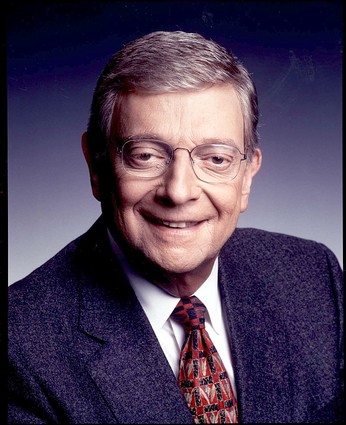
week after collapsing at his home, has been diagnosed with colon
cancer, station officials said today.

31626223.jpg

Doctors were treating Fishman, 75, for an infection he suffered after
the collapse when they discovered the cancer, which has spread to his
liver, said interim news director Rich Goldner.

Added Goldner: “Hal is awake and thanks everyone for their well wishes
and says he is going to fight this illness. He is looking forward to
coming back when he gets better.”

Fishman, a news veteran of more than 45 years, has anchored the
station’s 10 p.m. newscast since 1975. He is a former political science
professor and renowned aviation enthusiast, holding several records for
speed and altitude.

He joined KTLA in 1965 and reported on the assassination of Robert F.
Kennedy, the Northridge earthquake and the Rodney King beating.

His honors include a Governor’s Award from the Los Angeles Chapter of
the Academy of Television Arts and Sciences and an Outstanding
Broadcast Journalism Award from the Society of Professional Journalists.

In 2000, KTLA named its newsroom the “Hal Fishman Newsroom” in
recognition of his services to the community and to the station, which,
like the Los Angeles Times, is owned by Chicago-based Tribune Co.

His omnipresence on the Los Angeles news scene prompted dozens of well-wishers to send messages to the station’s website.

Many lauded Fishman’s straight-talking perspective, often delivered in the style of a stern father.

“Hal, get well soon and get back to work,” said one missive from Gerry
in El Cajon. “L.A. needs your honesty and perspective. Many of us have
watched KTLA for decades. We have grown up [I won’t say old] with you.
You are a civic treasure.”

carla.rivera@latimes.com

greg.Braxton@latimes.com

Los Angeles Times

Powered by ScribeFire.

Cop shielding Villaraigosa gets rough with reporter

Stories

Mayor Antonio Villaraigosa today sought to put the scandal surrounding
his personal life behind him, one day after the Telemundo network
suspended his girlfriend, newscaster Mirthala Salinas, for covering the
mayor while they were romantically involved.

But a Villaraigosa news conference at the Port of Los Angeles ended
chaotically, with a port police sergeant shoving a television reporter
against a cargo container as she attempted to pursue the mayor.


FOR THE RECORD:
An earlier version of this article referred to KVEA-TV Channel 52 as Channel 54.


Only minutes earlier, Villaraigosa had voiced hope that the
conclusion of Telemundo’s review of Salinas’ conduct would allow him to
move forward.

Yet even as the mayor expressed those sentiments, he took questions on
whether his poll numbers had dropped (he said he didn’t know), whether
he spoke to Telemundo for its review (he said he hadn’t) and whether he
felt responsible for the disciplinary actions that befell Salinas and
three management-level employees at Telemundo and its local affiliate,
KVEA-TV Channel 52.

“I regret (that) the decisions that I’ve made in my personal life have
been a distraction to the City of Los Angeles,” said Villaraigosa,
whose wife of 20 years has filed for divorce. “I’m deeply sorry that
I’ve let so many people down, especially my family. But it’s time to
move on, and move on we will.”

Villaraigosa said he took full responsibility for his actions “from the
very beginning.” And he repeatedly attempted to refocus reporters on
the port’s announcement that the retail chain Target had obtained 100
trucks powered by cleaner-burning liquid natural gas.

“That’s the real news here, by the way,” he said.

Villaraigosa customarily lingers after news conferences to answer
additional questions from reporters and allow cameras to follow him to
his vehicle.

But today, as the mayor strode from the podium, a half-dozen port
police officers formed a skirmish line to block reporters and cameramen
from approaching him.

“How come we’re not allowed to talk to him?” one reporter barked.

“Why the suddenly limited access?” another demanded.

When the officers broke their formation, more than a dozen journalists
starting running across a parking lot in pursuit of the mayor as he
departed.

Spanish-language television reporter Alicia Unger was at the front of
the pack, and as she approached one 20-foot container, Port Police Sgt.
Kevin McCloskey shoved her into the side of it, further infuriating
reporters, who began shouting.

“That’s wrong,” one television reporter screamed.

Another said: “You can’t hit a woman like that.”

A visibly shaken Unger, who reports for Azteca America Channel 54, then shouted at the officer: “Why are you pushing me?”

Reporters and camera operators surrounded McCloskey demanding to know
why he pushed Unger. McCloskey told them to contact port police as
another officer led him away.

Afterward, reporters turned their attention to Unger, who said that McCloskey “slammed me. He slammed me hard.”

Spokesman Matt Szabo later said that the mayor’s office did not order port police to keep reporters away from Villaraigosa.

david.zahniser@latimes.com

duke.helfand@latimes.com

Cop shielding Villaraigosa gets rough with reporter – Los Angeles Times

Powered by ScribeFire.

GREAT QUOTES STOLEN FROM A RIGHT-WING DOUCHEBAG

Stories

“I think it would be a profound mistake for us to use nuclear
weapons in any circumstance… involving civilians. Let me scratch
that. There’s been no discussion of nuclear weapons. That’s not on the
table.”

BARACK OBAMA

“What Giuliani is, is George Bush on steroids. Giuliani, Romney and
the rest of the Republicans running for the nomination are going to
give the country four more years of crony capitalism, which is exactly
what we have now. We have insurance companies and drug companies and
oil companies running this government. They need to be stopped. And
Giuliani just wants to empower them.”

JOHN EDWARDS

“I’m a democrat and I can’t stand this president…. I’m here to
represent people. The people I represent don’t want to impeach
this clown.”

EARL POMEROY

“We should reverse the presumption of confirmation. The Supreme
Court is dangerously out of balance. We cannot afford to see Justice
Stevens replaced by another Roberts, or Justice Ginsburg by another
Alito.”

CHUCK SCHUMER

“While President Bush and Vice President Cheney continue to operate
as if they are leaders of a monarchy, Congress should censure them and
make it clear to this and future generations that their actions are
entirely unacceptable.

“If Congress does not act to formally admonish this White House then
the future of our democracy will be placed on a slippery slope in which
other presidents may point to the actions of this administration as
justification for further abuses of the Constitution. Congress cannot
allow such abuses of power and law, which is why Senator Feingold and I
will soon introduce these censure resolutions.”

MAURICE HINCHEY

“I will be shortly introducing a censure resolution of the president
and the administration. One, on their getting us into the war of
Iraq—in Iraq and their failure to adequately prepare our military
and the misleading statements that have continued throughout the war in
Iraq. And the second, on this administration’s outrageous attack
on the rule of law, all the way from the illegal terrorist surveillance
program to their attitude about torture…. [T]his administration has
done the greatest assault on our Constitution perhaps in American
history.”

RUSS FEINGOLD

“I think we’re in great danger of [a terror attack staged by the U.S. government].”

RON PAUL

“I live in North Carolina. I’ll probably never eat a tangerine again.”

ELIZABETH EDWARDS

And to the analysis of Shields and Brooks…

Stories
David Brooks and Mark Shields
 
audioRealAudioDownload  

JIM LEHRER: And to the analysis of Shields and Brooks, syndicated columnist Mark Shields, New York Times columnist David Brooks.

David, do you see something new and awful about this heat that erupted in the House of Representatives?

DAVID
BROOKS, Columnist, New York Times: It’s not new, but awful. It’s like a
Eugene O’Neill play. They’ve got all these submerged hatreds, and it
only takes a little fissure to open them all up. And that’s what
happened yesterday.

What was striking about what happened with
the ag bill was that, first of all, the parties couldn’t agree what was
in the bill, and then they couldn’t agree on how the vote went about
the bill. And then when they had this whatever happened, the bit of
chaos, and the versions you get depend entirely on what party you’re
talking to, immediately the hatred erupted.

And it’s the same
hatred that erupted when Tom DeLay and others held the vote open a
couple of years ago, and that hatred is still there. And I don’t think
the procedures of the House have changed that much. The majority party
has changed, but a lot of the strong-arm tactics are sort of the same.

JIM LEHRER: Hatred is a strong word to use. Do you agree with David, who uses that word?

MARK
SHIELDS, Syndicated Columnist: No, I disagree with David. I think there
was a crankiness, there is a crankiness in the House right now, this
tension.

JIM LEHRER: Crankiness, not hatred?

MARK SHIELDS:
Crankiness. No, it was cranky. They’re tired. They’ve worked long
hours, and I think they’re ready to get out of there. And I think the
profound difference between what happened last night and what happened
with Tom DeLay, keeping the Medicare bill open for three hours, the
vote on the floor for three hours in total violation of the House
rules, and twisting arms and making threats on the House floor, was
that both Steny Hoyer, the majority leader — I thought who handled it
very well — and Mike McNulty, who was in the chair, said, “I was
wrong. I made a mistake.” I mean, I didn’t hear that in the DeLay era.
That was entirely different. Now…

JIM LEHRER: But David’s point
is that, whether or not it was an honest mistake or not, that
underlying the surface here is tension, and much more than tension.

MARK
SHIELDS: Well, I don’t know — I mean, I thought John Boehner was quite
measured and quite restrained. Roy Blunt, the Republican whip, was
different. And I think there’s no question that, within the Republican
caucus, there are people who are unreconstructed, just as there are
people on the Democratic side who are unreconstructed in any dealing
with the other side.

And I think Roy Blunt was speaking to and
for them, whereas John Boehner, who’s a fierce partisan and a very
loyal Republican, you know, was trying to think how he could make the
house work.

DAVID BROOKS: Well, they both have Machiavellian
reasons to want to make the House appear less angry because the
approval ratings of the Congress as a whole, and the House in
particular, are sub-Cheney, and they’re pretty terrible. So they both
have an incentive to make it seem like they’re both doing their job.

And
the big thing that has changed — this has been a long, gradual change
— is that members of each party are much less likely to care what
people in the other party think of them personally than used to be. And
so they’re perfectly happy to shout, “Shame,” or to behave in shameful
ways toward people in the other party.


Mark Shields


Mark Shields
Syndicated Columnist
Let’s
be very blunt: The House reflects the country, and the country is riven
over the issue of Iraq. There’s a consensus that we want to get out,
and there’s no consensus on how.


Civility in Congress

JIM LEHRER: Does it matter?

MARK SHIELDS: Why, sure, it does matter.

JIM LEHRER: I mean, other than just…

MARK
SHIELDS: It matters because, you know, for one thing, I mean, we saw
the retirement announced this week of Ray LaHood. Ray LaHood is a
Republican from Peoria, Illinois, who served as Bob Michel’s chief of
staff, who was Republican leader, was an enormously civilized, genteel
man, who has friends on the other side of the aisle, and for whatever
reason is leaving.

And the quotient and quota of civility in that
institution has depleted seriously by people like David Skaggs, from
Colorado, who left, and Ray LaHood, both of whom organized a weekend
for families to overcome what David has described, that would get
along. They went away for one weekend, maybe even two, but then he
tried to rejuvenate it, and couldn’t get people to want to do it.

DAVID
BROOKS: I actually went to one of those weekends as a facilitator of
conversation. And there was — I tell the story — there was a woman in
the hallway weeping because, in one of the breakout sessions, she’d
been insulted so badly that she left the room weeping.

JIM LEHRER: A member of the House of Representatives?

DAVID
BROOKS: A spouse. And this was at the civility conference. And so
that’s a little of the atmosphere that was even carrying over.

JIM
LEHRER: Going to substance here now, Speaker Pelosi said in an
interview on the program last night that she was proud of the record of
the House of Representatives during this session. Does she have a right
to be proud? Should she be proud?

DAVID BROOKS: I don’t think in
particular. I think she’s done things to exercise her control over her
party, which looked unlikely when this started. I think she’s been an
effective speaker at organizing the Democrats, and this was a party
that seemed riven with Steny Hoyer on one side and her on the other. I
think she’s been effective in that.

In terms of passing
legislation, changing the way the House does business, reducing the
number of earmarks, that’s certainly not been a success. The number of
earmarks has shot upwards. And so I think substantively, it’s not been
a successful Congress, but politically she’s done well, and that’s what
she’s oriented to, 2008.

MARK SHIELDS: I agree with David. I
think she’s been a far more leader of the — effective leader of the
party than many people thought she was capable of being. I mean, she’s
cracked heads, and she’s kept the Democrats quite united.

Let’s
be very blunt: The House reflects the country, and the country is riven
over the issue of Iraq. There’s a consensus that we want to get out,
and there’s no consensus on how. And that’s exactly where the House is.
And they’ve had six separate votes on it. That drives the House; that
drives the entire ethos of the House, the entire atmosphere of the
House.

I think that — if you’re giving a grade, I’d say it’s an
incomplete, because, I mean, there are things like children’s health,
and the student loan reform, as well as the ethics reform I think that
are significant, and the energy bill — it will be tomorrow — that it
will be September, it will be October, but they will — I think they
will be done.


David Brooks


David Brooks
The New York Times
I
was out on the campaign trail with Republicans in New Hampshire, every
other question was about health insurance. This really is an issue in
even Republican circles.


Debate over children’s health bill

JIM
LEHRER: What do you think on — what is your view on the children’s
health bill, the SCHIP thing, David, which got a lot of heat? We’ve had
debates here on the NewsHour about it.

DAVID BROOKS: I confess
I don’t have an intelligent view on the substance. From first glance,
it looks like something is building on a successful program that would
extend health benefits to children. If you look at the members of the
Senate, the Republicans say who would be unlikely to vote for a
Democratic piece of legislation, I think 18 Republicans voted for it.
So you have to think the thing has some merit.

What strikes me,
interestingly, is the politics of it. Because on the one hand, I was
out on the campaign trail with Republicans in New Hampshire, every
other question was about health insurance. This really is an issue in
even Republican circles.

JIM LEHRER: You mean about no having it and worrying about not having…

DAVID
BROOKS: Exactly, one thing or another, whether it’s veterans or
something, it’s a big issue, let alone on the Democratic side. And so
that’s a big issue. On the other hand, spending restraint is also a
huge issue out there. And Democrats have been notably slow to pick
fights on spending versus not spending, for that reason.

JIM LEHRER: And the SCHIP issue has got both. It’s got health insurance. Also it’s got spending issue politically, right?

MARK SHIELDS: Hey, Jim…

JIM LEHRER: Oh, Mark.

MARK
SHIELDS: … there is no political defense from the White House’s
position on this. This is a Republican program passed in 1997. I mean,
Trent Lott, God bless him, the Republican whip in the Senate, talks
about this is socialized government-run medicine. This is what they’re
trying to push.

The last time I checked, every member of Congress
and their children is covered by a government-sponsored-and-paid-for
health program. I trust in a better conscience they’ll all renounce
this during the recess and go to private plans.

I mean, what are
we talking about? We’re talking about the children of the working poor.
I mean, somehow there’s a charge that the six deadbeats who are 5 years
old, these 6-year-olds want to get on and rip off the taxpayer? I mean,
I just can’t believe it.

They’re going to tax? Yes, they’re going
to tax cigarettes. I mean, unfortunately, cigarettes and the poor
people who smoke them have become a punching bag and a fiscal reservoir
for the country and for programs. But I don’t think the Republicans and
the White House — I mean, the Republicans talk openly about how they
can’t understand the White House’s political point on this.

DAVID
BROOKS: I think most Republicans would not accuse 6-year-olds of being
deadbeats. I don’t think quite that’s their argument. This is the
open-air argument of what’s going to be the biggest domestic argument
of the ’08 campaign, and the Republican position would be, not that
these people shouldn’t be covered, it’s going to be that we shouldn’t
do it in a nationalized way, a Britain-Canada style, and we shouldn’t
ramp up spending that we can’t pay for. And they’d say the cigarette
tax only pays for a tiny portion. There are other things that aren’t
paid for, so you’ve got to pay for it.

And so that’s going to be the argument. I’m not sure the argument is going to be over deadbeat 6-year-olds.


Mark Shields


Mark Shields
Syndicated Columnist
[W]hat
this does is it…ends the whole entertainment industry in Washington,
no tickets, no gifts, no entertainment, no dinners for lobbyists.


New ethics rules

JIM
LEHRER: OK, Mark, you mentioned the ethics legislation. Are things
really going to change that much because of what happened?

MARK SHIELDS: Sure, they are.

MARK
SHIELDS: First of all, Jim, according to the Heritage foundation, the
Republican think-tank, very respected, since 1996, Republicans members
of Congress have left the House, one out of two has become a registered
lobbyist. I mean, the explosion in K Street is just…

JIM LEHRER: K Street is a street in Washington where the lobbyists work and live.

MARK
SHIELDS: Lobbyists work, it’s just remarkable, OK? And the nexus
between lobbyists and money to campaigns — if David’s running, I’m a
lobbyist. What I do is I then collect money from my clients, from my
associates, and I then bundle that money and bring it to David, and
say, “Look, you know, I can only give you $2,300, but here’s $45,000.”

JIM LEHRER: And, by the way, I represent the…

MARK
SHIELDS: Exactly, and I want to have a continuing relationship with you
and your wonderful staff. And what this does is it exposes that, it
ends the whole entertainment industry in Washington, no tickets, no
gifts, no entertainment, no dinners for lobbyists. But the money thing
— for members and staff — extends to two years the time before a
member who leaves can now go out and lobby. And I just think — I
really think it makes an enormous difference. It’s going to be
disinfectant of sunlight. We’re going to know who’s bundling…

JIM LEHRER: They can still bundle, but they have explain it.

MARK SHIELDS: That’s right. That’s right.

JIM LEHRER: What do you think?

DAVID
BROOKS: I think it makes a difference for the reasons Mark talked to.
It’s going to be lonely for us at Nationals games, no lobbyists and
members of Congress floating around, a lot of beer and hot dogs for us.

MARK SHIELDS: You’ll get better seats.

DAVID
BROOKS: But the thing a lot of people wish had gone further — and this
is controversial — is, again, going back to the earmarks and the
transparency of the earmarks. A lot of people, like John McCain, think
that they should have gone further so that the earmarks, that you
couldn’t slip it in.

The Democrats claim they did go to some
extent. But I really think the earmarks are corrosive. And that’s what
the lobbyists really care about is, is getting those special provisions
slipped in. And until you cut away that, which is the root of all
evil…


David Brooks


David Brooks
The New York Times
[I]n
’94, there were 4,000 earmarks in the budget. Ten years later, there
were 14,000. And I think the Washington Post reported there were now
34,000. People love earmarks.

Impact on earmarks

JIM
LEHRER: And the new bill does not in any way ban earmarks. All it does
is say, “You’ve got to say who got the earmarks and why,” right?

MARK SHIELDS: And you have to certify that nobody connected with you is benefiting from it financially.

DAVID
BROOKS: Right, but there are loopholes about where it gets certified
and things like that that a lot of people are complaining about.

JIM LEHRER: So do you think it’s going to end earmarks, it’s going to…

DAVID
BROOKS: Oh, well, it certainly won’t end earmarks. Everybody loves
earmarks. I mean, I think, if I remember this correctly, when Gingrich
came to power in ’94, there were 4,000 earmarks in the budget. Ten
years later, there were 14,000. And I think the Washington Post
reported there were now 34,000. People love earmarks.

JIM LEHRER: Does the raid on Senator Stevens’ Alaska home, does that affect the ethics climate and passable legislation…

MARK
SHIELDS: It guaranteed Senate passage. I mean, if you’re a Republican,
you can’t say, “Oh, boy, this is political.” Here they are, the FBI,
going in and invading and examining the home of the senior Republican
senator. It absolutely guaranteed it.

And I think what we’re
seeing is that Alaska is, from top to bottom — the political
environment there is being examined and will be scrutinized.

JIM LEHRER: A climate change as a result of this?

DAVID
BROOKS: Yes. But, again, the Ted Stevens, what he did, whether he did
it or not, that’s not what the cause of all this lobby reform
legislation. It wasn’t the stuff that people were trying to hide that
caused this legislation. It was the stuff that was happening in the
open day on restaurants on K Street.

And so, you know, what he
did, may have done, may be illegal, but the stuff that was going on
every day is what we needed to address. And that’s what the legislation
was about.

JIM LEHRER: But I’m just thinking about whether or not
it’s tied directly to this. Does it have an indirect influence on the
way people…

DAVID BROOKS: Well, I think when you’ve got money
in freezers, houses being rebuilt, it all feeds in. Duke Cunningham,
we’ve had many cases of this.

JIM LEHRER: OK, David, Mark, thank you both very much.

Online NewsHour: Analysis | Republicans Walk Out on House | August 3, 2007 | PBS

Powered by ScribeFire.

Design a site like this with WordPress.com
Get started
