BY JOE DZIEMIANOWICZ, ELIZABETH HAYS and MELISSA GRACE
No deal after the first day of talks between stagehands and producers over the Broadway strike comes to an end.
Negotiators hunkered down at a Times Square hotel all day Saturday to try to end the Broadway strike but couldn’t reach a deal.
Representatives of the striking stagehands and theater producers are expected to return to the bargaining table Sunday.
The closed-door discussions began at 10 a.m. in a fourth-floor ballroom at the Westin Hotel on W. 43rd St. – where prestrike talks broke down 11 days ago.
As the day dragged on, both sides refused to comment.
Negotiations didn’t wrap up until about 11:45 p.m.
“Now’s the pressure time, and everyone knows it,” said Barry Peek, a labor lawyer who is not involved in the talks. “I would expect that they’ll stay at the bargaining table this weekend until they get a deal.”
Thanksgiving week is second only to the week between Christmas and New Year’s Day as Broadway’s most profitable time.
At midday Saturday, some union delegates broke away from the negotiations to visit picketing colleagues at a nearby theater and tell them there was no progress.
“We’re just waiting around,” shrugged a Local 1 union captain.
Later, the talks seemed to pick up more steam, but both sides adhered to a news blackout.
“It would be unwise, disrespectful and could sidetrack the negotiations to say anything,” one union leader said. Representatives for the producer’s league also declined to comment.
Delegates and picketers wore black armbands in a show of respect for stagehand Francis Lavaia, 57, who died after collapsing on a W. 45th St. picket line Friday night.
The two sides last talked Nov. 8, two days before the union walked off the job, shutting down 27 plays and musicals.
Seemingly everyone in Times Square – theater producers, stagehands, restaurateurs, cabbies and food vendors – wants the theater lights back on soon.
“I’m hoping that we can resolve this and go back on stage,” said Scott Ellis, director of the mystery musical “Curtains.”
But as curtain time came and went yesterday, the only show at the Richard Rodgers Theatre was the stern-faced picketers handing out leaflets.
The stagehands – prop handlers, carpenters and lighting and sound technicians – have been working without a contract since the end of July.
Negotiations are focused on pay and work rules.
“We’re here as long as it takes,” said a 49-year-old stagehand, who had been working on the highly anticipated “Cyrano de Bergerac,” starring Jennifer Garner, before the strike began Nov. 10.
The strike is costing the city an estimated $2 million a day. Restaurants in the district began offering 15% discounts Saturday to fill their empty tables.
Thousands of theater fans have been disappointed.
Jane Pealver, 41, of Milwaukee had hoped to celebrate her anniversary at “Monty Python’s Spamalot” Saturday night.
“We’ve had our tickets for eight months,” she said angrily.
An editor’s note at the top of Sidney Blumenthal’s column this week
breaks the news, but I thought I’d share it here as well: He’s leaving
Salon to join the Hillary Clinton campaign as a senior advisor. His
incisive thinking and incomparable writing will be missed. Sidney was
our Washington bureau chief during the 2004 election, presided over one
of the best accounts of George W. Bush’s missing year
in the Texas Air National Guard, and has been a weekly Salon columnist
since 2003. As the Bush administration destroyed most of what it
touched, from Iraq to the Justice Department, his column has been must
reading, for the way it captures big-picture themes as well as the
small, sad portraits of major players, from Colin Powell to Alberto Gonzales to Scooter Libby to Karen Hughes.
It’s too bad we’ll have to live through the closing days of the Bush
administration without his weekly illumination, but we wish him well on
the campaign front.
There is no such thing as bad publicity in show business. Case in point, the controversial CBS series that chronicles kids left to their own devices out in the New Mexican desert.
CBS’ new reality series, “Kid Nation,” will be broadcast starting Sept. 19, in spite of lawsuits and negative articles alleging child abuse and labor law infractions.
Network executives and the program’s producer continued to exude confidence that the reality show would go on as scheduled.
“Everybody’s questions about the show will be answered when it airs,” the show’s executive producer, Tom Forman, said to the New York Times.
According to the Times, CBS has started a series of screenings of the first episode for advertising executives, with some taking place last week and more scheduled for this week.
The show premise is that 40 children, ages 8 to 15, are placed in a “ghost town” in New Mexico to see if they can build a working society without the help of adults.
But soon after the production ended in May, the parent of a child in the production complained about her child being injured and about sub-standard working conditions on the set.
Now, CBS has allegedly made some plans to produce a second edition of the series. It has already held some casting sessions for new children, claims the Times.
Forman told the Times the producers need to be ready to start shooting again if the network likes the early ratings, and orders a second series.
But the problems with the labor law infractions that the state of New Mexico cited for the “Kid Nation” production will have an effect on what state will house the future location of any kid based reality series.
The Times reports that the “attorney general’s office in New Mexico had dropped an investigation into the show, but reopened it two weeks ago after the complaints began to surface.”
Most states have tougher laws than New Mexico’s regarding children and labor.
The negative attention that has popped up over “Kid Nation” has made it too hot a potato for any state to permit future filming, one unnamed CBS executive said to the Times.
Asked if the show could be relocated to Mexico or elsewhere, Mr. Forman said to the Times, “Nothing is off the table.”
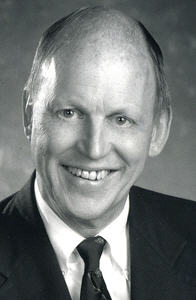
Thomas A. Wood, 76, former headmaster of Friends’ Central School in Wynnewood, died of heart failure Oct. 27 at Plymouth Harbor, a retirement community in Sarasota, Fla. Dr. Wood headed Friends’ Central, a coed Quaker school, for 17 years. During his tenure, he oversaw the construction of a building, Shallcross Hall; the conversion of an 18th-century barn into a library; and the purchase of the Montgomery School on Old Gulph Road in Wynnewood, which became Friends’ Central’s lower school campus.
“Tom Wood had strong vision and foresight,” said Friends’ Central’s present headmaster, David M. Felsen. “The purchase of the second campus allowed for tremendous growth and development of the school,” he said.
He had “a remarkable eye for talent,” Felsen said, “and drew to the school wonderful teachers and administrators.”
When Dr. Wood resigned as headmaster in 1987, the 19th-century stone structure that housed the upper school and administrative offices was named the Wood Building.
After leaving Friends’ Central, he was director of consulting for Independent Educational Services in Princeton for five years.
Dr. Wood grew up in West Chester and graduated from Choate School in Wallingford, Conn. He earned a bachelor’s degree from Haverford College and a doctorate in Elizabethan literature from the University of Birmingham in England. He retained a fondness for English diction and proper grammar, his cousin Betsy Neese said.
Before becoming headmaster at Friends’ Central in 1970, Dr. Wood taught at the Hill School in Pottstown; was an administrator at Phillips Exeter Academy in Exeter, N.H., and Athens College in Greece; and then was assistant headmaster at Friends Academy in Locust Valley, N.Y.
He enjoyed politics and in 1984 took a six-month sabbatical from Friends’ Central to head the Philadelphia presidential campaign of Democrat Alan Cranston, then a U.S. senator from California.
Dr. Wood loved spending time at his vacation home on Lake Wallenpaupack in the Poconos. He often invited students from Friends’ Central, and friends and family to visit, Neese said, and would fill up as many as six supermarket carts to feed all of his guests. “He was the consummate host,” she said.
Dr. Wood is survived by sisters Posey Jones and Molly Tully; stepchildren Alexander Otey and Olivia Brady; three step-grandchildren; and his former wife, Patricia Otey Wood.
A memorial service will be at 3 p.m. Dec. 16 in Shallcross Hall at Friends’ Central School, 1101 City Ave., Wynnewood.
The thing that sticks out = V.P. Cheney knew about an incoming flight! What were the orders? If it was for a shoot down, why weren’t the Pentagon, Capitol building and White House evacuated… What if the orders were to let the incoming aircraft hit?
President Bush came to the steps of the Capitol yesterday for a Second Inaugural do-over. Here is the text of his revised speech:
ON this day, when we celebrate the durable wisdom of our Constitution, we must remember: Constitutions don’t work for everyone. It’s not a one-size-fits-all type deal.
We are led, by recent events and common sense, to one conclusion: The survival of liberty in our land increasingly depends on the repression of liberty in other lands.
Once I thought my daddy was a wimp for cuddlin’ up real close with dictators, tradin’ stability for freedom. But now I gotta admit, that’s a darn fair trade. As I told Mushy last night on that cool, high-tech videophone I got in the Sit Room, the best hope for expanding peace is expanding dictators.
In America’s ideal of freedom, we are ennobled by a heart for the weak. But we must also have a heart for the strongmen.
Sometimes when the soul of a nation speaks, we must listen. But if that soul is housed in a bunch of trial lawyers wearing identical dark suits and calling my man Mushy a “dog,” I say, bring on the batons. Police tear-gassing lawyers is really just a foreign version of tort reform, which I support.
Those lawyers should be in jail. Mushy told me they were reckonin’ to represent Osama when General-General catches him. Which will be any day now. He’s a man of his word.
I don’t blame Mushy for dissolving that disloyal Supreme Court. When I needed to subvert the democratic process during the 2000 recount, my Supreme Court was totally supportive.
House arrest for that fired chief justice sounds very relaxin’, especially if he’s got a feather pillow.
I think Mushy should put Benazir Bhutto under house arrest in Karachi. They call her “a kleptocrat in an Hermès scarf.” I call her a chaos magnet.
She’s slippery. One minute she’s overlooking Mushy’s flaws, the next she’s appalled by them. I’m not even sure what nickname to use. Her friends called her Pinky at Harvard and Bibi later. I think I like Pinky. From the day of our foundin’, we have proclaimed the imperative of self-government, because no one is fit to be a master, and no one deserves to be a slave.
But I looked into Mushy’s eyes and saw a master, a man committed to helping us fight terror. And sometimes we must fight terror with tyranny. He promised me he’d be a more low-key autocrat, stop wearing that scary uniform — at least when he’s playing tennis.
From now on, it is the policy of the United States to seek and support the growth of tyrannical movements and institutions in every nation and culture, with the ultimate goal of ending democracy in our world so liberty can thrive.
We will persistently clarify the moral choice before every ruler and nation: Choose oppression, which can work, as we see with our Arab allies, or freedom, which — O.K., I admit it this once — we can’t make work in Iraq.
America’s influence is not unlimited. And unfortunately for the oppressed, Mushy’s open defiance is helping to further undermine America’s influence. But we will use what influence we have left to pretend that jailed dissidents prefer their chains and that human beings aspire to live at the mercy of bullies.
I’m gonna have to sweet-talk Laura on coming around on Burma. I might even have to kiss her hand, like Sarko.
Condi was very worried about Mushy suspending the Constitution, but Vice says Constitutions are for sissies. He doesn’t see anything wrong with Mushy’s press blackout. He thinks we can learn a few lessons from him.
Vice says if we had someone decisive like Mushy in Iraq instead of those floppy Iranian puppets we put in power, we’d be a lot better off.
All who live in tyranny and hopelessness can know: the United States will ignore your oppression and excuse your oppressors. When you stand for your liberty, we will not stand with you.
The leaders of governments with long habits of control need to know: To serve your people you must learn to mistrust them. Stop your journey of progress and justice, and America will not only walk at your side, we’ll give you billions of dollars and lots of big-ticket stuff, like F-16s — no strings attached. And we’ll take you at your word that you have no intention of using them against India.
In the long run, there is justice without freedom, and there can be human rights once the human rights activists have been thrown in the pokey.
Three years ago, I believed that the most important question history would ask us was: Did our generation advance the cause of freedom?
But now I am older and wiser. I know that the most important question history will ask us is: What’s a little martial law between friends?
Only a couple of years ago, Firefox was the little browser that could — an open-source program created by thousands of contributors around the world without the benefit of a giant company like Microsoft to finance it.
Since then, Firefox, which has prospered under the nonprofit Mozilla Foundation, has grown to be the largest rival to Microsoft’s Internet Explorer, with 15 to 20 percent of the browser market worldwide and higher percentages in Europe and among technology devotees. It is the most popular alternative browser since Netscape, with about three times as many users as Apple’s Safari.
Part of Firefox’s appeal was its origins as a nonprofit venture, a people-powered revolution involving the most basic Internet technology, the Web browser. Also, because the core code was open, Firefox could tap into developers’ creativity; they are encouraged to soup up the browser, whether by blocking ads from commercial Web sites, a popular add-on, or by creating “skins” to customize the browser’s appearance.
But in trying to build on this success, the Mozilla Foundation has come to resemble an investor-backed Silicon Valley start-up more than a scrappy collaborative underdog. Siobhan O’Mahony, an assistant professor at the School of Management of the University of California, Davis, calls Mozilla “the first corporate open-source project.”
The foundation has used a for-profit subsidiary, the Mozilla Corporation, to collect tens of millions of dollars in royalties from search engine companies that want prominent placement on the browser. And by collecting that money as a war chest to compete against giants like Microsoft and Apple, the foundation has, at least temporarily, moved away from the typical activities of a nonprofit organization.
“The Mozilla community has been a bit hybrid in terms of integrating public and private investment all along — its history is fairly unique in this respect,” Professor O’Mahony said.
So far, the many contributors to Firefox seem pleased with its financial success. The bigger question is what Mozilla will do with all its money.
According to Mozilla’s 2006 financial records, which were recently released, the foundation had $74 million in assets, the bulk invested in mutual funds and the like, and last year it collected $66 million in revenue. Eighty-five percent of that revenue came from a single source — Google, which has a royalty contract with Firefox.
Despite that ample revenue, the Mozilla Foundation gave away less than $100,000 in grants (according to the audited statement), or $285,000 (according to Mozilla itself), in 2006. In the same year, it paid the corporation’s chief executive, Mitchell Baker, more than $500,000 in salary and benefits. (She is also chairwoman of the foundation.)
Ms. Baker, a lawyer who has worked for Silicon Valley companies since the mid-1990s, said her compensation “is yet another example of Mozilla as a hybrid,” adding that it made her “a poor stepchild, not even,” compared to the leaders of other equally influential Silicon Valley companies.
Ms. Baker says it was the community, not Google’s money, that made Firefox a player in the field. “Mozilla is successful because we have this giant set of people who care about it,” she said. “The fundamental infrastructure piece that keeps Mozilla independent from even a single source of income like Google is the diverse set of people.”
She added: “No amount of money would have allowed us to be as successful as we are.” Then, referring to Microsoft, she said, “We cannot outspend them.”
The rise of Firefox can be seen as an extension of the Netscape-Microsoft battle of the mid-1990s. After Microsoft largely wrested control of the market, Netscape decided in 1998 to release its code to the public, and immediately developers took up the challenge.
By 2003, AOL, which had acquired Netscape, released the browser code to the newly created Mozilla Foundation, and by November 2004, the first version of Firefox was released. At the time, it was promoted as pursuing the goals of being user-friendly, able to work on different operating systems and more secure. The corporation was created in 2005.
The browser’s other, unstated advantage, shared with other open-source projects, was A.B.M: Anybody but Microsoft.
“Firefox is able to tap many different audiences. Not everyone cares about keeping Web standards open, but a significant part of the contributing population fears that if Firefox loses share, then Web standards could become the purview of Microsoft alone,” Professor O’Mahony wrote in an e-mail message.
Dean Hachamovitch, Microsoft’s general manager for Internet Explorer, noted that the market still showed a marked preference for Explorer, but he did concede that Microsoft, for structural reasons, could not show the enthusiasm Firefox developers have.
“We are much more reserved about thinking out loud as we make the browser better,” he said. “I can go through and talk about all the innovations we have made, but we don’t talk about them until they are done. People make very important decisions based on what Microsoft says; we have a responsibility about what we say out loud.”
Looming over Mozilla’s future, however, is its close connection with Google, which has been writing most of the checks that finance the Firefox project through its royalty contract.
When the connection with Google was revealed more than a year ago, the question on popular tech Web sites like Slashdot.org was whether Mozilla was acting as a proxy in Google’s larger war with Microsoft and others.
The foundation went so far as to directly address the issue, writing recently, “We do not vet our initiatives with Google,” and adding that it made sure that Google “understood the separation between a search relationship and the rest of our activities.”
Yet lately, the concern among Firefox users and developers about the Mozilla-Google relationship focuses more on what would happen if Google were to walk away, create its own browser or back another, like Safari. This discussion of life after Google represents an unexpected twist: the fear is that instead of being a proxy for Google, Mozilla may have become dangerously reliant on it.
Wladimir Palant, a longtime contributor to Firefox and developer of the popular Adblock Plus add-on that removes ads from Web pages, said he was pleased that the foundation had so much money saved up. And while he rattled off a number of priorities that he was glad the foundation had been pursuing, including improving the infrastructure and hiring more staff, he said No. 1 was, “Save some of the money for later.”
He said, “This will keep them independent of market tendencies and companies like Google.” If Google were to make an unreasonable demand, he said, “Mozilla will still have enough time to look for alternative money sources.”
Ms. Baker said that while she tried “to stay away from” that kind of speculation, “I take the view that we are doing something fundamentally important, and as that becomes clear, there could be other entrants.” She added: “Google is on everyone’s mind, but it could come from China, who knows?”
A Google spokeswoman would not comment on any of the issues raised by the Google-Mozilla relationship, but issued a statement: “Mozilla is a valued business partner because many users utilize Firefox to access Google products and services. We will continue to work with a variety of technology providers, including Mozilla, to ensure our mutual users have the best experience possible with our products and services.”
To an outside observer like Tim Wu, a law professor at Columbia who focuses on the Internet, the alliance still makes a lot of sense.
“We’re living in a cold war between open and closed systems, and Google is happy to lend support to entities that it sees as allies,” he said.
While acknowledging that he does not know the secret terms of their contract, he said, by way of analogy, “No one is surprised that Turkey would get aid from the U.S. during the cold war.”
NBC informed the nonwriting staff of The Tonight Show with Jay Leno that it will be laid off at the end of next week in the wake of the show shutting down for the writers’ strike. Jay Leno
And with Leno still refusing to cross the picket line, the show is looking at coming back on the air Nov. 19 with guest hosts so that it can save the jobs of the nonwriters.
“All sorts of things are being discussed, including guest hosts,” Tonight Show executive producer Debbie Vickers said. “Our preference is that we return to production of The Tonight Show with Jay as host as soon as possible.”
B&C also learned that the same timetable has been given to the staff of NBC’s Late Night with Conan O’Brien. That show’s nonwriters also face layoffs at the end of the week of Nov. 12.
But Vickers also wants to save the jobs of her nonwriting staffers.
“We want to protect the staff, who have been loyal to this show for decades, in the same way that Johnny Carson reluctantly returned without his writers in 1988,” she said.
Late-night shows have gone into repeats since the strike began Monday as the hosts walked out in solidarity with their writing staffs.
With the shows shut down, networks can cut costs by laying off most of the rest of the staff.
And Leno’s chief writer doesn’t expect Leno back anytime soon.
“I talk to Jay every day, and he will not be the first [late-night host] to cross the picket line,” said Tonight Show head writer Joe Medeiros, also a strike captain for the Writers Guild of America. “So they are looking at guest hosts as one possibility so all those people don’t have to lose their jobs.”
Medeiros on Friday expressed anger at NBC for pulling the plug on the staff so quickly.
“This is the way that NBC treats the No. 1 late-night talk show that makes them $50 million a year and has been No. 1 for 12 years?” he said, noting that NBC even turned off his NBC e-mail account.
Even prior to the strike taking effect, many knew that the nonwriting late-night show staff members from all networks would probably begin to see layoffs within two to three weeks if their hosts did not resume their on-air duties.
The hosts are compelled to return without their writing staffs to save the jobs of all of the nonwriters, which can number more than 100 per show.
There is precedent for hosts to come back sans writers, as Johnny Carson and David Letterman both did during the 1988 strike.
Medeiros also spoke in animated fashion about NBC’s decision to replace Leno with Conan O’Brien in 2009.
“And all this after they already kicked the man out the door,” Medeiros said.
CBS has already said that The Late Show with David Letterman will remain in repeats the week of Nov. 12.
ABC’s Jimmy Kimmel Live continues to run in repeats, as its host has backed the writers not only by stepping aside, but even driving a taco truck around to picket sites in Los Angeles. Leno has also been a constant presence at picketing around town.
Norman Mailer, the macho prince of American letters who for decades
reigned as the country’s literary conscience and provocateur with such
books as “The Naked and the Dead” and “The Executioner’s Song” died
Saturday, his literary executor said. He was 84.
Mailer died of acute renal failure at Mount Sinai Hospital, said J. Michael Lennon, who is also the author’s biographer.
From his classic debut novel to such masterworks of literary
journalism as “The Armies of the Night,” the two-time Pulitzer Prize
winner always got credit for insight, passion and originality.
Some of his works were highly praised, some panned, but none was
pronounced the Great American Novel that seemed to be his life quest
from the time he soared to the top as a brash 25-year-old “enfant
terrible.”
Mailer built and nurtured an image over the years as pugnacious,
streetwise and high-living. He drank, fought, smoked pot, married six
times and stabbed his second wife, almost fatally, during a drunken
party.
He had nine children, made a quixotic bid to become mayor of New
York, produced five forgettable films, dabbled in journalism, flew
gliders, challenged professional boxers, was banned from a Manhattan
YWHA for reciting obscene poetry, feuded publicly with writer Gore
Vidal and crusaded against women’s lib.
But as Newsweek reviewer Raymond Sokolov said in 1968, “in the end it is the writing that will count.”
Mailer, he wrote, possessed “a superb natural style that does not
crack under the pressures he puts upon it, a talent for narrative and
characters with real blood streams and nervous systems, a great
openness and eagerness for experience, a sense of urgency about the
need to test thought and character in the crucible of a difficult era.”
Norman Mailer was born Jan. 31, 1923 in Long Branch, N.J. His
father, Isaac, a South Africa-born accountant, and mother, Fanny, who
ran a housekeeping and nursing agency, soon moved to Brooklyn —
later described by Mailer as “the most secure Jewish environment in
America.”
Mailer completed public schools, earned an engineering science
degree in 1943 from Harvard, where he decided to become a writer, and
was soon drafted into the Army. Sent to the Philippines as an
infantryman, he saw enough of Army life and combat to provide a basis
for his first book, “The Naked and the Dead,” published in 1948 while
he was a post-graduate student in Paris on the G.I. Bill.
The book — noteworthy for Mailer’s invention of the word “fug”
as a substitute for the then-unacceptable four-letter original —
was a best-seller, and Mailer returned home to find himself anointed
the new Hemingway, Dos Passos and Melville.
Buoyed by instant literary celebrity, Mailer embraced the early
1950s counterculture — defining “hip” in his essay “The White
Negro,” allying himself with Beat Generation gurus Jack Kerouac and
Allen Ginsberg, and writing social and political commentary for the
leftist Village Voice, which he helped found. He also churned out two
more novels, “Barbary Shore” (1951) and “Deer Park” (1955), neither
embraced kindly by readers or critics.
Mailer turned reporter to cover the 1960 Democratic Party convention
for Esquire and later claimed, with typical hubris, that his piece,
“Superman Comes to the Supermarket,” had made the difference in John F.
Kennedy’s razor-thin margin of victory over Republican Richard M. Nixon.
While Life magazine called his next book, “An American Dream”
(1965), “the big comeback of Norman Mailer,” the author-journalist was
chronicling major events of the day: an anti-war march on Washington,
the 1968 political conventions, the Ali-Patterson fight, an Apollo moon
shot.
His 1968 account of the peace march on the Pentagon, “The Armies of
the Night,” won the Pulitzer Prize and the National Book Award. He was
described as the only person over 40 trusted by the flower generation.
Covering the 1968 Democratic convention in Chicago for Harper’s
magazine, Mailer was torn between keeping to a tight deadline or
joining the anti-war protests that led to a violent police crackdown.
“I was in a moral quandary. I didn’t know if I was being scared or
being professional,” he later testified in the trial of the so-called
Chicago Seven.
In 1999, “The Armies of the Night” was listed at No. 19 on a New
York University survey of 100 examples of the best journalism of the
century.
Mailer’s personal life was as turbulent as the times. In 1960, at a
party at his Brooklyn Heights home, Mailer stabbed his second wife,
Adele Morales, with a knife. She declined to press charges, and it was
not until 1997 that she revealed, in her own book, how close she had
come to dying.
In 1969, Mailer ran for mayor on a “left conservative”
platform. He said New York City should become the 51st state, and urged
a referendum for “black ghetto dwellers” on whether they should set up
their own government.
Mailer had numerous minor run-ins with the law, usually for
being drunk or disorderly, but was also jailed briefly during the
Pentagon protests. While directing the film “Maidstone” in 1968, the
self-described “old club fighter” punched actor Lane Smith, breaking
his jaw, and bit actor Rip Torn’s ear in another scuffle.
Years later, he championed the work of a convict-writer named
Jack Abbott — and was subjected to ridicule and criticism when
Abbott, released to a halfway house, promptly stabbed a man to death.
Mailer had views on almost everything.
The ’70s: “the decade in which image became preeminent because nothing deeper was going on.”
Poetry: A “natural activity … a poem comes to one,” whereas
prose required making “an appointment with one’s mind to write a few
thousand words.”
Journalism: irresponsible. “You can’t be too certain about what happened.”
Technology: “insidious, debilitating and depressing,” and nobody
in politics had an answer to “its impact on our spiritual well-being.”
“He had such a compendious vision of what it meant to be alive.
He had serious opinions on everything there was to have an opinion on,
and everything he had was so original,” said friend William Kennedy,
author of “Ironweed.”
Mailer’s suspicion of technology was so deep that while most
writers used typewriters or computers, he wrote with a pen, some 1,500
words a day, in what Newsweek’s Sokolov called “an illegible and
curving hand.” When a stranger asked him on a Brooklyn street if he
wrote on a computer, he replied, “No, I never learned that,” then
added, in a mischievous aside, “but my girl does.”
In a 1971 magazine piece about the new women’s liberation
movement, Mailer equated the dehumanizing effect of technology with
what he said was feminists’ need to abolish the mystery, romance and
“blind, goat-kicking lust” from sex.
Time magazine said the broadside should “earn him a permanent
niche in their pantheon of male chauvinist pigs.” Mailer later told an
interviewer that his being called sexist was “the greatest injustice in
American life.”
Two years later, he wrote “Marilyn” and was accused of
plagiarism by other Marilyn Monroe biographers. One, Maurice Zolotow,
called it “one of the literary heists of the century.” Mailer shot
back, “nobody calls me a plagiarist and gets away with it,” adding that
if he was going to steal, it would be from Shakespeare or Melville.
“He could do anything he wanted to do — the movie
business, writing, theater, politics,” author Gay Talese said Saturday.
“He never thought the boundaries were restricted. He’d go anywhere and
try anything. He was a courageous person, a great person, fully
confident, with a great sense of optimism.”
In “Advertisements for Myself” (1959), Mailer promised to write the greatest novel yet, but later conceded he had not.
Among other notable works: “Cannibals and Christians” (1966);
“Why Are We in Vietnam?” (1967); and “Miami and the Siege of Chicago”
(1968), an account of the two political conventions that year.
“The Executioner’s Song” (1979), an epic account of the life
and death of petty criminal Gary Gilmore, whom Mailer never met, won
the 1980 Pulitzer Prize for fiction. “Ancient Evenings” (1983), a novel
of ancient Egypt that took 11 years to complete, was critically panned.
“Tough Guys Don’t Dance” (1984) became a 1987 film. Some
critics found “Harlot’s Ghost” (1991), a novel about the CIA,
surprisingly sympathetic to the cold warriors, considering Mailer’s
left-leaning past. In 1997, he came out with “The Gospel According to
the Son,” a novel told from Jesus Christ’s point of view. The following
year, he marked his 75th birthday with the epic-length anthology “The
Time of Our Time.”
Mailer’s wives, besides Morales, were Beatrice Silverman; Lady
Jeanne Campbell; Beverly Bentley; actress Carol Stevens and painter
Norris Church. He had five daughters, three sons and a stepson.
Mailer lived for decades in the Brooklyn Heights townhouse with
a view of New York harbor and lower Manhattan from the rooftop “crow’s
nest,” and kept a beachside home in Provincetown, Mass., where he spent
increasing time in his later years.
Despite heart surgery, hearing loss and arthritic knees that
forced him to walk with canes, Mailer retained his enthusiasm for
writing and in early 2007 released “The Castle in the Forest,” a novel
about Hitler’s early years, narrated by an underling of Satan. A book
of conversations about the cosmos, “On God: An Uncommon Conversation,”
came out in the fall.
In 2005, Mailer received a gold medal for lifetime achievement
at the National Book Awards, where he deplored what he called the
“withering” of general interest in the “serious novel.”
Authors like himself, he said more than once, had become
anachronisms as people focused on television and young writers aspired
to screenwriting or journalism.
When he was young, Mailer said, “fiction was everything. The
novel, the big novel, the driving force. We all wanted to be Hemingway
… I don’t think the same thing can be said anymore. I don’t think my
work has inspired any writer, not the way Hemingway inspired me.”
“Obviously, he was a great American voice,” said a tearful Joan Didion, struggling for words upon learning of Mailer’s death.
Lennon said arrangements for a private service and burial for
family members and close friends would be announced next week, and a
memorial service would be held in New York in the coming months.
___
Associated Press writer Hillel Italie in New York contributed to this report.







 The New York Herald Sun