Author: JT
"I'm Snaking a Septic Tank-Pinch Me" Bill Maher 10/17/08
StoriesBush Stole American Optimism | Tom Friedman with Bill Maher
Barack Obama, Broadcatching, Comedy, Credit Default Swaps, Financial Crisis, Hedge Funds, John McCain, Politics, Sarah Palin, Tullycast, Video, Wall StreetWhich Sports Teams Could Face Bankruptcy Threat?
Bankruptcy, MLB, MLS, NBA, NFL, NHL
DARREN ROVELL
Posted By: Darren Rovell | Sports Business Reporter
cnbc.com
09 Oct 2008 | 09:51 AM ET
In the midst of the greatest economic freefall this country has ever seen, one of the most popular topics among those in the sports finance world is which team, in which league, will file for bankruptcy first and when.

With Jeff deGraff, the top tech analyst on the Street, predicting last night on CNBC’s “Fast Money” that we are “probably in the fifth inning” of the meltdown, sports teams and their owners can’t possibly be immune, with billions and billions of dollars lost.
Let’s start with the “when.”
The best guess, according to those in the know, is that if the bear market continues, a team will likely file for bankruptcy by February or March. Who is it going to be? It’s hard to say unless you analyze every owner’s unique financial situation. But it’s generally believed that if a team files in the near future, odds are it will be an NHL team, they reason. That’s because it’s the sport with the least cash flow and probably has the owners with the lowest net worth. In fact, since 1974, a major professional sports team has filed for bankruptcy five times and every single one of them was a National Hockey League Team.
NFL’s Randy Moss To Wear “My” Shoes In Game!Write My Blog Contest–Your Chance To Blog Right Here!Brooks Shoes Offers Something “Extra” For Upcoming Marathon
The Pittsburgh Penguins filed for bankruptcy in 1974 and 1998, the Los Angeles Kings filed in 1995 and the Ottawa Senators and the Buffalo Sabres filed for bankruptcy within days of each other in 2003. In June of this year, Nashville Predators co-owner William “Boots” Del Biaggio filed for Chapter 11.
Although owners love their sports teams, it’s undeniable that many of their businesses are also losing money and that means, at some point, a team has to go. And once one owner does it, it’s very possible that the financially strained in the toughest markets could go running to the courthouse to try to salvage something.
Bain Capital was laughed at when it was reported that they offered $4 billion to buy the entire NHL in 2005, as the sport endured a full season of sitting out from the lockout. That deal would have put the average franchise at $133 million. Almost four years later, that number looks pretty good.
Somali Pirate Source: $8 Million Ransom Deal in the Offing
Stories
Somali Pirate Source: $8 Million Ransom Deal in the Offing to Free Ukraine Ship
MOGADISHU
An onshore associate of Somali pirates holding a Ukrainian ship with tanks and other weaponry on board said on Wednesday an $8 million ransom deal was in the offing which may enable the boat to be freed within days. “A boat will carry the money from Djibouti and pirates are expected to release the ship in the coming two nights,” a business partner of the pirates, who identified himself only as Farah, told Reuters.

In the highest-profile of scores of pirate attacks off Somalia this year, the MV Faina has been held since the end of September with 20 crew members on board. Its cargo includes 33 T-72 tanks which were en route to Kenya’s Mombasa port.
U.S. navy warships are watching the ship, which lies offshore near Hobyo town, guarded by about 50 pirates.
“The pirates on board the Ukrainian ship have struck a bargain of $8 million ransom,” added Farah, who has given reliable information in the past about pirate activities.
“I think the Americans are aware of the deal because there is no other alternative to release the ship. If the warships threatened, pirates would die in a last-ditch fight and risk the hostages,” he said.
Pirates on the Faina, reached by Reuters via satellite phone, said they were no longer speaking to media despite giving numerous interviews in the last two weeks.
U.S. FEARS
Lieutenant Nathan Christensen, spokesman for the U.S. Fifth Fleet whose boats are monitoring the Faina, could not confirm the state of ransom talks but said he hoped the saga ended soon.
“The actual negotiations are between the pirates and the shipping company, we’re not engaged in anything on that front. Having said that, we want this to end as soon as possible and as peacefully as possible,” he said.
“We are definitely concerned that the cargo may fall into the wrong hands … terrorists and violent extremists and the pirates themselves.”
The saga has galvanized international concern over piracy in the Gulf of Aden and Indian Ocean ship lanes off Somalia.
The U.N. Security Council on Tuesday again urged a joint naval operation against the pirates, who have reaped millions in ransoms this year and pushed up insurance costs for ships.
Farah scoffed at the international threat.
“The world has repeatedly voted to fight pirates, but if the situation were a piece of cake, then the American ship would not just be watching the Ukrainian ship,” he said.
Kenya reiterated on Wednesday its denial that the Faina’s military cargo was secretly destined for South Sudan as a regional maritime group and some defense sources have said.
Nairobi has been embarrassed by that accusation because it helped broker a 2005 north-south peace accord in Sudan. There are also suggestions of kickbacks involved in the shipment.
“The cargo on board the hijacked ship belongs to the Kenya government,” Foreign Minister Moses Wetangula said.
The ship’s manifest, seen by Reuters, lists Kenya as the “consignee” but gives MOD/GOSS as the contract reference. GOSS is the normal abbreviation for Government of South Sudan.
Somali Foreign Minister Ali Jama Jangili said an end to civil conflict onshore was a pre-requisite to solving piracy.
“Only the maintenance of peace in Somalia can help eradicate the menace of piracy,” he told reporters in Nairobi.
(Additional reporting by Abdiqani Hassan in Bosasso, Raissa Kasolowsky in Dubai, Andrew Cawthorne and Humphrey Malalo in Nairobi; Writing by Andrew Cawthorne; Editing by Matthew Tostevin))
var s_account = “wdgnewabcnews,wdgasec”;
<!–
s_omni.pageName = “abcn:fn_print”; //content name
s_omni.pageURL = “”; //content url
s_omni.pageType = “”; //page type
s_omni.server = window.document.location.hostname; //reporting domain
s_omni.prop4 = “wirestory_print”; //content type
s_omni.prop1 = “abcn”; //site name
s_omni.channel = “abcn:”; //level1
s_omni.prop5 = “”; //level2
s_omni.prop6 = “”; //content alternate section
s_omni.prop13 = “by abdi sheikh”; //columnist
s_omni.prop16 = “reuters”; //source
s_omni.prop18 = “5981485:somali pirate source: deal near on ukraine ship”; //content id:content name
s_omni.prop24 = “5981485” //top story
s_omni.prop25 = “”; //top video
s_omni.prop26 = “”; //top slideshow
s_omni.hier1 = “abcn”; //directory structure
s_omni.eVar16 = s_omni.pageName; //content name conversion
s_omni.eVar17 = s_omni.prop4+”:”+s_omni.channel;
var s_code=s_omni.t();if(s_code)document.write(s_code)
//–>
Arab Markets Get Hit Hard
Arabtec, Dubai, Dubai Financial Market, Emaar, Saudi Arabia
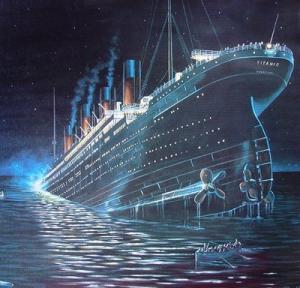
Dubai’s stock market dropped by more than 8% on a turbulent day’s trading, adding to substantial losses caused by fears of a faltering property market.
Two of the biggest fallers were the Gulf emirate’s property giant Emaar and construction firm Arabtec.
Billions of dollars were wiped off other Mid-East exchanges including Abu Dhabi, Egypt, Qatar and Saudi Arabia.
Panic gripped trading floors in the morning, although some staged partial recoveries before the close of trading.
The Dubai Financial Market sank to 3012 at midday after starting the day at 3184, although the index ended at 3085.
Foreign investors are reportedly selling interests in Dubai amid fears of weakness in the emirate’s construction bonanza and a greater exposure to global markets than its Gulf neighbours.
Unwarranted falls
Saudi Arabia’s stock exchange – the Middle East’s largest – also staged a comeback after falling by more than 7.5% at one stage, trading below the 6000-point mark for the first time since 2004.
| High tension and panic are gripping the Gulf stock markets Kuwaiti economist Hajjaj Bukhdur |
The Tadawul All-Shares Index ended trading just 1.5% down at 6160, hours after a central bank official reassured investors the country did not face the liquidity problems that have caused such chaos in international markets. Deputy Director Mohammed al-Jasser said recent sharp stock market falls, which have hit Saudi banks hard, were unwarranted.
“The situation is stable and does not require any emergency measures as if there were a problem with the banks meeting their commitments,” Mr Jasser told al-Arabiya TV.
The latest declines mean Saudi bank shares have lost more than half their value since the beginning of the year.
Record falls
Egypt’s stock market also clawed back more than half of its losses earlier in the day to close down 7.1%. The benchmark Case-30 index lost 16.47% on Tuesday.
“We’re swamped here,” Ahmed Hefnawi, an analyst with investment bank EFG Hermes, told AFP news agency during frantic selling in the morning.
Kuwaiti economist Hajjaj Bukhdur said: “High tension and panic are gripping the Gulf stock markets”.
“Some major portfolios and investment funds are pressurising governments to intervene by injecting liquidity,” he said.
Earlier in the day Kuwait’s Central Bank cut discount interest rates by 1.25 percentage points to 4.5%, hoping to address growing concerns about financial liquidity.
In morning trading, the stock market – which is the Arab world’s second largest – fell by 2.8%, but it closed down just 1.4%.
There was no recovery at Qatar’s exchange, however, which ended the day 8.77% down, the biggest single-day market fall in several years in the gas-rich state.
The Tel Aviv stock exchange was closed for a Jewish holiday, having risen on Tuesday thanks to a 0.5-point cut in the base interest rate, to 3.75%.
The First Podcar City: Any Coincidence That It's PartyTown USA : Ithaca, New York?
computer-guided car, driverless, ITHACA, Oil, podcari


Planning America’s First Podcar City
ITHACA, N.Y., Oct. 13, 2008
(AP) The thought of a driverless, , transporting people where they want to go on demand is a futuristic notion to some.
To Jacob Roberts, podcars – or PRTs, for personal rapid transit – represent an important component in the here-and-now of transportation. “It’s time we design cities for the human, not for the automobile,” said Roberts, president of Connect Ithaca, a group of planning and building professionals, activists and students committed to making this upstate New York college town the first podcar community in the United States.“In the podcar … it creates the perfect blend between the privacy and autonomy of the automobile with the public transportation aspect and, of course, it uses clean energy,” Roberts said.
With the oil crisis reaching a zenith and federal lawmakers ready to begin fashioning a new national transportation bill for 2010, Roberts and his colleagues think the future is now for podcars – electric, automated, lightweight vehicles that ride on their own network separate from other traffic.
Unlike mass transit, podcars carry two to 10 passengers, giving travelers the freedom and privacy of their own car while reducing the use of fossil fuels, reducing traffic congestion and freeing up space now monopolized by parking.
At stations located every block or every half-mile, depending on the need, a rider enters a destination on a computerized pad, and a car would take the person nonstop to the location. Stations would have slanted pull-in bays so that some cars could stop for passengers, while others could continue unimpeded on the main course.
“It works almost like an elevator, but horizontally,” said Roberts, adding podcar travel would be safer than automobile travel.
The podcar is not entirely new. A limited version with larger cars carrying up to 15 passengers was built in 1975 in Morgantown, W.Va., and still transports West Virginia University students.
Next year, Heathrow Airport outside London will unveil a pilot podcar system to ferry air travelers on the ground. Companies in Sweden, Poland and Korea are already operating full-scale test tracks to demonstrate the feasibility. Designers are planning a podcar network for Masdar City, outside Abu Dhabi, which is being built as the world’s first zero-carbon, zero-waste city.
Meanwhile, more than a dozen cities in Sweden are planning podcar systems as part of the country’s commitment to be fossil-fuel-free by 2020, said Hans Lindqvist, a councilman from Varmdo, Sweden, and chairman of Kompass, an association of groups and municipalities behind the Swedish initiative.
“Today’s transportation system is reaching a dead end,” said Lindqvist, a former member of the European parliament.
Cars have dominated the cityscape for nearly a century, taking up valuable space while polluting the air, said Magnus Hunhammar, chief executive officer of the Stockholm-based Institute for Sustainable Transportation, the world’s leading center on podcar technology.
“Something has to change,” he said. “We aren’t talking about replacing the automobile entirely. We are adding something else into the transportation strategy.”
 (Advanced Transport Systems Ltd.)
(Left: A computer model of a PRT system being built at London’s Heathrow Airport, scheduled to open next year.)
Skeptics, however, question whether podcars can ever be more than a novelty mode of transportation, suitable only for limited-area operations, such as airports, colleges and corporate campuses. Detractors, mainly light-rail advocates, say a podcar system would be too complex and expensive.
“It is operationally and economically unfeasible,” said Vukan Vuchic, a professor of transportation and engineering at the University of Pennsylvania who has written several books on urban transportation.
“In the city, if you have that much demand, you could build these guideways and afford the millions it would take, but you wouldn’t have capacity. In the suburbs, you would have capacity, but the demand would be so thin you couldn’t possibly pay for those guideways, elevated stations, control systems and everything else,” Vuchic said.
Podcars typically run on an elevated guideway or rails, but they also can run at street level. As a starting point, pilot podcar networks can be built along existing infrastructure, supporters say.
Ithaca Mayor Carol Peterson said a podcar network could be part of her upstate city’s long-range transportation plans and its mission of developing urban neighborhoods that are environmentally sustainable and pedestrian-friendly. Ithaca has a long history of progressive achievements – this summer, it began the first community-wide car sharing program in upstate New York.
In Ithaca, a network could connect the downtown business district and main business boulevard with the campuses of Cornell University and Ithaca College, which sit on hillsides flanking the city. When the two colleges are in session, Ithaca’s population balloons from about 30,000 to about 80,000, causing big-city congestion on the city’s roads.
Santa Cruz, Calif., recently hired a contractor to design a small solar-powered podcar system that would loop through the city’s downtown and along its beach front.
The Institute for Sustainable Transportation predicts a podcar system will be installed in an American city within the next five years, although it is likely to cost tens of millions of dollars. Because of the huge initial investment, funding would have to come from both public and private sectors, IST officials said.
The capital cost is about $25 million to $40 million per mile, which includes guideways, vehicles and stations, compared with $100 million to $300 million a mile for light-rail or subway systems, according to the IST.
Although the plan for Ithaca is only in the conceptual stages, Roberts sees the city as a logical place for the country’s first community-wide podcar network, noting that construction of the Erie Canal across upstate New York in the early 1800s revolutionized commercial transportation in a young America.
“Buffalo, Rochester, Syracuse, Albany are connected along a single line, the Erie Canal. Now, they are connected by the (New York State) Thruway. It would be easy to adapt. You could have a high-speed rail line, or even buses, deliver travelers to the podcar stations, and the podcars take them wherever they want to go in the city,” he said.
But podcar developers say they have overcome most technological obstacles and now must overcome the political and cultural barriers that lie ahead, equating it to the mind-set revolution that occurred when Americans hitched up their horses for good to become a nation of motorists.
“We are introducing an alternative to the automobile for the first time in 100 years,” said Christopher Perkins, chief executive officer of Unimodal Transport Solutions, a California company that builds podcars that operate on magnetic levitation instead of wheels.
“But if you look back 100 years, you saw that we made the transition from the horse to the car. I think we are ready to make another transition,” he said.
For more information on Personal Rapid Transit (PRT) systems, visit the following Web sites:

Technorati Tags: ITHACA, driverless, computer-guided car, podcar, oil
Iceland Economy Melts Away Like an Owsley Gooniebird
Central Bank of Iceland, euro, Financial Crisis, Iceland, IMF, Kaupthing BankIceland is all but officially bankrupt
INTERNATIONAL HERALD TRIBUNE
International Herald Tribune
Iceland is all but officially bankrupt
By Eric Pfanner
Thursday, October 9, 2008REYKJAVIK: People go bankrupt all the time. Companies do, too. But countries?
Iceland was on the verge of doing exactly that on Thursday as the government shut down the stock market and seized control of its last major independent bank. That brought trading in the country’s currency to a halt, with foreign banks no longer willing to take Icelandic krona, even at fire-sale rates.
As the meltdown in the Icelandic financial system quickened, with the government seemingly powerless to do anything about it, analysts said there was probably only one realistic option left: for Iceland to be bailed out by the International Monetary Fund.
“Iceland is bankrupt,” said Arsaell Valfells, a professor at the University of Iceland. “The Icelandic krona is history. The IMF has to come and rescue us.”
Prime Minister Geir Haarde, who had warned this week of the threat of “national bankruptcy,” said Thursday that Iceland’s finance minister, Arni Mathiesen, would be in Washington this weekend for the autumn IMF/World Bank meetings. He declined to say whether Iceland was seeking a rescue package from the international lender.
“We will certainly keep this option open, but we have not yet made a decision,” Haarde said Thursday at a news conference.The IMF managing director, Dominique Strauss-Kahn, said in Washington that he had activated an emergency funding system, last used during the Asian financial crisis of the late 1990’s, to help countries in crisis. Though not mentioning Iceland by name, he said: “We are ready to answer any demand by countries facing problems.”
Iceland has approached Russia about a loan of 4 billion, or $5.5 billion, to help see it through the crisis, but Haarde said no agreement had been reached.
An IMF intervention in Iceland, which would necessarily involve accepting a series of harsh measures to restore fiscal and monetary stability, would underline the extraordinary reversal in the country’s fortunes after a decade-long, debt-fueled binge by the country’s banks, businesses and some private citizens. The banks, while avoiding the toxic mortgage securities that have humbled Wall Street, expanded aggressively at home and abroad. When credit tightened and the krona fell this year, they were unable to finance their debts.
In these circumstances, going to the IMF “is probably the only thing Iceland can do,” said Richard Portes, an economist at the London Business School.
Events have moved so fast that the full import of national bankruptcy has yet to sink in here. It’s happened before, of course, but in places like Argentina and Thailand, not a country that likes to think of itself as close to Europe.
And on an island raked by icy North Atlantic winds and dotted with volcanoes and geysers, where people live with the threat of earthquakes and maritime disasters, few residents seem to be losing their cool over the financial crisis – yet. But some have suffered deep losses, and others are simply bewildered at how things could have gone so wrong so quickly.
“There is a lot of fear in society and there are people who are losing everything,” Bubbi Morthens, an Icelandic rock favorite, said Wednesday after singing at an impromptu midday concert in central Reykjavik intended to lift people’s spirits.
Like many of his compatriots, Morthens did well when Iceland was riding high, accumulating considerable wealth. But when the government seized control of Iceland’s third-largest bank, Glitnir, last month, Morthens said he lost his life savings, which he had invested in the bank’s stock.
On Thursday, the government seized Kaupthing Bank, the country’s largest lender, effectively completing the nationalization of the banking system after the previous takeover of Glitnir and the No.2 lender, Landsbanki.
Meanwhile trading in the currency froze up Thursday, according to Bloomberg News, citing dealers at Nordea, a big Scandinavian bank. The last trade was made at 340 krona to the euro, Nordea said – less than half what the Icelandic currency was worth at the start of the week.
Haarde said the Central Bank of Iceland had set up a special system to handle currency transactions, so that Icelandic companies could conduct international business.
“We are gradually moving through this crisis,” he said, sounding surprisingly unworried for the leader of a country facing economic and financial disaster. “There are still a few issues to resolve but that is the nature of these kinds of things.”
Problems with the krona have been at the core of the government’s inability to control the crisis. Without a viable currency, there is no way to support the banks, which have done the bulk of their business in foreign markets. There is also no way to bring down inflation or interest rates, both already in double digits before the crisis intensified in recent days.
Valfells and Portes said that once the situation is stabilized, the best way forward would be for Iceland is to give up on the krona and adopt the euro instead.
How could Iceland, which is not even a member of the European Union, adopt the currency?
One option would be to simply “peg” its currency to the euro. In that case, Iceland would also hand over control of monetary policy, including the setting of interest rates, to the European Central Bank in Frankfurt.
But fixing the currency to the euro could be difficult for Iceland, given that its central bank probably lacks the necessary reserve to defend such a level if the currency were to come under renewed attack, Portes said.
That leaves another option: applying to join the European Union and adding Iceland to the euro zone. Because Iceland is already part of the European Economic Area, a looser trading bloc, it already abides by many EU rules.
Still, such a move would be politically challenging. The conservative Independence Party, headed by the prime minister, has been dead set against it. Another member of that party, which is governing in a coalition with the pro-EU Social Democrats, is the central bank chairman, David Oddsson, a former prime minister.
They are supported by the powerful fishing industry, which mostly wants to stay out of the euro and to keep Europe at a comfortable distance. Fishing has been the focus of many clashes between Iceland and its European neighbors – most heatedly with Britain, in what became known as the Cod Wars of the 1950s to the 70s. The two countries clashed repeatedly over Iceland’s move to extend exclusive fishing rights into waters that had long been trawled by British vessels, too.
Tension with Britain has flared anew during the current crisis. It centers on accounts, worth an estimated 8 billion pounds, that Britons hold in the Icelandic banks; while the British government has guaranteed private savers’ accounts, charities and local government organizations fear that they will lose their money. The government of Prime Minister Gordon Brown of Britain has used powers granted under anti-terrorism laws to freeze British assets of Landsbanki until the standoff is resolved.
“We do not consider this to be a particularly friendly act,” Haarde said, adding that he had tried to defuse the situation in a telephone call with Brown on Thursday.
For all the worries, this capital city of 120,000 people still displays the fruits of the decade-long economic boom that followed the deregulation of Iceland’s financial sector in the 1990s – hip cafés, lobster restaurants and stylish shops selling outdoor gear.
But the days when the economy seemed capable of gravity-defying feats are gone. So are the days when investors went on an international buying spree, adding some of the biggest names of the British and American retailing industries to their portfolios. Gone too, are the days when ordinary citizens effortlessly joined in the fun, taking out second mortgages to finance their own trips abroad or at least to the Laugavegur, the main shopping strip in Reykjavik.
“It’s difficult; the landscape is very difficult,” said Franch Michelsen, a watch dealer in central Reykjavik, as he took a break Wednesday from cleaning his shop window.
Some ordinary Icelanders face a similar problem to the one that brought down the banks. In recent months, many mortgages were taken out in foreign currencies – marketed by the banks as a way to benefit from lower interest rates abroad, as rates in Iceland rose into the double digits.
Now, with the Icelandic krona plunging, homeowners suddenly have to pay back far more expensive euro or dollar values of their mortgages. At the same time, house prices are falling.
The Reverend Karl Sigurbjornsson, the bishop of Iceland, who leads the state-sponsored Lutheran church, says he worries about how the prospect of financial suffering will affect a society that “was led to believe that it was unlimited growth forever.”
“What will happen when the dust settles?” he asked. “A lot of people will be very angry. It will be a challenge for our society.”
Correction:
Notes:
International Herald Tribune Copyright © 2008 The International Herald Tribune | http://www.iht.com

Technorati Tags: Kaupthing Bank, Central Bank of Iceland, euro, Financial Crisis, Iceland, IMF,
Stiglitz on The Great American Economy [must read]
StoriesVANITY FAIR
Reversal of Fortune
Describing how ideology, special-interest pressure, populist politics, and sheer incompetence have left the U.S. economy on life support, the author puts forth a clear, commonsense plan to reverse the Bush-era follies and regain America’s economic sanity.
by Joseph E. Stiglitz November 2008
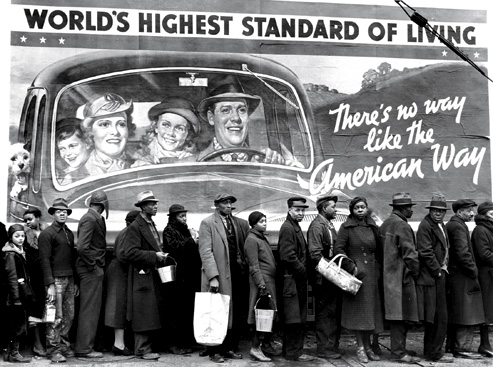
When the American economy enters a downturn, you often hear the experts debating whether it is likely to be V-shaped (short and sharp) or U-shaped (longer but milder). Today, the American economy may be entering a downturn that is best described as L-shaped. It is in a very low place indeed, and likely to remain there for some time to come.
Virtually all the indicators look grim. Inflation is running at an annual rate of nearly 6 percent, its highest level in 17 years. Unemployment stands at 6 percent; there has been no net job growth in the private sector for almost a year. Housing prices have fallen faster than at any time in memory—in Florida and California, by 30 percent or more. Banks are reporting record losses, only months after their executives walked off with record bonuses as their reward. President Bush inherited a $128 billion budget surplus from Bill Clinton; this year the federal government announced the second-largest budget deficit ever reported. During the eight years of the Bush administration, the national debt has increased by more than 65 percent, to nearly $10 trillion (to which the debts of Freddie Mac and Fannie Mae should now be added, according to the Congressional Budget Office). Meanwhile, we are saddled with the cost of two wars. The price tag for the one in Iraq alone will, by my estimate, ultimately exceed $3 trillion.

 The New York Herald Sun