In The Name Of Love

America, Avril Rose Tully, Barack Obama, Bono, Broadcatching, City of Lights, Hope, Inauguration, Israel, Joe Biden, Joseph Biden, Larry Miller, Lincoln Memorial, Martin Luther King, N.W. D.C., The Edge, Tullycast, U.S.A., U2, Washington D.C.

“I knew much more than I do now….

The Stars Are Coming Out For a Man Named Obama

Barack Obama, Celebrity, Hollywood, Presidential Innauguration

WASHINGTON (AP) – Roll out the red carpet! Papparazzi, ready your cameras! Hollywood and rock stars are bringing their own razzle-dazzle to President-elect Barack Obama’s inauguration.

Anne Hathaway, Susan Sarandon, Marcia Cross, Tim Robbins, Seal, Adrian Grenier, Ashley Judd, Jane Krakowski, Rachael Leigh Cook, Blair Underwood and directors Spike Lee and Ron Howard are confirmed. And that’s just a partial list of the hosts for an unofficial inaugural ball.

Jane Krakowski

jane-krakowski-picture-1

Elvis Costello is the headliner and rock stars Sting and Sam Moore will also appear, according to The Creative Coalition. The ball is a fundraising event for the nonprofit arts and entertainment advocacy group.

The event will kick off in Washington’s Harman Center of the Arts the night of Jan. 20, when Obama is sworn is as the nation’s 44th president. Musical guests are scheduled to perform until midnight.

Besides the star-studded lineup, confirmed hosts also include members of Congress as well as policy, media and business leaders.

This won’t be the only celebrity ball for the inauguration, which typically attracts plenty of glitzy affairs. Events across Washington are expected to be attended by plenty of A-listers and political power players.

Holder Forgets To Tell Judiciary Committee About Blago Work

Barack Obama, Eric Holder, Patrick Fitzgerald, Rahm Emmanuel, Rod Blagojevich
December 17, 2008

Holder omitted Blagojevich link from questionnaire/Announced as a ‘special investigator to the Illinois Gaming Board’ in 2004

Before Eric Holder was President-elect Barack Obama’s choice to be attorney general, he was Gov. Blagojevich’s pick to sort out a mess involving Illinois’ long-dormant casino license.rat-blago

Blagojevich and Holder appeared together at a March 24, 2004, news conference to announce Holder’s role as “special investigator to the Illinois Gaming Board” — a post that was to pay Holder and his Washington, D.C. law firm up to $300,000.

Holder, however, omitted that event from his 47-page response to a Senate Judiciary Committee questionnaire made public this week — an oversight he plans to correct after a Chicago Sun-Times inquiry, Obama’s transition team indicated late Tuesday.

“Eric Holder has given hundreds of press interviews,” Obama transition spokeswoman Stephanie Cutter said in a statement. “He did his best to report them all to the committee, but as he noted in the questionnaire itself, some were undoubtedly missed in the effort to reconstruct a list of them.”

Holder signed the questionnaire on Sunday — five days after Blagojevich’s arrest for allegedly putting Obama’s U.S. Senate seat up for sale. The Judiciary Committee asked him to provide lists and “copies of transcripts or tape recordings of all speeches or talks delivered by you” and “all interviews you have given to newspapers, magazines or other publications.”

The March 2004 Chicago news conference where Holder and Blagojevich spoke was widely covered because of a controversial 4-1 Gaming Board vote earlier that month to allow a casino to be built in Rosemont. That vote defied the recommendation of the board’s staff, which had raised concerns about alleged organized-crime links to the Rosemont casino’s developer.

Besides that, the Gaming Board’s staff had been concerned that the governor had named his close friend and fund-raiser, Christopher G. Kelly, as a “special government agent” to be involved in official state negotiations about the casino. Kelly, the Sun-Times later learned, was a business partner of Tony Rezko, another Blagojevich fund-raiser who had held an option to lease a hotel site next to the proposed casino site in Rosemont.

Rezko, also a former Obama fund-raiser, and Kelly both have denied any wrongdoing related to the casino, though both have been charged in separate, unrelated criminal cases since 2004.

The Sun-Times disclosed Rezko’s interest in the Rosemont hotel site about three weeks before the news conference announcing Holder would be involved in the casino case. Holder was not aware of the story when he opted to get involved, a source said.

In an interview Tuesday, the Gaming Board’s chief investigator in 2004 said the timing of Blagojevich’s appointment of Holder raised the staff’s suspicions.

“The concern was Holder had a bias to do whatever Blagojevich wanted, which was to give the casino to Rosemont,” said Jim Wagner, who was a top Chicago FBI agent before he joined the Gaming Board, from which he retired in December 2005. “We all believed the only reason Holder was coming in was to fashion an investigation that would manipulate the casino into Rosemont.”

Wagner also said the matter should be explored by the Senate Judiciary Committee. “It ought be brought up and vetted totally as to what motivated him to leave it off” the questionnaire, Wagner said.

At the 2004 press conference, Holder stressed he would be independent.

“The governor’s made quite clear to me that he has no preconceived notions as to how this should turn out, that we should follow the facts, let them lead us to wherever they take us and then report to him and to the people of the state with regard to our findings,” he said.

Despite the concerns of the Gaming Board’s staff, Holder ended up a non-factor in the casino matter. The board — this time listening to its staff’s concerns — refused to hire him, and Blagojevich on May 18, 2004, said he was scrapping Holder’s probe.

“Holder and his firm did some preliminary work in anticipation of the engagement, but did not undertake the investigation itself before it was canceled,” said Cutter, the Obama transition team spokeswoman. “Holder and his firm received no compensation from the state for this preparatory work.

“The 2004 press conference,” she said, “was not memorable because Holder’s legal work for the State of Illinois never materialized.”

The state gaming license once slated to be located in Rosemont has been in limbo since Holder’s brief involvement in it. A process to award the license to one of three bidders is expected to wrap up soon. Rosemont — whose officials long have denied organized crime somehow taints their suburb — again is a finalist to become home to a casino, along with Waukegan and Des Plaines.

A former Deputy Attorney General, Holder has faced criticism about his role in President Bill Clinton’s controversial pardon of fugitive Marc Rich. His confirmation hearing is to begin Jan. 15.

Rahm Emanuel Heard on Wiretaps in Fitzgerald Investigation

Barack Obama, Burris, Chicago Politics, Chicago Tribune, Patrick Fitzgerald, Rahm Emmanuel, Rod Blagojevich

Chicago Tribune

Rahm Emanuel talked with governor’s office about who should fill Obama’s Senate seat

Chief of staff for Obama had list of names

By Bob Secter

bamaRahm Emanuel, President-elect Barack Obama‘s pick to be White House chief of staff, had conversations with Gov. Rod Blagojevich’s administration about who would replace Obama in the U.S. Senate, the Tribune has learned.

The revelation does not suggest Obama’s new gatekeeper was involved in any talk of dealmaking involving the seat. But it does help fill in the gaps surrounding a question that Obama was unable or unwilling to answer this week: Did anyone on his staff have contact with Blagojevich about his choice for the Senate seat?

Blagojevich and John Harris, his former chief of staff, face federal charges in an alleged shakedown involving the vacant Senate seat, which Illinois law grants the governor sole authority to fill.

Obama said Thursday he had never spoken to Blagojevich about the Senate vacancy and was “confident that no representatives” of his had engaged in any dealmaking over the seat with the governor or his team. He also pledged Thursday that in the “next few days” he would explain what contacts his staff may have had with the governor’s office about the Senate vacancy.

Emanuel, who has long been close to both Blagojevich and Obama, has refused to respond to questions about any involvement he may have had with the Blagojevich camp over the Senate pick. A spokeswoman for Emanuel also declined to comment Friday.

One source confirmed that communications between Emanuel and the Blagojevich administration were captured on court-approved wiretaps.

Another source said that contact between the Obama camp and the governor’s administration regarding the Senate seat began the Saturday before the Nov. 4 election, when Emanuel made a call to the cell phone of Harris. The conversation took place around the same time press reports surfaced about Emanuel being approached about taking the high-level White House post should Obama win.

Emanuel delivered a list of candidates who would be “acceptable” to Obama, the source said. On the list were Obama adviser Valerie Jarrett, Illinois Veterans Affairs director Tammy Duckworth, state Comptroller Dan Hynes and U.S. Rep. Jan Schakowsky of Chicago, the source said. All are Democrats.

Sometime after the election, Emanuel called Harris back to add the name of Democratic Atty. Gen. Lisa Madigan to the approved list, the source said.

Blagojevich and Harris, who resigned his state post Friday, are charged with plotting to sell the selection of Obama’s replacement in exchange for lucrative jobs or campaign cash for the governor. Among other things, a government affidavit filed with the charges claimed that Blagojevich had kicked around the idea of using his Senate selection to leverage an appointment to an ambassadorship or Cabinet post in the Obama administration.

Federal authorities have not suggested Obama or his team knew about Blagojevich’s alleged schemes.

In an interview, Schakowsky said she spoke to Emanuel on Thursday and he seemed unfazed by the controversy.

Schakowsky also spoke of a conversation she had with Emanuel shortly after he was named chief of staff. She said she called Emanuel him “to get some intelligence” on whether Obama might approve of her selection as senator.

“He indicated that the president-elect would be fine with certain people and I was one of them,” Schakowsky said.

Schakowsky said it was natural for Obama to take an interest in the selection process for his Senate seat. “It makes perfect sense for the president-elect or his people to have some interaction about filling the seat he was vacating,” she said.

Though now working full-time on Obama’s transition, Emanuel has yet to resign his congressional seat. Illinois law has a different process for filling vacant House seats than Senate seats. When Emanuel resigns, a special election will be held for his replacement.

One alleged scheme outlined in the charges against Blagojevich involves the special election for Emanuel’s seat. The government affidavit said Blagojevich and others were recorded talking about an unnamed “president-elect adviser” concerned about the election for Emanuel’s congressional seat who might help the governor land a new job at a non-profit organization.

Tribune reporter David Heinzmann contributed to this report.

bsecter@tribune.com

Guess What? That Whole "Limit on Executive Pay" Thingy in Bailout is Bunk

401k, AIG, bailout, Banking, Bankruptcy, Barack Obama, Barney Frank, Bear Stearns, Bernanke, Bernie Madoff, Citi, Congress, Corporate Greed, D.C., Executive Pay, Lehman, Merrill, Morgan Stanley, Mortgage Backed Securities, U.S. Congress, U.S. Senate, U.S. Treasury, Wall Street

Executive Pay Limits May Prove Toothless
Loophole in Bailout Provision Leaves Enforcement in Doubt

By Amit R. Paley
Washington Post Staff Writer
Monday, December 15, 2008; A01

248_4890

Congress wanted to guarantee that the $700 billion financial bailout would limit the eye-popping pay of Wall Street executives, so lawmakers included a mechanism for reviewing executive compensation and penalizing firms that break the rules.

But at the last minute, the Bush administration insisted on a one-sentence change to the provision, congressional aides said. The change stipulated that the penalty would apply only to firms that received bailout funds by selling troubled assets to the government in an auction, which was the way the Treasury Department had said it planned to use the money.

Now, however, the small change looks more like a giant loophole, according to lawmakers and legal experts. In a reversal, the Bush administration has not used auctions for any of the $335 billion committed so far from the rescue package, nor does it plan to use them in the future. Lawmakers and legal experts say the change has effectively repealed the only enforcement mechanism in the law dealing with lavish pay for top executives.

“The flimsy executive-compensation restrictions in the original bill are now all but gone,” said Sen. Charles E. Grassley (Iowa), ranking Republican on of the Senate Finance Committee.

The modification reflects how the rapidly shifting nature of the crisis and the government’s response to it have led to unexpected results that are just now beginning to be understood. The Government Accountability Office, the investigative arm of Congress, issued a critical report this month about the financial industry rescue package that said it was unclear how the Treasury would determine whether banks were following the executive-compensation rules.

Michele A. Davis, spokeswoman for the Treasury, said the agency is working to develop a policy for how it will enforce the executive-compensation rules. She would not say when the guidance would be issued or what penalties it might impose. But she said the companies promised to follow the rules in contracts with the department.

The final legislation contained unprecedented restrictions on executive compensation for firms accepting money from the bailout fund. The rules limited incentives that encourage top executives to take excessive risks, provided for the recovery of bonuses based on earnings that never materialize and prohibited “golden parachute” severance pay. But several analysts said that perhaps the most effective provision was the ban on companies deducting more than $500,000 a year from their taxable income for compensation paid to their top five executives.

That tax provision, which amended the Internal Revenue Code, was the only part of the law that contained an explicit enforcement mechanism. The provision means the IRS must review the pay of those executives as part of its normal review of tax filings. If a company does not comply, the IRS can impose a tax penalty. The law did not create an enforcement mechanism for reviewing the other restrictions on executive pay.

If a firm violates the executive-compensation limits, department officials said, the Treasury could seek damages, go to court to force compliance, or even rescind the contracts and recover the bailout money. “We therefore have all the remedies available to us for a breach of contract,” Davis wrote in an e-mail.

Legal experts said those efforts could be complicated if the Treasury outlines the penalties after companies have received bailout money. David M. Lynn, former chief counsel of the Securities and Exchange Commission‘s division of corporation finance, said courts have sometimes placed limits on the government’s ability to impose penalties if there was no fair warning.

“Treasury might find its hands tied down the road,” said Lynn, who is also co-author of “The Executive Compensation Disclosure Treatise and Reporting Guide.”

Congressional leaders are also concerned that the Treasury might simply choose not to enforce the rules or be unwilling to impose financial penalties that could further weaken a firm and send the economy deeper into a tailspin.

The Bush administration at first opposed any restrictions on executive pay, congressional aides said. The original three-page bailout proposal presented to lawmakers in September contained no mention of such limits. “Treasury was pretty clear that they thought doing this exec-comp stuff would limit the effectiveness of the program,” said a Democratic congressional aide involved in the negotiations, who, like others interviewed for this story, spoke on condition of anonymity. “They felt companies might not take part if we put in these rules.”

Congressional leaders disagreed. By the morning of Saturday, Sept. 27, the final day of marathon negotiations on the bill, draft language relating to taxes and containing the enforcement provision applied to all companies participating in the bailout programs, Democratic and Republican congressional aides said. But then Treasury Secretary Henry M. Paulson Jr. and his deputies began pushing for the compensation rules to differentiate between companies whose assets are purchased at auction and those whose assets or equity are purchased directly by the government, the aides said.

Congressional leaders from both parties thought Paulson wanted the distinction for extraordinary cases like American International Group, which the government seized in September. He wanted to be able to push executives out of companies that the government controlled and have the flexibility to bring in strong new executives, said one senior congressional aide.

“The argument that they were making at the time is that the direct investment was going to be used only in circumstances where the company was AIGed, so to speak,” said a senior Democratic congressional aide.

Davis, the Treasury spokeswoman, confirmed that the Treasury pushed to place fewer restrictions on executives at companies receiving capital infusions, but she gave a different explanation. She said many of those firms are more stable and are being encouraged to participate in the bailout to strengthen the overall system. “The provisions for failing institutions should come with more onerous conditions than those for healthy institutions whose participation benefits the entire system,” she said.

Lawmakers agreed to the Treasury’s request that the measure apply only to executives at companies whose assets were bought by the government through auctions. In the executive-compensation tax section, a new sentence saying that eventually was inserted.

Meanwhile, Paulson repeatedly told lawmakers that he did not plan to use bailout funds to inject capital directly into financial institutions. Privately, however, his staff was developing plans to do just that, Paulson acknowledged in an interview.

Although lawmakers hailed the rules as unprecedented new limits on executive pay, several were unhappy that the law was not stricter.

Under pressure from Congress, the Treasury issued regulations in October on executive compensation and applied the tax-deduction limits to all companies receiving bailout funds, although the legislation did not require it for firms that received direct capital injections. But the Treasury failed to issue guidelines requiring the IRS or any other agency to enforce the rules, and it also failed to explain how the restrictions would be enforced.

The Treasury’s regulations also instructed firms to disclose more compensation information to the Securities and Exchange Commission. But officials at the SEC do not think they have the authority to force companies to disclose the kind of pay information required by the bailout law, according to people familiar with the matter, though they hope companies will cooperate. John Nester, an SEC spokesman, declined to comment.

Senators on the Finance Committee have expressed concern to Paulson and are now considering whether they should amend the law to apply the enforcement mechanism to all firms participating in the bailout.


Live From The District of Columbia! It's The Nancy and Rahm Show

Barack Obama, Harry Reid, Nancy Pelosi, Rahm Emmanuel, U.S. Congress, U.S. Senate

POLITICO (DRUDGE LIGHT)

In a recent conversation with House Speaker Nancy Pelosi, Rahm Emanuel offered some advice on a Democratic House leadership race. Pelosi’s response, according to several Democratic sources: It is “an internal House Democratic Caucus matter, and we’ll handle it.”

Democratic insiders say there’s no animosity between Pelosi and Emanuel, who’s leaving his post as chairman of the House Democratic Caucus to become the next White House chief of staff.

But the speaker is laying down the law nonetheless.

rahpel

In talks with Emanuel and others, sources say, Pelosi has “set parameters” for what she wants from Barack Obama and his White House staff — no surprises, and no backdoor efforts to go around her and other Democratic leaders by cutting deals with moderate New Democrats or conservative Blue Dogs.

Specifically, Pelosi has told Emanuel that she wants to know when representatives of the incoming administration have any contact with her rank-and-file Democrats — and why, sources say.

During the Bush years, the White House set policy, and Republicans on Capitol Hill were expected to follow it. Former Speaker Dennis Hastert (R-Ill.) occasionally lashed out at former White House chief of staff Andy Card or other senior administration aides when he felt they had gone too far. But in general, Republican lawmakers followed Bush’s lead on every major legislative battle, from Iraq to tax and spending bills to anti-terror policies. With the exception of immigration reform, the House fight over the $700 billion Wall Street bailout package and last week’s meltdown over a bailout for the Big Three automakers, Bush got what he wanted from Congress, especially within his own party.

Pelosi and Senate Majority Leader Harry Reid (D-Nev.) are signaling that they won’t tolerate a repeat with a Democrat in the White House and Democratic majorities in the House and the Senate.

Pelosi “is not going to allow Obama to triangulate her,” said a Democratic source close to the leadership. “It’s not going to happen to her.”

Pelosi’s mantra, in a way, is “no surprises.” The speaker wants to be told when Reid is communicating with the Blue Dogs or other factions with her caucus, and she expects the same from Obama when he arrives in the Oval Office, said Democratic sources.

“We certainly are in frequent communication with the [Obama] transition team,” said Brendan Daly, Pelosi’s communications director. Daly noted that Pelosi and Emanuel have long-standing ties — she appointed him to head up the Democratic Congressional Campaign Committee at the start of 2005 — and added that Emanuel often speaks directly with John Lawrence, Pelosi’s chief of staff.

Daly said Pelosi will work closely with Obama and Reid to craft an economic stimulus package early next year, as well as other economic recovery legislation.

“She and President-elect Obama have the same goals,” Daly added. “It’s a matter of working together to get things done.”

Pelosi herself said the same about Obama in an interview with Bloomberg’s Al Hunt last week, stating that “our priorities are the same about creating good-paying jobs.”

But it won’t always be that easy. Capitol Hill veterans predict that, no matter how much goodwill there is at the start of a new administration, there are always battles over policy and legislative priorities between the White House and Congress.

“There is tension. There is going to be tension,” said a Democratic veteran of Capitol Hill. “This is not Hastert. She wants to know what they are up to.”

The Emanuel-Pelosi relationship is a complex one that defies easy explanation. Emanuel was a rising star inside the Democratic Caucus — with many members convinced he would be speaker one day — until Obama tapped him for the West Wing job. In large part, Emanuel owed his rise to Pelosi, who put him in charge of the DCCC, where he helped lead the Democrats back to the House majority after 12 years out of power.

From the DCCC, Emanuel moved up to the chairmanship of the caucus. But both he and Pelosi had stocked the DCCC with their own loyalists after the 2006 election, and they both tried to influence campaign strategy as subtly as possible through these surrogates. At the same time, Emanuel was often jockeying with other members on major legislation, including immigration reform and the Wall Street bailout, but rarely without the speaker’s blessing.

Pelosi sometimes resisted Emanuel’s desire to always be on the attack, but she did respect his insight and his willingness to work hard to achieve legislative and political goals. She refused to back Emanuel when he made noises about running for majority whip, the post now held by Rep. Jim Clyburn (D-S.C.). But when Obama approached him about the chief of staff job, Emanuel consulted Pelosi first.

Yet the two will find themselves on different ends of Pennsylvania Avenue next year, and that will change the nature of their current relationship profoundly.

“Look, they have different goals now,” said an aide to one top Democrat. “Her job is to protect her members; his job is protect Obama. Those can’t always be the same thing.”

This source added: “I think they will do what they can to work together, but these are two strong-willed people who are used to getting their way. There’s bound to be some areas of disagreement. We’ll just have to see how they handle it.”

More Republicans For Obama's Cabinet

Barack Obama, Ken Salazar, Mary Schapiro, Repuublicans, Robert Gates, SEC, Vilsack

CHICAGO, Illinois (CNN)

artmaryschapirosecgiPresident-elect Barack Obama has picked GOP Rep. Ray LaHood of Illinois to be his nominee for transportation secretary, two sources told CNN on Wednesday.

Two Democratic sources also said Obama will tap Mary Schapiro to head the Securities and Exchange Commission.

Schapiro is CEO of the Financial Industry Regulatory Authority, the largest nongovernment regulator for all securities firms doing business with the U.S. public. She is a former SEC commissioner and served as chairman of the Commodity Futures Trading Commission in 1994 during the Clinton Administration.

Obama will formally announce his choice of LaHood, a seven-term congressman from Peoria, at a press conference in Chicago on Thursday morning, the sources said.

LaHood is well-respected by Democrats and Republicans on Capitol Hill.

One of LaHood’s closest friends in Congress, fellow Illinois Republican Tim Johnson, said LaHood “has the ability to work both sides of the aisle well” and called him “an extraordinarily talented legislator.”

Obama has so far chosen one other Republican for his Cabinet. Defense Secretary Robert Gates will stay on in the Obama administration.

Earlier on Wednesday, Obama announced former Iowa Gov. Tom Vilsack as his choice for agriculture secretary and Colorado Sen. Ken Salazar as his choice for secretary of the interior.

“Together they will serve as guardians of the American landscape on which the health of our economy and the well-being of our families so heavily depend,” Obama said at a news conference in Chicago.

Vilsack was a high-profile supporter of Sen. Hillary Clinton during the presidential primaries after he briefly sought the Democratic presidential nomination.

Vilsack has championed the development of ethanol, an alternative energy, in Iowa — something that coincides with Obama’s vision for an energy-independent future, and something he can promote from the Department of Agriculture.

Vilsack, who dropped out of the presidential race in February 2007, is the fourth former presidential rival to join Obama’s team.

Vice president-elect Joe Biden; Hillary Clinton, Obama’s pick for secretary of state; and Bill Richardson, Obama’s pick for secretary of commerce, also sought the Democratic presidential nomination.

“With the appointments I announced earlier in the week, and with those I am announcing today, I am confident that we have the team we need to make the rural agenda America’s agenda, to create millions of new green jobs, to free our nation from its dependence on oil and to help preserve this planet for our children,” Obama said. VideoWatch Obama name Salazar and Vilsack to his team »

Salazar, Obama’s choice for secretary of the interior, has focused on public land and energy resource issues as a first-term senator from Colorado. He is the second Latino to be named to Obama’s Cabinet.

Obama said Wednesday he was confident that under Salazar, the Interior Department would become more proactive instead of “sitting back, waiting for whoever has most access in Washington to extract what they want.”

Salazar is a member of the Senate Committee on Energy and Natural Resources and has developed a reputation as a strong advocate of reducing the country’s dependence on foreign oil.

A fifth-generation Coloradan, Salazar was elected to the Senate in 2004 and quickly made a name for himself in immigration reform.

He was a key member of a bipartisan Senate group that put together the Comprehensive Immigration Reform Act of 2007, which would have beefed up border security and increased the number of Border Patrol agents, but also would have created a guest worker program.

That program would have allowed migrants to work temporarily in the Untied States. The most controversial aspect of the bill was the creation of a pathway to legalization and eventual citizenship for the estimated 12 million illegal immigrants already in the country, an idea that critics dismissed as “amnesty.” The bill failed to make it through Congress.

Salazar’s appointment would not jeopardize the balance of power in the Senate. Colorado Gov. Bill Ritter, a fellow Democrat, would name his replacement. iReport.com: Chatting with Salazar

Also on Wednesday, White House spokeswoman Dana Perino announced that Obama will meet for a second time with President Bush. The meeting also will include the three living former presidents.

President Bush will be host at a lunch with Obama and former Presidents Jimmy Carter, George H. W. Bush and Bill Clinton on January 7, Perino said.

Obama proposed the meeting with the former presidents to Bush when the two met in the Oval Office on November 10, two sources said.

The high-powered meeting is another sign of how closely the Obama and Bush teams have been working to try to make sure the first post-9/11 transfer of power goes smoothly.

“It’s been unbelievably cooperative,” said one Democratic official, who was not authorized to speak publicly about the conversations between Bush and Obama.

Obama Chief Speechwriter Caught In Drunken Hillary Picture-Groping

Barack Obama, Hillary Clinton, Jon Favreau, Scandal

tapped_large

THE VICTIM TRAIN.

fav1Dee Dee Myers has a pity kegger over the humiliating picture of Jon Favreau groping a cardboard cutout of Hillary Clinton:

Imagine how different the reaction would be if an important aide to John McCain had been caught in similar picture featuring Michelle Obama? Or if the picture had shown a cutout of Barack Obama and, say, a white hood? Why is it when ideology and race are eliminated, so is the outrage?I’m not sure what the appropriate punishment should be for Jon Favreau, but I know it should be more than a groveling phone call to Senator Clinton. At a minimum, President-Elect Obama should take Favreau on his first—and, hopefully, his last—very public trip to the woodshed.

This is a picture of Favreau, probably drunk, acting a fool at a gathering of his friends. Has Myers ever laughed at a racist joke? A sexist joke? Watched the movie Blazing Saddles? Enjoyed the comedy stylings of Eddie Murphy or Richard Pryor? Did something she regretted after having one drink too many? I know I have. In fact I don’t know anyone who hasn’t. Myers is proposing a level of scrutiny — that private jokes between friends should be evaluated as professional conduct — that no one in public life would survive. For the most part, liberals have spent the last ten years arguing that people’s private lives are just that — in large part because of the behavior of a former president that Myers used to work for. In going after Jon Favreau, Myers has essentially laid out the argument for impeaching Bill Clinton.

But say that Favreau had been caught in a picture making a racist joke about Obama rather than a sexist joke about Hillary Clinton. In all likelihood, Obama would have either got angry, or laughed it off, but I doubt Favreau would have been fired, because Obama really hasn’t shown a tendency to react particularly emotionally to racial slights. If he had, he wouldn’t be where he is.

–A. Serwer

This post has been edited from its original version.

Man In Louisiana is Badly Beaten For Wearing 'Obama' Tee-Shirt

Barack Obama, Racism, The South

KSLA

9479629_bg3

By Tania Francois – email | bio

SHREVEPORT, LA (KSLA) – A 32-year-old Shreveport man is now recovering at home after he says he was badly beaten at a west Shreveport gas station for wearing a Barack Obama t-shirt.

Kaylon Johnson says he now has a broken nose and eye socket after the brutal attack that he says was racially motivated and brought on by the t-shirt. “They were screaming “f” Obama, f***. Obama something about a n**** president, basically you know I was hit.”

This all happened Saturday night around 11:30 at the Citgo on Industrial Drive off of I-20.  He says he had already pumped gas and was walking out of the store with a drink when he was attacked. “Seem like some red necks, they’re pretty big guys and they were blasting music or whatever, mean by the time I turned around and looked at him they were on me.” Johnson says all he remembers after that was hitting his car door.

Johnson has been heavily involved in the Obama campaign and has even opened up a store on North Market where he sells Obama shirts. He says the beating will not distract him.  “Things go on every day and all this seems is it shows that we do have purpose throughout the campaign and we still have work to do after the campaign.”

Johnson was discharged on Sunday but he says he will still have to undergo surgery to fix his broken nose and fractured eye socket. He says he can’t blow his nose which constantly drips blood because doctors fear it may be shattered and break even more.

Shreveport police say they are investigating and the FBI may also get involved to determine if this is a hate crime.

"A Senate Seat is a Fucking Valuable Thing, You Don't Just Give It Away For Nothing"

Barack Obama, District Of Corruption, Illinois Corruption, Justice Department, Patrick Fitzgerald, Politics and Corruption, Rod Blagojevich, Tribune Company

-Illinois Governor Rod Blagojevich-

What role did Blagojevich play in Tribune’s bankruptcy?

THE DEAL

A day after Sam Zell’s Tribune Co. filed for Chapter 11 bankruptcy protection, the Federal Bureau of Investigation arrested Illinois Governor Rod Blagojevich and Chief of Staff John Harris on charges of corruption, alleging that, among other transgressions, they meddled with Tribune’s troubled businesses, including the auction of the Chicago Cubs.

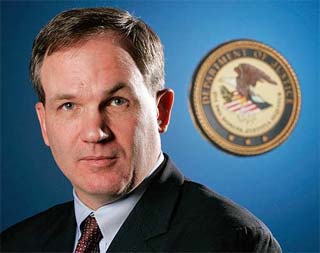
patrickfitzgerald2005Mr. Patrick Fitzgerald Will F#ck Your Sh*t Up Bro

The Chicago Tribune’s editorial page has been critical of the governor, and suspicious of his activities; if the government’s allegations turn out to be true, then they had plenty of reason to be wary. Interestingly, Blagojevich was equally suspicious of the Tribune’s editorial board, and allegedly sought to trade his influence in the auction of the Cubs and Wrigley Field in exchange for the Tribune firing its editorial board. Below is the Department of Justice’s allegations against Blagojevich that specifically involves the Tribune:

According to the affidavit, intercepted phone calls revealed that the Tribune Company, which owns the Chicago Tribune and the Chicago Cubs, has explored the possibility of obtaining assistance from the Illinois Finance Authority (IFA) relating to the Tribune Company’s efforts to sell the Cubs and the financing or sale of Wrigley Field. In a November 6 phone call, Harris explained to Blagojevich that the deal the Tribune Company was trying to get through the IFA was basically a tax mitigation scheme in which the IFA would own title to Wrigley Field and the Tribune would not have to pay capital gains tax, which Harris estimated would save the company approximately $100 million. Intercepted calls allegedly show that Blagojevich directed Harris to inform Tribune Owner and an associate, identified as Tribune Financial Advisor, that state financial assistance would be withheld unless members of the Chicago Tribune’s editorial board were fired, primarily because Blagojevich viewed them as driving discussion of his possible impeachment. In a November 4 phone call, Blagojevich allegedly told Harris that he should say to Tribune Financial Advisor, Cubs Chairman and Tribune Owner, “our recommendation is fire all those [expletive] people, get ’em the [expletive] out of there and get us some editorial support.”

On November 6, the day of a Tribune editorial critical of Blagojevich , Harris told Blagojevich that he told Tribune Financial Advisor the previous day that things “look like they could move ahead fine but, you know, there is a risk that all of this is going to get derailed by your own editorial page.” Harris also told Blagojevich that he was meeting with Tribune Financial Advisor on November 10.

In a November 11 intercepted call, Harris allegedly told Blagojevich that Tribune Financial Advisor talked to Tribune Owner and Tribune Owner “got the message and is very sensitive to the issue.” Harris told Blagojevich that according to Tribune Financial Advisor, there would be “certain corporate reorganizations and budget cuts coming and, reading between the lines, he’s going after that section.” Blagojevich allegedly responded. “Oh. That’s fantastic.” After further discussion, Blagojevich said, “Wow. Okay, keep our fingers crossed. You’re the man. Good job, John.” In a further conversation on November 21, Harris told Blagojevich that he had singled out to Tribune Financial Advisor the Tribune’s deputy editorial page editor, John McCormick, “as somebody who was the most biased and unfair.” After hearing that Tribune Financial Advisor had assured Harris that the Tribune would be making changes affecting the editorial board, Blagojevich allegedly had a series of conversations with Chicago Cubs representatives regarding efforts to provide state financing for Wrigley Field. On November 30, Blagojevich spoke with the president of a Chicago-area sports consulting firm, who indicated that he was working with the Cubs on matters involving Wrigley Field. Blagojevich and Sports Consultant discussed the importance of getting the IFA transaction approved at the agency’s December or January meeting because Blagojevich was contemplating leaving office in early January and his IFA appointees would still be in place to approve the deal, the charges allege.

The reference to “Tribune Owner” would seem to mean Sam Zell. If that’s the case, is Zell in hot water? Did he help the government? What impact if any will the Blagojevich allegations have on Tribune’s bankruptcy filing? In the end, it’s doubtful that Blagojevich’s alleged role in the Cubs auction, which may have slowed the sale, was directly material to its bankruptcy filing. The team, for instance, is not part of the filing. Nonetheless, it offers some colorful insight into the auction. – Matthew Wurtzel

See the DOJ’s_complaint_(pdf)

Matthew Wurtzel is the editor of Dealscape.