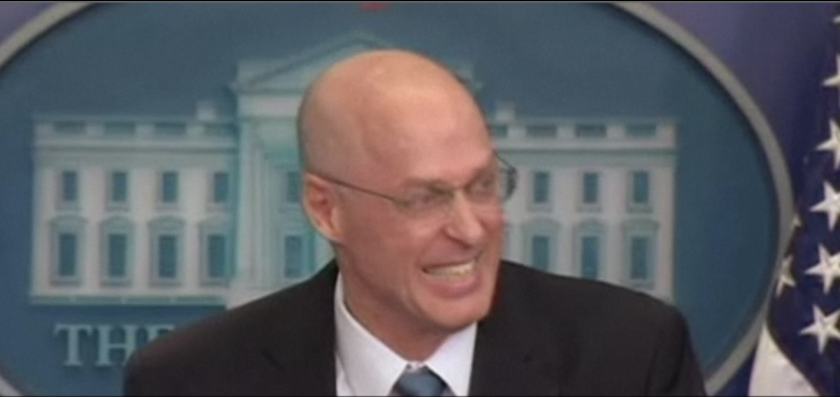
How Goldman Secretly Bet on the U.S. Housing Crash

Adjustable Rate Mortgages, Baba Booey, Bear Stearns, Citibank, Henry Paulson, TARP, Tim Geithner, Treasury, Wall Street, Washington Mutual

McClatchy Washington Bureau

tongue

Sun, Nov. 01, 2009

Greg Gordon | McClatchy Newspapers

Add to FacebookAdd to DiggAdd to Del.icio.usAdd to StumbleuponAdd to RedditAdd to BlinklistAdd to TwitterAdd to TechnoratiAdd to FurlAdd to Newsvine

November 01, 2009 01:17:44 AM

WASHINGTON — In 2006 and 2007, Goldman Sachs Group peddled more than $40 billion in securities backed by at least 200,000 risky home mortgages, but never told the buyers it was secretly betting that a sharp drop in U.S. housing prices would send the value of those securities plummeting.

Goldman’s sales and its clandestine wagers, completed at the brink of the housing market meltdown, enabled the nation’s premier investment bank to pass most of its potential losses to others before a flood of mortgage defaults staggered the U.S. and global economies.

Only later did investors discover that what Goldman had promoted as triple-A rated investments were closer to junk.

Now, pension funds, insurance companies, labor unions and foreign financial institutions that bought those dicey mortgage securities are facing large losses, and a five-month McClatchy investigation has found that Goldman’s failure to disclose that it made secret, exotic bets on an imminent housing crash may have violated securities laws.

“The Securities and Exchange Commission should be very interested in any financial company that secretly decides a financial product is a loser and then goes out and actively markets that product or very similar products to unsuspecting customers without disclosing its true opinion,” said Laurence Kotlikoff, a Boston University economics professor who’s proposed a massive overhaul of the nation’s banks. “This is fraud and should be prosecuted.”

John Coffee, a Columbia University law professor who served on an advisory committee to the New York Stock Exchange, said that investment banks have wide latitude to manage their assets, and so the legality of Goldman’s maneuvers depends on what its executives knew at the time.

“It would look much more damaging,” Coffee said, “if it appeared that the firm was dumping these investments because it saw them as toxic waste and virtually worthless.”

Dylan Ratigan Breaks Down the TARP Fiasco

AIG, Bank of america, Bear Stearns, Citibank, Corporate Communists, Credit markets, Dylan Ratigan, FDIC, Federal Reserve Board, GDP, Goldman Sachs, Henry Paulson, Lehman Brothers, Merrill Lynch, Neil Barofsky, TARP, Tim Geithner, Too Big to Fail, Toxic Assets, Treasury Department, Wall Street

Add to FacebookAdd to DiggAdd to Del.icio.usAdd to StumbleuponAdd to RedditAdd to BlinklistAdd to TwitterAdd to TechnoratiAdd to FurlAdd to Newsvine

Matt Taiibi : Naked Short-Selling Caught on Video

AIG, Bear Stearns, Citibank, Deep Capture, Goldman Sachs, Hank Paulson, Jim Cramer, Lehman Brothers, Matt Taibbi, Naked Short-Selling, Patrick Byrne, Stock Exchange, Wall Street

Matt Taibbi

True Slant

Caught On Tape: A Naked Swindle

Continuing with the theme of naked short-selling, I have a video that was given to me last week that will allow people to see how naked short-selling can take place.

This video is only 31 seconds long and what it shows is a day-trader trying to sell short shares in a major NYSE-traded stock. To disguise the identity of the trader, I’ve had to edit out the name of the company in question — I’ll call it BANK X for short. What I can say is that the stock in question is one of America’s largest financial companies and the recipient of an enormous amount of public bailout money, so the fact that its stock can be manipulated is something that should be a concern to everyone.

Matt Taibbi: "Wall Street's Naked Swindle"

AIG, Bear Stearns, Citi, Federal Reserve, George Bush, Henry Paulson, Lehman Brothers, Matt Taibbi, Merrill Lynch, Tim Geithner, Wall Street

Goldman Sachs Did An Excellent Job of Bailing Out Goldman Sachs

AIG, Bear Stearns, Ben Bernanke, Citi, Credit Default Swaps, Federal Reserve, Goldman Sachs, Henry Paulson, Short Selling, TARP, Tim Geithner, Treasury

THE NEW YORK TIMES

August 9, 2009
hp3
Paulson’s Calls to Goldman Tested Ethics
By GRETCHEN MORGENSON and DON VAN NATTA Jr.

Before he became President George W. Bush’s Treasury secretary in 2006, Henry M. Paulson Jr. agreed to hold himself to a higher ethical standard than his predecessors. He not only sold all his holdings in Goldman Sachs, the investment bank he had run, but also specifically said that he would avoid any substantive interaction with Goldman executives for his entire term unless he first obtained an ethics waiver from the government.

But today, seven months after Mr. Paulson left office, questions are still being asked about his part in decisions last fall to prop up the teetering financial system with tens of billions of taxpayer dollars, including aid that directly benefited his former firm. Testifying on Capitol Hill last month, he was grilled about his relationship with Goldman.

“Is it possible that there’s so much conflict of interest here that all you folks don’t even realize that you’re helping people that you’re associated with?” Representative Cliff Stearns, Republican of Florida, asked Mr. Paulson at the July 16 hearing.

“I operated very consistently within the ethic guidelines I had as secretary of the Treasury,” Mr. Paulson responded, adding that he asked for an ethics waiver for his interactions with his old firm “when it became clear that we had some very significant issues with Goldman Sachs.”

Mr. Paulson did not say when he received a waiver, but copies of two waivers he received — from the White House counsel’s office and the Treasury Department — show they were issued on the afternoon of Sept. 17, 2008.

That date was in the middle of the most perilous week of the financial crisis and a day after the government agreed to lend $85 billion to the American International Group, which used the money to pay off Goldman and other big banks that were financially threatened by A.I.G.’s potential collapse.

It is common, of course, for regulators to be in contact with market participants to gather valuable industry intelligence, and financial regulators had to scramble very quickly last fall to address an unprecedented crisis. In those circumstances it would have been difficult for anyone to follow routine guidelines.

While Mr. Paulson spoke to many Wall Street executives during that period, he was in very frequent contact with Lloyd C. Blankfein, Goldman’s chief executive, according to a copy of Mr. Paulson’s calendars acquired by The New York Times through a Freedom of Information Act request.

During the week of the A.I.G. bailout alone, Mr. Paulson and Mr. Blankfein spoke two dozen times, the calendars show, far more frequently than Mr. Paulson did with other Wall Street executives.

On Sept. 17, the day Mr. Paulson secured his waivers, he and Mr. Blankfein spoke five times. Two of the calls occurred before Mr. Paulson’s waivers were granted.

Michele Davis, a spokeswoman for Mr. Paulson, said that the former Treasury secretary was busy writing his memoirs and that his publisher had barred him from granting interviews until his manuscript was done. She pointed out that the ethics agreement Mr. Paulson agreed to when he joined the Treasury did not prevent him from talking to Goldman executives like Mr. Blankfein in order to keep abreast of market developments.

Ms. Davis also said that Federal Reserve officials, not Mr. Paulson, played the lead role in shaping and financing the A.I.G. bailout.

But Mr. Paulson was closely involved in decisions to rescue A.I.G., according to two senior government officials who requested anonymity because the negotiations were supposed to be confidential.

And government ethics specialists say that the timing of Mr. Paulson’s waivers, and the circumstances surrounding it, are troubling.

“I think that when you have a person in a high government position who has been with one of the major financial institutions, things like this have to happen more publicly and they have to happen more in the normal course of business rather than privately, quietly and on the fly,” said Peter Bienstock, the former executive director of the New York State Commission on Government Integrity and a partner at the law firm of Cohen Hennessey Bienstock & Rabin.

He went on: “If it can happen on a phone call and can happen without public scrutiny, it destroys the standard because then anything can happen in that fashion and any waiver can happen.”

Inevitable Questions

Concerns about potential conflicts of interest were perhaps inevitable during this financial crisis, the worst since the Great Depression. In the weeks before Mr. Paulson obtained the waivers, Treasury lawyers raised questions about whether he had conflicts of interest, a senior government official said.

Indeed, Mr. Paulson helped decide the fates of a variety of financial companies, including two longtime Goldman rivals, Bear Stearns and Lehman Brothers, before his ethics waivers were granted. Ad hoc actions taken by Mr. Paulson and officials at the Federal Reserve, like letting Lehman fail and compensating A.I.G.’s trading partners, continue to confound some market participants and members of Congress.

“I think it’s clear he had a conflict of interest,” Mr. Stearns, the congressman, said in an interview. “He was covering himself with this waiver because he knew he had a conflict of interest with his telephone calls and with his actions. Even though he had no money in Goldman, he had a vested interest in Goldman’s success, in terms of his own reputation and historical perspective.”

Adding to questions about Mr. Paulson’s role, critics say, is the fact that Goldman Sachs was among a group of banks that received substantial government assistance during the turmoil. Goldman not only received $13 billion in taxpayer money as a result of the A.I.G. bailout, but also was given permission at the height of the crisis to convert from an investment firm to a national bank, giving it easier access to federal financing in the event it came under greater financial pressure.

Goldman also won federal debt guarantees and received $10 billion under the Troubled Asset Relief Program. It benefited further when the Securities and Exchange Commission suddenly changed its rules governing stock trading, barring investors from being able to bet against Goldman’s shares by selling them short.

Now that the company’s crisis has passed, Goldman has rebounded more markedly than its rivals. It has paid back the $10 billion in government assistance, with interest, and exited the federal debt guarantee program. It recently reported second-quarter profit of $3.44 billion, putting its employees on track to earn record bonuses this year: about $700,000 each, on average.

Ms. Davis, the spokeswoman for Mr. Paulson, said Goldman never received special treatment from the Treasury. Mr. Paulson’s calendars do not disclose any details about his conversations with Mr. Blankfein, and Ms. Davis said Mr. Paulson always maintained a proper regulatory distance from his old firm.

A spokesman for Goldman, Lucas van Praag, said: “Lloyd Blankfein, like the C.E.O.’s of other major financial institutions, received calls from, and made calls to, Treasury to provide a market perspective on conditions and events as they were unfolding. Given what was happening in the world, it would have been shocking if such conversations hadn’t taken place.”

Although federal officials were concerned that Goldman Sachs might collapse that week, Mr. van Praag said the only topics of discussion between Mr. Blankfein and Mr. Paulson at the time involved Lehman Brothers’ troubled London operations and “disarray in the money markets.” Mr. van Praag said Goldman was fully insulated from financial fallout related to a possible A.I.G. collapse in mid-September of last year.

However, Mr. Paulson believed he needed to request the ethics waivers during that tumultuous week, after regulators had become concerned that the same crisis of confidence that felled Bear Stearns and Lehman might spread to the remaining investment banks, including Goldman Sachs.

At a conference call scheduled for 3 p.m. on Sept. 17, 2008, Fed officials intended to discuss the financial soundness of Goldman Sachs, Merrill Lynch and Morgan Stanley, and they had asked Mr. Paulson to participate, according to Mr. Paulson’s calendars and his spokeswoman.

That was the first time during the crisis that Mr. Paulson’s involvement required a waiver, Ms. Davis said. The waiver was requested that morning and granted orally that afternoon, just before the 3 p.m. conference call.

A few minutes later, in an e-mail message to Mr. Paulson, Bernard J. Knight Jr., assistant general counsel at the Treasury, outlined the agency’s rationale for granting the waiver.

“I have determined that the magnitude of the government’s interest in your participation in matters that might affect or involve Goldman Sachs clearly outweighs the concern that your participation may cause a reasonable person to question the integrity of the government’s programs and operations,” Mr. Knight wrote.

Goldman’s Windfall

For investors in the United States and around the world, the days after the A.I.G. rescue were perilous and uncertain; the Dow Jones industrial average fell 4 percent on Sept. 17 as credit markets froze and investors absorbed the implications of the insurance giant’s collapse. That day, Mr. Paulson and his colleagues at the Federal Reserve were scrambling to contain the damage and shore up investor confidence.

But Mr. Paulson has disavowed any involvement in the decision to use taxpayer funds to make Goldman and A.I.G.’s trading partners whole. In his July testimony to the House, he said: “I want you to know that I had no role whatsoever in any of the Fed’s decision regarding payments to any of A.I.G.’s creditors or counterparties.”

Ms. Davis reiterated this, saying that Mr. Paulson’s involvement in the A.I.G. bailout was meant to forestall a collapse of the entire financial system and not to rescue any individual firms exposed to A.I.G., like Goldman. However, she said, federal officials were worried that both Goldman and Morgan Stanley were in danger themselves of failing later in the week and it was in that context that Mr. Paulson received a waiver.

“The waiver was in anticipation of a need to rescue Goldman Sachs,” Ms. Davis said, “not to bail out A.I.G.”

Treasury Department lawyers said a waiver for Mr. Paulson regarding A.I.G. was not necessary, Ms. Davis said, because the A.I.G. rescue was conducted by the Federal Reserve. The Treasury had no power to rescue A.I.G., she said. Only the Fed could make such a loan.

But according to two senior government officials involved in the discussions about an A.I.G. bailout and several other people who attended those meetings and requested anonymity because of confidentiality agreements, the government’s decision to rescue A.I.G was made collectively by Mr. Paulson, officials from the Federal Reserve and other financial regulators in meetings at the New York Fed over the weekend of Sept. 13-14, 2008.

These people said Mr. Paulson played a major role in the A.I.G. rescue discussions over that weekend and that it was well known among the participants that a loan to A.I.G. would be used to pay Goldman and the insurer’s other trading partners.

Over that weekend, according to a former senior government official involved in the discussions, Mr. Paulson said that he had been warned by lawyers for the Treasury Department not to contact Goldman executives directly. But he said Mr. Paulson told him he had disregarded the advice because the “crisis” required action.

Ms. Davis said: “Hank doesn’t recall saying that. Staff had advised that he interact one on one with Goldman as little as possible, not because it would be a violation but for appearances, recognizing someone would likely attempt to read too much into it.”

On Sept. 16, 2008, the day that the government agreed to inject billions into A.I.G., Mr. Paulson personally called Robert B. Willumstad, A.I.G.’s chief executive, and dismissed him. Mr. Paulson’s involvement in the decision to rescue A.I.G. is also supported by an e-mail message sent by Scott G. Alvarez, general counsel at the Federal Reserve Board, to Robert Hoyt, a Treasury legal counsel, that same day.

The subject of the message, acquired under the Freedom of Information Act, is “AIG Letter,” and it contains a reference to a document called “AIG.Paulson.Letter.draft2.09.16.2008.doc.” The letter itself was not released.

Ms. Davis said this letter was intended to confirm that the Treasury and Mr. Paulson supported the loan to A.I.G. and that its officials recognized that any Fed losses would be absorbed by taxpayers. She said the existence of the letter did not confirm that Mr. Paulson was extensively involved in discussions about an A.I.G. bailout.

Since last September, the government’s commitment to A.I.G. has swelled to $173 billion. A recent report from the Government Accountability Office questioned whether taxpayers would ever be repaid the money loaned to what was once the world’s largest insurance company.

Constant Contact

In the ethics agreement that Mr. Paulson signed in 2006, he wrote: “I believe that these steps will ensure that I avoid even the appearance of a conflict of interest in the performance of my duties as Secretary of the Treasury.”

While that agreement barred him from dealing on specific matters involving Goldman, he spoke with Mr. Blankfein at other pivotal moments in the crisis before receiving waivers.

Mr. Paulson’s schedules from 2007 and 2008 show that he spoke with Mr. Blankfein, who was his successor as Goldman’s chief, 26 times before receiving a waiver.

On the morning of Sept. 16, 2008, the day the A.I.G. rescue was announced, Mr. Paulson’s calendars show that he took a call from Mr. Blankfein at 9:40 a.m. Mr. Paulson received the ethics waiver regarding contacts with Goldman between 2:30 and 3 the next afternoon. According to his calendar, he called Mr. Blankfein five times that day. The first call was placed at 9:10 a.m.; the second at 12:15 p.m.; and there were two more calls later that day. That evening, after taking a call from President Bush, Mr. Paulson called Mr. Blankfein again.

When the Treasury secretary reached his office the next day, on Sept. 18, his first call, at 6:55 a.m., went to Mr. Blankfein. That was followed by a call from Mr. Blankfein. All told, from Sept. 16 to Sept. 21, 2008, Mr. Paulson and Mr. Blankfein spoke 24 times.

At the height of the financial crisis, Mr. Paulson spoke far more often with Mr. Blankfein than any other executive, according to entries in his calendars.

The calls between Mr. Paulson and Mr. Blankfein, especially those surrounding the A.I.G. bailout, are disturbing to Samuel L. Hayes, a professor emeritus at Harvard Business School and a consultant in the past for government agencies, including the Treasury Department.

“We don’t know what they talked about,” Mr. Hayes said. “Obviously there was an enormous amount at stake for Goldman in whether or not the A.I.G. contracts would be made whole. So I think the burden is now on Mr. Paulson to demonstrate that there was no exchange of information one way or the other that influenced the ultimate decision of the government to essentially provide a blank check for A.I.G.’s contracts.”

In a letter accompanying the government’s production of Mr. Paulson’s calendar under the Freedom of Information Act request, Kevin M. Downey, a lawyer for Mr. Paulson, raised questions about how comprehensive the schedules were. He noted, for example, that the calendars did not reflect the Treasury secretary’s attendance at several public events. Mr. Downey did not return phone calls or e-mail messages seeking further comment.

Moreover, because the schedules include only phone calls made through Mr. Paulson’s office at Treasury, they provide only a partial picture of his communications. They do not reflect calls he made on his cellphone or from his home telephone.

According to the schedules, Mr. Paulson’s contacts with Mr. Blankfein began even before the height of the crisis last fall. During August 2007, for example, when the market for asset-backed commercial paper was seizing up, Mr. Paulson spoke with Mr. Blankfein 13 times. Mr. Paulson placed 12 of those calls.

By contrast, Mr. Paulson spoke six times that August with Richard S. Fuld Jr. of Lehman, four times with Jamie Dimon of JPMorgan Chase and only twice with John Thain of Merrill Lynch.
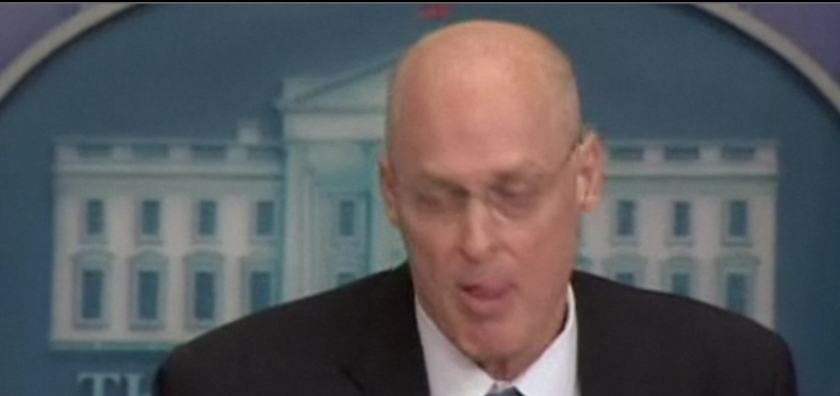
Big Banks Get Big Time Changes

AIG, Banking, Barack Obama, Bear Stearns, Citibank, Federal Reserve, Goldman Sachs, Larry Summers, Merrill Lynch, Tim Geithner, Treasury, Wall Street, Washington Mutual

Jun 17, 7:13 PM (ET)

hp3By JIM KUHNHENN and MARTIN CRUTSINGER

ASSOCIATED PRESS

WASHINGTON (AP) – From simple home loans to Wall Street’s most exotic schemes, the government would impose and enforce sweeping new “rules of the road” for the nation’s battered financial system under an overhaul proposed Wednesday by President Barack Obama.

Aimed at preventing a repeat of the worst economic crisis in seven decades, the changes would begin to reverse a determined campaign pressed in the 1980s by President Ronald Reagan to cut back on federal regulations.

Obama’s plan would do little to streamline the alphabet soup of agencies that oversee the financial sector. But it calls for fundamental shifts in authority that would eliminate one regulatory agency, create another and both enhance and undercut the authority of the powerful Federal Reserve.

The new agency, a consumer protection office, would specifically take over oversight of mortgages, requiring that lenders give customers the option of “plain vanilla” plans with straightforward and affordable terms. Lenders who repackage loans and sell them to investors as securities would be required to retain 5 percent of the credit risk – a figure some analysts believe is too low.

In all, the Obama’s broad proposal cheered consumer advocates and dismayed the banking industry with its proposed creation of a regulator to protect consumers in all their banking transactions, from mortgages to credit cards. Large insurers protested the administration’s decision not to impose a standard, federal regulation on the insurance industry, leaving it to the separate states as at present. Mutual funds succeeded in staying under the jurisdiction of the Securities and Exchange Commission instead of the new consumer protection agency.

Obama cast his proposals as an attempt to find a middle ground between the benefits and excesses of capitalism.

“We are called upon to put in place those reforms that allow our best qualities to flourish – while keeping those worst traits in check,” Obama said.

The president’s plan lands in the lap of a Congress already preoccupied by historic health care legislation, consideration of a new Supreme Court justice and other major issues. Still, Obama has set an ambitious schedule, pushing lawmakers to adopt a new regulatory regime by year’s end.

“We’ll have it done this year,” pledged Sen. Chris Dodd, D-Conn., chairman of the Senate Banking Committee.

“Absolutely,” agreed Rep. Barney Frank, D-Mass., chairman of the House Financial Services Committee.

But fissures quickly developed.

Dodd, who had been at Obama’s side in the East Room of the White House for the announcement, raised questions about one of the plan’s key features – giving the Federal Reserve authority to oversee the largest and most interconnected players in the financial world.

“There’s not a lot of confidence in the Fed at this point,” Dodd said.

Obama’s proposal would require the Federal Reserve, which now can independently use emergency powers to bail out failing banks, to first obtain Treasury Department approval before extending credit to institutions in “unusual and exigent circumstances,” a change designed to mollify critics who say the Fed should be more accountable in exercising its powers as a lender of last resort.

But the proposal also would do away with a restriction imposed on the Fed in 1999 when Congress lifted Depression-era restrictions that allowed banks to get into securities and insurance businesses. The Fed, as the regulator for the larger financial holding companies, had been prohibited from examining or imposing restrictions on those firms’ subsidiaries. Obama’s proposal specifically lifts that restriction, giving the Fed the ability to duplicate and even overrule other regulators. At the same time, the new consumer agency would take away some of the Fed’s authority.

Fed defenders argue that none of the major institutional collapses – AIG, Bear Stearns, Lehman Bros., Merrill Lynch or Countrywide – were supervised by the Federal Reserve. Critics argue the Fed failed to crack down on dubious mortgage practices that were at the heart of the crisis.

Administration officials concede their plan responds to the current crisis- in national security terms, it prepares them to fight the last war. But they also insist that a central tenet of their plan is a requirement that from now on financial institutions will have to keep more money in reserve – the best hedge against another meltdown.

That may appear to be a no-brainer: If banks and other large institutions have more money, they won’t be vulnerable if their risky bets go bad.

However, banking regulators have been arguing for years over implementation of an international standard for bank capital. Geithner said Wednesday hoped to move on enhanced capital standards “in parallel with the rest of the world.”

Obama’s overall plan, laid out in an 88-page white paper, was the result of extensive consultations with members of Congress, regulators and industry groups and represented a compromise from bolder ideas the administration ended up abandoning because of heavy opposition.

The plan had its share of winners and losers, both inside and outside government.

Sheila Bair, the chair of the Federal Deposit Insurance Corp., lost her campaign to have a regulatory council, not the Fed, regulate large firms whose failure could undermine the entire system. SEC Chairman Mary Schapiro also had expressed support for Bair’s push for a more powerful risk council.

The regulatory overhaul ended up eliminating only one agency, the Office of Thrift Supervision, generally considered a weak link among current banking regulators. The OTS oversaw the American International Group, whose business insuring exotic securities blew up last fall, prompting a $182 billion federal bailout.

The failure to merge all four current banking agencies into one super regulator could open the door for big banks to continue to exploit weak links in the current system. Sen. Charles Schumer of New York, a leading Democratic voice on Wall Street issues, praised the administration’s plan but said he would consider further consolidation.

“We’re removing one major agency-shopping opportunity, but there’s a real potential for others,” said Patricia McCoy, a law professor at the University of Connecticut who has studied bank failures.

Associated Press writers Marcy Gordon, Anne Flaherty, Jeannine Aversa and Stevenson Jacobs contributed to this report.

Greenwald: The Individuals Obama Chose to be His Top Economic Officials Embody Exactly the Corruption He Repeatedly Vowed to End

AIG, Alan Greenspan, Bear Stearns, Citibank, Goldman Sachs, Henry Paulson, Larry Summers, Robert Rubin, Tim Geithner

Larry Summers, Tim Geithner and Wall Street’s ownership of government

Glenn Greenwald- SALON

Apr. 04, 2009 |

White House officials yesterday released their personal financial disclosure forms, and included in the millions of dollars which top Obama economics adviser Larry Summers made from Wall Street in 2008 is this detail:bailout

Lawrence H. Summers, one of President Obama’s top economic advisers, collected roughly $5.2 million in compensation from hedge fund D.E. Shaw over the past year and was paid more than $2.7 million in speaking fees by several troubled Wall Street firms and other organizations. . . .

Financial institutions including JP Morgan Chase, Citigroup, Goldman Sachs, Lehman Brothers and Merrill Lynch paid Summers for speaking appearances in 2008. Fees ranged from $45,000 for a Nov. 12 Merrill Lynch appearance to $135,000 for an April 16 visit to Goldman Sachs, according to his disclosure form.

That’s $135,000 paid by Goldman Sachs to Summers — for a one-day visit.  And the payment was made at a time — in April, 2008 — when everyone assumed that the next President would either be Barack Obama or Hillary Clinton and that Larry Summers would therefore become exactly what he now is:  the most influential financial official in the U.S. Government (and the $45,000 Merrill Lynch payment came 8 days after Obama’s election). Goldman would not be able to make a one-day $135,000 payment to Summers now that he is Obama’s top economics adviser, but doing so a few months beforehand was obviously something about which neither parties felt any compunction.  It’s basically an advanced bribe.  And it’s paying off in spades.  And none of it seemed to bother Obama in the slightest when he first strongly considered naming Summers as Treasury Secretary and then named him his top economics adviser instead (thereby avoiding the need for Senate confirmation), knowing that Summers would exert great influence in determining who benefited from the government’s response to the financial crisis.

Last night, former Reagan-era S&L regulator and current University of Missouri Professor Bill Black was on Bill Moyers’ Journal and detailed the magnitude of what he called the on-going massive fraud, the role Tim Geithner played in it before being promoted to Treasury Secretary (where he continues to abet it), and — most amazingly of all — the crusade led by Alan Greenspan, former Goldman CEO Robert Rubin (Geithner’s mentor) and Larry Summers in the late 1990s to block the efforts of top regulators (especially Brooksley Born, head of the Commodities Futures Trading Commission) to regulate the exact financial derivatives market that became the principal cause of the global financial crisis.  To get a sense for how deep and massive is the on-going fraud and the key role played in it by key Obama officials, I highly recommend watching that Black interview (it can be seen here and the transcript is here).

This article from Stanford Magazine — an absolutely amazing read — details how Summers, Rubin and Greenspan led the way in blocking any regulatory efforts of the derivatives market whatsoever on the ground that the financial industry and its lobbyists were objecting:

As chairperson of the CFTC, Born advocated reining in the huge and growing market for financial derivatives. . . . One type of derivative—known as a credit-default swap—has been a key contributor to the economy’s recent unraveling. . .

Back in the 1990s, however, Born’s proposal stirred an almost visceral response from other regulators in the Clinton administration, as well as members of Congress and lobbyists. . . . But even the modest proposal got a vituperative response. The dozen or so large banks that wrote most of the OTC derivative contracts saw the move as a threat to a major profit center. Greenspan and his deregulation-minded brain trust saw no need to upset the status quo. The sheer act of contemplating regulation, they maintained, would cause widespread chaos in markets around the world.

Born recalls taking a phone call from Lawrence Summers, then Rubin’s top deputy at the Treasury Department, complaining about the proposal, and mentioning that he was taking heat from industry lobbyists. . . . The debate came to a head April 21, 1998. In a Treasury Department meeting of a presidential working group that included Born and the other top regulators, Greenspan and Rubin took turns attempting to change her mind. Rubin took the lead, she recalls.

“I was told by the secretary of the treasury that the CFTC had no jurisdiction, and for that reason and that reason alone, we should not go forward,” Born says. . . . “It seemed totally inexplicable to me,” Born says of the seeming disinterest her counterparts showed in how the markets were operating. “It was as though the other financial regulators were saying, ‘We don’t want to know.’”

She formally launched the proposal on May 7, and within hours, Greenspan, Rubin and Levitt issued a joint statement condemning Born and the CFTC, expressing “grave concern about this action and its possible consequences.” They announced a plan to ask for legislation to stop the CFTC in its tracks.

Rubin, Summers and Greenspan succeeded in inducing Congress — funded, of course, by these same financial firms — to enact legislation blocking the CFTC from regulating these derivative markets.  More amazingly still, the CFTC, headed back then by Born, is now headed by Obama appointee Gary Gensler, a former Goldman Sachs executive (naturally) who was as instrumental as anyone in blocking any regulations of those derivative markets (and then enriched himself by feeding on those unregulated markets).

Just think about how this works.  People like Rubin, Summers and Gensler shuffle back and forth from the public to the private sector and back again, repeatedly switching places with their GOP counterparts in this endless public/private sector looting.  When in government, they ensure that the laws and regulations are written to redound directly to the benefit of a handful of Wall St. firms, literally abolishing all safeguards and allowing them to pillage and steal.  Then, when out of government, they return to those very firms and collect millions upon millions of dollars, profits made possible by the laws and regulations they implemented when in government.  Then, when their party returns to power, they return back to government, where they continue to use their influence to ensure that the oligarchical circle that rewards them so massively is protected and advanced.  This corruption is so tawdry and transparent — and it has fueled and continues to fuel a fraud so enormous and destructive as to be unprecedented in both size and audacity — that it is mystifying that it is not provoking more mass public rage.

All of that leads to things like this, from today’s Washington Post:

The Obama administration is engineering its new bailout initiatives in a way that it believes will allow firms benefiting from the programs to avoid restrictions imposed by Congress, including limits on lavish executive pay, according to government officials. . . .

The administration believes it can sidestep the rules because, in many cases, it has decided not to provide federal aid directly to financial companies, the sources said. Instead, the government has set up special entities that act as middlemen, channeling the bailout funds to the firms and, via this two-step process, stripping away the requirement that the restrictions be imposed, according to officials. . . .

In one program, designed to restart small-business lending, President Obama’s officials are planning to set up a middleman called a special-purpose vehicle — a term made notorious during the Enron scandal — or another type of entity to evade the congressional mandates, sources familiar with the matter said.

If that isn’t illegal, it is as close to it as one can get.  And it is a blatant attempt by the White House to brush aside — circumvent and violate — the spirit if not the letter of Congressional restrictions on executive pay for TARP-receiving firms.  It was Obama, in the wake of various scandals over profligate spending by TARP firms, who pretended to ride the wave of populist anger and to lead the way in demanding limits on compensation.  And ever since his flamboyant announcement, Obama — adopting the same approach that seems to drive him in most other areas — has taken one step after the next to gut and render irrelevant the very compensation limits he publicly pretended to champion (thereafter dishonestly blaming Chris Dodd for doing so and virtually destroying Dodd’s political career).   And the winners — as always — are the same Wall St. firms that caused the crisis in the first place while enriching and otherwise co-opting the very individuals Obama chose to be his top financial officials.

Worse still, what is happening here is an exact analog to what is happening in the realm of Bush war crimes — the Obama administration’s first priority is to protect the wrongdoers and criminals by ensuring that the criminality remains secret.  Here is how Black explained it last night:

Black:  Geithner is charging, is covering up. Just like Paulson did before him. Geithner is publicly saying that it’s going to take $2 trillion — a trillion is a thousand billion — $2 trillion taxpayer dollars to deal with this problem. But they’re allowing all the banks to report that they’re not only solvent, but fully capitalized. Both statements can’t be true. It can’t be that they need $2 trillion, because they have masses losses, and that they’re fine.

These are all people who have failed. Paulson failed, Geithner failed. They were all promoted because they failed, not because…

Moyers:  What do you mean?

Black: Well, Geithner has, was one of our nation’s top regulators, during the entire subprime scandal, that I just described. He took absolutely no effective action. He gave no warning. He did nothing in response to the FBI warning that there was an epidemic of fraud. All this pig in the poke stuff happened under him. So, in his phrase about legacy assets. Well he’s a failed legacy regulator. . . .

The Great Depression, we said, “Hey, we have to learn the facts. What caused this disaster, so that we can take steps, like pass the Glass-Steagall law, that will prevent future disasters?” Where’s our investigation?

What would happen if after a plane crashes, we said, “Oh, we don’t want to look in the past. We want to be forward looking. Many people might have been, you know, we don’t want to pass blame. No. We have a nonpartisan, skilled inquiry. We spend lots of money on, get really bright people. And we find out, to the best of our ability, what caused every single major plane crash in America. And because of that, aviation has an extraordinarily good safety record. We ought to follow the same policies in the financial sphere. We have to find out what caused the disasters, or we will keep reliving them. . . .

Moyers: Yeah. Are you saying that Timothy Geithner, the Secretary of the Treasury, and others in the administration, with the banks, are engaged in a cover up to keep us from knowing what went wrong?

Black: Absolutely.

Moyers: You are.

Black: Absolutely, because they are scared to death. . . . What we’re doing with — no, Treasury and both administrations. The Bush administration and now the Obama administration kept secret from us what was being done with AIG. AIG was being used secretly to bail out favored banks like UBS and like Goldman Sachs. Secretary Paulson’s firm, that he had come from being CEO. It got the largest amount of money. $12.9 billion. And they didn’t want us to know that. And it was only Congressional pressure, and not Congressional pressure, by the way, on Geithner, but Congressional pressure on AIG.

Where Congress said, “We will not give you a single penny more unless we know who received the money.” And, you know, when he was Treasury Secretary, Paulson created a recommendation group to tell Treasury what they ought to do with AIG. And he put Goldman Sachs on it.

Moyers: Even though Goldman Sachs had a big vested stake.

Black: Massive stake. And even though he had just been CEO of Goldman Sachs before becoming Treasury Secretary. Now, in most stages in American history, that would be a scandal of such proportions that he wouldn’t be allowed in civilized society.

This is exactly what former IMF Chief Economist Simon Johnson warned about in his vital Atlantic article:  “that the finance industry has effectively captured our government — a state of affairs that more typically describes emerging markets, and is at the center of many emerging-market crises.”   This is the key passage where Johnson described the hallmark of how corrupt oligarchies that cause financial crises then attempt to deal with the fallout:

Squeezing the oligarchs, though, is seldom the strategy of choice among emerging-market governments. Quite the contrary: at the outset of the crisis, the oligarchs are usually among the first to get extra help from the government, such as preferential access to foreign currency, or maybe a nice tax break, or—here’s a classic Kremlin bailout technique — the assumption of private debt obligations by the government. Under duress, generosity toward old friends takes many innovative forms. Meanwhile, needing to squeeze someone, most emerging-market governments look first to ordinary working folk—at least until the riots grow too large. . . .

As much as he campaigned against anything, Obama railed against precisely this sort of incestuous, profoundly corrupt control by narrow private interests of the Government, yet he has chosen to empower the very individuals who most embody that corruption.  And the results are exactly what one would expect them to be.

* * * * *

I was on the Moyers program last night after the Black interview — along with Amy Goodman — discussing the media’s role in this establishment corruption (that segment can be viewed here), and yesterday morning I was on C-SPAN’s Washington Journal with the primary topic being this blatant, sleazy oligarchical control of both the Executive and legislative branches (which can be seen here).

UPDATE:  Just to get a sense for how propagandistic, sycophantic and fact-free are the most extreme Obama worshippers in our “journalist” class, consider this recent article from The New Republic‘s Noam Scheiber in which he urged the White House to “free its economic oracle” — Summers — and defended and praised Summers on the ground that “his exposure to Wall Street over the years has been limited.”  As Jonathan Schwarz asks, citing the massive compensation on which Summers engorged himself by feeding at the Wall Street trough last year:  “I wonder what would have constituted ‘significant’ exposure to Wall Street? Maybe if he’d worked for D.E. Shaw full time? (Amazingly, Summers was paid $5.2 million for a part-time position.)”

— Glenn Greenwald

Former AIG Head Hank Greenberg on CNBC With Maria Bartiromo

AIG, Bear Stearns, Ben Bernanke, Citibank, CNBC, Cramer+Stewart, Credit Default Swaps, Deep Capture, Derivatives, Dick Fuld, Gradient Analytics, Hedge Funds, Henry Paulson, Jim Cramer, Jon Stewart, Lehman Brothers, Maria Bartiromo, Mortgage Crisis, Overstock, Patrick Byrne

Former AIG Head Hank Greenberg on CNBC With Maria Bartiromo

Vodpod videos no longer available.

Rick Santelli Subtly Schooled By Dylan Ratigan

AIG, Bear Stearns, Ben Bernanke, Citibank, CNBC, Cramer+Stewart, Credit Default Swaps, Deep Capture, Derivatives, Dick Fuld, Gradient Analytics, Hedge Funds, Henry Paulson, Jim Cramer, Jon Stewart, Lehman Brothers, Maria Bartiromo, Mortgage Crisis, Overstock, Patrick Byrne

Rick Santelli Subtly Schooled By Dylan Ratigan

Vodpod videos no longer available.

The Madness of Jim Cramer – Day After Pathetic Evisceration by "Comedian"

AIG, Bear Stearns, Ben Bernanke, Citibank, CNBC, Cramer+Stewart, Credit Default Swaps, Deep Capture, Derivatives, Dick Fuld, Gradient Analytics, Hedge Funds, Henry Paulson, Jim Cramer, Jon Stewart, Lehman Brothers, Maria Bartiromo, Mortgage Crisis, Overstock, Patrick Byrne

The Madness of Jim Cramer – Day After Pathetic Evisceration by “Comedian”

Vodpod videos no longer available.