Big U.S. Banks Will Soon Disappear

AMERICAN EXPRESS, American International Group, Bank of america, Banks, Citigroup, Economy, FIFTH THIRD BANCORP, Goldman Sachs, JPMORGAN CHASE, METLIFE, Morgan Stanley, STRESS TESTS, US BANCORP, WELLS FARGO

Big US Banks May Be Headed For Extinction—And Soon

CNBC

81delta88

Posted By: Albert Bozzo | Senior Features Editor
CNBC.com
| 08 May 2009 | 02:30 PM ET

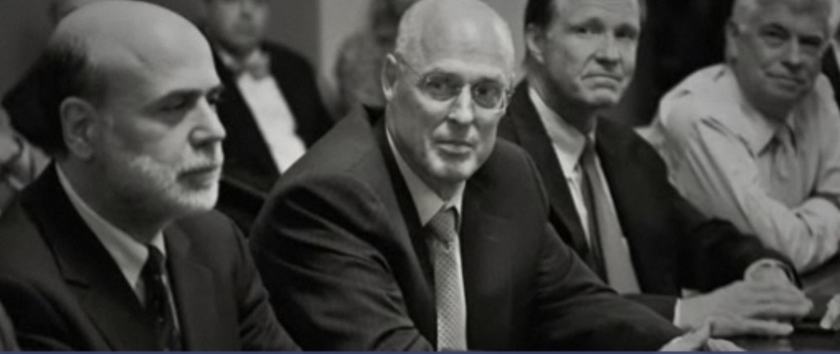
In the world of banking, too-big-to-fail may be in the process of morphing into too-big-to-exist.

After hundreds of billions in federal aid and even more in lost investment capital, both the government and investors may be ready for a big sea change.

The only question, for some, is how quickly it will happen.

“In the next few months, we’ll see the tacitly nationalized banks—Bank of America, Citigroup —sold off rapidly into pieces, turned into much smaller banks,” Sanders Morris Harris Group Chairman George Ball predicted on CNBC Thursday, adding the government wants to send a strong message, to “punish too-big-to-fail banks that have blotted their copy and not exonerate their management.”

“Five years from now, these banks will be broken up,” is how FBR Capital Markets bank analyst Paul J Miller sees it.

From Washington to Wall Street to Main Street, a dramatic change in conventional thinking appears to underway.

“Some institutions are too big to exist, because they are too interconnected,” Sen. Richard Shelby (R-Ala.) told CNBC earlier this week. “The regulators can’t regulate them.”

That conclusion became painfully obvious in the two faces of the financial crisis.

On one side, the federal government had to provide billions in aid —and on more than one occasion—to the likes of to Bank of America , Citigroup and the giant insurer AIG , which has its own lending unit, to prop them up.

On the other side, the failure of Lehman Brothers—which might have been averted with federal intervention—reverberated throughout the global economy.

Months later, the Obama administration and Congress now appear keenly focused on the dilemma and are expected to create legislation that will empower regulators to intervene in the affairs of big financial institutions and essentially wind down their operations in an orderly fashion with limited collateral damage to the economy. Such authority would also apply to investment banks tirned bank holding companies, such as Goldman Sachs .

“They need it and they’ll get it,” said Robert Glauber, who was a top Treasury official during the government rescue of the savings and loan industry two decades ago.

Regulatory reform is also likely to include new antitrust authority to block mega-mergers creating financial firms whose problems could adversely affect the overall system. Analysts say, if that’s the case, the government won’t want the too-big-to-fail companies of the past essentially hanging around.

Exactly how the government does that is unclear, but experts say there are ways without resorting to a heavy-handed approach such as nationalization.

“If once there is some kind of coherent policy toward systemic risk, whomever is managing that policy can start to make life difficult for an entity that is too big to fail,” says former S&L regulator and White House economist Lawrence White, at NYU’s Stern School of Business. “It wouldn’t upset if they were providing subtle nudges.

“The Fed doesn’t want them that big and might make them hold more capital,” suggests Miller.

Some speculate that any further government aid to certain firms might come with such strings attached.

Others say a fresh look at regulation will help the process and unveil the complex, diverse and, at times, incompatible operations of the bank holding companies and their commercial bank subsidiaries.

“They can’t assess the risks of the big banks,” says Frank Sorrentino, Chairman and CEO of North Jersey Community Bank, which recently acquired a failing bank in a transaction assisted by federal regulators at the FDIC.

Risk, or a disregard of risk, may also have factored into the decision-making of big bank executives, who assumed the too-big-to-fail doctrine would catch them if they fell, which the bailouts obviously did.

Small banks clearly have a financial interest in seeing the end of the big bank era, but that alone doesn’t undercut their arguments. In some cases it may be good for business, consumers and the overall marketplace.

“It’s an appealing idea to our clients because it will make them more competitive,” says Robert C. Schwartz, a partner at Smith, Gambrell & Russell, which represents big and small banks in the Southeast. “Changes may leave gaps for the regional banks and the community banks.”

“If the government does the right thing, it will be the private sector that forces these companies to do what they need to do for the benefit of their shareholders,” says Sorrentino, whose bank has $400 million in assets. (By contrasts, the 19 firms involved in the government’s recently completed stress tests have assets of $100-billion or more.)

Investors have clearly been focused on shrinking earnings and stock prices and what some consider diminished prospects for the future, even with a positive resolution to the financial crisis.

“I also think investors are going to realize that they’ll be low-single digit growth rates,” says Miller

Some analysts say recent events highlight a fundamental problem that has been somewhat ignored for years; the financial supermarket structure of the big institutions makes them difficult, if not, impossible to operate with great success.

“Investors will say,That business unit hidden in there; let’s spin that off,” says Sorrentino. “Either the regulators are going to force it or the shareholders are going force it.”

U.S. Lawmakers Smell Something Fishy in Bank of America / Merrill Deal

bailout, Banking Crisis, BankOf America, Ben Bernanke, Goldman Sachs, Henry Paulson, Merrill Lynch, TARP, Tim Geithner

bo21U.S. lawmakers seek BofA-Merrill probe

R E U T E R S

Fri Apr 24, 2009
By Kim Dixon and Rachelle Younglai

WASHINGTON (Reuters) – Momentum is building among U.S. lawmakers to investigate Bank of America’s (BAC.N: Quote, Profile, Research, Stock Buzz) purchase of Merrill Lynch, amid allegations that federal officials gave the bank’s chief executive an ultimatum to complete the deal with the troubled investment house.

A senior Republican Senator joined House Democrats on Friday in seeking more details after New York’s attorney general said CEO Kenneth Lewis had testified he was pressured by former Treasury Secretary Henry Paulson and Fed Chairman Ben Bernanke to do the merger, or lose his job.

“That was very disturbing,” Senator Richard Shelby, the ranking Republican on the Banking Committee, told the Reuters Global Financial Regulation Summit in Washington on Friday.

“I don’t know if there is securities fraud in there or what,” said Shelby, from Alabama.

Meanwhile, lawmakers in the House of Representatives expanded their probe by demanding all internal communications from the Federal Reserve and the U.S. Treasury Department touching on the deal.

New York Attorney General Andrew Cuomo said on Thursday that Lewis testified that Paulson and Bernanke also pressured him to keep quiet about losses at the troubled Merrill Lynch, which rose to $12 billion from $9 billion in a matter of days.

This account has been disputed by representatives for Bernanke and Paulson but raises questions about whether federal officials encouraged Lewis to keep important information from investors.

Bank of America ultimately got additional federal bailout money to absorb Merrill.

Shelby said he wants the Senate Banking Committee to hold a hearing on the merger.

A spokeswoman for Senate Banking Committee Chairman Christopher Dodd said he was deeply concerned about the allegations and had talked on Friday with Cuomo. “He will decide on next steps soon,” she said.

Representative Ed Towns, chairman of the House Oversight and Government Reform Committee, and domestic policy subcommittee chairman Dennis Kucinich, sent letters dated April 23 to the Fed and Treasury demanding the internal documents, with a request for responses by May 4.

“The implications of Mr. Lewis’ testimony, if accurate, are extremely serious,” said Towns and Kucinich.

The Securities and Exchange Commission has already said it is reviewing the disclosures surrounding the merger.

Publicly-traded companies are supposed to widely publicize so-called material information — information an investor needs to decide whether to buy or sell a stock.

“Bank of America and Ken Lewis are, in my mind, in deep trouble,” said James Cox, a securities professor at Duke Law School. “Both under state law and federal law disclosure standards there was clear duty to correct earlier statements regarding the viability and wisdom of the acquisition of Merrill Lynch.”

The potential liability of Paulson and Bernanke is a more murky area, according to former SEC chairman Harvey Pitt, who served under former President George W. Bush.

Securities law absolves government officials from liability in acts performed as part of official duties, he said.

“If Paulson and Bernanke coerced B of A to violate the securities laws out of concern for the economy, they can’t be liable and I think it would be hard to hold B of A liable,” Pitt said in an email.

“Nevertheless, you can’t violate the duties you owe shareholders merely because someone in the government asks you to do so,” said Pitt.

(For summit blog: blogs.reuters.com/summits/)

(Reporting by Kim Dixon and Rachelle Younglai; Editing by Tim Dobbyn)

Bill Black With Bill Moyers

Banking Crisis, Bill Black, FDIC, Goldman Sachs, SEC, Tim Geithner, Wall Street

Part Two

Part Three

[http://www.youtube.com/watch?v=jJ38T-VgmSY]

The Quiet Coup :: Simon Johnson

AIG, Banking Crisis, CDS, Goldman Sachs, Hank Paulson, SEC, Simon Johnsin

The Quiet Coup

bo2

The crash has laid bare many unpleasant truths about the United States. One of the most alarming, says a former chief economist of the International Monetary Fund, is that the finance industry has effectively captured our government—a state of affairs that more typically describes emerging markets, and is at the center of many emerging-market crises. If the IMF’s staff could speak freely about the U.S., it would tell us what it tells all countries in this situation: recovery will fail unless we break the financial oligarchy that is blocking essential reform. And if we are to prevent a true depression, we’re running out of time.

SIMON JOHNSON

ATLANTIC MAGAZINE

One thing you learn rather quickly when working at the International Monetary Fund is that no one is ever very happy to see you. Typically, your “clients” come in only after private capital has abandoned them, after regional trading-bloc partners have been unable to throw a strong enough lifeline, after last-ditch attempts to borrow from powerful friends like China or the European Union have fallen through. You’re never at the top of anyone’s dance card.

The reason, of course, is that the IMF specializes in telling its clients what they don’t want to hear. I should know; I pressed painful changes on many foreign officials during my time there as chief economist in 2007 and 2008. And I felt the effects of IMF pressure, at least indirectly, when I worked with governments in Eastern Europe as they struggled after 1989, and with the private sector in Asia and Latin America during the crises of the late 1990s and early 2000s. Over that time, from every vantage point, I saw firsthand the steady flow of officials—from Ukraine, Russia, Thailand, Indonesia, South Korea, and elsewhere—trudging to the fund when circumstances were dire and all else had failed.

Every crisis is different, of course. Ukraine faced hyperinflation in 1994; Russia desperately needed help when its short-term-debt rollover scheme exploded in the summer of 1998; the Indonesian rupiah plunged in 1997, nearly leveling the corporate economy; that same year, South Korea’s 30-year economic miracle ground to a halt when foreign banks suddenly refused to extend new credit.

But I must tell you, to IMF officials, all of these crises looked depressingly similar. Each country, of course, needed a loan, but more than that, each needed to make big changes so that the loan could really work. Almost always, countries in crisis need to learn to live within their means after a period of excess—exports must be increased, and imports cut—and the goal is to do this without the most horrible of recessions. Naturally, the fund’s economists spend time figuring out the policies—budget, money supply, and the like—that make sense in this context. Yet the economic solution is seldom very hard to work out.

No, the real concern of the fund’s senior staff, and the biggest obstacle to recovery, is almost invariably the politics of countries in crisis.

Typically, these countries are in a desperate economic situation for one simple reason—the powerful elites within them overreached in good times and took too many risks. Emerging-market governments and their private-sector allies commonly form a tight-knit—and, most of the time, genteel—oligarchy, running the country rather like a profit-seeking company in which they are the controlling shareholders. When a country like Indonesia or South Korea or Russia grows, so do the ambitions of its captains of industry. As masters of their mini-universe, these people make some investments that clearly benefit the broader economy, but they also start making bigger and riskier bets. They reckon—correctly, in most cases—that their political connections will allow them to push onto the government any substantial problems that arise.

In Russia, for instance, the private sector is now in serious trouble because, over the past five years or so, it borrowed at least $490 billion from global banks and investors on the assumption that the country’s energy sector could support a permanent increase in consumption throughout the economy. As Russia’s oligarchs spent this capital, acquiring other companies and embarking on ambitious investment plans that generated jobs, their importance to the political elite increased. Growing political support meant better access to lucrative contracts, tax breaks, and subsidies. And foreign investors could not have been more pleased; all other things being equal, they prefer to lend money to people who have the implicit backing of their national governments, even if that backing gives off the faint whiff of corruption.

Greenwald: The Individuals Obama Chose to be His Top Economic Officials Embody Exactly the Corruption He Repeatedly Vowed to End

AIG, Alan Greenspan, Bear Stearns, Citibank, Goldman Sachs, Henry Paulson, Larry Summers, Robert Rubin, Tim Geithner

Larry Summers, Tim Geithner and Wall Street’s ownership of government

Glenn Greenwald- SALON

Apr. 04, 2009 |

White House officials yesterday released their personal financial disclosure forms, and included in the millions of dollars which top Obama economics adviser Larry Summers made from Wall Street in 2008 is this detail:bailout

Lawrence H. Summers, one of President Obama’s top economic advisers, collected roughly $5.2 million in compensation from hedge fund D.E. Shaw over the past year and was paid more than $2.7 million in speaking fees by several troubled Wall Street firms and other organizations. . . .

Financial institutions including JP Morgan Chase, Citigroup, Goldman Sachs, Lehman Brothers and Merrill Lynch paid Summers for speaking appearances in 2008. Fees ranged from $45,000 for a Nov. 12 Merrill Lynch appearance to $135,000 for an April 16 visit to Goldman Sachs, according to his disclosure form.

That’s $135,000 paid by Goldman Sachs to Summers — for a one-day visit.  And the payment was made at a time — in April, 2008 — when everyone assumed that the next President would either be Barack Obama or Hillary Clinton and that Larry Summers would therefore become exactly what he now is:  the most influential financial official in the U.S. Government (and the $45,000 Merrill Lynch payment came 8 days after Obama’s election). Goldman would not be able to make a one-day $135,000 payment to Summers now that he is Obama’s top economics adviser, but doing so a few months beforehand was obviously something about which neither parties felt any compunction.  It’s basically an advanced bribe.  And it’s paying off in spades.  And none of it seemed to bother Obama in the slightest when he first strongly considered naming Summers as Treasury Secretary and then named him his top economics adviser instead (thereby avoiding the need for Senate confirmation), knowing that Summers would exert great influence in determining who benefited from the government’s response to the financial crisis.

Last night, former Reagan-era S&L regulator and current University of Missouri Professor Bill Black was on Bill Moyers’ Journal and detailed the magnitude of what he called the on-going massive fraud, the role Tim Geithner played in it before being promoted to Treasury Secretary (where he continues to abet it), and — most amazingly of all — the crusade led by Alan Greenspan, former Goldman CEO Robert Rubin (Geithner’s mentor) and Larry Summers in the late 1990s to block the efforts of top regulators (especially Brooksley Born, head of the Commodities Futures Trading Commission) to regulate the exact financial derivatives market that became the principal cause of the global financial crisis.  To get a sense for how deep and massive is the on-going fraud and the key role played in it by key Obama officials, I highly recommend watching that Black interview (it can be seen here and the transcript is here).

This article from Stanford Magazine — an absolutely amazing read — details how Summers, Rubin and Greenspan led the way in blocking any regulatory efforts of the derivatives market whatsoever on the ground that the financial industry and its lobbyists were objecting:

As chairperson of the CFTC, Born advocated reining in the huge and growing market for financial derivatives. . . . One type of derivative—known as a credit-default swap—has been a key contributor to the economy’s recent unraveling. . .

Back in the 1990s, however, Born’s proposal stirred an almost visceral response from other regulators in the Clinton administration, as well as members of Congress and lobbyists. . . . But even the modest proposal got a vituperative response. The dozen or so large banks that wrote most of the OTC derivative contracts saw the move as a threat to a major profit center. Greenspan and his deregulation-minded brain trust saw no need to upset the status quo. The sheer act of contemplating regulation, they maintained, would cause widespread chaos in markets around the world.

Born recalls taking a phone call from Lawrence Summers, then Rubin’s top deputy at the Treasury Department, complaining about the proposal, and mentioning that he was taking heat from industry lobbyists. . . . The debate came to a head April 21, 1998. In a Treasury Department meeting of a presidential working group that included Born and the other top regulators, Greenspan and Rubin took turns attempting to change her mind. Rubin took the lead, she recalls.

“I was told by the secretary of the treasury that the CFTC had no jurisdiction, and for that reason and that reason alone, we should not go forward,” Born says. . . . “It seemed totally inexplicable to me,” Born says of the seeming disinterest her counterparts showed in how the markets were operating. “It was as though the other financial regulators were saying, ‘We don’t want to know.’”

She formally launched the proposal on May 7, and within hours, Greenspan, Rubin and Levitt issued a joint statement condemning Born and the CFTC, expressing “grave concern about this action and its possible consequences.” They announced a plan to ask for legislation to stop the CFTC in its tracks.

Rubin, Summers and Greenspan succeeded in inducing Congress — funded, of course, by these same financial firms — to enact legislation blocking the CFTC from regulating these derivative markets.  More amazingly still, the CFTC, headed back then by Born, is now headed by Obama appointee Gary Gensler, a former Goldman Sachs executive (naturally) who was as instrumental as anyone in blocking any regulations of those derivative markets (and then enriched himself by feeding on those unregulated markets).

Just think about how this works.  People like Rubin, Summers and Gensler shuffle back and forth from the public to the private sector and back again, repeatedly switching places with their GOP counterparts in this endless public/private sector looting.  When in government, they ensure that the laws and regulations are written to redound directly to the benefit of a handful of Wall St. firms, literally abolishing all safeguards and allowing them to pillage and steal.  Then, when out of government, they return to those very firms and collect millions upon millions of dollars, profits made possible by the laws and regulations they implemented when in government.  Then, when their party returns to power, they return back to government, where they continue to use their influence to ensure that the oligarchical circle that rewards them so massively is protected and advanced.  This corruption is so tawdry and transparent — and it has fueled and continues to fuel a fraud so enormous and destructive as to be unprecedented in both size and audacity — that it is mystifying that it is not provoking more mass public rage.

All of that leads to things like this, from today’s Washington Post:

The Obama administration is engineering its new bailout initiatives in a way that it believes will allow firms benefiting from the programs to avoid restrictions imposed by Congress, including limits on lavish executive pay, according to government officials. . . .

The administration believes it can sidestep the rules because, in many cases, it has decided not to provide federal aid directly to financial companies, the sources said. Instead, the government has set up special entities that act as middlemen, channeling the bailout funds to the firms and, via this two-step process, stripping away the requirement that the restrictions be imposed, according to officials. . . .

In one program, designed to restart small-business lending, President Obama’s officials are planning to set up a middleman called a special-purpose vehicle — a term made notorious during the Enron scandal — or another type of entity to evade the congressional mandates, sources familiar with the matter said.

If that isn’t illegal, it is as close to it as one can get.  And it is a blatant attempt by the White House to brush aside — circumvent and violate — the spirit if not the letter of Congressional restrictions on executive pay for TARP-receiving firms.  It was Obama, in the wake of various scandals over profligate spending by TARP firms, who pretended to ride the wave of populist anger and to lead the way in demanding limits on compensation.  And ever since his flamboyant announcement, Obama — adopting the same approach that seems to drive him in most other areas — has taken one step after the next to gut and render irrelevant the very compensation limits he publicly pretended to champion (thereafter dishonestly blaming Chris Dodd for doing so and virtually destroying Dodd’s political career).   And the winners — as always — are the same Wall St. firms that caused the crisis in the first place while enriching and otherwise co-opting the very individuals Obama chose to be his top financial officials.

Worse still, what is happening here is an exact analog to what is happening in the realm of Bush war crimes — the Obama administration’s first priority is to protect the wrongdoers and criminals by ensuring that the criminality remains secret.  Here is how Black explained it last night:

Black:  Geithner is charging, is covering up. Just like Paulson did before him. Geithner is publicly saying that it’s going to take $2 trillion — a trillion is a thousand billion — $2 trillion taxpayer dollars to deal with this problem. But they’re allowing all the banks to report that they’re not only solvent, but fully capitalized. Both statements can’t be true. It can’t be that they need $2 trillion, because they have masses losses, and that they’re fine.

These are all people who have failed. Paulson failed, Geithner failed. They were all promoted because they failed, not because…

Moyers:  What do you mean?

Black: Well, Geithner has, was one of our nation’s top regulators, during the entire subprime scandal, that I just described. He took absolutely no effective action. He gave no warning. He did nothing in response to the FBI warning that there was an epidemic of fraud. All this pig in the poke stuff happened under him. So, in his phrase about legacy assets. Well he’s a failed legacy regulator. . . .

The Great Depression, we said, “Hey, we have to learn the facts. What caused this disaster, so that we can take steps, like pass the Glass-Steagall law, that will prevent future disasters?” Where’s our investigation?

What would happen if after a plane crashes, we said, “Oh, we don’t want to look in the past. We want to be forward looking. Many people might have been, you know, we don’t want to pass blame. No. We have a nonpartisan, skilled inquiry. We spend lots of money on, get really bright people. And we find out, to the best of our ability, what caused every single major plane crash in America. And because of that, aviation has an extraordinarily good safety record. We ought to follow the same policies in the financial sphere. We have to find out what caused the disasters, or we will keep reliving them. . . .

Moyers: Yeah. Are you saying that Timothy Geithner, the Secretary of the Treasury, and others in the administration, with the banks, are engaged in a cover up to keep us from knowing what went wrong?

Black: Absolutely.

Moyers: You are.

Black: Absolutely, because they are scared to death. . . . What we’re doing with — no, Treasury and both administrations. The Bush administration and now the Obama administration kept secret from us what was being done with AIG. AIG was being used secretly to bail out favored banks like UBS and like Goldman Sachs. Secretary Paulson’s firm, that he had come from being CEO. It got the largest amount of money. $12.9 billion. And they didn’t want us to know that. And it was only Congressional pressure, and not Congressional pressure, by the way, on Geithner, but Congressional pressure on AIG.

Where Congress said, “We will not give you a single penny more unless we know who received the money.” And, you know, when he was Treasury Secretary, Paulson created a recommendation group to tell Treasury what they ought to do with AIG. And he put Goldman Sachs on it.

Moyers: Even though Goldman Sachs had a big vested stake.

Black: Massive stake. And even though he had just been CEO of Goldman Sachs before becoming Treasury Secretary. Now, in most stages in American history, that would be a scandal of such proportions that he wouldn’t be allowed in civilized society.

This is exactly what former IMF Chief Economist Simon Johnson warned about in his vital Atlantic article:  “that the finance industry has effectively captured our government — a state of affairs that more typically describes emerging markets, and is at the center of many emerging-market crises.”   This is the key passage where Johnson described the hallmark of how corrupt oligarchies that cause financial crises then attempt to deal with the fallout:

Squeezing the oligarchs, though, is seldom the strategy of choice among emerging-market governments. Quite the contrary: at the outset of the crisis, the oligarchs are usually among the first to get extra help from the government, such as preferential access to foreign currency, or maybe a nice tax break, or—here’s a classic Kremlin bailout technique — the assumption of private debt obligations by the government. Under duress, generosity toward old friends takes many innovative forms. Meanwhile, needing to squeeze someone, most emerging-market governments look first to ordinary working folk—at least until the riots grow too large. . . .

As much as he campaigned against anything, Obama railed against precisely this sort of incestuous, profoundly corrupt control by narrow private interests of the Government, yet he has chosen to empower the very individuals who most embody that corruption.  And the results are exactly what one would expect them to be.

* * * * *

I was on the Moyers program last night after the Black interview — along with Amy Goodman — discussing the media’s role in this establishment corruption (that segment can be viewed here), and yesterday morning I was on C-SPAN’s Washington Journal with the primary topic being this blatant, sleazy oligarchical control of both the Executive and legislative branches (which can be seen here).

UPDATE:  Just to get a sense for how propagandistic, sycophantic and fact-free are the most extreme Obama worshippers in our “journalist” class, consider this recent article from The New Republic‘s Noam Scheiber in which he urged the White House to “free its economic oracle” — Summers — and defended and praised Summers on the ground that “his exposure to Wall Street over the years has been limited.”  As Jonathan Schwarz asks, citing the massive compensation on which Summers engorged himself by feeding at the Wall Street trough last year:  “I wonder what would have constituted ‘significant’ exposure to Wall Street? Maybe if he’d worked for D.E. Shaw full time? (Amazingly, Summers was paid $5.2 million for a part-time position.)”

— Glenn Greenwald
Banks Keeping Mum on TARP Bailout Funds; Only Morgan Stanley Coming Clean

ABC, AIG, Banking, Finance, Goldman Sachs, Morgan Stanley, TARP, Treasury, Verizon, Wall Street

inaug3

Morgan Stanley Is One Bank That Cites a Loan From TARP Money

Other Financial Banks Including Goldman Sachs and CitiGroup Keep Mum on How They Are Using TARP Cash

By CHARLES HERMAN, DAN ARNALL, LAUREN PEARLE and ZUNAIRA ZAKI

ABC NEWS

Dec. 17, 2008—

Banks that were rescued with billions of dollars in public funds have, in most cases, refused to provide specifics about how they have used or intend to use the money.

ABC News asked 16 of the banks that have received money from the Treasury Department’s $700 billion Trouble Asset Relief Program the same two questions: How has your financial institution used the money, and how much has your financial institution allocated to bonuses and incentives this year?

To read the banks’ responses, click here.

Goldman Sachs reported Tuesday that it paid $10.93 billion in compensation for the year, which includes salaries and bonuses, payroll taxes and benefits. That is down 46 percent from a year ago. Goldman Sachs received $10 billion from the Treasury.

“Bonuses across Goldman Sachs will be down significantly this year,” a bank representative told ABC News. The spokesman refused to disclose the size of the bonus pool or how much of the compensation fund of $10.93 billion was planned for bonuses.

“We do not break down the components of compensation; however, most of that number was not bonuses,” he said. Goldman Sachs added, “TARP money is not being paid to employee compensation. It’s been and will continue to be used to facilitate client activity in the capital markets.”

Goldman Sachs has pointed out that seven of its senior executives were forgoing bonuses this year. The company also reported Tuesday that it lost $2.1 billion in the last quarter.

“It looks like Goldman Sachs is treating this as business as usual,” said compensation expert James Reda. “They are taking our taxpayer money. They should be able to account for that money.

“What’s missing from this report is the exact amount of bonuses that were paid,” said Reda. He later added, “They’re hiding the ball.”

Fred Cannon, chief equity strategist with Keefe Bruyette and & Woods, an investment bank that specializes exclusively in financial services, said, “It is difficult to say what the TARP funds are directly used for. In terms of compensation, while TARP funds may not directly pay for compensation, the funds do provide additional overall cash to the companies.”

When pressed for what the TARP money was being used for, Goldman Sachs replied that it is spent to “facilitate client activity in the capital markets.”

Only One Bank Cited a Loan It Made

Of the 16 banks that were contacted by ABC News and asked how they were spending the hundreds of billions of taxpayer dollars, only one bank pointed to a specific loan that it made with the cash. That was a $17 billion loan that Morgan Stanley made to Verizon Wireless.

Morgan Stanley, which received $10 billion from TARP, released its quarterly finances today. The bank announced a dramatic and larger-than-predicted $2.37 billion quarterly loss but an overall year-end profit of $1.59 billion. That was down 49 percent from last year. The bank’s stock price dropped 72 percent this year.

In response to an ABC News email request, Morgan Stanley public information officer Mark Lake confirmed that bonuses are down “approximately 50 percent.”

Besides the Verizon loan cited by Morgan Stanley, the banks declined to detail how they were using the federal funds.

“Tarp money doesn’t go into bonuses,” Lake said, in an email to ABC News.

Wells Fargo said that of the $25 billion it received, it “cannot provide any foward-looking guidance on lending for this quarter [and] Intend[s] to use the Capital Purchase Program funds to make more loans to credit-worthy customers.”

More typical was the generic response by the Bank of New York Mellon, which said of the fortune it had banked in public moneys: “Using the $3 billion to provide liquidity to the credit markets.”

Congress and fiscal watchdogs have been frustrated and upset that the banks do not have to account for the way they are spending these publicly financed bonanzas.

The U.S. Treasury has spent or committed $335 billion of the $700 billion in the TARP fund in an attempt to get banks back in the lending business and to unfreeze the nation’s credit markets.

Last week Congress was angered to learn that giant insurance company American Insurance Group, which received $150 billion in TARP cash to stay afloat, was paying more than $100 million in “retention bonuses” to 168 employees.

That revelation prompted Rep. Elijah Cummings, D-Md., to complain, “It’s absolutely and incredibly wrong that we don’t have more transparency.”

All the Banks That Got TARP Cash Indicate They Are Paying Bonuses

While several banks said that its top executives would skip bonuses this year or its compensation pool was smaller this year than in past years, all indicated that some end-of-year compensation was in the works.

When asked how much the banks were paying out in bonuses and whether TARP funds would be used to finance them, most of the banks did not make such a declaration.

“Incentive compensation not yet allocated,” was as far as JP Morgan Chase, which received $25 billion from TARP, would go.

Bank of America, which got $15 billion from TARP, said only, “Have reduced the incentive targets by more than half. Final awards have not been determined.”

State Street Bank ruled out using TARP to reward its top officers.

“Will not use any of the proceeds from the TARP Capital Purchase Program to fund our bonus pool or executive compensation,” the bank insisted.

Cannon said the banks are being very conservative with their money.

After reviewing the statements the banks provided to ABC News he said, “The banks are expressing good intention in line with the good intention of the program. However, the answers from the bank belie the current challenge; the economy is deteriorating rapidly and making good loans, with strong underwriting into an economy that is falling apart is very difficult.”

ABC News’ MaryKate Burke contributed to this report.

–>

Goldman Sachs Tax Rate Drops to 1%- From 6 Billion to 14 Million

Banking Fraud, Finance, Goldman Sachs, Tax Fraud, Wall Street

By Christine Harper Dec. 16

(Bloomberg)

delayed

Goldman Sachs Group Inc., which got $10 billion and debt guarantees from the U.S. government in October, expects to pay $14 million in taxes worldwide for 2008 compared with $6 billion in 2007. The company’s effective income tax rate dropped to 1 percent from 34.1 percent, New York-based Goldman Sachs said today in a statement. The firm reported a $2.3 billion profit for the year after paying $10.9 billion in employee compensation and benefits.

Goldman Sachs, which today reported its first quarterly loss since going public in 1999, lowered its rate with more tax credits as a percentage of earnings and because of “changes in geographic earnings mix,” the company said. The rate decline looks “a little extreme,” said Robert Willens, president and chief executive officer of tax and accounting advisory firm Robert Willens LLC. “I was definitely taken aback,” Willens said. “Clearly they have taken steps to ensure that a lot of their income is earned in lower-tax jurisdictions.” U.S. Representative Lloyd Doggett, a Texas Democrat who serves on the tax-writing House Ways and Means Committee, said steps by Goldman Sachs and other banks shifting income to countries with lower taxes is cause for concern. “This problem is larger than Goldman Sachs,” Doggett said. “With the right hand out begging for bailout money, the left is hiding it offshore.” In the first nine months of the fiscal year, Goldman had planned to pay taxes at a 25.1 percent rate, the company said today. A fourth-quarter tax credit of $1.48 billion was 41 percent of the company’s pretax loss in the period, higher than many analysts expected. David Trone, an analyst at Fox-Pitt Kelton Cochran Caronia Waller, expected the fourth-quarter tax credit to be 28 percent. The tax-rate decline may raise some eyebrows because of the support the U.S. government has provided to Goldman Sachs and other companies this year, Willens said. “It’s not very good public relations,” he said.

First Presidential Debate | September 26, 2008 | Complete

Barack Obama, Bush, Congress, Duke Ziebert, Election 2008, Financial Crisis, Goldman Sachs, Iraq, Jim Lehrer, Joe Biden, John McCain, Merrill Lynch, Morgan Stanley, Mortgage Crisis, Politics, Video, Wall Street, Youtube

"California Knows How to Party" New Rules From Bill Maher | September 19, 2008

AIG, Andrew Sullivan, Goldman Sachs, Iraq, Morgan Stanley, Naomi Klein, Politics, Real Time, Shock Doctrine, Tullycast, Wall Street

Real Time w/ Bill Maher | Naomi Klein and The Shock Doctrine

AIG, Andrew Sullivan, Goldman Sachs, Iraq, Morgan Stanley, Naomi Klein, Politics, Real Time, Shock Doctrine, Tullycast, Wall Street