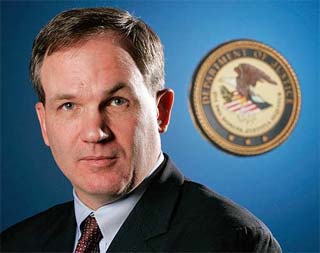
Holder Forgets To Tell Judiciary Committee About Blago Work

Barack Obama, Eric Holder, Patrick Fitzgerald, Rahm Emmanuel, Rod Blagojevich
December 17, 2008

Holder omitted Blagojevich link from questionnaire/Announced as a ‘special investigator to the Illinois Gaming Board’ in 2004

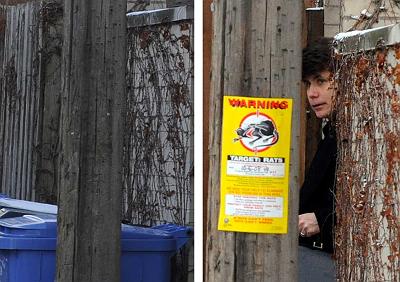
Before Eric Holder was President-elect Barack Obama’s choice to be attorney general, he was Gov. Blagojevich’s pick to sort out a mess involving Illinois’ long-dormant casino license.rat-blago

Blagojevich and Holder appeared together at a March 24, 2004, news conference to announce Holder’s role as “special investigator to the Illinois Gaming Board” — a post that was to pay Holder and his Washington, D.C. law firm up to $300,000.

Holder, however, omitted that event from his 47-page response to a Senate Judiciary Committee questionnaire made public this week — an oversight he plans to correct after a Chicago Sun-Times inquiry, Obama’s transition team indicated late Tuesday.
“Eric Holder has given hundreds of press interviews,” Obama transition spokeswoman Stephanie Cutter said in a statement. “He did his best to report them all to the committee, but as he noted in the questionnaire itself, some were undoubtedly missed in the effort to reconstruct a list of them.”

Holder signed the questionnaire on Sunday — five days after Blagojevich’s arrest for allegedly putting Obama’s U.S. Senate seat up for sale. The Judiciary Committee asked him to provide lists and “copies of transcripts or tape recordings of all speeches or talks delivered by you” and “all interviews you have given to newspapers, magazines or other publications.”

The March 2004 Chicago news conference where Holder and Blagojevich spoke was widely covered because of a controversial 4-1 Gaming Board vote earlier that month to allow a casino to be built in Rosemont. That vote defied the recommendation of the board’s staff, which had raised concerns about alleged organized-crime links to the Rosemont casino’s developer.

Besides that, the Gaming Board’s staff had been concerned that the governor had named his close friend and fund-raiser, Christopher G. Kelly, as a “special government agent” to be involved in official state negotiations about the casino. Kelly, the Sun-Times later learned, was a business partner of Tony Rezko, another Blagojevich fund-raiser who had held an option to lease a hotel site next to the proposed casino site in Rosemont.

Rezko, also a former Obama fund-raiser, and Kelly both have denied any wrongdoing related to the casino, though both have been charged in separate, unrelated criminal cases since 2004.

The Sun-Times disclosed Rezko’s interest in the Rosemont hotel site about three weeks before the news conference announcing Holder would be involved in the casino case. Holder was not aware of the story when he opted to get involved, a source said.

In an interview Tuesday, the Gaming Board’s chief investigator in 2004 said the timing of Blagojevich’s appointment of Holder raised the staff’s suspicions.

“The concern was Holder had a bias to do whatever Blagojevich wanted, which was to give the casino to Rosemont,” said Jim Wagner, who was a top Chicago FBI agent before he joined the Gaming Board, from which he retired in December 2005. “We all believed the only reason Holder was coming in was to fashion an investigation that would manipulate the casino into Rosemont.”

Wagner also said the matter should be explored by the Senate Judiciary Committee. “It ought be brought up and vetted totally as to what motivated him to leave it off” the questionnaire, Wagner said.

At the 2004 press conference, Holder stressed he would be independent.

“The governor’s made quite clear to me that he has no preconceived notions as to how this should turn out, that we should follow the facts, let them lead us to wherever they take us and then report to him and to the people of the state with regard to our findings,” he said.

Despite the concerns of the Gaming Board’s staff, Holder ended up a non-factor in the casino matter. The board — this time listening to its staff’s concerns — refused to hire him, and Blagojevich on May 18, 2004, said he was scrapping Holder’s probe.

“Holder and his firm did some preliminary work in anticipation of the engagement, but did not undertake the investigation itself before it was canceled,” said Cutter, the Obama transition team spokeswoman. “Holder and his firm received no compensation from the state for this preparatory work.

“The 2004 press conference,” she said, “was not memorable because Holder’s legal work for the State of Illinois never materialized.”

The state gaming license once slated to be located in Rosemont has been in limbo since Holder’s brief involvement in it. A process to award the license to one of three bidders is expected to wrap up soon. Rosemont — whose officials long have denied organized crime somehow taints their suburb — again is a finalist to become home to a casino, along with Waukegan and Des Plaines.

A former Deputy Attorney General, Holder has faced criticism about his role in President Bill Clinton’s controversial pardon of fugitive Marc Rich. His confirmation hearing is to begin Jan. 15.

Rahm Emanuel Heard on Wiretaps in Fitzgerald Investigation

Barack Obama, Burris, Chicago Politics, Chicago Tribune, Patrick Fitzgerald, Rahm Emmanuel, Rod Blagojevich

Chicago Tribune

Rahm Emanuel talked with governor’s office about who should fill Obama’s Senate seat

Chief of staff for Obama had list of names

By Bob Secter

bamaRahm Emanuel, President-elect Barack Obama‘s pick to be White House chief of staff, had conversations with Gov. Rod Blagojevich’s administration about who would replace Obama in the U.S. Senate, the Tribune has learned.

The revelation does not suggest Obama’s new gatekeeper was involved in any talk of dealmaking involving the seat. But it does help fill in the gaps surrounding a question that Obama was unable or unwilling to answer this week: Did anyone on his staff have contact with Blagojevich about his choice for the Senate seat?

Blagojevich and John Harris, his former chief of staff, face federal charges in an alleged shakedown involving the vacant Senate seat, which Illinois law grants the governor sole authority to fill.

Obama said Thursday he had never spoken to Blagojevich about the Senate vacancy and was “confident that no representatives” of his had engaged in any dealmaking over the seat with the governor or his team. He also pledged Thursday that in the “next few days” he would explain what contacts his staff may have had with the governor’s office about the Senate vacancy.

Emanuel, who has long been close to both Blagojevich and Obama, has refused to respond to questions about any involvement he may have had with the Blagojevich camp over the Senate pick. A spokeswoman for Emanuel also declined to comment Friday.

One source confirmed that communications between Emanuel and the Blagojevich administration were captured on court-approved wiretaps.

Another source said that contact between the Obama camp and the governor’s administration regarding the Senate seat began the Saturday before the Nov. 4 election, when Emanuel made a call to the cell phone of Harris. The conversation took place around the same time press reports surfaced about Emanuel being approached about taking the high-level White House post should Obama win.

Emanuel delivered a list of candidates who would be “acceptable” to Obama, the source said. On the list were Obama adviser Valerie Jarrett, Illinois Veterans Affairs director Tammy Duckworth, state Comptroller Dan Hynes and U.S. Rep. Jan Schakowsky of Chicago, the source said. All are Democrats.

Sometime after the election, Emanuel called Harris back to add the name of Democratic Atty. Gen. Lisa Madigan to the approved list, the source said.

Blagojevich and Harris, who resigned his state post Friday, are charged with plotting to sell the selection of Obama’s replacement in exchange for lucrative jobs or campaign cash for the governor. Among other things, a government affidavit filed with the charges claimed that Blagojevich had kicked around the idea of using his Senate selection to leverage an appointment to an ambassadorship or Cabinet post in the Obama administration.

Federal authorities have not suggested Obama or his team knew about Blagojevich’s alleged schemes.

In an interview, Schakowsky said she spoke to Emanuel on Thursday and he seemed unfazed by the controversy.

Schakowsky also spoke of a conversation she had with Emanuel shortly after he was named chief of staff. She said she called Emanuel him “to get some intelligence” on whether Obama might approve of her selection as senator.

“He indicated that the president-elect would be fine with certain people and I was one of them,” Schakowsky said.

Schakowsky said it was natural for Obama to take an interest in the selection process for his Senate seat. “It makes perfect sense for the president-elect or his people to have some interaction about filling the seat he was vacating,” she said.

Though now working full-time on Obama’s transition, Emanuel has yet to resign his congressional seat. Illinois law has a different process for filling vacant House seats than Senate seats. When Emanuel resigns, a special election will be held for his replacement.

One alleged scheme outlined in the charges against Blagojevich involves the special election for Emanuel’s seat. The government affidavit said Blagojevich and others were recorded talking about an unnamed “president-elect adviser” concerned about the election for Emanuel’s congressional seat who might help the governor land a new job at a non-profit organization.

Tribune reporter David Heinzmann contributed to this report.

bsecter@tribune.com

"A Senate Seat is a Fucking Valuable Thing, You Don't Just Give It Away For Nothing"

Barack Obama, District Of Corruption, Illinois Corruption, Justice Department, Patrick Fitzgerald, Politics and Corruption, Rod Blagojevich, Tribune Company

-Illinois Governor Rod Blagojevich-

What role did Blagojevich play in Tribune’s bankruptcy?

THE DEAL

A day after Sam Zell’s Tribune Co. filed for Chapter 11 bankruptcy protection, the Federal Bureau of Investigation arrested Illinois Governor Rod Blagojevich and Chief of Staff John Harris on charges of corruption, alleging that, among other transgressions, they meddled with Tribune’s troubled businesses, including the auction of the Chicago Cubs.

patrickfitzgerald2005Mr. Patrick Fitzgerald Will F#ck Your Sh*t Up Bro
The Chicago Tribune’s editorial page has been critical of the governor, and suspicious of his activities; if the government’s allegations turn out to be true, then they had plenty of reason to be wary. Interestingly, Blagojevich was equally suspicious of the Tribune’s editorial board, and allegedly sought to trade his influence in the auction of the Cubs and Wrigley Field in exchange for the Tribune firing its editorial board. Below is the Department of Justice’s allegations against Blagojevich that specifically involves the Tribune:

According to the affidavit, intercepted phone calls revealed that the Tribune Company, which owns the Chicago Tribune and the Chicago Cubs, has explored the possibility of obtaining assistance from the Illinois Finance Authority (IFA) relating to the Tribune Company’s efforts to sell the Cubs and the financing or sale of Wrigley Field. In a November 6 phone call, Harris explained to Blagojevich that the deal the Tribune Company was trying to get through the IFA was basically a tax mitigation scheme in which the IFA would own title to Wrigley Field and the Tribune would not have to pay capital gains tax, which Harris estimated would save the company approximately $100 million. Intercepted calls allegedly show that Blagojevich directed Harris to inform Tribune Owner and an associate, identified as Tribune Financial Advisor, that state financial assistance would be withheld unless members of the Chicago Tribune’s editorial board were fired, primarily because Blagojevich viewed them as driving discussion of his possible impeachment. In a November 4 phone call, Blagojevich allegedly told Harris that he should say to Tribune Financial Advisor, Cubs Chairman and Tribune Owner, “our recommendation is fire all those [expletive] people, get ’em the [expletive] out of there and get us some editorial support.”

On November 6, the day of a Tribune editorial critical of Blagojevich , Harris told Blagojevich that he told Tribune Financial Advisor the previous day that things “look like they could move ahead fine but, you know, there is a risk that all of this is going to get derailed by your own editorial page.” Harris also told Blagojevich that he was meeting with Tribune Financial Advisor on November 10.

In a November 11 intercepted call, Harris allegedly told Blagojevich that Tribune Financial Advisor talked to Tribune Owner and Tribune Owner “got the message and is very sensitive to the issue.” Harris told Blagojevich that according to Tribune Financial Advisor, there would be “certain corporate reorganizations and budget cuts coming and, reading between the lines, he’s going after that section.” Blagojevich allegedly responded. “Oh. That’s fantastic.” After further discussion, Blagojevich said, “Wow. Okay, keep our fingers crossed. You’re the man. Good job, John.” In a further conversation on November 21, Harris told Blagojevich that he had singled out to Tribune Financial Advisor the Tribune’s deputy editorial page editor, John McCormick, “as somebody who was the most biased and unfair.” After hearing that Tribune Financial Advisor had assured Harris that the Tribune would be making changes affecting the editorial board, Blagojevich allegedly had a series of conversations with Chicago Cubs representatives regarding efforts to provide state financing for Wrigley Field. On November 30, Blagojevich spoke with the president of a Chicago-area sports consulting firm, who indicated that he was working with the Cubs on matters involving Wrigley Field. Blagojevich and Sports Consultant discussed the importance of getting the IFA transaction approved at the agency’s December or January meeting because Blagojevich was contemplating leaving office in early January and his IFA appointees would still be in place to approve the deal, the charges allege.

The reference to “Tribune Owner” would seem to mean Sam Zell. If that’s the case, is Zell in hot water? Did he help the government? What impact if any will the Blagojevich allegations have on Tribune’s bankruptcy filing? In the end, it’s doubtful that Blagojevich’s alleged role in the Cubs auction, which may have slowed the sale, was directly material to its bankruptcy filing. The team, for instance, is not part of the filing. Nonetheless, it offers some colorful insight into the auction. – Matthew Wurtzel

See the DOJ’s_complaint_(pdf)

Matthew Wurtzel is the editor of Dealscape.


Online Poker, Fantasy Football, TMZ or a Reasonable Discussion of What Exactly Happened on 9/11?

9/11, Afghanistan, Barack Obama, Bill Kristol, Bin Laden, Blackwater USA, Broadcatching, Carlyle Group, Charles Krauthammer, Civil Liberties, Consensus Journalism, Department of Homeland Security, Dick Cheney, Don Rumsfeld, Douchebaggery, Douglas Feith, Election 2008, Elliot Abrams, FBI, FISA, George Bush, GOP, Halliburton, Howard Stern, Irving Kristol, Joe Biden, Joseph Wilson, Journalism, Judith Miller, Justice Department, Karl Rove, Kellogg Brown and Root, Matt Cooper, McCain, Michael Mukasey, Ohio, Oil, Patrick Fitzgerald, Patriot Act, PNAC, Politics of Fear, Richard Mellon Scaife, Robert Luskin, Robert Novak, Roger Ailes, Rupert Murdoch, Rush Limbaugh, Saddam Hussein, Scooter Libby, Shock Doctrine, The New York Times, Tim Russert, Tullycast, Valerie Plame, Viveca Novak

I was alluding to the fact that people can spend hours investigating a succotash recipe or watch hours of mindless television or play video poker until the cows come home, eat and then go back

out but immediately scoff and mock a discussion of the worst attack on the U.S. in it’s history.

It’s disturbing.

Liberal architects investigating the World Trade Center Towers?

Please.

Ambassador Joseph Wilson Endorses Hillary Clinton; Calls Her "Battle Tested"

Barack Obama, David Corn, Dick Cheney, Douglas Feith, Election 2008, Elliot Abrams, Hillary Clinton, Jane Hamsher, Joe Wilson, John McCain, Judge Thomas F. Hogan, Judith Millaer, Karl Rove, Marcy Wheeler, Matt Cooper, Patrick Fitzgerald, Richard Mellon Scaife, Robert Luskin, Robert Novak, Scooter Libby, The District, Tim Russert, Viveca Novak

BaltimoreSun.com

wilsons.jpg

Battle-tested

Hillary Clinton fought the Republican attack machine, and emerged stronger

By Joseph C. Wilson IV

February 12, 2008

With the emergence of Sen. John McCain as the presumptive Republican nominee, the choice for the Democrats in the 2008 presidential election now shifts to who is best positioned to beat him, in what promises to be a more hard-fought campaign – and perhaps a nastier one – than Democrats anticipated.

Sen. Barack Obama’s promise of transformation and an end of partisan politics has its seductive appeal. The Bush-Cheney era, after all, has been punctuated by smear campaigns, character assassinations and ideological fervor.

Nobody dislikes such poisonous partisanship, especially in foreign policy, more than I do. I am one of very few Foreign Service officers to have served as ambassador in the administrations of both George H. W. Bush and Bill Clinton, yet I have spent the past four years fighting a concerted character assassination campaign orchestrated by the George W. Bush White House.

Sen. Hillary Clinton is one of the few who fully understood the stakes in that battle. Time and again, she reached out to my wife – outed CIA officer Valerie Plame Wilson – and me to remind us that as painful as the attacks were, we simply could not allow ourselves to be driven from the public square by bullying. Mrs. Clinton knew from experience, having spent the better part of the past 20 years fighting the Republican attack machine. She is a fighter.

But will Mr. Obama fight? His brief time on the national scene gives little comfort. Consider a February 2006 exchange of letters with Mr. McCain on the subject of ethics reform. The wrathful Mr. McCain accused Mr. Obama of being “disingenuous,” to which Mr. Obama meekly replied, “The fact that you have now questioned my sincerity and my desire to put aside politics for the public interest is regrettable but does not in any way diminish my deep respect for you.”

Mr. McCain was insultingly dismissive but successful in intimidating his inexperienced colleague. Thus, in his one known face-to-face encounter with Mr. McCain, Mr. Obama failed to stand his ground.

What gives us confidence that Mr. Obama will be stronger the next time he faces Mr. McCain, a seasoned political fighter with extensive national security credentials? Even more important, what special disadvantages does Mr. Obama carry into this contest on questions of national security?

How will Mr. Obama answer Mr. McCain about his careless remark about unilaterally bombing Pakistan – perhaps blowing up an already difficult relationship with a nuclear state threatened by Islamic extremists? How will Mr. Obama respond to charges made by the Kenyan government that his campaigning activities in Kenya in support of his distant cousin running for president there made him “a stooge” and constituted interference in the politics of an important and besieged ally in the war on terror?

How will he answer charges that his desire for unstructured personal summits without preconditions with a host of America’s adversaries, from Mahmoud Ahmadinejad to Kim Jong Il, would be little more than premature capitulation?

Contrary to the myth of the Obama campaign, 2008 is not the year for transcendental transformation. The task for the next administration will be to repair the damage done by eight years of radical rule. And the choice for Americans is clear: four more years of corrupt Republican rule, senseless wars, evisceration of the Constitution, emptying of the national treasury – or rebuilding our government and our national reputation, piece by piece.

In order to effect practical change against a determined adversary, we do not need a would-be philosopher-king but a seasoned gladiator who understands the fight Democrats will face in the fall campaign and in governing.

Theodore Roosevelt once said, “It is not the critic who counts: not the man who points out how the strong man stumbles or where the doer of deeds could have done better. The credit belongs to the man who is actually in the arena, whose face is marred by dust and sweat and blood, who strives valiantly, who errs and comes up short again and again … who, at the best, knows, in the end, the triumph of high achievement, and who, at the worst, if he fails, at least he fails while daring greatly.”

If he were around today, Roosevelt might be speaking of the woman in the arena. Hillary Clinton has been in that arena for a generation. She is one of the few to have defeated the attack machine that is today’s Republican Party and to have emerged stronger. She is deeply knowledgeable about governing; she made herself into a power in the Senate; she is respected by our military; and she never flinches. She has never been intimidated, not by any Republican – not even John McCain.

Barack Obama claims to represent the future, but it should be increasingly evident that he is not the man for this moment, especially with Mr. McCain’s arrival. We’ve seen a preview of that contest already. It was a TKO.