Dylan Ratigan Practices Journalism on Lying Health Care Industry Hack Betsy McCaughey
Vodpod videos no longer available.


Dylan Ratigan Practices Journalism on Lying Health Care Industry Hack Betsy McCaughey
Vodpod videos no longer available.


People are angry-angry I say!
Douchechills….
August 1, 2009
Updated 10:22am AKDT
AlaskaReport has learned this morning that Todd Palin and former Alaska governor Sarah Palin are to divorce. Multiple sources in Wasilla and Anchorage have confirmed the news.
A National Enquirer story exposing previous affairs on both sides led to a deterioration of their marriage and the stress from that led to Palin’s resignation as governor of Alaska.
The Palins were noticeably not speaking to each other at last Sunday’s resignation speech in Fairbanks. Sarah ditched Todd (MSNBC) right after the speech and left without him. Sarah removed her wedding ring a couple of weeks ago.
Sarah has recently purchased land in Montana and is considering moving the family there. Sarah Palin is originally from Idaho.
Todd Palin told Fox News last week that he was heading back to his job in the oil fields of Alaska, yet Sarah recently signed a book deal reportedly worth $11 million.
Editor’s note: AlaskaReport was the first website to report that Sarah Palin was running for governor of Alaska and the first website to report that Sarah was picked as John McCain’s VP candidate.
Former Alaska governor Sarah Palin says politicians need to have thick skin “Just as I’ve got” Which of course is hilarious since she quit as Alaska’s governor complaining about her hurt feelings from Alaska’s bloggers reporting on her numerous ethics violations.
WASHINGTON — The United States is in the midst of a devastating recession, mired in two overseas wars and grappling with a swine flu outbreak, but conservative critics are assailing President Barack Obama on another pressing issue: his choice of burger topping.
Dijongate is in full force, with Fox News and a conservative blogger leading the charge against the president for his choice of the apparently un-American mustard atop his cheeseburger during a recent impromptu lunch stop with Vice-President Joe Biden.
There’s no evidence of wiretapped hotel rooms or a Deep Throat lurking in the shadows, but there are indeed accusations of a coverup – MSNBC, apparently, edited out the president’s request for Dijon in order to help Obama maintain his “man of the people” street cred.
Fox’s Sean Hannity has been telling his viewers that MSNBC – and reporter Andrea Mitchell in particular – are trying to hide Obama’s Dijon-loving ways from the public.
Hannity has been referring to the president’s lunch as his “fancy burger.”
“It was Grey Poupon, which is equally snotty,” alleged one commenter on Hannity’s website.
William Jacobson, a Cornell law school professor who has also been blogging about Dijongate, noted that Mitchell “didn’t mention one arugula-like fact” about Obama’s order earlier this week at Ray’s Hell Burger in Arlington, Va.
Jacobson said the MSNBC video of the stop at Ray’s cuts out just as Obama asks for Dijon. He refers to MSNBC as “Obama’s favourite network.”
“MSNBC edited out the audio when Obama ordered his Hell Burger just at the moment when Obama asked for Dijon mustard,” Jacobson wrote in a Thursday post entitled “Thou Shalt Not Mock Obama’s Mustard.”
“Now, I have nothing against Dijon mustard, but the image didn’t fit with the image being spun by the White House and MSNBC. Dijon mustard on a Hell Burger had a very John Kerry-ish quality about it.”
Jacobson blogged about other incidents in which Obama has revealed his weakness for the spicy French condiment.
It’s a key ingredient, for example, in the president’s favourite tuna salad, and he also had the gall to request it during his first trip on Air Force One.
“And the mainstream media didn’t cover it,” Jacobson wrote.
It all hearkens back to those silly days of “freedom fries,” the name given to French fries by hawkish conservatives in 2003 when France expressed strong opposition to the U.S. invasion of Iraq.
The French stance resulted in a call from American right-wingers for a boycott of French goods and the removal of the country’s name from products. That left America’s best-selling mustard – French’s – in a bit of a quandary.
French’s, in fact, figures prominently in a Dijon-related anecdote Obama himself chronicled in his book, “The Audacity of Hope.”
He told the story of his first tour through Illinois, when he ordered Dijon on his cheeseburger at a TGI Friday’s.
His panicked political aide assured the waitress that Obama didn’t want Dijon at all and waved her away, thrusting a bottle of French’s at him instead. The waitress, perplexed, assured Obama that she had Dijon if he wanted it.
“As the waitress walked away, I leaned over and whispered that I didn’t think there were any photographers around,” Obama wrote.
The anecdote underscored Obama’s thoughts on what he viewed as the absurdity of focusing on non-issues in politics.
“What’s troubling is the gap between the magnitude of our challenges and the smallness of our politics-the ease with which we are distracted by the petty and trivial,” he wrote.
One commenter on Jacobson’s blog mocked Dijongate on Thursday: “Wait till the right finds out he eats guacamole, then he’ll be seen as a pro-immigrant nut job. God forbid he ever takes a bite of hummus!”
Jacobson, however, insists that alleged efforts to cover up Obama’s choice of mustard this week are newsworthy.
“I don’t think anyone is ‘upset’ with his choice of mustard, although that is how some are spinning it,” Jacobson said in an e-mail. “It is the absurd level of image control, which is not trivial.”
Nonetheless, some of the right’s attacks on Obama have bordered on the inane, subjecting conservatives to ridicule.
Comedian Bill Maher, a longtime libertarian, recently maligned the right and their fixation on the trivial in an opinion piece in the Los Angeles Times.
“Here are the big issues for normal people: the war, the economy, the environment, mending fences with our enemies and allies, and the rule of law,” Maher wrote.
“And here’s the list of Republican obsessions since President Obama took office: that his birth certificate is supposedly fake, he uses a TelePrompTer too much, he bowed to a Saudi guy, Europeans like him, he gives inappropriate gifts, his wife shamelessly flaunts her upper arms, and he shook hands with Hugo Chavez and slipped him the nuclear launch codes.”
Conservatives, Maher wrote, are now behaving like “the bitter divorced guy whose country has left him – obsessing over it, haranguing it, blubbering one minute about how much you love it and vowing the next that if you cannot have it, nobody will,” he wrote.
“But … your country is not coming back to you. She’s found somebody new. And it’s a black guy.”

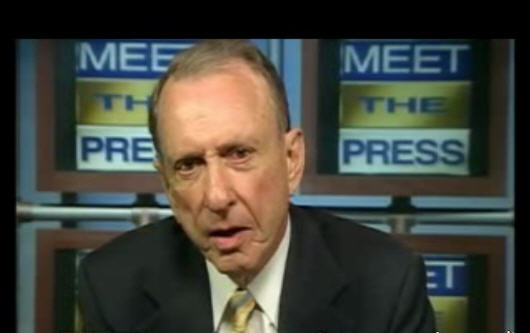
After it was announced earlier this week that Sen. Jeff Sessions (R-AL) would replace Sen. Arlen Specter (D-PA) as the ranking member on the Senate Judiciary Committee, bloggers, including ThinkProgress, noted that Sessions had a record of racial insensitivity that stopped his appointment to the federal bench in 1986. Now, Sen. Lindsey Graham (R-SC) is hitting back at the blogs:
Sen. Lindsey Graham (R-S.C.) said Republicans would fight back hard if Democrats or liberal groups try to make the Supreme Court confirmation process about Sessions’ record, rather than about Obama’s nominee to replace Justice David Souter.
“If people try to go down that road, it’ll blow up in their face, because Jeff is a good guy,” Graham said. “My hope is that our Democratic colleagues — if you start listening to the bloggers — if we’re going to let the bloggers run the country, then the country’s best days are behind us.”
[H/t Scarce]
While I’m enjoying the sight of Specter’s seniority reduced, he did bring a lot of money to Pennsylvania and I’m hoping my state doesn’t suffer too much as a result:
The Senate last night stripped Sen. Arlen Specter (Pa.) of his seniority on committees, a week after the 29-year veteran of the chamber quit the Republican Party to join the Democrats.
In announcing his move across the aisle last week, Specter asserted that Majority Leader Harry M. Reid (D-Nev.) had assured him he would retain his seniority in the Senate and on the five committees on which he serves. Specter’s tenure ranked him ahead of all but seven Democrats.
Instead, though, on a voice vote last night, the Senate approved a resolution that made Specter the most junior Democrat on four committees for the remainder of this Congress. (He will rank second from last on the fifth, the Special Committee on Aging.) Reid himself read the resolution on the Senate floor, underscoring the reversal.
Democrats have suggested that they will consider revisiting Specter’s seniority claim at the committee level only after next year’s midterm elections.
“This is all going to be negotiated next Congress,” Jim Manley, a Reid spokesman, said last night.
Specter’s office declined to comment.
The loss of seniority could prove costly to Specter in his campaign to win reelection in 2010, denying him the ability to distinguish himself from a newcomer in his ability to claim key positions.
Specter said last week that becoming chairman of the Appropriations Committee was a personal goal of his, and his Senate service seemed to put him in position to be the third-ranking Democrat there. Now, though, he will not hold even an Appropriations subcommittee chairmanship in 2011 — a critical foothold Specter has used to send billions of dollars to Pennsylvania.
WASHINGTON (CNN) — Veteran Sen. Arlen Specter, R-Pennsylvania, switched from the Republican to the Democratic Party on Tuesday, Sen. Harry Reid said.
The Specter party switch would give Democrats a filibuster-proof Senate majority of 60 seats if Al Franken holds his current lead in the disputed Minnesota Senate race.
 Specter, a five-term Senate veteran, was expected to face a very tough primary challenge in 2010 from former Rep. Pat Toomey, who nearly defeated Specter in the Pennsylvania GOP Senate primary in 2004.
A Quinnipiac University survey of registered Pennsylvania voters released last month showed Specter trailing the more conservative Toomey in a hypothetical primary matchup, 41 to 27 percent.
A separate Franklin & Marshall survey showed Specter leading Toomey 33 to 18 percent. Another 42 percent, however, were undecided.
More than half of the Republicans polled in the Franklin & Marshall survey said they would prefer to see someone new in the Senate.
Numerous Republicans are angry with Specter over his recent vote in support of President Obama’s $787 billion stimulus plan.
Specter, one of only three GOP senators to vote for the measure, has been part of a dwindling group of GOP moderates from the northeastern part of the country.
A not-so-funny thing happened on the way to economic recovery. Over the last two weeks, what should have been a deadly serious debate about how to save an economy in desperate straits turned, instead, into hackneyed political theater, with Republicans spouting all the old clichés about wasteful government spending and the wonders of tax cuts.
It’s as if the dismal economic failure of the last eight years never happened — yet Democrats have, incredibly, been on the defensive. Even if a major stimulus bill does pass the Senate, there’s a real risk that important parts of the original plan, especially aid to state and local governments, will have been emasculated.
Somehow, Washington has lost any sense of what’s at stake — of the reality that we may well be falling into an economic abyss, and that if we do, it will be very hard to get out again.
It’s hard to exaggerate how much economic trouble we’re in. The crisis began with housing, but the implosion of the Bush-era housing bubble has set economic dominoes falling not just in the United States, but around the world.
Consumers, their wealth decimated and their optimism shattered by collapsing home prices and a sliding stock market, have cut back their spending and sharply increased their saving — a good thing in the long run, but a huge blow to the economy right now. Developers of commercial real estate, watching rents fall and financing costs soar, are slashing their investment plans. Businesses are canceling plans to expand capacity, since they aren’t selling enough to use the capacity they have. And exports, which were one of the U.S. economy’s few areas of strength over the past couple of years, are now plunging as the financial crisis hits our trading partners.
Meanwhile, our main line of defense against recessions — the Federal Reserve’s usual ability to support the economy by cutting interest rates — has already been overrun. The Fed has cut the rates it controls basically to zero, yet the economy is still in free fall.
It’s no wonder, then, that most economic forecasts warn that in the absence of government action we’re headed for a deep, prolonged slump. Some private analysts predict double-digit unemployment. The Congressional Budget Office is slightly more sanguine, but its director, nonetheless, recently warned that “absent a change in fiscal policy … the shortfall in the nation’s output relative to potential levels will be the largest — in duration and depth — since the Depression of the 1930s.”
Worst of all is the possibility that the economy will, as it did in the ’30s, end up stuck in a prolonged deflationary trap.
We’re already closer to outright deflation than at any point since the Great Depression. In particular, the private sector is experiencing widespread wage cuts for the first time since the 1930s, and there will be much more of that if the economy continues to weaken.
As the great American economist Irving Fisher pointed out almost 80 years ago, deflation, once started, tends to feed on itself. As dollar incomes fall in the face of a depressed economy, the burden of debt becomes harder to bear, while the expectation of further price declines discourages investment spending. These effects of deflation depress the economy further, which leads to more deflation, and so on.
And deflationary traps can go on for a long time. Japan experienced a “lost decade” of deflation and stagnation in the 1990s — and the only thing that let Japan escape from its trap was a global boom that boosted the nation’s exports. Who will rescue America from a similar trap now that the whole world is slumping at the same time?
Would the Obama economic plan, if enacted, ensure that America won’t have its own lost decade? Not necessarily: a number of economists, myself included, think the plan falls short and should be substantially bigger. But the Obama plan would certainly improve our odds. And that’s why the efforts of Republicans to make the plan smaller and less effective — to turn it into little more than another round of Bush-style tax cuts — are so destructive.
So what should Mr. Obama do? Count me among those who think that the president made a big mistake in his initial approach, that his attempts to transcend partisanship ended up empowering politicians who take their marching orders from Rush Limbaugh. What matters now, however, is what he does next.
It’s time for Mr. Obama to go on the offensive. Above all, he must not shy away from pointing out that those who stand in the way of his plan, in the name of a discredited economic philosophy, are putting the nation’s future at risk. The American economy is on the edge of catastrophe, and much of the Republican Party is trying to push it over that edge.
Media Matters for America previously identified numerous myths and falsehoods advanced by the media in their coverage of the American Recovery and Reinvestment Act. As debate on the bill continues in Congress, other myths and falsehoods advanced by the media about the recovery package have risen to prominence. These myths and falsehoods include: the assertion that the bill will not stimulate the economy — including the false assertion that the Congressional Budget Office (CBO) said the bill will not stimulate the economy; that spending in the bill is not stimulus; that there is no reason for stimulus after an economic turnaround begins; that corporate tax rate cuts and capital gains tax rate cuts would provide substantial stimulus; and that undocumented immigrants without Social Security numbers could receive the “Making Work Pay” tax credit provided in the bill.
1. The bill will not stimulate the economy
In a February 1 article, The Associated Press reported an assertion by Senate Minority Leader Mitch McConnell (R-KY) that the recovery bill will not stimulate the economy without noting that the CBO disagrees. ABC World News anchor Charles Gibson echoed this assertion during his February 3 interview with President Obama, stating: “And as you know, there’s a lot of people in the public, a lot of members of Congress who think this is pork-stuffed and that it really doesn’t stimulate.” Additionally, on the January 28 edition of his show, nationally syndicated radio host Rush Limbaugh allowed Rep. Eric Cantor (R-VA) to falsely claim of the bill: “Even the Congressional Budget Office, controlled by the Democrats now, says it is not a stimulative bill.” Fox News host Sean Hannity repeated this claim on the February 2 broadcast of Fox News’ Hannity, asserting that the CBO “say[s] it’s not a stimulus bill.”
In fact, in analyzing the House version of the bill, H.R. 1, and the proposed Senate version, the CBO stated that it expects both measures to “have a noticeable impact on economic growth and employment in the next few years.” Additionally, in his January 27 written testimony before the House Budget Committee, CBO director Douglas Elmendorf said that H.R. 1 would “provide massive fiscal stimulus that includes a combination of government spending increases and revenue reductions.” Elmendorf further stated: “In CBO’s judgment, H.R. 1 would provide a substantial boost to economic activity over the next several years relative to what would occur without any legislation.”
2. Government spending in the bill is not stimulus
Several media figures, including CNN correspondent Carol Costello, CBS Evening News correspondent Sharyl Attkisson, and ABC World News anchor Charles Gibson, have all uncritically reported or aired the Republican claim that, in Gibson’s words, “it’s a spending bill and not a stimulus,” without noting that economists have said that government spending is stimulus. Indeed, in his January 27 testimony, Elmendorf explicitly refuted the suggestion that some of the spending provisions in the bill would not have a stimulative effect, stating: “[I]n our estimation — and I think the estimation of most economists — all of the increase in government spending and all of the reduction in tax revenue provides some stimulative effect. People are put to work, receive income, spend that on something else. That puts somebody else to work.” Additionally, Dean Baker, co-director of the Center for Economic and Policy Research, has said, “[S]pending is stimulus. Any spending will generate jobs. It is that simple.”
3. There is no reason for stimulus after a turnaround begins

 The New York Herald Sun