Spam King Kills Wife, Child and Himself Four Days After Prison Escape

Stories

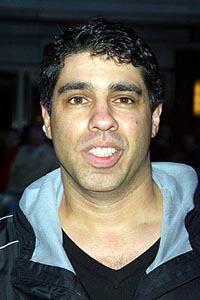
In a story by the Denver Post, Davidson, 35, was found dead in the driveway of a home near Bennett, Colo., an apparent gunshot suicide victim. In a 2006 silver Toyota Sequoia located in the driveway, authorities found the bodies of Davison’s wife and toddler, also gunshot victims. An unidentified teenager survived the killing spree, as did an infant in the backseat of the SUV.

Davidson escaped from the minimum security prison at Florence on July 25. Davidson was just two months into a 21-month federal sentence for his role in sending millions of e-mail promoting questionable penny stocks. The Rocky Mountain News reported Davidson forced his wife to help him escape from the minimum security facility.

The newspaper also reported the teenager who was wounded was Davidson’s daughter, who escaped the murder scene and was lucid enough to tell authorities what had happened.

“What a nightmare, and such a coward. Davidson imposed the death penalty on family members for his own crime,” U.S. Attorney Troy Eid told the newspaper.

Davidson was sentenced on April 28. In addition to his nearly two-year prison sentence, Davidson was ordered to pay $714,139 in restitution to the IRS. As part of the restitution, Davis has agreed to forfeit property he purchased, including gold coins, with the ill-gotten proceeds of his offense.

According to government documents, Davidson conducted his spamming operation from July 2002 through April 2007. The primary nature of Davidson’s business consisted of providing promotional services for companies by sending large volumes of unsolicited commercial e-mail.

Davidson’s original spamming activities were provided on behalf of companies to promote watches, perfume and other items. Beginning in the middle of 2005, Davidson sent spam on behalf of an unidentified Texas company to promote the sale of the company’s stock.  The company generated its income through selling stock on behalf of small companies on the public market.

Davidson, aided by several sub contractors, sent hundreds of thousands of unsolicited e-mail messages to potential purchasers throughout the United States and the world touting the excellent investment opportunities the stock offered.

The e-mail messages contained false header information, which concealed the actual sender from the recipient of the e-mail.  Davidson operated his spamming activities from his personal residence in Bennett, where he had a large network of computers and servers, which facilitated his business.

Obama dazzles over 200,000 in Berlin

Stories

THE LOCAL -GERMANY’S NEWS IN ENGLISH

Published: 24 Jul 08 19:42 CET
Online: http://www.thelocal.de/13277/

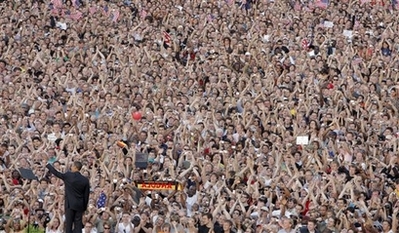
Over 200,000 jubilant Barack Obama supporters shut down the centre of Berlin on Thursday evening to listen to the US presidential candidate give an impassioned speech on the global challenges of the 21st century.

People from all walks of life streamed to the German capital’s Victory Column memorial at the heart of the city’s Tiergarten park hoping to glimpse of the popular US senator from Illinois.

“Thank you to the citizens of Berlin and to the people of Germany,” Obama told the crowd to wild applause. “Tonight, I speak to you not as a candidate for president, but as a citizen – a proud citizen of the United States, and a fellow citizen of the world.”

As the sun set on the German capital, the predominately younger audience of Berliners listened intently to Obama speak of the common problems facing Europe and America.

“As we speak, cars in Boston and factories in Beijing are melting the ice caps in the Arctic, shrinking coastlines in the Atlantic, and bringing drought to farms from Kansas to Kenya,” Obama said.

“Poorly secured nuclear material in the former Soviet Union, or secrets from a scientist in Pakistan could help build a bomb that detonates in Paris. The poppies in Afghanistan become the heroin in Berlin. The poverty and violence in Somalia breeds the terror of tomorrow. The genocide in Darfur shames the conscience of us all.”

German television broadcast the speech live, as some 1,000 police officers, US Secret Service and private security guards were mobilized for the visit.

Prior to his address, Berliners gave the event a festival atmosphere, grilling sausages and selling beer near the site of the speech, which has frequently been used for large public gatherings.

The massive show of support underscored how deeply dissatisfied many Germans are with the leadership of US President George W. Bush, who remains unpopular in Europe for his decision to invade Iraq and his apparent reluctance to tackle issues like global warming.

Uwe Bley came all the way from the northern port city of Hamburg with his wife to see Obama on Thursday. “He can’t change much from here,” the 60-year-old told The Local, expressing his desire for the presidential candidate to take America in a new direction. “But he’s the new hope now.”

Obama told the massive crowd near the former course of the old Berlin Wall that humanity faced a perilous turning point, and it was time to build “a world that stands as one.”

“The greatest danger of all is to allow new walls to divide us from one another,” said Obama, who has scorched through US politics at lightning speed to challenge Republican John McCain for the White House in November’s election.

The audacious speech took the White House race out of US borders in a way never seen before, and was designed to portray Obama as a leader with unique global appeal.

“The walls between old allies on either side of the Atlantic cannot stand,” he said, referring to festering divisions between Europe and the United States opened up by the US-led invasion of Iraq in 2003.

“The walls between the countries with the most and those with the least cannot stand. The walls between races and tribes; natives and immigrants; Christian and Muslim and Jew cannot stand. These now are the walls we must tear down,” Obama said, drawing loud cheers and applause.

Obama’s speech was a clear echo of former US president Ronald Reagan’s call to then Soviet leader Mikhael Gorbachev in Berlin in 1987 to “tear down this wall,” before the fall of communism.

“It was a good speech, nicely geared to an international audience,” American Berlin resident Michael Goodhart, 38, told The Local after the event. “It’s impressive that he can draw such a crowd here,” he said. “Obama represents such a stark change – in his age, look and policies.”

tl/afp

The Local (news@thelocal.de)

Maryland State Police Spied on Peace, Anti-Death Penalty Groups

Stories

DEMOCRACY NOW

July 21, 2008

Police Spied on Peace, Anti-Death Penalty Groups

The American Civil Liberties Union released
documents Thursday showing that undercover officers from the Maryland
State Police spied on peace groups and anti-death penalty protesters
for over a year in 2005 and 2006. The police summaries and intelligence
logs reveal that covert agents infiltrated groups like the antiwar
Baltimore Pledge of Resistance, the Baltimore Coalition Against the
Death Penalty, and the Committee to Save Vernon Evans, a death row
prisoner. We speak with antiwar activist Max Obuszewski and with
journalist Dave Zirin. Both were the target of surveillance. [includes
rush transcript]

Guests:

Max Obuszewski, longtime Baltimore
peace activist, monitored by the Maryland State Police. He is with the
peace group Baltimore Pledge of Resistance.

Dave Zirin, sportswriter and author of Welcome to the Terrordome: The Pain, Politics and Promise of Sports.
He writes a weekly column called “Edge of Sports.” His
latest article is called “COINTELPRO Comes to My Town.”

Rush Transcript

This transcript is
available free of charge. However, donations help us provide closed
captioning for the deaf and hard of hearing on our TV broadcast. Thank
you for your generous contribution.
Donate
$25,
$50, $100,
More…


Related Links

AMY GOODMAN: We turn now to Maryland, a new document
revealing police surveillance of local activists opposed to war and the
death penalty. The American Civil Liberties Union released documents
Thursday showing undercover officers from the Maryland State Police
spied on peace groups and anti-death-penalty protesters for over a year
from 2005 to 2006, when Robert Ehrlich, Jr. was governor. On Friday,
current governor, Martin O’Malley, vowed not to allow police
surveillance of peace groups.

The police summaries and
intelligence logs obtained by the ACLU under the Maryland Public
Information Act reveal that covert agents infiltrated groups like the
antiwar Baltimore Pledge of Resistance, the Baltimore Coalition Against
the Death Penalty and the Committee to Save Vernon Evans, a death row
prisoner. According to the documents, police monitored and entered the
names of activists in a law enforcement database of people suspected of
being terrorists or drug traffickers. Maryland ACLU staff attorney
David Rocah released the documents at a news conference on Thursday.

    DAVID ROCAH: What
    you see in the documents today is a particular individual, Max
    Obuszewski, sitting to my left, who is listed in the Maryland
    high-intensity drug-trafficking area database with—under the
    suspected crimes of terrorism. Mr. Obuszewski is a person who has
    devoted his entire life to nonviolent, peaceful protest activities on
    behalf of peace. If there is anyone in the world who is further from a
    terrorist, it’s hard for me to imagine them. And that the
    Maryland State Police can think that being antiwar is a subset of
    terrorism is a terrifying prospect.

AMY GOODMAN: Longtime
peace activist Max Obuszewski from the Baltimore Pledge of Resistance
joins me now from Washington, D.C. We’re also joined by another
target of the surveillance of the Maryland State Police, Dave Zirin,
the sportswriter and author of, among other books, Welcome to the Terrordome: The Pain, Politics and Promise of Sports.
He writes a weekly column called “Edge of Sports.” His
latest article for CounterPunch is called “COINTELPRO Comes to My
Town.” We welcome you both to Democracy Now!

Max Obuszewski, let’s begin with you. Tell us how you learned about what was taking place.

MAX OBUSZEWSKI: You
just played a clip of David Rocah from the Maryland ACLU speaking. He
called me. I was in court on Wednesday, last Wednesday. I’m a
member of the Ghosts of the Iraq War. We were arrested March 12,
protesting in the Senate gallery. I have a trial September 29. So I was
in court for a status hearing. When I got home, probably about 4:00
p.m., David called me to say they got this information from the
Attorney General’s office. This is the Maryland Attorney
General’s office. And he said, “I hope you’re sitting
down, because I want to tell you that you’ve been listed as a
terrorist.”

I mean, I know, as a longtime peace activist, that I’m
being surveilled. And these documents that were released is just a tip
of the iceberg. But to be labeled, put into a database and accused of
terrorism—and it’s a drug trafficking database, that was
beyond comprehension. It just indicates, in my opinion, the fallacy of
the searches that are going on by our government in putting people into
these databases. A lot of the questions at the press conference that
day was about, have you traveled internationally, do you have any
trouble getting on airplanes, and so on and so forth.

AMY GOODMAN: Can you talk about your work, Max? What do you do?

MAX OBUSZEWSKI: Well,
I’m a full-time peace activist. And I mentioned earlier that I
think this is the tip of the iceberg. 1996, July 4th, a group of us, a
fairly large group, went out to the National Security Agency to protest
the operations of the Puzzle Palace. Phil Berrigan, Jeremy Scahill and
I sat in front of a gate to protest the place. That was the first
protest at the National Security Agency since 1973, when the Jonah
House, Phil Berrigan, Elizabeth McAlister and others poured gallons of
blood at the entrance. This is noted in James Bamford’s book Puzzle Palace.
So we decided to start that up again. So this was July 4th of 1996. So
we go out there every Independence Day or a date close to Independence
Day since that time. And that’s obviously going to put you on the
radar screen. Or acting with Phil Berrigan, I’ve been arrested
with Phil Berrigan. I’ve joined him on many of the Plowshares
actions that took place that he was involved in. And all of
that’s going to cause my name to be registered someplace.

Five
of us were arrested October 4th of ’03 at the National Security
Agency. For whatever reason, three of us had our charges dropped, even
though all five of us did the same thing, tried to request a meeting
with the NSA director. Two of the people went to court the following
August, ’04, and in discovery we finally got what we knew was
going on, that the National Security Agency and other members of the
Joint Terrorism Task Force were surveilling us. And I filed a FOIA
request to try to get the information. They indicated, yes, we have
information on the Pledge of Resistance, the Jonah House and other
protest groups, but we won’t give you the information unless you
pay $1,400. We had guardian angels who were willing to pay the $1,400,
but we didn’t think that was principled. We felt we should get
this information without paying for it. So we then contacted the
American Civil Liberties Union, and they filed lawsuits through Heller
Ehrman, a Washington, D.C. law firm, who’s doing all this work pro bono with everybody, including the Maryland State Police.

The
Maryland State Police informed the ACLU that they had one document.
They will not release it, though, because it would reveal covert
operations. The Maryland ACLU then went to a federal court in June of
this year, and, lo and behold, the Attorney General’s office
released forty-four pages. I firmly believe, though, there’s
many, many more information. The Baltimore City Police, for example,
claim they have no documents on us. Well, if you carefully read the
documents that have been released, Baltimore City intelligence was
always in the loop in the surveillance and so on. And the documents
that were released in the NSA trial indicated to us that Baltimore
intelligence was involved in that operation, watching us as we gathered
at the American Friends Service Committee and then traveled out to Fort
Meade, where the National Security Agency is located.

AMY GOODMAN: Dave
Zirin, you’re a well-known sportswriter, have written a few
books. You’re writing now about the Olympics in China. How did
you get ensnared in this?

DAVE ZIRIN: Amy, they
picked on the wrong sportswriter, and they picked on the wrong group of
activists. For more than a decade, I’ve worked with an
organization called the Campaign to End the Death Penalty. It’s a
group that does remarkable work, nodeathpenalty.org.
I mean, we do such seditious activities as tabling at farmers’
markets, organizing pickets and trying to raise awareness about the
nature of the death penalty. And I had a little group that was meeting
in Takoma Park, Maryland. And if your listeners and viewers don’t
know anything about Takoma Park, Maryland, you’re far more likely
to find tie-dye than terrorists, far more likely to find vegans than
violence in Takoma Park. And yet, still, they infiltrated. Still, they
sent agents. Still, our taxpayer dollars went to pay people to
infiltrate and take notes on our meetings, and it’s absolutely
enraging.

And I can only draw two conclusions from it. I mean, the first
is that a lot of this Homeland Security funding is an absolute sham,
that it’s being used to actually crush dissent, not to keep us
safer in any real way. I mean, we were talking about farmers’
markets, for goodness sake, petitioning, doing tablings. And the second
thing I can conclude from this is that we actually posed a real threat
in Maryland. We won a moratorium against the death penalty. We had
exposed it as the most racist death row in these United States. And
yet, still, they—I think it just made them remarkably nervous,
because we were making some real headway.

AMY GOODMAN: Do you know who was spying on you?

DAVE ZIRIN: Yes,
we do. It was somebody who was known to us as Lucy. She came into our
meeting. She was very enthusiastic. She—I remember her sitting
there taking copious notes. She wasn’t the sort of person who
would raise her hand and ask incendiary questions. It all seemed very
much like this was just another person from this liberal enclave of
Takoma Park who was interested in working with us.

And I’ll tell you, that’s one of the most insidious
things about this. And this is the whole history of
counterintelligence, COINTELPRO, it’s that it breeds this sense
of paranoia. It breeds this sense of, do I really know this person
sitting next to me? Who is this person really about? And I really hope
that as activists our reaction is not to regard the people who are next
to us at demonstrations with suspicion. And it’s like my friend
Mike Stark says, hey, as long as the police agents are carrying water,
then let’s not try to be too much looking at each other and
pointing fingers at each other, because it’s far more important
that we keep our eyes on the prize. And for us, that’s ending the
death penalty in Maryland.

AMY GOODMAN: Max Obuszewski, was Lucy someone who was known to you? And did you feel like—did you feel like you were being followed?

MAX OBUSZEWSKI: Well,
let me also mention this, that Lucy—her first contact that we
have so far that we know of was actually back in February, before
these—the dates of these documents. She attended a meeting that
Bernadine Dohrn spoke at in Baltimore. This was—I believe it was
February 8th of ’05.

AMY GOODMAN: The well-known Irish activist.

MAX OBUSZEWSKI: Exactly. No, no, this is—

AMY GOODMAN: No, no, no, the—yes, the activist from Chicago.

MAX OBUSZEWSKI: Exactly,
Weather Underground. So, I got that information from Red Emma’s,
a bookstore here in Baltimore, that she was at that. But she was Anne
at that time. And I went back and looked at the emails I received from
her. She changed her name later to Shoop. And it’s very
interesting, because in the documents, a lot of this information is
redacted. Once they come to my, quote-unquote, “criminal
history,” most of that is redacted. But there’s at least
one place, maybe two places, in there where she’s identified. Do
we have a friend in the Attorney General’s office that
intentionally did that? I don’t know.

But you have to understand, though, that there was more than
just her coming to meetings watching us. We had an anti-death penalty
protest when Ehrlich was being inaugurated in Annapolis, and this
gentleman showed up and was with us, traveled with us, came back with
us. We never saw him again, never heard from him again. The presumption
is, he was also a State Police officer following us.

The sad thing is, as Dave is talking about, all of these
gatherings, there’s also the Hiroshima-Nagasaki Commemoration
Committee. They actually came to one of our rallies where we had hibakusha
speaking. The sad thing about all of this, constantly in these
documents the agents indicate that we were doing nonviolent work, that
we were doing First Amendment work, but they kept repeating, “We
think that this investigation should continue.” They logged in
288 hours. I’m a pacifist. The idea that the Maryland State
Police, the Homeland Security division, is going to be coming to
meetings that I attend is beyond comprehension. Generally, in larger
meetings, I always ask: if there’s anyone here from the FBI, the
NSA or the CIA, please identify yourself; you’re welcome to
participate in the meeting.

AMY GOODMAN: These are open meetings; you advertise them for people to come.

MAX OBUSZEWSKI: Yes,
exactly. They’re advertised. There’s fliers put up. The
rallies are all announced. We—you know, anyone can come to our
meetings. We’re trusting.

AMY GOODMAN: Mike Stark is quoted in the Washington Post,
another activist, anti-death penalty activist, if the governor,
O’Malley, will now be spied on, because he’s opposed to the
death penalty.

DAVE ZIRIN: Right. And I think this
lays out an important challenge to Governor O’Malley, because
Governor O’Malley has said—in response to this, he has
said, “Well, look, we are not going to be spying on people who
engage in lawful activities.” I would make the case that
that’s not good enough. We need a full investigation of what the
Maryland State Police have done. We need an absolutely ironclad
statement by people in power that they’re not going to spy on
people who are involved in what should be constitutionally protected
acts.

And I’ll tell you something, Robert Ehrlich,
the Governor of Maryland, he put his hand on a Bible and swore to
uphold the Constitution of the United States, and then he proceeded to
use the Constitution as a handy-wipe in surveilling people like Max,
myself and many, many others. And I think it’s got to be clear,
that we’re going to go on offense right now. We’re going to
have press conferences. We’re going to bring a lawsuit through
the ACLU. And when this is all said and done, Bob Ehrlich and the State
of Maryland, they’re going to be paying for my kid’s
braces, because this is outrageous that they’ve gone after us
like this.

AMY GOODMAN: It’s interesting, Dave Zirin, your latest piece is about China and is about the Olympics—

DAVE ZIRIN: Yeah.

AMY GOODMAN: —and about repression, about serious squelching of freedom of speech of all the different countries’ teams.

DAVE ZIRIN: Right.
That’s absolutely right. And that’s happening inside and
outside of China. I mean, recently, there have been flames of protest
in many different provinces in China, from Sichuan, where the
earthquakes were, to Hunan, Shanghai, Xizhou, and the common variable
has been, the Chinese totalitarian government has said, quote,
“We need to go on war footing to make sure that there are no
protests in Beijing during the Olympics.”

At the same time, Western powers have put out the word to their
athletes: you cannot go to China and raise issues like Darfur, like
Tibet, like issues about labor rights, even issues of the environment
and bottled water, which affect athletes directly. I mean, we’re
going to see marathon athletes perhaps running with masks on, because
they’re so scared of the environmental damage that it could do to
their lungs by running in Beijing.

And so, you’ve got this crackdown on dissent in China
that’s being mirrored by Western Olympic officials. And here at
home, those of us who just want to get together in Takoma Park and talk
about fighting the death penalty are seeing similar infiltration. It
boggles the mind.

AMY GOODMAN: The head of the
Olympic Committee has warned this, the head of the British Olympic
Committee, the Canadian Olympic Committee. Has the US Olympic Committee
told athletes not to speak out?

DAVE ZIRIN: They’re
engaging in a very interesting contradictory message. On the one hand,
they have said quite clearly, sports and politics do not mix.
They’ve laid that down. And the coach of USA basketball, for
example, Mike Krzyzewski, has said, one has nothing to do with the
other; it shouldn’t happen. At the same time, other Olympic
officials have said, well, we do sort of believe in freedom of speech,
so maybe people should say something. And I think that speaks to the
push-pull relation relationship that the US has with China, as both
people they depend on for underwriting their wars oversees and as their
global banker, but at the same time, also they’re in competition
with China for global economic supremacy. So you see those
contradictions in how the US is approaching the Olympics.

AMY GOODMAN: We’re going to leave it there. Dave Zirin, well-known sportswriter, his latest book, Welcome to the Terrordome: The Pain, Politics and Promise of Sports.
And Max Obuszewski, longtime peace activist from Baltimore. Both Dave
and Max have been the targets of a Maryland spying campaign by the
state police. They’re asking for more documents and say
they’re suing.

DAVE ZIRIN: Absolutely.


Creative Commons License
The original content of this program is licensed under a Creative Commons Attribution-Noncommercial-No Derivative Works 3.0 United States License. Please attribute legal copies of this work to democracynow.org.
Some of the work(s) that this program incorporates, however, may be
separately licensed. For further information or additional permissions,
contact us.
U.S. Military to Patrol Internet

Stories


The U.S. military is looking for a contractor to patrol cyberspace,
watching for warning signs of forthcoming terrorist attacks or other
hostile activity on the Web. “If someone wants to blow us up, we want
to know about it,”
Robert Hembrook, the deputy intelligence chief of
the U.S. Army’s Fifth Signal Command in Mannheim, Germany, told United
Press International.


In a solicitation posted on the Web last week, the command said it was
looking for a contractor to provide “Internet awareness services” to
support “force protection” — the term of art for the security of U.S.
military installations and personnel.
“The purpose of the services will be to identify and assess stated and
implied threat, antipathy, unrest and other contextual data relating to
selected Internet domains,” says the solicitation.
Hembrook was tight-lipped about the proposal. “The more we talk about
it, the less effective it will be,” he said. “If we didn’t have to put
it out in public (to make the contract award), we wouldn’t have.”
He would not comment on the kinds of Internet sites the contractor
would be directed to look at but acknowledged it would “not (be) far
off” to assume violent Islamic extremists would be at the top of the
list.

The solicitation says the successful contractor will “analyze various
Web pages, chat rooms, blogs and other Internet domains to aggregate
and assess data of interest,” adding, “The contractor will prioritize
foreign-language domains that relate to specific areas of concern
… (and) will also identify new Internet domains” that might
relate to “specific local requirements” of the command.
Officials were keen to stress the contract covered only information
that could be found by anyone with a computer and Internet connection.
“We’re not interested in being Big Brother,” said LeAnne MacAllister,
chief spokeswoman for the command, which runs communications in Europe
for the U.S. Army and the military’s joint commands there.
“I would not characterize it as monitoring,” added Hembrook. “This is a
research tool gathering information that is already in the public
domain.”

Experts say Islamic extremist groups like al-Qaida use the Web for
propaganda and fundraising purposes. Although the extent to which it is
employed in operational planning is less clear, most agree that
important information about targeting and tactics can be gleaned from
extremists’ public pronouncements. Hembrook said the main purpose of
the contract is to analyze “trends in information.” The contractor will
“help us find those needles in that haystack of information.”
The solicitor says the contractor’s team will include a “principal
cyber investigator,” a “locally specialized threat analyst” and a
“foreign-speaking analyst with cyber investigative skills,” as well as
a 24/7 watch team.
The contractor will produce weekly written reports, containing “raw
data and supporting analysis.” The addresses of the Web page sources
will be “captioned under alias to preserve access,” says the
solicitation. Experts have noted in the past that publishing the
addresses of some extremists’ sites has led to them being attacked or
moving. However, the contractor will “consider releasing specific (Web
page addresses) on an as-needed basis … if explicit threat
materials or imminent threat to personnel or facilities are
discovered.”
The contractor also will notify the command immediately “upon receipt
of any and all stated or implied threats that contain timing and/or
targeting information relating to personnel, facilities or activities,
and to specifically designated areas of concern.”

While declining to comment on the specific solicitation, Ben Venzke,
CEO of IntelCenter, an Alexandria, Va.-based company that monitors
Islamic extremist propaganda for clients including U.S. government
agencies, said it was “common” for the military or other agencies to
employ contractors “to support their own work on these issues.”
“What most people don’t get,” he said, “is that (each agency or entity)
has their own very specific requirements. … They are looking for
one type of thing in particular.”
Venzke explained that while an analyst for a big-city police department
might be looking at extremist Web sites for certain kinds of
information, their requirements would be different from those of
intelligence analysts looking for evidence of trends in extremist
targeting or ideology, which in turn would be different from those
concerned — like the Fifth Signal Command — with force protection.

“There is some overlap,” he said, “and you always have to work to
minimize that, but generally, there are so many different …
pieces you can look at … it’s not duplication.”

'Sister Green,' Who Died on Hospital Floor, Was Mother of Six

Stories

Woman who died on hospital floor called ‘beautiful person’ – CNN.com

Woman who died on hospital floor called ‘beautiful person’

By Mary Snow
CNN

NEW YORK (CNN) — To people around the world who have seen the video, Esmin Green is a symbol of a health-care system that seems to have failed horribly.

Green, 49, is shown rolling off a waiting room chair at King County Hospital in Brooklyn, New York, on June 19. She lands face-down on the floor, convulsing.

Surveillance video captures her lying on the floor for more than an hour as several hospital workers see her and appear to ignore her. She died there.

But to fellow members of her church, she was known as “Sister Green.” Together, they served as a family for her in the decade after she left Jamaica for New York.

Green left six children in Jamaica — the youngest now 14. She had been sending money home. VideoWatch ‘Sister Green’ in church »

Her oldest daughter, 31-year-old Tecia Harrison, told CNN that she cannot bear to think of her mother’s last moments.

“I haven’t seen it, and I don’t think I have the heart or mind to watch it because that’s my mother there,” Harrison said. “That’s the woman who gave birth to me 31 years ago. I cannot watch that.”

Green was involuntarily admitted to the hospital’s psychiatric emergency department June 18 for “agitation and psychosis.”

Friend Peter Pilgrim says he saw Green a few days before her death. He says she was struggling with losing her job at a day care center and had been forced to move out of her apartment.

“Esmin Green is a beautiful person,” he said. “She has a good heart. She loved people, and she loved children.”

Green’s pastor says she had been hospitalized with emotional problems once before and recently appeared to be in distress again. So the pastor called 911, a decision that haunts her.

Upon her admission, Green waited nearly 24 hours for treatment, said the New York Civil Liberties Union, which released the surveillance video of the incident Tuesday.

Her collapse came at 5:32 a.m. June 19, the NYCLU said, and she stopped moving at 6:07 a.m. During that time, according to the organization, workers at the hospital ignored her.

At 6:35 a.m., the tape shows a hospital employee approaching and nudging Green with her foot, the group said. Help was summoned three minutes later. VideoWatch the surveillance video »

In addition, the organization said, hospital staff falsified Green’s records to cover up the time she had lain there without assistance.

“Contrary to what was recorded from four different angles by the hospital’s video cameras, the patient’s medical records say that at 6 a.m., she got up and went to the bathroom, and at 6:20 a.m. she was ‘sitting quietly in waiting room’ — more than 10 minutes since she last moved and 48 minutes after she fell to the floor.”

The medical examiner’s office says it is still trying to determine what caused Green’s death. Her medical records will be the focus of an investigation. Hospital documents say she was “awake and sitting quietly” at the very moment she was actually struggling on the floor.

The New York City Health and Hospitals Corporation, which oversees the hospital, released a statement Tuesday saying it was “shocked and distressed by this situation. It is clear that some of our employees failed to act based on our compassionate standards of care.”

James Saunders, a spokesman for the corporation, said seven employees have been fired or suspended: the chief of psychiatry, chief of security, a doctor, two nurses and two security guards.

A Health and Hospitals Corporation spokeswoman said it was aware of the discrepancies in Green’s record when it began the preliminary investigation June 20.

The corporation pledged to put “additional and significant” reforms in place in the wake of the death.

A federal investigation is also under way, looking into abuse allegations at Kings County that were detailed in a lawsuit in 2007.

In May 2007, the New York Civil Liberties Union and the Mental Hygiene Legal Service sued Kings County in federal court, alleging that conditions at the facility are filthy. Patients are often forced to sleep in plastic chairs or on floors covered in urine, feces and blood while waiting for beds, the groups allege, and often go without basic hygiene such as showers, clean linens and clean clothes.

The lawsuit claims that patients who complain face physical abuse and are injected with drugs to keep them docile.

The hospital, the suit alleges, lacks “the minimal requirements of basic cleanliness, space, privacy, and personal hygiene that are constitutionally guaranteed even to convicted felons.”

Among the reforms agreed to in court Tuesday by the hospital are additional staffing; checking of patients every 15 minutes; and limiting to 25 the number of patients in the psychiatric emergency ward, officials said.

In addition, the hospital said it is expanding crisis-prevention training for staff; expanding space to prevent overcrowding; and reducing patients’ wait time for release, treatment or placement in an inpatient bed.

Artie Lange and Baba Booey Attacked in Afghanistan

Stories

No Injuries Reported as Convoy is Attacked After USO Show

Howard Stern comics bombed, no joke

NEW YORK DAILY NEWS

Thursday, July 3rd 2008, 4:00 AM

Howard Stern nearly lost his closest cohorts in Afghanistan this week.

Stern’s Sirius radio show producer Gary Dell’Abate, show regular Artie Lange and comedians Nick DiPaolo, Jim Florentine and Dave Attell had just finished a comedy show for troops in Kandahar when the base came under attack.

“Everything was going fine until the end,” a friend of the comics, who heard from them by cell phone, tells us. “They were all done with their sets, and they were headed in a car convoy to a meet-and-greet elsewhere, but they only made it about 20 yards.

“The military base they were on came under mortar fire, and the convoy was turned around.”

Troops led the comics into a secure bunker, where they all waited for a very unfunny 35 minutes as the shelling continued.

Eventually it stopped, and the comedians, all uninjured, went on to continue the USO/Armed Forces Entertainment tour at other undisclosed locations in the Persian Gulf. Tony Burton, Dell’Abate’s rep, confirmed the incident but couldn’t comment.

Before they left for Afghanistan, callers like lawyer Dominic Barbara phoned in to the Stern show and wondered if the comics, especially those like Dell’Abate, who has children, should be risking their lives.

But Dell’Abate seemed most concerned about the 22-hour flight to the country, saying he’d never flown longer than seven hours.

Lange seemed most worried about what material they could use, given the Army’s orders not to make jokes involving President Bush, sex, race, religion, drugs or drinking.

Any safety fears he may have had surely disappeared when he heard how desperate the troops are for entertainment. In fact, when the soldiers heard they were getting a show, they were ecstatic, according to the Stern fan site Marksfriggin.com.

So far, Scarlett Johansson, Robin Williams, Kid Rock, Toby Keith, Morgan Freeman, Jessica Simpson, Kelli Pickler and bands O.A.R. and Five for Fighting have been among the few courageous enough to go to the war zones to bring soldiers a bit of cheer.

But Stern himself may have had the last word on the tour when he joked, “Why is Gary going, anyway? He’s not even funny.”

No worries: Dell’Abate is serving as the tour’s emcee.

From Secret Deals With Big Oil in The White House to Permanent Bases in Iraq

Stories

Think Progress

Engel: Permanent Bases Would Technically Be Iraqi With U.S.
‘Tenants’ As ‘A Face Saving Device

On Thursday, the UK Independent’s Patrick Cockburn reported on “a secret deal being
negotiated in Baghdad” that “would perpetuate the American
military occupation of Iraq indefinitely.” According to Cockburn,
the deal result in American soldiers being stationed on permanent bases in Iraq:

Iraqi officials fear that the accord, under which US
troops would occupy permanent bases, conduct military operations,
arrest Iraqis and enjoy immunity from Iraqi law, will destabilise
Iraq’s position in the Middle East and lay the basis for unending
conflict in their country.

On the same day, NPR’s Diane Rehm asked
NBC News Middle East correspondent Richard Engel about the report.
Engel said that as part of “a face saving device,” the
bases would technically be Iraqi and “U.S. troops would reside on
them as tenants”:

ENGEL: That’s the question, is it permanent bases or is it not, and the details of this have not been published. The
U.S. and Iraqi officials I’ve spoken to say they would not be
U.S. permanent bases in Iraq, they would be Iraqi bases and that U.S.
troops would reside on them as tenants and may even have to pay some
sort of nominal rent, so there would be a face saving device.

What’s also trying to be worked out is what’s the exact
U.S. mission. Would they be able to conduct independent operations
without the advice and consultation of the Iraqi government and that
has been a point of contention.

After Cockburn’s report was released, U.S. Ambassador to Iraq,
Ryan Crocker, tried to quash talk of permanent U.S. bases, telling
reporters that “it is not going to be forever.”
But Crocker also spoke of a situation that could comport with
Engel’s “face saving” description, claiming that
“there isn’t going to be an agreement that infringes on
Iraqi sovereignty.”

Transcript:

REHM: Here’s an email from James asking about an
article published today in the Independent in UK by Patrick Coburn and
it’s entitled, Revealed: Secret Plan To Keep Iraq Under U.S.
Control. Do you know about this?

ENGEL: I don’t know the article, but I know Patrick Cockburn,
he’s a friend and a fine reporter. Is this, I’ll take a
look at the article.

REHM: Just published today and our communicator in Raleigh says, “why has this not received more attention?”

ENGEL: I know what he’s talking about. This is the strategic
long term agreement that is being negotiated between Iraq and the
United States. This is a deal that is supposed to be, and we have
reported it, I think NBC News was the first to report this, it was, it
is a long term strategic alliance that is being hammered out, mostly in
secret in Baghdad. And that has many, many Iraqis concerned, it has
some U.S. officials concerned as well. The U.S. negotiators that
I’ve spoken to who are involved in this insist that it is not a
treaty, that it will not commit large numbers of U.S. forces to Iraq
for a long time, but it does clarify what the role of U.S. forces will
be for a long period going forward.

REHM: I.E.

ENGEL: That’s the question, is it permanent bases or is it
not, and the details of this have not been published. The U.S. and
Iraqi officials I’ve spoken to say they would not be U.S.
permanent bases in Iraq, they would be Iraqi bases and that U.S. troops
would reside on them as tenets and may even have to pay some sort of
nominal rent, so there would be a face saving device. What’s also
trying to be worked out is what’s the exact U.S. mission. Would
they be able to conduct independent operations without the advice and
consultation of the Iraqi government and that has been a point of
contention.

DOZIER: I know a member of Crocker’s team has been working on
this for about a year behind the scenes. And one of the major sticking
points is what law will apply to U.S. troops, how much will they be
able to do on their own, how much will they have to…they want of
course the rights that they have right now, to stage their own
missions, their own raids, without getting anybody’s say so, just
informing, “We’re headed off, we’re going to do
this.” The Iraqis are pushing for approval of everything and also
that Iraqi law would apply to soldiers, Marines who conduct violent
acts.

Kos Jumps a Shark

Stories

[Ed. note: I’ve liked Markos since I used to read his baby blog and before he basically
invented the Netroots. With that said, this may not just be his “Jump the Shark” moment but it may also be some of the worst writing in the history of the game]

Daily Kos: State of the Nation

Rewarding good behavior
by kos
Tue Jul 01, 2008 at 11:05:46 AM PDT

So many of you are upset that I pulled back my credit card last night, making a last minute decision to hold back on a $2,300 contribution to Obama. Let me explain further:

First of all, obviously Obama is a great candidate who is running a great 50-state race. That much cannot be denied. But he’s had a rough couple of weeks.

First, he reversed course and capitulated on FISA, not just turning back on the Constitution, but on the whole concept of “leadership”. Personally, I like to see presidents who 1) lead, and 2) uphold their promises to protect the Constitution.

Then, he took his not-so-veiled swipe at MoveOn in his “patriotism” speech.

Finally, he reinforced right-wing and media talking points that Wes Clark had somehow impugned McCain’s military service when, in reality, Clark had done no such thing.

All of a sudden, there was a lot of cowering when, just days ago, we got to read this:

When Mr. Wenner asked how Mr. Obama might respond to harsh attacks from Republicans, suggesting that Democrats have “cowered” in the past, Mr. Obama replied, “Yeah, I don’t do cowering.”

Could’ve fooled me, and maybe he is. Maybe what looks like cowering to me is really part of that “moving to the center” stuff everyone keeps talking about. But there is a line between “moving to the center” and stabbing your allies in the back out of fear of being criticized. And, of late, he’s been doing a lot of unecessary stabbing, betraying his claims of being a new kind of politician. Not that I ever bought it, but Obama is now clearly not looking much different than every other Democratic politician who has ever turned his or her back on the base in order to prove centrist bona fides. That’s not an indictment, just an observation.

Now I know there’s a contingent around here that things Obama can do no wrong, and he must never be criticized, and if you do, well fuck you! I respect the sentiment, but will respectfully disagree. We’re allowed to do that here. But fair notice — I will never pull a Rush Limbaugh and carry water for anyone. Not for the Democratic Congress, and not for our future Democratic president. When anyone does something I don’t care for, I will say so. I’ve never pulled my punches before, so why start now?

Obama will be fine without my contribution, and he may even still get it before this thing is said and done, but it would be at a time when he has done something positive. That’s called rewarding good behavior. And if that opportunity fails to arise because Obama goes on a Sister Souljah’ing rampage, then no worries. Chances are good that the DNC would get the money instead. But at this time, I simply have no desire to reward bad behavior. Some of you don’t care about his behavior, or don’t think it’s bad behavior, or whatever. I didn’t ask any of you to follow suit, and don’t care whether you do or not. I didn’t pull him from the Orange to Blue list. I’m not going to start praising Nader or Barr. I’ll still vote for him. Yadda, yadda, yadda. At the end of the day, I’m pretty irrelevant in the whole affair. Obama is going to raise a ton of dough and win this thing whether I send him money or not.

Ultimately, he’s currently saying that he doesn’t need people like me to win this thing, and he’s right. He doesn’t. If they’ve got polling or whatnot that says that this is his best path to victory, so much the better. I want him to win big. But when the Obama campaign makes those calculations, they have to realize that they’re going to necessarily lose some intensity of support. It’s not all upside. And for me, that is reflected in a lack of interest in making that contribution.

That’s it. No need to freak out. It is what it is. Others will happily pick up the slack. We’re headed toward a massive Democratic wave, and what I decide to do with my money means next to nothing, no matter how much hyperventilating may happen on this site’s comments and diaries about it all.

And if for some crazy hard-to-see reason my money actually is important to the Obama campaign, then they can adjust their behavior to get it.

The New York Times Blog Reacts to Sy Hersh's Latest Act of Journalism

Stories

More
than two years after his reporting stoked worries that there might be
another American war in the Middle East, Seymour Hersh is getting a lot
of attention with another installment in this week’s New Yorker titled “Preparing the Battlefield.”

In 2006,
his major revelation was that the United States had accelerated
military planning against Iran. His new article focuses on a “major
escalation” of covert activities against Iran following a finding, or
declaration, signed by President Bush late last year. The operations
are detailed by anonymous sources (read the full article here), including one who provided the big picture:

“The Finding was focused on undermining Iran’s nuclear
ambitions and trying to undermine the government through regime
change,” a person familiar with its contents said, and it involved
“working with opposition groups and passing money.”

Congressional leaders on intelligence,
including some key Democrats, have backed the finding by approving $400
million to carry it out, the article said. Already there are fervent
protests on left-leaning blogs similar to those voiced after the warrantless wiretapping program was revealed: “But what about Congressional oversight?”

The larger concern, of course, is whether the White House is laying
the groundwork for an attack before the Bush administration leaves
office.

While the article states that “clandestine operations against Iran
are not new,” it also says there are “serious questions” in Congress
about whether American forces are going too far. Since the Bush
administration does not seek oversight for covert military activities,
Mr. Hersh wrote that “Congress has been given only a partial view of
how the money it authorized may be used.”

The administration, the C.I.A. and lawmakers declined to comment on
the report, but Ryan C. Crocker, the American ambassador to Iraq,
responded on CNN on Sunday. “I can tell you flatly that U.S. forces are
not operating across the Iraqi border into Iran, in the south or
anywhere else,” he said.

The article refers to “a secret military task force … operating in
Iran” and an anonymous member of Congress drawing the line thusly: “No
lethal action, period” inside the country. Senior American officials “may not tell the ambassador everything” going on inside Iran, Mr. Hersh suggested on CNN on Sunday.

The Iranian government seemed to be observing the back-and-forth
with great interest. Press TV, a satellite channel sponsored by Iran’s
state-run television operation, quickly published reports on the piece, Mr. Crocker’s reaction and a more run-of-the-mill threat from an Iranian general who announced that the military was “digging 320,000 graves for invaders.”

The article by Mr. Hersh, who uncovered the My Lai massacre in
Vietnam in 1969, prompted outrage on the left and dismissals on the
right. “IT’S HERSH,” Redstate, a frequent critic of Mr. Hersh, wrote. “COME ON!” The blogger was referring to some criticisms that he has a tendency to inflate information that is critical of the government.

Several bloggers seemed aware of the issue, warning readers that the
important news on Congressional approval of the covert operations seems
to be mixed with less reliable information.

Regarding one part of the article that mentions a meeting held by
Vice President Cheney on “how to create a casus belli between Tehran
and Washington,” Isaac Chotiner of The New Republic asks,
“Why is this buried at the very end of the piece? Why is not followed
up on even slightly?” And Foreign Policy magazine’s lead blogger, Blake
Hounshell, linked to the New Yorker story with a reservation: “Let’s just say that it’s far from certain the United States is doing what he claims.”

Laura Rozen, a national security writer, included further caution on a source quoted several times in the article, Sam Gardiner, a retired Air Force colonel.
“In the end, I just don’t think the Bush administration is trying to
seriously destabilize the Iranian regime or change it,” Ms. Rozen
wrote.

The conclusion echoed a news analysis in The New York Times a day after it reported that Israel had held a military exercise seemingly aimed at Iran.

As it happens, Ms. Rozen asked several experts about the possibility
of a U.S. attack on Iran for an article on MotherJones.com just before
the Hersh piece emerged. With sound bites like “very, very unlikely,” “quite low,” “less rather than more likely,” there was far less alarm than in The New Yorker.

But there were quite a few caveats in their comments as well,
reflecting that no outsider to the decision-making process can judge
the matter with assurance. And in any case, there’s a wild card:
Israel. Or as Jacqueline Shire, one of the analysts talking to Mother
Jones, said: “In short, who knows?”

Design a site like this with WordPress.com
Get started