The Abu Ghraib Whistleblower's Ordeal

Stories
The Abu Ghraib whistleblower’s ordeal

By Dawn Bryan

BBC News

Joe Darby


The US soldier who exposed the abuse of Iraqi prisoners in Abu Ghraib
prison found himself a marked man after his anonymity was blown in the
most astonishing way by Donald Rumsfeld.

When Joe Darby saw the horrific photos of abuse at Abu Ghraib prison he was stunned.

So stunned that he walked out into the hot Baghdad night and smoked half a dozen cigarettes and agonised over what he should do.

Joe Darby was a reserve soldier with US forces at Abu Ghraib prison
when he stumbled across those images which would eventually shock the
world in 2004.

They were photographs of his colleagues, some of them
men and women he had known since high school – torturing and abusing
Iraqi prisoners.

His decision to hand them over rather than keep quiet changed his life forever.

The military policeman has only been allowed to talk about that
struggle very recently, and in his first UK interview, for BBC Radio
4’s The Choice, he told Michael Buerk how he made that decision and how
he fears for the safety of his family.

Photos of abuse

He had been in Iraq for seven months when he was first handed the
photographs on a CD. It was lent to him by a colleague, Charles Graner.

I knew that some people wouldn’t agree with what I did… They view it as – I put American soldiers in prison over Iraqis

Joe Darby

Most of the disc contained general shots around Hilla and Baghdad, but also those infamous photos of abuse.

At first he did not quite believe what he was looking at.

“The first picture I saw, I laughed – because one, it’s just a pyramid
of naked people – I didn’t know it was Iraqi prisoners,” he says.

“Because I have seen soldiers do some really stupid things. As I got into the photos more I realised what they were.

“There were photos of Graner beating three prisoners in a group. There
was a picture of a naked male Iraqi standing with a bag over his head,
holding the head, the sandbagged head of a male Iraqi kneeling between
his legs.

“The most pronounced woman in the photographs was
Lyndie England, and she was leading prisoners around on a leash. She
was giving a thumbs-up and standing behind the pyramid, you know with
the thumbs-up, standing next to Graner. Posing with one of the Iraqi
prisoners who had died.”

Promised anonymity

Joe Darby knew what he saw was wrong, but it took him three weeks to
decide to hand those photographs in. When he finally did, he was
promised anonymity and hoped he would hear no more about it.

But he was scared of the repercussions from the accused soldiers in the photos.

“I was afraid for retribution not only from them, but from other soldiers,” he says.

“At night when I would sleep, they were less than 100 yards from me, and I didn’t even have a door on the room I slept in.

“I had a raincoat hanging up for a door. Like I said to my room mate,
they could reach their hand in the door – because I slept right by the
door – and cut my throat without making a noise, or anybody knowing
what was going on, and I was scared of that.”

When the accused soldiers were finally removed from the base, he thought his troubles were over.

And then he was sitting in a crowded Iraqi canteen with hundreds of
soldiers and Donald Rumsfeld came on the television to thank Joe Darby
by name for handing in the photographs.

“I don’t think it was an accident because those things are pretty much scripted,” Mr Darby says.

“But I did receive a letter from him which said he had no malicious
intent, he was only doing it to praise me and he had no idea about my
anonymity.

“I really find it hard to believe that the secretary of
defence of the United States has no idea about the star witness for a
criminal case being anonymous.”

Rather than turn on him for betraying colleagues, most
of the soldiers in his unit shook his hand. It was at home where the
real trouble started.

Labelled a traitor

His wife had no idea that Mr Darby had handed in those photos, but when
he was named, she had to flee to her sister’s house which was then
vandalised with graffiti. Many in his home town called him a traitor.

“I knew that some people wouldn’t agree with what I did,” he says.

“You have some people who don’t view it as right and wrong. They view it as: I put American soldiers in prison over Iraqis.”

That animosity in his home town has meant that he still cannot return there.

After Donald Rumsfeld blew his cover, he was bundled out of Iraq very
quickly and lived under armed protection for the first six months.

He has since left the army but did testify at the
trials of some of those accused of abuse and torture. It is Charles
Graner he is most afraid of.

“Seeing Graner across the courtroom was the only one that was difficult during the trial,” he says.

“He had a stone-cold stare of hatred the entire time – he wouldn’t take
his eyes off me the whole time he sat there. I think this is a grudge
he will hold till the day he gets out of prison.”

Mr Darby and his family have moved to a new town. They have new jobs. They have done everything but change their identities.

But he does not see himself as a hero, or a traitor. Just “a soldier who did his job – no more, no less”.

“I’ve never regretted for one second what I did when I was in Iraq, to turn those pictures in,” he says.

You can hear Joe Darby being interviewed by Michael Buerk on BBC Radio 4’s The Choice on 7 August at 0900 BST.

Powered by ScribeFire.

Anger boils up in Najaf over power cut

Stories

Saturday , 04 /08 /2007 Time 5:59:12
Najaf – Voices of Iraq

Najaf, Aug 4, (VOI) – The holy Shiite city of Najaf suffered
from a power cut during the past two days after the National
Electricity Network turned off the power station that provides the city
with electricity, adding to the agony of local residents who struggled
to withstand the scorching heat of August.

A source from the Najaf Electricity Department told the independent
news agency Voices of Iraq (VOI) that the Iraqi Ministry of Electricity
turned off the northern and al-Hizam power stations after the Najaf
municipal council detached the local natural gas station from the
national network.

With a temperature of 48°C, the price of ice cubes increased
dramatically. Muhammad al-Ghazali, a local resident told VOI, “I
have been searching for ice cubes since the early morning, but to no
avail. (Large) ice cubes are sold at 16,000-20,000 Iraqi dinars
(12.9-16 U.S. dollars) and people are fighting over them.”

Wondering why Najaf’s residents should be punished for a
dispute between the Ministry of Electricity and the local municipal
council, al-Ghazali called on the government to provide basic services
for the Iraqi people.

Complaining about a similar increase in fuel prices, another local
resident said that gas has been sold for 35,000 Iraqi dinars/20 liters
($28), compared with 18,000-20,000 dinars ($14.5-16) before the
electricity crisis in the city. “We are completely crippled by
heat and lack of electricity. We lost concentration. For how long will
the government allow this to continue?” he wondered.

Najaf’s Deputy Mayor Abdul Hussein Abtan announced earlier on
local al-Ghadeer TV that the municipal council had isolated the natural
gas station from the national network, while municipal council member
Birak al-Shamarty denied the news. According to al-Shamarty, the
council switched off the capacity regulator which controls the flow of
electricity to the city, but vowed to adhere to the city’s quota
for electricity.

Al-Shamarty attributed the power cut to a failure in the electricity
national network, which he said was the result of an overload on the
network. Meanwhile, a source from Najaf’s natural gas station
linked the electricity crisis in the city to a significant decrease in
gas pressure which he said deactivated two natural gas-powered units in
the local power station.
SS

Aswat Aliraq

Powered by ScribeFire.

A beginner's guide to BitTorrent

Stories

UltraNewb

utorrent.png
Despite the fact that BitTorrent has been around for a good 6 years now, the lightning fast file sharing protocol hasn’t completely taken off in the mainstream. Since we post a decent amount about BitTorrent around here, we figured it was just time we put out a beginner’s guide to BitTorrent. This is the guide you can send to your friend next time he gets that glassy look in his eyes when you mention BitTorrent and how quick and easy it makes downloading albums educational, public domain videos and other large files.

Without going into too much detail, here’s a crash course in the file sharing protocol that is BitTorrent (feel free to skip to the How to find and download a file with BitTorrent section if you’re not all that interested in the details).

What is it

BitTorrent is not a program. [1] It’s a method of downloading files using a distributed peer-to-peer file sharing system. The programs that you use to download files via the BitTorrent protocol are called BitTorrent clients.

BitTorrent is not like Limewire/Kazaa/Napster/other P2P programs you’ve used in the past. This is often the biggest source of confusion for people new to BitTorrent. It’s not difficult to use, it’s just different. As soon as you forget about your old file-sharing program (and you will once you start using BT), the easier it will be to start using BitTorrent.

How does it work

how-bittorrent-works.pngWhat makes the BitTorrent protocol unique is that it distributes the sharing of files across all users who have downloaded or are in the process of downloading a file. Because BitTorrent breaks up and distributes files in hundreds of small chunks, you don’t even need to have downloaded the whole file before you start sharing. As soon as you have even a piece of the file, you can start sharing that piece with other users. That’s what makes BitTorrent so fast; your BitTorrent client starts sharing as soon as it downloads one chunk of the file (instead of waiting until the entire download has been completed).

In order to download a file like the educational public domain video we mentioned above, you have to find and download a torrent file (which uses the .torrent file extension) and then open it with your BitTorrent client. The torrent file does not contain your files. Instead, it contains information which tells your BitTorrent client where it can find peers who are also sharing and downloading the file.

How to find and download a file with BitTorrent

Now that you’ve got a better idea of the terminology and process behind BitTorrent, let’s jump right into using BitTorrent.

First you need to download a BitTorrent client (the program that manages your BitTorrent downloads). I’d recommend:

  • uTorrent for Windows
  • Transmission for Mac
  • Azureus or KTorrent for Linux (Actually, Azureus is cross platform, meaning it will work on Windows and Mac, but on those platforms it’s not nearly as lightweight as the alternatives listed above.)

Search for a good torrent. There are a handful of really good web sites for downloading torrents (that’s right, you search for torrents on the internet). The sites I’d recommend (in no particular order) are:mininova.png

seeders-health-files.pngTry out whichever one you like. One might fit your tastes better than another, but I’ve had good experiences with all of these. From this point, search the site using their search box like you’re using Google—just type in the name of what you’re looking for. You’ll likely get several results, but you want to choose the torrent with the highest number of seeders (indicated in most BitTorrent search results under a field labeled ‘S’). Seeders are people who have already downloaded and are sharing the entire file. The more seeders, the faster your download will be. Some sites also provide you with a health meter, which is generally a measure of seeders vs. active downloaders.

open-with-client.pngDownload the torrent. Once you’ve found a good and healthy torrent, find the download link and download the torrent. Your browser will ask you what you want to do with the file, so be sure to tell it to open the torrent in the BitTorrent client you downloaded above.

save-as.pngYour BitTorrent client will open and (possibly) ask you where you want to save the file(s). Pick your save location, hit OK, and that’s it; your file will begin downloading. If you’re not impressed with the speed at first, be patient. It can sometimes take a minute or two before the download ramps up to full speed. If you’re still not happy, try searching for another torrent with more seeders.

That’s it?

Yep, that’s it. That, in a nutshell, is how to download files using BitTorrent. There can be more to it, of course, if you want to dive in a bit deeper. For example, you can run through the Speed Guide in uTorrent to improve your download speeds (the guide is fairly self explanatory—just go to Options -> Speed Guide to get started), download select files from the torrent rather than every file, throttle your bandwidth, and so on, but this basic guide should get you started.

ratio.pngAlso, to ensure you stay in good standing in the BitTorrent community (and aren’t labeled a leecher), you should always try to upload as much as you download. Most BitTorrent clients keep track of your upload/download ratio, and you should generally continue sharing a file until your ratio reaches 1, after which you can feel free to remove it from your client (the file will remain on your computer—you just stop sharing it).

If you’re ready to move on to even more advanced BitTorrent business or you want to try out alternate methods of downloading files via BitTorrent, check out the following posts:

Since I’m sure many of our readers are experienced with BitTorrent from way back, I’d love to hear your suggestions for BitTorrent newbs in the comments. Also, if you’re new to BitTorrent and you have any questions, let’s hear ’em.

[1] Well, there is a BitTorrent client specifically called BitTorrent, but we’re talking about the BitTorrent protocol. Most of the time you hear someone talking about BitTorrent, they’re talking about the protocol and not the program. [back up]

Feature

12:00 PM ON FRI AUG 3 2007
BY ADAM PASH
39,240 views

Read More:

Powered by ScribeFire.

Gebrselassie Wins NYC Half Marathon

Stories

NEW YORK

Haile
Gebrselassie already showed he can make it anywhere; he can add New
York to his list. Running in the Big Apple for the first time, the
34-year-old Ethiopian won the New York City Half Marathon in 59
minutes, 24 seconds Sunday – the second-fastest time in the United
States and his eighth win in eight half marathons.

“I was
dreaming just to run in New York City. The dream has come true this
morning,” said Gebrselassie, probably the world’s greatest distance
runner. “Wow, I’m so happy!”

Abdi Abdirahman of the United States
was second, more than a minute behind. Two-time Boston Marathon
champion Robert Cheruiyot of Kenya was third in the second running of
the race.

Hilda Kibet of Kenya won the women’s race in 1:10:32,
outsprinting defending champion Catherine Ndereba by 1.15 seconds. Nina
Rillstone of New Zealand, a surprise leader until the final
quarter-mile when the two Kenyans passed her, was 2.60 back in third.

Gebrselassie,
a two-time Olympic gold medalist, emerged from Central Park after the
7-mile mark, along with Cheruiyot Abdirahman. Gebrselassie and
Abdirahman dropped Cheruiyot when the Kenyan went for water, and before
the American knew it, he was in Gebrselassie’s wake, too.

“I
thought I was going to recover my surge and then just maintain the pace
but it wasn’t that way,” Abdirahman said. “I didn’t give up, no way. We
know Haile’s the greatest, but at the same time, this is sports.”

Gebrselassie didn’t see it quite the same way.

“Right after the park, I just said ‘OK, this is my race,'” he said.

All
that was left was a Sunday morning jog. He took a moment to gawk at
Times Square, like any tourist would, as he breezed through, then he
trotted down the West Side of Manhattan to Battery Park, occasionally
looking back to see if anyone was gaining on him.

Of course, no
one was, even though Abdirahman’s time of 1:00:29 was a personal best.
Cheruiyot was taken to a hospital as a precaution after he finished in
1:00:58. In October, the Kenyan slipped while crossing the finish line
of the Chicago Marathon and spent two days in the hospital with a
concussion.

The women’s race wasn’t decided until Kibet turned it
on at the finish. The Kenyan, who said she will probably compete for
the Netherlands in the 2008 Olympics, discovered her finishing kick
this year in a race when she had to beat her sister over the final 100
meters or so.

“You know when it comes to sprinting, when you’re
just a few meters from someone, then you feel very strong,” Kibet said.
“You’re just fighting to win.”

Ndereba was confused by marshals
pointing to different routes at the finish for men and women, and
didn’t see a sign indicating how close the runners were until 200
meters remained. It wasn’t enough to catch Kibet, who also beat Ndereba
by more than 30 seconds in a 10-kilometer race in July.

“I didn’t
know who to go with,” Ndereba said. “I’m not disappointed. I never get
disappointed for this kind of thing. … I count it as something to
work on.”

The temperature was a comfortable 70 degrees after a
week of oppressive heat and humidity, helping Gebrselassie set the
course record.

Gebrselassie, who holds world records in the 10K
and 20K, won gold in the 10,000 meters in Atlanta in 1996 and Sydney in
2000. His time Sunday (a half-marathon is slightly more than 21
kilometers) was second-best in the U.S. only to his own 58:55 in Tempe,
Ariz., last year. It was the 16th-fastest half marathon.

In the
days before the race, Gebrselassie soaked up the bustle of the city. On
Sunday morning, he ran through mostly deserted streets.

“Yesterday, I was in Times Square. I was there,” he said. “It was very busy. Today, nobody. Amazing.”

Does this mean he’ll run the New York City Marathon?

“Not
this year,” Gebrselassie said. “I’m thinking 2008 or 2009. I’m thinking
I’ll run the New York Marathon before I stop running, surely.”


Study: Some office printers emit dangerous particles

Stories

A new study suggests that some printers emit dangerous particles that could make office workers sick.

Researchers at Queensland University of Technology
in Australia found that 17 of the 62 printers they tested were “high
particle emitters” that posed a threat to humans. They say 37 of the
printers didn’t emit any particles, but one gave off particles at the
same rate as a burning cigarette.

“These [printer] particles are tiny like cigarette smoke particles
and, when deep inside the lung, they do the same amount of damage. The
health effects from inhaling ultra-fine particles depend on particle
composition, but the results can range from respiratory irritation to
more severe illness such as cardiovascular problems or cancer,”
Professor Lidia Morawska, the study’s author, tells The Age.

Her research showed that particle levels were five times higher
during working hours because of the emissions from printers. She says
the printers were more likely to emit dangerous particles when the
toner cartridge was new or the machines was being used to print
detailed images.

“Printers should operate in environments where there is as much
ventilation as possible and as far as possible from where people’s
desks are located.” she tells tells Australian Broadcasting Corporation.

ABC Science has an extensive report on the findings.

USATODAY.com

Powered by ScribeFire.

The New Republic VS. The Weekly Standard

Stories

The New Republic VS. The Weekly Standard

The war in Iraq has sparked a parallel war between two of Washington’s most prominent partisan political publications, The New Republic and the Weekly Standard. The war has been akin to the ongoing seige of Baghdad’s Green Zone, with the Standard playing the role of Iraqi insurgents, lobbing mortars over the Green Zone gates while TNR rushes to shore up its defenses.

The war began on July 13, when The New Republic published a “Baghdad Diary”
by “Scott Thomas,” an Army private writing under a pseudonym about U.S.
atrocities in Iraq. Thomas described his participation in the mockery
of a female soldier disfigured by an IED, claimed he witnessed
troops
intentionally running over dogs in a Bradley Fighting Vehicle, and
alleged that another soldier played with the skulls of dead Iraqi
children.

In attempt to challenge the wild notion that atrocities could occur amidst a violent occupation, the neoconservative Weekly Standard‘s Matthew Goldfarb published an article declaring that TNR‘s
Baghdad Diary was “looking more like fiction.” Goldfarb’s piece relied
on a series of letters supposedly sent to him by active-duty soldiers
that raised questions about the veracity of TNR’s story.

As a result of intensifying attacks from the Standard and rightwing blogs — attacks amplified by the Washington Post‘s Howard Kurtz — Thomas was forced to reveal his identity:
Pvt. Scott Thomas Beauchamp. According to Foer, the Army punished
Beauchamp by revoking his cellphone and email privileges. Right-wing
bloggers subsequently seized on TRN editor-in-chief Franklin Foer’s disclosure that Beauchamp is engaged to TNR reporter and researcher Elspeth Reeve.

Beauchamp has placed his career in extreme jeopardy and subjected
his private life to the scrutiny of right-wing trolls, all to confirm
his published account of U.S. atrocities in Iraq. TNR for its part has just completed a review
of Beauchamp’s diary and found only one minor error. Now it is up to
Goldfarb and his allies to back up their incendiary charges. Who are
the Standard‘s sources? Are they reliable? And if they are, why did the Standard omit key details about their backgrounds?

Among all the active duty soldiers used by Goldfarb to undermine Beauchamp, only one is cited by name: Matt Sanchez, a corporal in the Marine reserves. “Frankly, I don’t believe ANY of this story,” Sanchez proclaimed in the Standard about Beauchamp’s diary. Who is Sanchez? According to Goldfarb, he is simply a soldier “who stands behind his work.”

But Sanchez is more than a mere man in uniform. As I reported for Media Matters today, Sanchez is also a conservative pro-war activist whose bio includes a stint as the gay porn actor Rod Majors, (star of such filmic classics as “Beat Off Frenzy”) and an illustrious part-time job as a male prostitute — facts he has acknowledged “leaving … off my curriculum vitae.”

More importantly, Sanchez has been under investigation by the Marine Corps for fraud. According to an April 1 Marine Corps Times article,
Sanchez was informed in a March 22 email from Reserve Col. Charles
Jones, a staff judge advocate, that he was under investigation for
lying “‘to various people, including but not limited to,
representatives of the New York City United War Veterans Council [UWVC]
and U-Haul Corporation’ about deploying to Iraq at the commandant’s
request.” The email added: “‘Specifically, you wrongfully solicited
funds to support your purported deployment to Iraq’ by coordinating a
$300 payment from the UWVC and $12,000 from U-Haul.”

There is no excuse for Goldfarb’s omission of these facts about Sanchez. They were easily accessible through a simple Google search of Sanchez’s name, and have been the talk of the blogosphere for some time. I wrote extensively about Sanchez for the Huffington Post in March and appeared on a segment of Countdown with Keith Olbermann to discuss his strange double life. Sanchez has also been profiled by Radar and by numerous bloggers. He even penned a long auto-apologia
for Salon.com about his path from porn to the conservative movement.
Couldn’t Goldfarb find a better on-the-record source? Apparently not.

The efforts of Sanchez and right-wing bloggers to take Beauchamp down were allegedly supported by a TNR staffer with a bizarre background. I just received a letter from a source close to TNR. The source wrote:

One reason Beauchamp had to go public was that
conservative bloggers were tracking him down. And the reason they were
was that a temp who was working as assistant for our publisher was
leaking like crazy to right-wing websites. Not that he knew much, but
he was hanging around, he went to a going away party for Ryan [Lizza]
at frank’s [Frank Foer] house, eavesdropping and then posting on
right-wing websites.

That’s how they found out about Scott being married to Ellie [Elspeth Reeve].

Anyway, the guy’s name is Robert McGee. His online pseudonym:
Throbert McGee. Not real hard to track down (especially when he’s
posting that he works at TNR.)

After a little Googling, I found that “Throbert McGee” (seen here embracing his “longtime sidekick Juan”) once kept a “blinkin’ blog”
where he posted about “Faggot fixer-upper wallpaper” and linked to the
overtly racist right-wing blog, “Little Green Footballs.” On the forum
of another conservative blog, Throbert commented favorably about Matt Sanchez’s “11” Monster Cock.” Throbert also used this forum as his platform to attack Beauchamp and leak information to conservative bloggers about Beauchamp’s private life.

I hear there are darker postings by Throbert lurking in the
blogosphere, but I will leave it to his right-wing mouthpieces to
explain those. And I will wait (hopefully not in vain) for the Weekly Standard‘s
Goldfarb to come clean about Sanchez and the rest of the unnamed
“active duty soldiers and various experts” he used as sources.

Max Blumenthal: The Weekly Standard’s Reliable Sources:
Male Prostitute Matt Sanchez and Web Weirdo “Throbert McGee”

Powered by ScribeFire.

Clinton-Obama Tensions

Stories

On the Trail

In his Web column today, Jeff Zeleny writes that for Hillary Rodham
Clinton and Barack Obama, the genteel decorum of the Senate has given
way to the go-for-the-jugular instinct of the campaign trail:

It wasn’t always this way.

When Mr. Obama was running for the Senate, Mrs. Clinton waited out a
lightning storm on a tarmac to fly to Chicago for a fundraiser on his
behalf. After he arrived in Washington in 2005, he studied her first
year in office and worked to keep a similarly studious – yet low
– profile. After Hurricane Katrina, he joined Mrs. Clinton and
former President Bill Clinton as they visited storm evacuees in
Houston, with Mr. Obama walking a few paces behind out of deference to
the leading names of the Democratic Party.

The relationship began to change, according to several Democrats who
are friendly to both senators, when Mr. Obama began musing aloud about
a presidential bid. The day he opened his exploratory committee,
several Senate observers said, he extended his hand and said hello on
the Senate floor. She breezed by him, offering a cool stare. Go to Column

Clinton-Obama Tensions Spill Into the Senate – The Caucus – Politics – New York Times Blog

Powered by ScribeFire.

KTLA anchor Hal Fishman has colon cancer

Stories

By Greg Braxton and Carla Rivera, Times Staff Writers
3:41 PM PDT, August 3, 2007

Veteran KTLA Channel 5 anchor Hal Fishman, who was hospitalized this
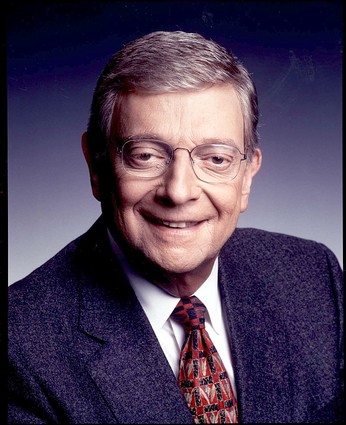
week after collapsing at his home, has been diagnosed with colon
cancer, station officials said today.

31626223.jpg

Doctors were treating Fishman, 75, for an infection he suffered after
the collapse when they discovered the cancer, which has spread to his
liver, said interim news director Rich Goldner.

Added Goldner: “Hal is awake and thanks everyone for their well wishes
and says he is going to fight this illness. He is looking forward to
coming back when he gets better.”

Fishman, a news veteran of more than 45 years, has anchored the
station’s 10 p.m. newscast since 1975. He is a former political science
professor and renowned aviation enthusiast, holding several records for
speed and altitude.

He joined KTLA in 1965 and reported on the assassination of Robert F.
Kennedy, the Northridge earthquake and the Rodney King beating.

His honors include a Governor’s Award from the Los Angeles Chapter of
the Academy of Television Arts and Sciences and an Outstanding
Broadcast Journalism Award from the Society of Professional Journalists.

In 2000, KTLA named its newsroom the “Hal Fishman Newsroom” in
recognition of his services to the community and to the station, which,
like the Los Angeles Times, is owned by Chicago-based Tribune Co.

His omnipresence on the Los Angeles news scene prompted dozens of well-wishers to send messages to the station’s website.

Many lauded Fishman’s straight-talking perspective, often delivered in the style of a stern father.

“Hal, get well soon and get back to work,” said one missive from Gerry
in El Cajon. “L.A. needs your honesty and perspective. Many of us have
watched KTLA for decades. We have grown up [I won’t say old] with you.
You are a civic treasure.”

carla.rivera@latimes.com

greg.Braxton@latimes.com

Los Angeles Times

Powered by ScribeFire.

Cop shielding Villaraigosa gets rough with reporter

Stories

Mayor Antonio Villaraigosa today sought to put the scandal surrounding
his personal life behind him, one day after the Telemundo network
suspended his girlfriend, newscaster Mirthala Salinas, for covering the
mayor while they were romantically involved.

But a Villaraigosa news conference at the Port of Los Angeles ended
chaotically, with a port police sergeant shoving a television reporter
against a cargo container as she attempted to pursue the mayor.


FOR THE RECORD:
An earlier version of this article referred to KVEA-TV Channel 52 as Channel 54.


Only minutes earlier, Villaraigosa had voiced hope that the
conclusion of Telemundo’s review of Salinas’ conduct would allow him to
move forward.

Yet even as the mayor expressed those sentiments, he took questions on
whether his poll numbers had dropped (he said he didn’t know), whether
he spoke to Telemundo for its review (he said he hadn’t) and whether he
felt responsible for the disciplinary actions that befell Salinas and
three management-level employees at Telemundo and its local affiliate,
KVEA-TV Channel 52.

“I regret (that) the decisions that I’ve made in my personal life have
been a distraction to the City of Los Angeles,” said Villaraigosa,
whose wife of 20 years has filed for divorce. “I’m deeply sorry that
I’ve let so many people down, especially my family. But it’s time to
move on, and move on we will.”

Villaraigosa said he took full responsibility for his actions “from the
very beginning.” And he repeatedly attempted to refocus reporters on
the port’s announcement that the retail chain Target had obtained 100
trucks powered by cleaner-burning liquid natural gas.

“That’s the real news here, by the way,” he said.

Villaraigosa customarily lingers after news conferences to answer
additional questions from reporters and allow cameras to follow him to
his vehicle.

But today, as the mayor strode from the podium, a half-dozen port
police officers formed a skirmish line to block reporters and cameramen
from approaching him.

“How come we’re not allowed to talk to him?” one reporter barked.

“Why the suddenly limited access?” another demanded.

When the officers broke their formation, more than a dozen journalists
starting running across a parking lot in pursuit of the mayor as he
departed.

Spanish-language television reporter Alicia Unger was at the front of
the pack, and as she approached one 20-foot container, Port Police Sgt.
Kevin McCloskey shoved her into the side of it, further infuriating
reporters, who began shouting.

“That’s wrong,” one television reporter screamed.

Another said: “You can’t hit a woman like that.”

A visibly shaken Unger, who reports for Azteca America Channel 54, then shouted at the officer: “Why are you pushing me?”

Reporters and camera operators surrounded McCloskey demanding to know
why he pushed Unger. McCloskey told them to contact port police as
another officer led him away.

Afterward, reporters turned their attention to Unger, who said that McCloskey “slammed me. He slammed me hard.”

Spokesman Matt Szabo later said that the mayor’s office did not order port police to keep reporters away from Villaraigosa.

david.zahniser@latimes.com

duke.helfand@latimes.com

Cop shielding Villaraigosa gets rough with reporter – Los Angeles Times

Powered by ScribeFire.

Design a site like this with WordPress.com
Get started
