White House
The Weird and Douchey World of Jake Tapper
ABC News, Jake Tapper, Politics, White House


Danny Froomkin Pretty Much Says It All About The Last Eight Years of "Journalism"
Dan Froomkin, Washington Post, White HousePosted at 10:22 AM ET, 06/26/2009
White House Watched
Today’s column is my last for The Washington Post. And the first thing I want to say is thank you. Thank you to all you readers, e-mailers, commenters, questioners, Facebook friends and Twitterers for spending your time with me and engaging with me over the years. And thank you for the recent outpouring of support. It was extraordinarily uplifting, and I’m deeply grateful. If I ever had any doubt, your words have further inspired me to continue doing accountability journalism. My plan is to take a few weeks off before embarking upon my next endeavor — but when I do, I hope you’ll join me.
It’s hard to summarize the past five and a half years. But I’ll try.
I started my column in January 2004, and one dominant theme quickly emerged: That George W. Bush was truly the proverbial emperor with no clothes. In the days and weeks after the 9/11 terror attacks, the nation, including the media, vested him with abilities he didn’t have and credibility he didn’t deserve. As it happens, it was on the day of my very first column that we also got the first insider look at the Bush White House, via Ron Suskind’s book, The Price of Loyalty. In it, former Treasury Secretary Paul O’Neill described a disengaged president “like a blind man in a room full of deaf people”, encircled by “a Praetorian guard,” intently looking for a way to overthrow Saddam Hussein long before 9/11. The ensuing five years and 1,088 columns really just fleshed out that portrait, describing a president who was oblivious, embubbled and untrustworthy.
When I look back on the Bush years, I think of the lies. There were so many. Lies about the war and lies to cover up the lies about the war. Lies about torture and surveillance. Lies about Valerie Plame. Vice President Dick Cheney’s lies, criminally prosecutable but for his chief of staff Scooter Libby’s lies. I also think about the extraordinary and fundamentally cancerous expansion of executive power that led to violations of our laws and our principles.
And while this wasn’t as readily apparent until President Obama took office, it’s now very clear that the Bush years were all about kicking the can down the road – either ignoring problems or, even worse, creating them and not solving them. This was true of a huge range of issues including the economy, energy, health care, global warming – and of course Iraq and Afghanistan.
How did the media cover it all? Not well. Reading pretty much everything that was written about Bush on a daily basis, as I did, one could certainly see the major themes emerging. But by and large, mainstream-media journalism missed the real Bush story for way too long. The handful of people who did exceptional investigative reporting during this era really deserve our gratitude: People such as Ron Suskind, Seymour Hersh, Jane Mayer, Murray Waas, Michael Massing, Mark Danner, Barton Gellman and Jo Becker, James Risen and Eric Lichtblau (better late than never), Dana Priest, Walter Pincus, Charlie Savage and Philippe Sands; there was also some fine investigative blogging over at Talking Points Memo and by Marcy Wheeler. Notably not on this list: The likes of Bob Woodward and Tim Russert. Hopefully, the next time the nation faces a grave national security crisis, we will listen to the people who were right, not the people who were wrong, and heed those who reported the truth, not those who served as stenographers to liars.
It’s also worth keeping in mind that there is so very much about the Bush era that we still don’t know.
Now, a little over five months after Bush left office, Barack Obama’s presidency is shaping up to be in large part about coming to terms with the Bush era, and fixing all the things that were broken. In most cases, Obama is approaching this task enthusiastically – although in some cases, he is doing so only under great pressure, and in a few cases, not at all . I think part of Obama’s abiding popularity with the public stems from what a contrast he is from his predecessor — and in particular his willingness to take on problems. But he certainly has a lot of balls in the air at one time. And I predict that his growing penchant for secrecy – especially but not only when it comes to the Bush legacy of torture and lawbreaking – will end up serving him poorly, unless he renounces it soon.
Obama is nowhere in Bush’s league when it comes to issues of credibility, but his every action nevertheless needs to be carefully scrutinized by the media, and he must be held accountable. We should be holding him to the highest standards – and there are plenty of places where we should be pushing back. Just for starters, there are a lot of hugely important but unanswered questions about his Afghanistan policy, his financial rescue plans, and his turnaround on transparency.
So now I’m off. I wish The Washington Post well. I’m proud to have been associated with it for 12 years (I was a producer and editor at the Web site before starting the column.) I remain a big believer in the “traditional media,” especially when it sticks to traditional journalistic values. The Post was, is and will always be a great newspaper, and I have confidence that it will rise to the challenges ahead.
I’ll be announcing my next move soon on whitehousewatch.com and also to anyone who e-mails me at froomkin@gmail.com. Please stay in touch.
//
By Dan Froomkin | June 26, 2009; 10:22 AM ET | Permalink | Comments (414)
Franken and Biden
Al Franken, Barack Obama, Joe Biden, Politics, White HouseFranken: “I Deeply Appreciate” Opportunity To Meet With Biden

The Franken campaign has released this statement on Al Franken’s meeting today at the White House with Vice President Biden:
MINNEAPOLIS [05/06/09] – This afternoon, Senator-elect Al Franken visited the White House to meet with Vice President Biden. Franken updated the Vice President on the state of Minnesota’s second U.S. Senate seat, and discussed the administration’s agenda and its potential benefits for the people of Minnesota. Franken was accompanied by his wife, Franni.
Al Franken:
“I deeply appreciate the administration’s ongoing support and the opportunity to meet with Vice President Biden today. Minnesotans are eager to see Congress make progress on the administration’s agenda – and I’m eager to do my part in that effort. From investments in alternative energy to the expansion of high-speed rail to the Twin Cities, we have a lot to do to help Minnesota’s working families, and I was pleased to discuss these important issues with the Vice President.”
……
Late Update: Vice President Biden has released this statement:
“The election process and recount in Minnesota have lived up to the state’s reputation for organization, transparency, and bipartisanship. The officials have been meticulous and every ruling has been unanimous.
“While Senator Amy Klobuchar is one of the hardest working members of the United States Senate, Minnesotans deserve their full representation.
“Once the Minnesota Supreme Court has issued its final ruling in this case, the President and I look forward to working with Mr. Franken on building an economy for the 21st century.”
Why is ABC News Chief White House Correspondent Jake Tapper Such a Complete and Utter Tool ?
ABC News, Barack Obama, Chrysler, GOP Talking Points, Hedge Funds, Jake Tapper, Matt Drudge, White House, White House Correspondents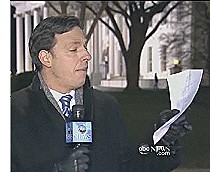
Last week, in an appalling show of corporate greed, “a small group of speculators” sank the Obama administration’s proposed Chrysler deal for just “an extra fifteen cents on the dollar.” The selfish greed of the hedge funds may, however, have produced a good result by forcing Chrysler into the bankruptcy process. The New York Times reported on Friday, “whatever the outcome, this bit of brinkmanship — which many characterized as a game of chicken with Washington — has become yet another public relations disaster for Wall Street.” But instead, this story of corporate greed has now been turned into a right-wing attack on President Obama. Here’s how it happened in three simple steps.
Step 1: Right-Wing Radio Gives Corporate Hedge Funds A Venue To Attack Obama In an interview with Detroit-based conservative talk show host Frank Beckmann on Friday, Tom Lauria — a corporate lawyer representing the hedge funds calling themselves the Committee of Chrysler Non-Tarp Lenders — alleged that one of its members, the investment firm Perella Weinberg, was “directly threatened by the White House” if it did not cooperate with the Obama’s administration’s rescue plan. (Perella was Rahm Emanuel’s former investment partner.) Lauria claimed that Perella withdrew its opposition to the government deal because the White House threatened “that the full force of the White House press corps would destroy its reputation if it continued to fight.” (Listen here.)
Step 2: Right-Wing Pressures White House Reporters To Take Up Its Attack After the story was cooked up by right-wing hate radio, it was peddled to members of the White House press corps, at least one of whom took the bait. On his radio show on Friday, right-wing talker Mark Levin discussed Lauria’s claims against Obama, and then called on his listeners to pressure the White House press corps — specifically ABC’s Jake Tapper — to report the story:
LEVIN: Somebody needs to pursue what’s going on in the White House behind the scenes! And stop playing games and making nice! American citizens — whatever walk of life they’re in — should not be threatened by the White House! Should not be told we’re going to drag you through the mud with the White House press corps! So confident is the White House that they have the White House press corps wrapped around their little finger! Maybe Jake Tapper will take a look at this. Ask that doofus — Gibbs.
Listen here:
Levin works for the ABC Radio Networks. Tapper works for ABC News. Step 3: ABC’s Jake Tapper Picks It Up, Drudge Promotes It A day after Levin’s show aired, ABC’s White House correspondent Jake Tapper gave the right-wing attacks the platform they were looking for. Tapper reported, “A leading bankruptcy attorney representing hedge funds and money managers told ABC News Saturday that Steve Rattner, the leader of the Obama administration’s Auto Industry Task Force, threatened one of the firms.” After Tapper reported it, Drudge linked to his story and helped give it further amplification: 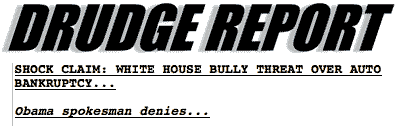 Both the White House and Perella Weinberg have released statements to ABC News denying the accusations made by Tom Lauria and the right-wing echo chamber. Bottom line: the right wing has morphed a story of corporate greed into a false political attack against Obama.
Stay Classy Politico….
Albritton Communications, Barack Obama, Beltway Media, Capitol Shill, Douchebaggery, Jim VandeHei, John Harris, Jonathan Martin, Mike Allen, Politico, Politics, White House“…They strike a desperate, high – school like “everybody love me” “centrist” pose”
-Tullycast viewer on The New Republic

White House: Priority Is Legislation That "Doesn't Signal A Change In Our Overall Stance on Trade
AFL-CIO, Barack Obama, Bob Baugh, CAFTA, Free Trade, Larry Summers, NAFTA, Ohio, Pennsylvania, Robert Gibbs, Trade, White House, Wisconsin, WTO
By David Sirota
02/04/2009
Whether or not you are among the tiny minority of Americans who thinks our trade and globalization policies are good for our country, it is undeniable that Barack Obama campaigned on very explicit pledges to radically change those policies [1]. He not only campaigned on an implicit promise to support Buy America laws [2], but with regards to existing trade agreements and their provisions dealing with procurement, he said he does “not support trade efforts that undermine important federal, state and local policies.”
Clearly, his move to water-down the Buy America laws he campaigned on violate the spirit – if not the letter – of his campaign promises, especially because he is justifying the move by citing the trade agreement restrictions he said he opposed. But today, the White House went even further, saying that the administration’s overarching goal is actually no wholesale change of trade policy whatsoever. Check this out [3] from White House press secretary Robert Gibbs’ briefing today:
The lawmakers are reacting to a demand by the White House that the provisions satisfy U.S. obligations under the World Trade Organization. President Barack Obama “wants to ensure that any legislation that passes is consistent with trade agreements and doesn’t signal a change in our overall stance on trade,” White House Press Secretary Robert Gibbs said at a news briefing today.
As the AFL-CIO’s Bob Baugh notes – and as Public Citizen ably details [4] – Buy America laws (ie. laws that let the government target its procurement to American companies) are completely consistent with our international trade agreements. Indeed, both the “protectionist” [5] fearmongering and the “violation of trade pacts” nonsense are canards on the substance.
But that’s less important than the White House’s meta statement here. After winning free-trade-decimated swing states like Ohio, Indiana, Pennsylvania, Wisconsin on very clear promises to change America’s overall stance on trade policy, the White House has made an official declaration that one of the president’s biggest objectives in the debate over the stimulus bill is that the legislation “doesn’t signal a change in our overall stance on trade.” Yes, the administration that came in on a promise of “change” is explicitly saying it doesn’t want to even “signal a change.”
Between this, and Larry Summers’ letter [6] insisting that the Obama administration will avoid any “industrial policy” at all cost, I don’t know how much more clear the Obama administration can really make things. It is going before cameras specifically saying its objective is to prevent change on one of the most important economic issues that Obama campaigned on.
Is There a White House Baby on the Way?
Barack Obama, Michelle Obama, Perez, Romors, White House
Celebrity blogger Perez Hilton has rarely let facts get in the way of gossip. Still, his latest and apparently baseless speculation about Michelle Obama has generated international baby buzz.
On Wednesday, an item appeared on PerezHilton.com (filed under Baby Blabber – Conspiracy Corner) with the headline: “White House Baby???”
“We’re hearing talk in D.C. that Michelle Obama is pregnant,” the post read.
Despite Hilton’s blunt disclaimer (“this is completely unconfirmed”), the rumor has picked up steam. A Google search for the words “Michelle Obama” and “pregnant” churns out 826,000 results. Meanwhile, Gawker has begun scrutinizing recent photos of the First Lady for signs of pregnancy.
The speculation has also spread overseas. News outlets from England to Australia pounced on the news.
So did the gambling world. In the wake of the rumor, Ireland’s biggest bookmaker Paddy Power slashed the odds on Michelle Obama giving birth this year from 10-1 to 2-1. You can also wager on the sex of the baby and even if the birth will produce multiple babies (it’s 20-1 that Michelle Obama will have twins and 10,000-1 that she will have octuplets).
Paddy Power’s Ken Robertson tells CBSNews.com that at this very moment, there are 166 bets on “Yes, there will be a new first baby” (for a total stake of 2412 Euros) and 222 bets on “No, there will not be a new first baby” (for a total stake of €3996).
Of course, the baby bets also include what the Obamas would name their third child, after Sasha and Malia. Barack Jr. is the favorite at 3-1; Michelle is 10-1; and the 250-1 long shots include Paris, Perez and Jesus.
Roberston says so far the most widely backed name for the new baby is Barack Jr., which has 98 bets for a total stake of €784.
If the dubious rumor does prove to be true, the baby would be only the second born in the White House. That sole distinction now belongs to the daughter of President Grover Cleveland, who was born in 1893. Her name? Esther.

What Really Happened in Ashcroft's Hospital Room: The Battle For Secret Surveillance
Andy Card, David Addington, Domestic Spying, FBI, FISA, George W. Bush, James Comey, John Ashcroft, John Yoo, Metadata, Robert Mueller, Secret Surveillance, White HouseIssue dated Dec 22, 2008
It is one of the darkly iconic scenes of the Bush Administration. In March 2004, two of the president’s most senior advisers rushed to a Washington hospital room where they confronted a bedridden John Ashcroft. White House chief of staff Andy Card and counsel Alberto Gonzales pressured the attorney general to renew a massive domestic-spying program that would lapse in a matter of days. But others hurried to the hospital room, too. Ashcroft’s deputy, James Comey, later joined by FBI Director Robert Mueller, stood over Ashcroft’s bed to make sure the White House aides didn’t coax their drugged and bleary colleague into signing something unwittingly. The attorney general, sick and pain-racked from a rare pancreatic disease, rose up from his bed, gathering what little strength he had, and firmly told the president’s emissaries that he would not sign their papers.
White House hard-liners would make one more effort—getting the president to recertify the program on his own, relying on his powers as commander in chief. But in the end, with an election looming and the entire political leadership of the Justice Department poised to resign rather than carry out orders they thought to be illegal, Bush backed down. The rebels prevailed.
But that is only part of the story—because Bush, even though he made concessions to the rebels, kept other aspects of the program intact. Even after The New York Times revealed the existence of the secret surveillance two years later—and despite outrage in Congress and among civil libertarians—monitoring of calls and e-mails between the United States and overseas without court approval continues. Much has been written about the Justice Department rebellion, including, most recently, the account in Barton Gellman’s groundbreaking book “Angler.” But a mystery remains: What did the Justice Department rebels object to, and what concessions did Bush make to appease them? What, precisely, was canceled?
Two knowledgeable sources tell NEWSWEEK that the clash erupted over a part of Bush’s espionage program that had nothing to do with the wiretapping of individual suspects. Rather, Comey and others threatened to resign because of the vast and indiscriminate collection of communications data. These sources, who asked not to be named discussing intelligence matters, describe a system in which the National Security Agency, with cooperation from some of the country’s largest telecommunications companies, was able to vacuum up the records of calls and e-mails of tens of millions of average Americans between September 2001 and March 2004. The program’s classified code name was “Stellar Wind,” though when officials needed to refer to it on the phone, they called it “SW.” (The NSA says it has “no information or comment”; a Justice Department spokesman also declined to comment.)
The NSA’s powerful computers became vast storehouses of “metadata.” They collected the telephone numbers of callers and recipients in the United States, and the time and duration of the calls. They also collected and stored the subject lines of e-mails, the times they were sent, and the addresses of both senders and recipients. By one estimate, the amount of data the NSA could suck up in close to real time was equivalent to one quarter of the entire Encyclopaedia Britannica per second. (The actual content of calls and e-mails was not being monitored as part of this aspect of the program, the sources say.) All this metadata was then sifted by the NSA, using complex algorithms to detect patterns and links that might indicate terrorist activity.
The secret collection and data-mining program had begun with a blessing by John Yoo, an ultraconservative lawyer in the Justice Department’s Office of Legal Counsel. Yoo was a close ally of hard-line lawyers in the White House and worked closely with David Addington, Vice President Dick Cheney’s lawyer. (Addington is now Cheney’s chief of staff.) But by 2003, Yoo had moved on, and a new head of the OLC, Jack Goldsmith, began reviewing his work. Goldsmith found Yoo’s legal opinions justifying the program flawed. His reasons are based on a mind-numbingly complex area of federal law, but the basic analysis comes down to this: the systematic collection and digital transmission of huge amounts of telephone and e-mail data by the government constitutes “electronic surveillance” under the Foreign Intelligence Surveillance Act, the exclusive law governing domestic spying in national-security cases. For such activities, FISA requires a court-approved warrant. Therefore, the program was illegal. The White House lawyers countered that the president’s constitutional powers as commander in chief trumped FISA. Goldsmith and his colleagues rejected that argument, and won. Days after the hospital clash, Bush shut down the massive data-collection program and stopped searches of the data that had already been stored. (It’s unclear whether the administration has since found new legal justification to return to at least some of these activities.)
This updated version of events helps explain exactly what motivated stalwart Republican lawyers like Comey to defy their Republican president. The Justice lawyers were not fuming about an Orwellian invasion of the privacy of American citizens. Though all the rebellious lawyers agreed that the program was illegal, some favored its goals while others questioned its efficacy. “At the end of the day, the dispute was a legal one, not a policy one,” says one participant. “It was about upholding the rule of law, not about what was appropriate from a civil-libertarian standpoint or any other standpoint.”
One of the most consequential government rebellions in memory may be regarded as an act of heroism by civil libertarians. But the rebels were conservatives who might have been willing to—and in some cases did—approve policies that would not sit well with many Americans. They just weren’t willing to break the law. Which is how the president’s men ended up in John Ashcroft’s hospital room on a cool March evening.
BUSTED! White House Suffers Loss in Email Case
Citizens for Responsibility and Ethics, CREW, Executive Office, Federal Records Act, Judge Kennedy, Melanie Sloan, National Security Archive, President Geaorge W. Bush, White HouseRats. Inc.
Associated Press
WASHINGTON — A federal judge on Monday ruled against the Bush administration in a court battle over the White House’s problem-plagued email system.
U.S. District Judge Henry Kennedy said two private groups may pursue their case as they press the administration to recover millions of possibly missing electronic messages.
Judge Kennedy rejected the government’s request to throw out the lawsuits filed by Citizens for Responsibility and Ethics in Washington and the National Security Archive.
The Bush administration had argued that the courts didn’t have the power to order the White House to retrieve any missing emails.
A document obtained by the Associated Press in August says the White House is missing as many as 225 days of email dating back to 2003.
The nine-page outline of the White House’s email problems invites companies to bid on a project to recover the missing electronic messages. The White House hasn’t said whether it has hired a contractor.
CREW executive director Melanie Sloan called the ruling “a clear victory for the American people. The Executive Office of the President does have to answer for the missing email.”
CREW and the National Security Archive are seeking a court order directing the archivist of the U.S. to ask that the attorney general initiate legal action under the Federal Records Act.
Copyright © 2008 Associated Press
 The New York Herald Sun