Jake Tapper : Chief WHite House Deficit Concern Troll


~ Stabaclinton and Friends:


By ADAM COOPER

Williams F1 has sold a minority shareholding to an Austrian group led by investor Christian “Toto” Wolff.
The Williams team has been owned 70/30 by Sir Frank Williams and Patrick Head since it was started in 1977. They have resisted overtures from potential partners, including BMW.
The 37-year-old Wolff is based in Switzerland with his partner, Scottish DTM racer Susie Stoddart. He made his money in a wide range of venture-capital investments under the Marchfifteen and Marchsixteen names. His holdings currently include HWA AG, which operates the Mercedes DTM program, and rally organization BRR, which runs the Red Bull junior team. He also runs a driver-management company with Mika Häkkinen.
Wolff also is a successful racer. He started in Formula Ford in 1992, but has focused mainly on GTs. In 2004, he raced a Ferrari 575 Maranello with close associate and former Formula One driver Karl Wendlinger in the FIA GT series. More recently, he has competed in rallying.
He is lap record holder at the full Nürburgring track, a feat achieved in a Porsche 997 RSR. But he wrecked the car on the next lap after a tire failed at 165 mph.



Los Angeles, California (CNN) — Despite intense student protests, the California Board of Regents on Thursday approved a 32 percent undergraduate tuition increase over the next two years.
Hundreds of students marched and chanted outside UCLA, where university officials were meeting. School officials argued that a fee increase and deep cuts in school spending were necessary because of the state government’s ongoing budget crisis.
After the vote, students rushed the parking decks and staged a sit-in to block regents officials from leaving. Campus police and California Highway Patrol officers were nearby and on the ready clad in riot gear.
Students and others say the cuts will hurt the working and middle classes who benefit from state-funded education.
“We’re fired up. Can’t take it no more,” students chanted as they marched and waved signs. “Education only for the rich,” one sign read.
Dozens of students lined up early for seats inside the regents meeting, hoping for a chance at the microphone during the public comment time before the vote. Campus police with riot gear lined up between the loud but peaceful protesters and the entrance.
The University of California’s Board of Regents approved the plan a day after the regents’ finance committee approved the 32 percent increase.
Some faculty members and campus workers — worried about furloughs and layoffs to come — joined the protesting students.
“Stop cuts in education and research,” a sign carried by a teacher said.
Fourteen people were arrested Wednesday morning after they disrupted the regents’ meeting with chanting, police said. Other protests — including “tent cities” — were under way on other University of California campuses across the state.
About 26 percent of the $20 billion spent each year by the system comes from the state’s general fund and tuition and fees paid by students, according to a summary on the regent’s Web site.
The first tuition increase, which takes effect in January, will cost undergraduate students an additional $585 a semester. The second increase kicks in next fall, raising tuition another $1,344.
The fee increases would be balanced by a raise in “the level of financial assistance for needy low- and middle-income students,” according to a statement from the Board of Regents.
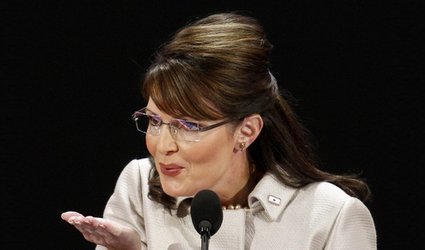
In an interview with ABC’s Barbara Walters, former Alaska governor Sarah Palin separated herself from decades of U.S. policy — which has held that Israel’s settlements in the Occupied Territories are illegitimate and an impediment to peace — saying that she thinks “Jewish settlements should be allowed to be expand”:
WALTERS: The Obama administration does not want Israel to build any more settlements on what they consider Palestinian territory. What is your view on this?
PALIN: I disagree with the Obama administration on that. I believe that the Jewish settlements should be allowed to be expanded upon, because that population of Israel is, is going to grow. More and more Jewish people will be flocking to Israel in the days and weeks and months ahead. And I don’t think that the Obama administration has any right to tell Israel that the Jewish settlements cannot expand.
WALTERS: Even if it’s [in] Palestinian areas?
PALIN: I believe that the Jewish settlements should be allowed to be expand.
Not only does Palin disagree with the Obama administration on that, she also disagrees with the Bush administration, whose 2002 “roadmap for peace” called for a settlement freeze. In fact, every U.S. administration since Israel’s occupation of the West Bank and Gaza began in 1967 has opposed Israel’s building of settlements, which are held to be illegal under the Fourth Geneva Convention:
Article 49. The Occupying Power shall not deport or transfer parts of its own civilian population into the territory it occupies.
In addition to violating Israel’s obligations under international law, the settlements are a major source of anger and frustration for Palestinians, and one of the main drivers of extremism and violence among both Palestinians and Israelis. By further entrenching Israel within the Palestinian territories, the settlements also make a two-state solution — which both Presidents Bush and Obama have recognized as a central U.S. national security interest — far more difficult to achieve.
Palin’s wild views on Jewish settlements might help her steal some radical right-wing religious support from Mike Huckabee, but they have disastrous implications both for U.S. and Israeli security, as well as for Palestinian national and human rights.
 The New York Herald Sun