Bernanke
Government Bailout Hits $8.5 trillion
Adjustable Rate Mortgages, AIG, Alan Greenspan, bailout, Banking Regulation, Banks, Ben Bernanke, Bernie Madoff, BofA, Citi, Credit, Credit Default Swaps, Fannie Mae, Federal Reserve, Finance, Freddy Mac, Henry Paulson, Lehman, Merrill, Mrs. Andrea Mitchell, Treasury, Wachovia, Wall Street, World Savings
Kathleen Pender
November 26, 2008
The federal government committed an additional $800 billion to two new loan programs on Tuesday, bringing its cumulative commitment to financial rescue initiatives to a staggering $8.5 trillion, according to Bloomberg News.
That sum represents almost 60 percent of the nation’s estimated gross domestic product.
Given the unprecedented size and complexity of these programs and the fact that many have never been tried before, it’s impossible to predict how much they will cost taxpayers. The final cost won’t be known for many years.
The money has been committed to a wide array of programs, including loans and loan guarantees, asset purchases, equity investments in financial companies, tax breaks for banks, help for struggling homeowners and a currency stabilization fund.
Most of the money, about $5.5 trillion, comes from the Federal Reserve, which as an independent entity does not need congressional approval to lend money to banks or, in “unusual and exigent circumstances,” to other financial institutions.
To stimulate lending, the Fed said on Tuesday it will purchase up to $600 billion in mortgage debt issued or backed by Fannie Mae, Freddie Mac and government housing agencies. It also will lend up to $200 billion to holders of securities backed by consumer and small-business loans. All but $20 billion of that $800 billion represents new commitments, a Fed spokeswoman said.
About $1.1 trillion of the $8.5 trillion is coming from the Treasury Department, including $700 billion approved by Congress in dramatic fashion under the Troubled Asset Relief Program.
The rest of the commitments are coming from the Federal Deposit Insurance Corp. and the Federal Housing Administration.
Only about $3.2 trillion of the $8.5 trillion has been tapped so far, according to Bloomberg. Some of it might never be.
Relatively little of the money represents direct outlays of cash with no strings attached, such as the $168 billion in stimulus checks mailed last spring.
Where it’s going
Most of the money is going into loans or loan guarantees, asset purchases or stock investments on which the government could see some return.
“If the economy were to miraculously recover, the taxpayer could make money. That’s not my best guess or even a likely scenario,” but it’s not inconceivable, says Anil Kashyap, a professor at the University of Chicago’s Booth School of Business.
The risk/reward ratio for taxpayers varies greatly from program to program.
For example, the first deal the government made when it bailed out insurance giant AIG had little risk and a lot of potential upside for taxpayers, Kashyap said. “Then it turned out the situation (at AIG) was worse than realized, and the terms were so brutal (to AIG) that we had to renegotiate. Now we have given them a lot more credit on more generous terms.”
Kashyap says the worst deal for taxpayers could be the Citigroup deal announced late Sunday. The government agreed to buy an additional $20 billion in preferred stock and absorb up to $249 billion in losses on troubled assets owned by Citi.
Given that Citigroup’s entire market value on Friday was $20.5 billion, “instead of taking that $20 billion in preferred shares we could have bought the company,” he says.
It’s hard to say how much the overall rescue attempt will add to the annual deficit or the national debt because the government accounts for each program differently.
If the Treasury borrows money to finance a program, that money adds to the federal debt and must eventually be paid off, with interest, says Diane Lim Rogers, chief economist with the Concord Coalition, a nonpartisan group that aims to eliminate federal deficits.
The federal debt held by the public has risen to $6.4 trillion from $5.5 trillion at the end of August. (Total debt, including that owed to Social Security and other government agencies, stands at more than $10 trillion.)
However, a $1 billion increase in the federal debt does not necessarily increase the annual budget deficit by $1 billion because it is expected to be repaid over time, Rogers said.
Annual deficit
A deficit arises when the government’s expenditures exceed its revenues in a particular year. Some estimate that the federal deficit will exceed $1 trillion this fiscal year as a result of the economic slowdown and efforts to revive it.
The Fed’s activities to shore up the financial system do not show up directly on the federal budget, although they can have an impact. The Fed lends money from its own balance sheet or by essentially creating new money. It has been doing both this year.
The problem is, “if you print money all the time, the money becomes worth less,” Rogers says. This usually leads to higher inflation and higher interest rates. The value of the dollar also falls because foreign investors become less willing to invest in the United States.
Today, interest rates are relatively low and the dollar has been mostly strengthening this year because U.S. Treasury securities “are still for the moment a very safe thing to be investing in because the financial market is so unstable,” Rogers said. “Once we stabilize the stock market, people will not be so enamored of clutching onto Treasurys.”
At that point, interest rates and inflation will rise. Increased borrowing by the Treasury will also put upward pressure on interest rates.
Deflation a big concern
Today, however, the Fed is more worried about deflation than inflation and is willing to flood the market with money if necessary to prevent an economic collapse.
Federal Reserve Chairman Ben Bernanke “has ordered the helicopters to get ready,” said Axel Merk, president of Merk Investments. “The helicopters are hovering and the first cash is making it through the seams. Soon, a door may be opened.”
Rogers says her biggest fear is not hyperinflation and the social unrest it could unleash. “I’m more worried about a lot of federal dollars being committed and not having much to show for it. My worst fear is we are leaving our children with a huge debt burden and not much left to pay it back.”
Economic rescue
Key dates in the federal government’s campaign to alleviate the economic crisis.
March 11: The Federal Reserve announces a rescue package to provide up to $200 billion in loans to banks and investment houses and let them put up risky mortgage-backed securities as collateral.
March 16: The Fed provides a $29 billion loan to JPMorgan Chase & Co. as part of its purchase of investment bank Bear Stearns.
July 30: President Bush signs a housing bill including $300 billion in new loan authority for the government to back cheaper mortgages for troubled homeowners.
Sept. 7: The Treasury takes over mortgage giants Fannie Mae and Freddie Mac, putting them into a conservatorship and pledging up to $200 billion to back their assets.
Sept. 16: The Fed injects $85 billion into the failing American International Group, one of the world’s largest insurance companies.
Sept. 16: The Fed pumps $70 billion more into the nation’s financial system to help ease credit stresses.
Sept. 19: The Treasury temporarily guarantees money market funds against losses up to $50 billion.
Oct. 3: President Bush signs the $700 billion economic bailout package. Treasury Secretary Henry Paulson says the money will be used to buy distressed mortgage-related securities from banks.
Oct. 6: The Fed increases a short-term loan program, saying it is boosting short-term lending to banks to $150 billion.
Oct. 7: The Fed says it will start buying unsecured short-term debt from companies, and says that up to $1.3 trillion of the debt may qualify for the program.
Oct. 8: The Fed agrees to lend AIG $37.8 billion more, bringing total to about $123 billion.
Oct. 14: The Treasury says it will use $250 billion of the $700 billion bailout to inject capital into the banks, with $125 billion provided to nine of the largest.
Oct. 14: The FDIC says it will temporarily guarantee up to a total of $1.4 trillion in loans between banks.
Oct. 21: The Fed says it will provide up to $540 billion in financing to provide liquidity for money market mutual funds.
Nov. 10: The Treasury and Fed replace the two loans provided to AIG with a $150 billion aid package that includes an infusion of $40 billion from the government’s bailout fund.
Nov. 12: Paulson says the government will not buy distressed mortgage-related assets, but instead will concentrate on injecting capital into banks.
Nov. 17: Treasury says it has provided $33.6 billion in capital to another 21 banks. So far, the government has invested $158.6 billion in 30 banks.
Sunday: The Treasury says it will invest $20 billion in Citigroup Inc., on top of $25 billion provided Oct. 14. The Treasury, Fed and FDIC also pledge to backstop large losses Citigroup might absorb on $306 billion in real estate-related assets.
Tuesday: The Fed says it will purchase up to $600 billion more in mortgage-related assets and will lend up to $200 billion to the holders of securities backed by various types of consumer loans.
Source: Associated Press
Net Worth runs Tuesdays, Thursdays and Sundays. E-mail Kathleen Pender at kpender@sfchronicle.com.
Jim Rogers Says Geithner Caused Crisis; Must Let Banks Fail
Banking, Finance, Jim Rodgers, Stimulus Package, Tim Geithner, Wall Street. Peter SchiffSmall Banks Getting Short End of Tarp Bat
Banking, Bernanke, Federal Reserve, Finance, Greenspan, Paulson, TARP, Treasury, Wall StreetSEEKING ALPHA
William Patalon III
Bank of American Corp. (BAC), which is getting $15 billion from the U.S. government as part of the Treasury Department’s $250 billion “recapitalization” effort, is doubling its stake in state-owned China Construction Bank Corp., and will hold a 20% stake worth $24 billion in China’s second-largest lender when that deal is finalized.
PNC Financial Services Group Inc. (PNC), which will get $7.7 billion from Treasury’s Troubled Assets Relief Program (TARP), is using that cash infusion to help finance its $5.2 billion buyout of embattled National City Corp. (NCC).
And U.S. Bancorp (USB), which received a $6.6 billion capital infusion from that same rescue package, has acquired two California lenders – Downey Savings & Loan Association, F.A., a subsidiary of Downey Financial Corp. (DSL), and PFF Bank & Trust, a subsidiary of PFF Bancorp Inc. (OTC: PFFB). U.S. Bank agreed to assume the first $1.6 billion in losses from the two, but says anything beyond that amount is subject to a loss-sharing deal it struck with the Federal Deposit Insurance Corp. (FDIC).
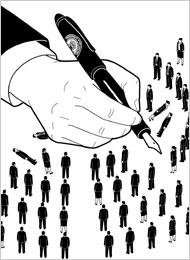
While the Treasury Department’s investment of more than $250 billion in U.S. financial institutions has been billed as a strategy that will bolster the health of the banking system and also jump-start lending, buyout deals such as these three show that the recapitalization plan has actually had a much different result – one that’s left whipsawed U.S. investors and lawmakers alike feeling burned, an ongoing Money Morning investigation continues to show.
Those billions have touched off a banking-sector version of “Let’s Make a Deal,” in which the biggest U.S. banks are using government money to get even bigger. While that’s admittedly removing the smaller, weaker banks from the market – a possible benefit to consumers and taxpayers alike – this trend is also having a detrimental effect: It’s reducing the competition that’s benefited consumers and kept the explosion in banking fees from being far worse than it already is.
This all happens without any of the economic benefits that an actual increase in lending would have had. And it does nothing to address the billions worth of illiquid securities that remain on (or off) banks’ balance sheets – as the recent Citigroup Inc. (C) imbroglio demonstrates.
In fact, Treasury’s TARP program has even managed to create a potentially illegal tax loophole that grants banks a tax-break windfall of as much as $140 billion. Lawmakers are furious – but possibly powerless, afraid that a full-scale assault on the tax change could cause already-done deals to unravel, in turn causing investor confidence to do the same.
One could even argue that since this first bailout (the $700 billion TARP initiative) has fueled takeovers – and not lending – the government had no choice but to roll out the more-recent $800 billion stimulus plan that was aimed at helping consumers and small businesses – a move that may spur lending and spending, but that still adds more debt to the already-sagging federal government balance sheet.
At the end of the day, these buyout deals are bad ones no matter how you evaluate them, says R. Shah Gilani, a retired hedge fund manager and expert on the U.S. credit crisis who is the editor of the Trigger Event Strategist, which identifies trading opportunities emanating from such financial-crisis “aftershocks” as this buyout binge.
“Why in the name of capitalism are taxpayers being fleeced by banks that are being given our money to grow their businesses with the further backstop of more of our money having to be thrown to the FDIC when they fail?” Gilani asked. “Consolidation does not mean that bad loans and illiquid securities are somehow merged out of existence. It means that they are being acquired under the premise that a larger, more consolidated depositor base will better be able to bear the weight of those bad assets. What in heaven’s name prevents depositors from exiting when the merged banks continue to experience massive losses and write-downs? The answer to that question would be … nothing.”
Lining Up for Deal Money
In launching TARP, U.S. Treasury Secretary Henry M. “Hank” Paulson Jr. said the government’s goal was to restore public confidence in the U.S. financial services sector – especially banks – so private investors would be willing to advance money to banks and banks, in turn, would be willing to lend.
“Our purpose is to increase the confidence of our banks, so that they will deploy, not hoard, the capital,” Paulson said.
Whatever Treasury’s actual intent, the reality is that banks are already sniffing out buyout targets, while snuffing out lending – and the TARP money is the reason for both.
Fueled by this taxpayer-supplied capital, the wave of consolidation deals is “absolutely” going to accelerate, says Louis Basenese, a mergers-and-acquisitions expert who is also the editor of The Takeover Trader newsletter. “When it comes to M&A, there’s always a pronounced ‘domino effect.’ Consolidation breeds more consolidation as industry leaders conclude they have to keep acquiring in order to remain competitive.”
Indeed, banking executives have been quite open about their expansionist plans during media interviews, or during conference calls related to quarterly earnings.
Take BB&T Corp. (BBT). During a conference call that dealt with the bank’s third-quarter results, Chief Executive Officer John A. Allison IV said the Winston-Salem, N.C.-based bank “will probably participate” in the government program. Allison didn’t say whether the federal money would induce BB&T to boost its lending. But he did say the bank would likely accept the money in order to finance its expansion plans, The Wall Street Journal said.
“We think that there are going to be some acquisition opportunities – either now or in the near future – and this is a relatively inexpensive way to raise capital [to pay the buyout bill],” Allison said during the conference call.
And BB&T is hardly alone. Zions Bancorporation (ZION), a Salt Lake City-based bank that’s been squeezed by some bad real-estate loans, recently said it would be getting $1.4 billion in federal money. CEO Harris H. Simmons said the infusion would enable Zions to boost “prudent” lending and keep paying its dividend – albeit at a reduced rate.
Sounds good, right? Not so fast. During a conference call about earnings, Zions Chief Financial Officer Doyle L. Arnold said any lending increase wouldn’t be dramatic. Besides, Arnold said, Zions will also use the money “to take advantage of what we would expect will be some acquisition opportunities, including some very low risk FDIC-assisted transactions in the next several quarters.”
Buyouts Already Accelerating
With all the liquidity the world’s governments and central banks have injected into the global financial system, the pace of worldwide deal making is already accelerating. Global deal volume for the year has already passed the $3 trillion level – only the fifth time that’s happened, although it took about three months longer for that to happen this year than it did a year ago.
At a time when the global financial crisis – and the accompanying drop-off in available deal capital (either equity or credit) – has caused about $150 billion in already-announced deals to be yanked off the table since Sept. 1, liquidity from the U.S. and U.K. governments has ignited record levels of financial-sector deal making.
According to Dealogic, government investments in financial institutions has reached $76 billion this year – eight times as much as in all of 2007, which was the previous record year. And that total doesn’t include the $250 billion in TARP money, or other deals that Paulson & Co. are helping engineer – JPMorgan Chase & Co.’s (JPM) buyouts of The Bear Stearns Cos. and Washington Mutual Inc. (WAMUQ), for instance.
If You Can’t Beat ‘em… Buy ‘em?
When it comes to identifying possible buyout targets, M&A experts such as Basenese say there are some very clear frontrunners.
“I’d put regional banks with solid footprints in the Southeast high on the list, and for two reasons,” Basenese said. “First, demographics point to stronger growth [in this region] as retirees migrate to warmer climates – and bring their assets along for the trip. Plus, the Southeast is largely un-penetrated by large national banks. An acquisition of a regional bank like SunTrust Banks Inc. (STI) would provide a distinct competitive advantage.
There’s a very good reason that smaller players may be next: Big banks and small banks have the easiest times – relatively speaking, of course – of raising capital. It’s toughest for the regional players. Big banks can tap into the global financial markets for cash, while the very small – and typically, highly local – banks can raise money from local investors.
The afore-mentioned stealthy shift in the U.S. Tax Code actually gives big U.S. banks a potential windfall of as much as $140 billion, says Gilani, the credit crisis expert and Trigger Event Strategist editor. What does this tax-change do? By acquiring a failed bank whose only real value is the losses on its books, the successful suitor would basically then be able to use the acquired bank’s losses to offset its own gains and thus avoid paying taxes.
 “While everyone was panicking, the Treasury Department slipped through a ruling that allows banks who acquire other banks to fully write-off all the acquired bank’s bad debts,” Gilani says. “For 22 years, the law was such that if you were to buy a company that had losses, say, of $1 billion, you couldn’t just take that loss against your own $1 billion profit and tell Uncle Sam, ‘Gee, now my loss offsets my profit, so I don’t have any profit, and I don’t owe you any tax.’ It was a recipe for tax evasion that demanded an appropriate law that only allows limited write-offs over an extended period of years.”
Given these incentives, who will be doing the buying? Clearly, the biggest U.S.-based banks will be the main hunters. But The Takeover Trader’s Basenese says that even foreign banks will be on the prowl for cheap U.S. banking assets.
Basenese also believes that Goldman Sachs Group Inc. (GS) and Morgan Stanley (MS) will be “big spenders.” Each will use TARP funds to help accelerate its transformation from an investment bank into a bank holding company. The changeover will require each company to build up a big base of deposits. And the best way to do that is to buy other banks, Basenese says.
“One thing [the wave of deals] does is to restore confidence in the sector,” Basenese said. “It will go a long way in convincing CEOs that it’s safe to use excess capital to fund acquisitions, and to grow, instead of using it to defend against a proverbial run on the bank.”
Not everyone agrees with that assessment. Investors who play the merger game correctly will do well. But the game itself won’t necessarily whip the industry into championship form, Gilani says.
“While consolidation, instead of outright collapses, in the banking industry may serve to relieve the FDIC of its burden to make good on failed banks, it in no way guarantees fewer failures,” he said. “In fact, it may only serve to guarantee, in some cases, even larger failures.”
The 17th Floor, Where Wealth Went to Vanish
Bankers, Banking and Finance, Bernie Madoff, Derivitives, Fraud, Hedge Funds, New York, Ponzi Scheme, Proprietary System, Wall Street
The 17th floor, where wealth went to vanish
Monday, December 15, 2008
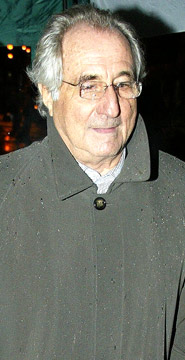
The epicenter of what may be the largest Ponzi scheme in history was the 17th floor of the Lipstick Building, an oval red-granite building rising 34 floors above Third Avenue in Midtown Manhattan.
A busy stock-trading operation occupied the 19th floor, and the computers and paperwork filled the 18th floor of Bernard L. Madoff Investment Securities.
But the 17th floor was Bernie Madoff’s sanctum, occupied by fewer than two dozen staff members and rarely visited by other employees. They called it the “hedge fund” floor, but U.S. prosecutors now say the work Madoff did there was actually a fraud scheme whose losses Madoff himself estimates at $50 billion.
The tally of reported losses climbed through the weekend to nearly $20 billion, with a giant Spanish bank, Banco Santander, reporting on Sunday that clients of one of its Swiss subsidiaries have lost $3 billion. Some of the biggest losers were members of the Palm Beach Country Club, where many of Madoff’s wealthy clients were recruited.
The list of prominent fraud victims grew as well. According to a person familiar with the business of the real estate and publishing magnate Mort Zuckerman, he is also on a list of victims that already included the owners of the New York Mets, a former owner of the Philadelphia Eagles and the chairman of GMAC.
And the 17th floor is now an occupied zone, as investigators and forensic auditors try to piece together what Madoff did with the billions entrusted to him by individuals, banks and hedge funds around the world.
So far, only Madoff, the firm’s 70-year-old founder, has been arrested in the scandal. He is free on a $10 million bond and cannot travel far outside the New York area.
But a question still dominates the investigation: How one person could have pulled off such a far-reaching, long-running fraud, carrying out all the simple practical chores the scheme required, like producing monthly statements, annual tax statements, trade confirmations and bank transfers.
Firms managing money on Madoff’s scale would typically have hundreds of people involved in these administrative tasks. Prosecutors say he claims to have acted entirely alone.
“Our task is to find the records and follow the money,” said Alexander Vasilescu, a lawyer in the New York office of the Securities and Exchange Commission. As of Sunday night, he said, investigators could not shed much light on the fraud or its scale. “We do not dispute his number we just have not calculated how he made it,” he said.
Scrutiny is also falling on the many banks and money managers who helped steer clients to Madoff and now say they are among his victims.
While many investors were friends or met Madoff at country clubs or on charitable boards, even more had entrusted their money to professional advisory firms that, in turn, handed it on to Madoff for a fee.
Investors are now questioning whether these paid advisers were diligent enough in investigating Madoff to ensure that their money was safe. Where those advisers work for big institutions like Banco Santander, investors will most likely look to them, rather than to the remnants of Madoff’s firm, for restitution.
Santander may face $3.1 billion in losses through its Optimal Investment Services, a Geneva-based fund of hedge funds that is owned by the bank. At the end of 2007, Optimal had 6 billion euros, or $8 billion, under management, according to the bank’s annual report which would mean that its Madoff investments were a substantial part of Optimal’s portfolio.
A spokesman for Santander declined to comment on the case.
Other Swiss institutions, including Banque Bénédict Hentsch and Neue Privat Bank, acknowledged being at risk, with Hentsch confirming about $48 million in exposure.
BNP Paribas said it had not invested directly in the Madoff funds but had 350 million euros, or about $500 million, at risk through trades and loans to hedge funds. And the private Swiss bank Reichmuth said it had 385 million Swiss francs, or $327 million, in potential losses. HSBC, one of the world’s largest banks, also said it had made loans to institutions that invested in Madoff but did not disclose the size of its potential losses.
Losses of this scale simply do not seem to fit into the intimate business that Madoff operated in New York.
With just over 200 employees, it was tight-knit and friendly, according to current and former employees. Madoff was gregarious and empathetic, known for visiting sick employees in their hospitals and hosting warmly generous staff parties.
By the elevated standards of Wall Street, the Madoff firm did not pay exceptionally well, but it was loyal to employees even in bad times. Madoff’s family filled the senior positions, but his was not the only family at the firm generations of employees had worked for Madoff.
Even before Madoff collapsed, some employees were mystified by the 17th floor. In recent regulatory filings, Madoff claimed to manage $17 billion for clients a number that would normally occupy a staff of at least 200 employees, far more than the 20 or so who worked on 17.
One Madoff employee said he and other workers assumed that Madoff must have a separate office elsewhere to oversee his client accounts.
Nevertheless, Madoff attracted and held the trust of companies that prided themselves on their diligent investigation of investment managers.
One of them was Walter Noel Jr., who struck up a business relationship with Madoff 20 years ago that helped earn his investment firm, the Fairfield Greenwich Group, millions of dollars in fees.
Indeed, over time, one Fairfield’s strongest selling points for its largest fund was its access to Madoff.
But now, Noel and Fairfield are the biggest known losers in the scandal, facing potential losses of $7.5 billion, more than half its assets.
Jeffrey Tucker, a Fairfield co-founder and former U.S. regulator, said in a statement posted on the firm’s Web site: “We have worked with Madoff for nearly 20 years, investing alongside our clients. We had no indication that we and many other firms and private investors were the victims of such a highly sophisticated, massive fraudulent scheme.”
The huge loss comes at a time when the hedge fund industry has already been wounded by the volatile markets. Several weeks ago, Fairfield had halted investor redemptions at two of its other funds, citing the tough market conditions as dozens of hedge funds have done. The firm reported a drop of $2 billion in assets between September and November.
Fairfield was founded in 1983 by Noel, the former head of international private banking at Chemical Bank, and Tucker, a former Securities and Exchange Commission official. It grew dramatically over the years, attracting investors in Europe, Latin America and Asia.
Noel first met Madoff in the 1980s, and Fairfield’s fortunes grew along with the returns Madoff reported. The two men were very different: Madoff hailed from eastern Queens and was tied closely to the Jewish community, while Noel, a native of Tennessee, moved in the Greenwich social scene with his wife, Monica.
“Walter was always really confident in Bernie and the strategy he employed,” said one hedge fund manager who declined to be named because for fear of jeopardizing his relationship with Noel.
“He was a person of superb ethics, and this has to cut him to the quick,” said George Ball, a former executive at E. F. Hutton and Prudential-Bache Securities who knows Noel.
Fairfield touted its investigative skills. On its Web site, the firm claimed to investigate hedge fund managers for six to 12 months before investing. As part of the process, a team of examiners conducted personal background checks, audited brokerage records and trading reports and interviewed hedge fund executives and compliance officials.
In 2001, Madoff called Fairfield and invited the firm to inspect his books after two news reports questioned the validity of his returns, according to a person close to Fairfield. Outside auditors hired to inspect Madoff’s operations concluded that “everything checked out,” this person said.
“FGG performed comprehensive and conscientious due diligence and risk monitoring,” Marc Kasowitz, a lawyer for Fairfield, said in a statement. “FGG like so many other Madoff clients was a victim of a highly-sophisticated massive fraud that escaped the detection of top institutional and private investors, industry organizations, auditors, examiners, and regulatory authorities.”
Now, Fairfield is seeking to recover what it can from Madoff.
“It is our intention to aggressively pursue the recovery of all assets related to Bernard L. Madoff Investment Securities,” Tucker said in a statement.
Working alongside the U.S. investigators on Madoff’s 17th floor, staffers for Lee Richards 3d, the court-appointed receiver for the firm, are trying to determine what parts of the firm can keep operating to preserve assets for investors.
A hotline number had been posted on the company Web site, madoff.com, but on Sunday night, Richards said that there was little reason to call.
“We don’t have anything to report to investors at this time,” he said. “We are doing everything we can to protect the assets of the Madoff entities that are subject to the receivership, and to learn what we can about the operations of those entities.”
More Republicans For Obama's Cabinet
Barack Obama, Ken Salazar, Mary Schapiro, Repuublicans, Robert Gates, SEC, Vilsack
President-elect Barack Obama has picked GOP Rep. Ray LaHood of Illinois to be his nominee for transportation secretary, two sources told CNN on Wednesday.
Two Democratic sources also said Obama will tap Mary Schapiro to head the Securities and Exchange Commission.
Schapiro is CEO of the Financial Industry Regulatory Authority, the largest nongovernment regulator for all securities firms doing business with the U.S. public. She is a former SEC commissioner and served as chairman of the Commodity Futures Trading Commission in 1994 during the Clinton Administration.
Obama will formally announce his choice of LaHood, a seven-term congressman from Peoria, at a press conference in Chicago on Thursday morning, the sources said.
LaHood is well-respected by Democrats and Republicans on Capitol Hill.
One of LaHood’s closest friends in Congress, fellow Illinois Republican Tim Johnson, said LaHood “has the ability to work both sides of the aisle well” and called him “an extraordinarily talented legislator.”
Obama has so far chosen one other Republican for his Cabinet. Defense Secretary Robert Gates will stay on in the Obama administration.
Earlier on Wednesday, Obama announced former Iowa Gov. Tom Vilsack as his choice for agriculture secretary and Colorado Sen. Ken Salazar as his choice for secretary of the interior.
“Together they will serve as guardians of the American landscape on which the health of our economy and the well-being of our families so heavily depend,” Obama said at a news conference in Chicago.
Vilsack was a high-profile supporter of Sen. Hillary Clinton during the presidential primaries after he briefly sought the Democratic presidential nomination.
Vilsack has championed the development of ethanol, an alternative energy, in Iowa — something that coincides with Obama’s vision for an energy-independent future, and something he can promote from the Department of Agriculture.
Vilsack, who dropped out of the presidential race in February 2007, is the fourth former presidential rival to join Obama’s team.
Vice president-elect Joe Biden; Hillary Clinton, Obama’s pick for secretary of state; and Bill Richardson, Obama’s pick for secretary of commerce, also sought the Democratic presidential nomination.
“With the appointments I announced earlier in the week, and with those I am announcing today, I am confident that we have the team we need to make the rural agenda America’s agenda, to create millions of new green jobs, to free our nation from its dependence on oil and to help preserve this planet for our children,” Obama said.  Watch Obama name Salazar and Vilsack to his team »
Salazar, Obama’s choice for secretary of the interior, has focused on public land and energy resource issues as a first-term senator from Colorado. He is the second Latino to be named to Obama’s Cabinet.
Obama said Wednesday he was confident that under Salazar, the Interior Department would become more proactive instead of “sitting back, waiting for whoever has most access in Washington to extract what they want.”
Salazar is a member of the Senate Committee on Energy and Natural Resources and has developed a reputation as a strong advocate of reducing the country’s dependence on foreign oil.
A fifth-generation Coloradan, Salazar was elected to the Senate in 2004 and quickly made a name for himself in immigration reform.
He was a key member of a bipartisan Senate group that put together the Comprehensive Immigration Reform Act of 2007, which would have beefed up border security and increased the number of Border Patrol agents, but also would have created a guest worker program.
That program would have allowed migrants to work temporarily in the Untied States. The most controversial aspect of the bill was the creation of a pathway to legalization and eventual citizenship for the estimated 12 million illegal immigrants already in the country, an idea that critics dismissed as “amnesty.” The bill failed to make it through Congress.
Salazar’s appointment would not jeopardize the balance of power in the Senate. Colorado Gov. Bill Ritter, a fellow Democrat, would name his replacement. iReport.com: Chatting with Salazar
Also on Wednesday, White House spokeswoman Dana Perino announced that Obama will meet for a second time with President Bush. The meeting also will include the three living former presidents.
President Bush will be host at a lunch with Obama and former Presidents Jimmy Carter, George H. W. Bush and Bill Clinton on January 7, Perino said.
Obama proposed the meeting with the former presidents to Bush when the two met in the Oval Office on November 10, two sources said.
The high-powered meeting is another sign of how closely the Obama and Bush teams have been working to try to make sure the first post-9/11 transfer of power goes smoothly.
“It’s been unbelievably cooperative,” said one Democratic official, who was not authorized to speak publicly about the conversations between Bush and Obama.
Experts Are Bewitched, Bewildered and Befuddled By The Economy
401k, bailout, Banks, Bin Laden, Buffett, Credit, Credit Default Swaps, Dow Jones, Finance, Hedge Funds, Lehman. AIG, Saddam, Stock Market, Wall StreetEconomy in Turmoil and Bailout Plans Adrift
Sunday, December 7, 2008
Washington —
Detroit automakers are in line behind governors who are in line behind banks, seeking emergency aid from Washington. Nearly $8 trillion in federal commitments is already out the door, and half of the $700 billion October rescue package has been spent. The economic downturn is accelerating. And nobody is really in charge.
Among a lame-duck Bush administration, a lame-duck Congress, and a president-elect, Barack Obama, who has no legal authority to act and is reluctant to get entangled with the Bush team, Washington’s political vacuum has left policy adrift at the most critical economic period in a generation.
 Three of the most storied companies in U.S. economic history – General Motors, Chrysler and Ford – face possible bankruptcy. With GM threatening to topple by the end of this month, House Speaker Nancy Pelosi reached a compromise with the Bush administration on a temporary loan for less than half the $34 billion the automakers wanted. It is aimed at keeping GM and Chrysler alive until the Obama administration takes office. Ford said it could survive without loans so long as the other car makers avoid bankruptcies that would disrupt shared supply chains.
Horrendous job losses in November – 533,000, not including 422,000 who left the workforce – exceeded the gloomiest forecasts. Economists warn that failures in Detroit will intensify the contraction, but at the same time say $34 billion in emergency loans may not save the automakers anyway.
Nobody in Washington wants the automakers to fail, fearing the fallout on the rest of the economy, which is now in the kind of decline that no one under 30 has ever experienced.
“The economy is now locked in a vicious downward spiral,” wrote Nigel Gault, chief economist of economic forecaster IHS Global Insight. The problems have spread globally, greatly magnifying the danger of a long and painful downturn.
What to do?
A big part of the problem is that no one really knows what to do.
“The world is dealing with an unprecedented series of economic events,” said Joseph Grundfest, a professor of law and business at Stanford University and co-director of the Rock Center on Corporate Governance. “Anybody who stands up and says, ‘Look, this is what you should be doing,’ not only lacks humility, but also lacks a real appreciation of the intellectual difficulty of these circumstances. Because if the answer was so clearly obvious, everybody would have it.”
Pelosi backed off her insistence that the Bush administration bail out the automakers from the $700 billion bank rescue fund, agreeing to tap $25 billion already allocated to the automakers to build green cars. The first $350 billion of the bank fund is almost gone. Congress would have to vote to release the second half, and both parties are so furious with the way the administration has handled the bank rescue that they have warned Treasury Secretary Henry Paulson not to bother asking for more.
“I am through with giving this crowd money to play with,” Senate Banking Committee chairman Chris Dodd, D-Conn., said Thursday, a sentiment echoed by House Republican leader John Boehner.
President Bush, engaged mainly in a series of retrospective speeches and interviews on his legacy, nonetheless forced Pelosi to back off the bank fund Friday. After years of fighting Detroit on fuel-economy standards, Pelosi had resisted using money intended to retool the automakers. Bush said he was worried about giving tax dollars to “companies that may not survive.” Commerce Secretary Carlos Gutierrez warned that allowing Detroit to tap the bank rescue fund would only invite other industries to do the same.
As Congress plunged through two days of inconclusive hearings on Detroit, Obama remained noncommittal. His “one-president-at-a-time” line so irked House Financial Services chairman Barney Frank, D-Mass., that he let loose one of his signature retorts: “I’m afraid that overstates the number of presidents we have,” Frank said. Obama has “got to remedy that situation.”
Obama’s radio address
Obama responded with a presidential-style radio address Saturday, promising the biggest public investment in infrastructure since the federal interstate highways were built in the 1950s, along with all-out efforts to retrofit public buildings for energy efficiency, modernize school buildings, and expand broadband networks, including helping doctors and hospitals switch to electronic medical records. All are part of a huge fiscal stimulus program, with more to come, that he promised would create 2.5 million jobs and save money over the long haul.
“We won’t just throw money at the problem,” Obama said. “We’ll measure progress by the reforms we make and the results we achieve – by the jobs we create, by the energy we save, by whether America is more competitive in the world.”
The colossal bank bailouts, and the way Paulson has managed them, have rendered Paulson effectively powerless. Both parties, under his dire urgings and at great political peril, passed the unpopular $700 billion bank rescue a month before the election. Paulson told them he had a plan. Now they feel betrayed.
Paulson has run through $350 billion veering from one strategy to another. The money may indeed have prevented a banking collapse, but it has not unglued credit markets as much as expected. His rescue of banking giant Citigroup came under fire for its lack of transparency, generous terms and taxpayer assumption of close to $300 billion in debt.
“The value of these measures thus far has been to stave off a total meltdown, which we flirted with,” said Robert Shapiro, former undersecretary of commerce for economic affairs in the Clinton administration and now head of Democratic think tank and advocacy group NDN’s globalization initiative. Shapiro argued, however, as do many Democrats, that Paulson has failed to tackle the underlying problem of housing foreclosures that is causing banks to rein in lending.
Nor has the administration explained to the public the difference between bailing out banks and bailing out automakers, said Bruce Bartlett, a former Treasury official in the George H.W. Bush administration. That has led to confusion about why anyone is getting bailed out.
In addition, “the theory underlying the bailout has changed over time,” Bartlett said. “The $700 billion number appears to have been picked out of thin air. I never saw a rationale for it.”
Fed actions
The Fed has taken further radical steps to inject liquidity into the banking system and guarantee loans, $8 trillion worth by some estimates. Presumably not all the assets it has backed will sour.
The markets have judged some steps effective, Grundfest said. These include buying mortgage debt from Fannie Mae and Freddie Mac, which lowered mortgage interest rates; injecting capital into banks, which prevented them from imploding; and backstopping federal money market funds to stop a panic.
“But the reality is the effects are not large enough,” said Grundfest. “There is a massive global repricing of certain assets. It’s real estate values coming down not just in the United States but around the world, and a massive de-leveraging, not just in the United States but around the world.”
The consequences include widening recession, unemployment and foreclosures.
“Part of the unfortunate reality is that if real estate prices are going to re-equilibrate to a lower level that is significantly lower than the peak, it is mathematically impossible to have that happen without having homeowners and lenders lose a lot of wealth,” Grundfest said. “To the extent that people think government policy can prevent that from happening, the only way you can do that is by having the government say, ‘OK, you lenders and homeowners, you won’t lose the wealth, we the government will lose the wealth.’ And that means that all the rest of us will lose the wealth. But the wealth will be lost.”
Why banks are different from automakers
There is little disagreement that the failure of the Detroit automakers would pose a heavy burden on the economy as autoworkers lose their jobs and suppliers, auto dealerships and other businesses supported by the automakers fail. But these are different from the systemic effects of a widespread banking panic on the whole economy.
House of cards
Banks loan out far more money than they keep in deposits, roughly $9 in loans for every $1 in deposits. This is what some describe as an intentional house of cards. The system works fine in normal times to expand credit to consumers and businesses.
But if confidence in a bank collapses, and all the depositors demand their money at the same time, even a healthy bank will inevitably fail. This is known as a bank run, made famous in the Jimmy Stewart movie “It’s a Wonderful Life,” often shown at Christmas.
Panic mode
When there is a general collapse in confidence, and depositors rush to draw their money out of many banks at the same time, the entire financial system can fail. As depositors demand their money, banks call in their loans and sell their assets, and yet still cannot pay all their depositors.
Asset values are driven to fire-sale prices. Credit shrinks dramatically. The contraction is every bit as powerful as the expansion of credit that occurred when the bank initially leveraged its deposits into a much larger 9-to-1 portfolio of loans. This reverse process is known as “de-leveraging.”
When this happens to many banks at the same time, as happened in the Great Depression, the credit contraction can bring down the rest of the economy.
Tight credit
The U.S. financial system came quite close to a 1929 abyss in mid-September, which led Congress to pass a $700 billion rescue plan. Even so, bank credit remains sharply constricted and asset prices depressed.
After the Great Depression, the federal government put in place the Federal Deposit Insurance Corp. to protect depositors in a bank run and prevent panic from developing in the first place. (In the current crisis, the FDIC raised its protection level from $100,000 to $250,000 in deposits.)
– Carolyn Lochhead
E-mail Carolyn Lochhead at clochhead@sfchronicle.com.
Stiglitz on The Great American Economy [must read]
StoriesVANITY FAIR
Reversal of Fortune
Describing how ideology, special-interest pressure, populist politics, and sheer incompetence have left the U.S. economy on life support, the author puts forth a clear, commonsense plan to reverse the Bush-era follies and regain America’s economic sanity.
by Joseph E. Stiglitz November 2008
When the American economy enters a downturn, you often hear the experts debating whether it is likely to be V-shaped (short and sharp) or U-shaped (longer but milder). Today, the American economy may be entering a downturn that is best described as L-shaped. It is in a very low place indeed, and likely to remain there for some time to come.
Virtually all the indicators look grim. Inflation is running at an annual rate of nearly 6 percent, its highest level in 17 years. Unemployment stands at 6 percent; there has been no net job growth in the private sector for almost a year. Housing prices have fallen faster than at any time in memory—in Florida and California, by 30 percent or more. Banks are reporting record losses, only months after their executives walked off with record bonuses as their reward. President Bush inherited a $128 billion budget surplus from Bill Clinton; this year the federal government announced the second-largest budget deficit ever reported. During the eight years of the Bush administration, the national debt has increased by more than 65 percent, to nearly $10 trillion (to which the debts of Freddie Mac and Fannie Mae should now be added, according to the Congressional Budget Office). Meanwhile, we are saddled with the cost of two wars. The price tag for the one in Iraq alone will, by my estimate, ultimately exceed $3 trillion.
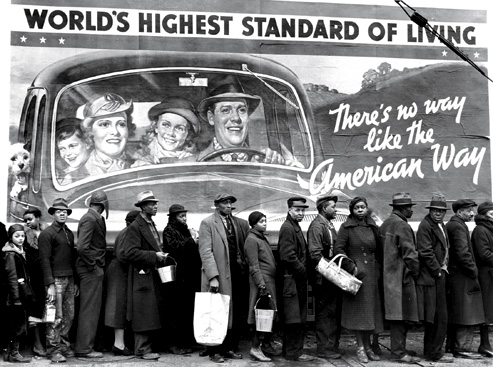
It's an Eminence Front, Dress Yourself to Kill
StoriesPeople Forget….
 The New York Herald Sun