STEVE BENEN ON: "HOW MANY U.S. ATTORNEYS WERE FIRED"

Stories

It’s been a little while, but
the last time we checked in with the purge scandal, about a month ago,
Sen. Dianne Feinstein (D-Calif.) asked the AG how many U.S. Attorneys
he’d fired during his tenure. He said he didn’t know.

After acknowledging the nine we know about from the purge, Gonzales
said, “I’m not aware, sitting here today, of any other U.S.
Attorney who was asked to leave — except there were some
instances people were asked to leave, quite frankly, because there was
legitimate cause.” (Given that he’d just named nine other
U.S. Attorneys who’d been fired, it sounded like he was conceding
that they’d been fired for illegitimate causes.)

He added, “Senator, there may have been others [fired
prosecutors]. I would be happy to get back to you with that kind of
information about who has left. But I don’t know the answer to
your question. But I can certainly find out.”

The good news is, Feinstein has finally heard back from the Justice Department. The bad news is, DoJ officials have decided not to cooperate with the request.

Crooks and Liars

Powered by ScribeFire.

Montoya looking forward to racing with Villeneuve

Stories

gpx324.jpg

USATODAY.com

CHARLOTTE,
N.C. — Juan Pablo Montoya and Jacques Villeneuve once had to be
separated during a confrontation in Canada. But that was six years ago
and their relationship has steadily improved since the contentious
early days.

Now Montoya is eagerly awaiting
Villeneuve’s arrival into NASCAR. The 1997 world champion is following
Montoya’s path into stock cars, and spent Monday and Tuesday testing a
truck in Chicago.

“I think it’s nice to see
Jacques, and hopefully he does well,” Montoya said. “If I can help in
any way I will. He’s a nice guy.”

That’s a
far different tune from the one Montoya sang back in 2001, his first
season in F1. He had just moved up from CART onto the world stage – a
path Villeneuve had also taken en route to becoming one of F1’s biggest
stars.

The contempt between the former
Indianapolis 500 winners erupted at the 2001 Canadian Grand Prix, when
Villeneuve accused Montoya of blocking him on the track during
practice. Montoya countered that Villeneuve brake-checked him at a
chicane during the same session.

The
tension boiled over in a confrontation at the pre-race driver briefing,
when the two exchanged words and Villeneuve reportedly tried to grab
Montoya by the throat. The two were separated by an official, and F1
boss Bernie Ecclestone threatened both with a two-race suspension if
they didn’t learn to get along.

Both drivers now say those days are long behind them.

“We
had a hard time, I would say early in our careers, then we mellowed
down,” Villeneuve said Tuesday. “But off the track, outside of the car,
we always got along. Just there were a few high-spirited moments in car
on the track.”

Villeneuve announced his
entrance into NASCAR last week, when he said he’d test a truck at
Chicagoland Speedway for Bill Davis Racing. Davis said he’ll enter the
Canadian in the final seven Truck Series races of this season, the ARCA
race at Talladega Superspeedway and then the full Nextel Cup schedule
next year. Villeneuve also will drive in the remaining Car of Tomorrow
test sessions.

Montoya believes it will be a
difficult transition for Villeneuve, who has not raced since he was
fired from BMW-Sauber last summer.

“I think
it will take him a little bit of time,” Montoya said. “It’s going to
take him some testing, and it will depend on how much the team is
behind him. That will all really make a difference in how good he is
going to be.”

Montoya said he’s willing to
help Villeneuve and will seek him out when the two cross paths at a
race track. Coming from the same open wheel background and the same
former series, the two will have a unique bond when compared to the
other NASCAR drivers.

“There will be
something there,” Montoya said. “I don’t know how big or how small, but
we have a lot of things in common. Jacques is very cool, he’s changed a
lot since I first knew him. He’s like a kid. He’s always buying music.
I look forward to him getting here.”

Q: You are the star of ABC’s new show “NASCAR in Primetime.” How do you like it?

JPM:
“I think it’s pretty cool. But it’s weird, seeing yourself on TV all
day, and your personal life. But I think they did a really good job of
it. I think people have been really happy with it, and I think people
who didn’t know me are getting a chance to see who I really am.”

Q: Is it an accurate portrayal of you?

JPM: “Yeah, I think it is. There is no acting. I don’t know how to act even if I wanted to.”

Q: Has any of it surprised you?

JPM:
“It’s interesting to see the Mark Martin side of the story, as well as
the two episodes of Johnny Sauter. It was interesting how Sauter uses
the “Rocky” movie to pump himself up before the race. I was thinking
that’s a little different, but if it works for him … “

Q: Well, what do you use to pump you up before a race?

JPM: “I just get in and drive the car.”

Q:
So, it’s been a few weeks since we’ve caught up and I missed all the
fireworks with you and Kevin Harvick. What’s going on there? You guys
had a bit of a run-in at Watkins Glen.

JPM:
“From my side, nothing. Really nothing. When they asked me about a few
days later, I didn’t even remember. I am being serious. I was doing
something for the team and they said I had two DNFs, and I said, ‘No,
my only DNF was in Michigan. And they said ‘We didn’t want to bring it
up, but Watkins Glen.’ I was like ‘Oh, yeah!’ But I don’t really care.”

Q: So you have not talked to Kevin since Watkins Glen?

JPM: “Nope.”

Q: Do you have any desire to speak to him?

JPM: “No. I think the day he sees that he screwed up, and has the (guts) to apologize, then we will talk.”

Q: He was talking about you on his team radio …

JPM: “Do I care?”

Q: Well, my question was, do you think you are in his head?

JPM:
“Next question. Not going there. Look, I’ll tell you, I think his
reaction in Watkins Glen is because he’s been having (bad) races in Cup
and this was the frustration of him having bad results, one after the
other.”

Q: Some people say that his reaction
was a buildup of frustration against you, and the things you have done
this season on the track?

JPM: “No, no, no. The only time he and I got together before that was Daytona.”

Q: No, not him and you, but others. Incidents you’ve had with others.

JPM:
“His teammates, you mean? I don’t care. And if he’s thinking about what
happens with anybody or everybody else out here, then everybody should
have problems with him. I shouldn’t be saying any of this. No more.”

Q: Are you NASCAR’s new Bad Boy?

JPM:
“No, I’ve been a ‘Bad Boy’ in too many series. People have always
looked at me like the Bad Boy and I don’t want to be that. I don’t even
look at myself as a Bad Boy. But if I think people need to respect me,
I am going to stand up for myself. That’s the best way I can put it.”

The Associated Press

Powered by ScribeFire.

JACQUES VILLENEUVE JOINS NASCAR; IMMEDIATELY FINED

Stories

 The New Formula: Jacques Villeneuve Ready To Test The NASCAR Waters

The new world order of NASCAR was again on display this week.

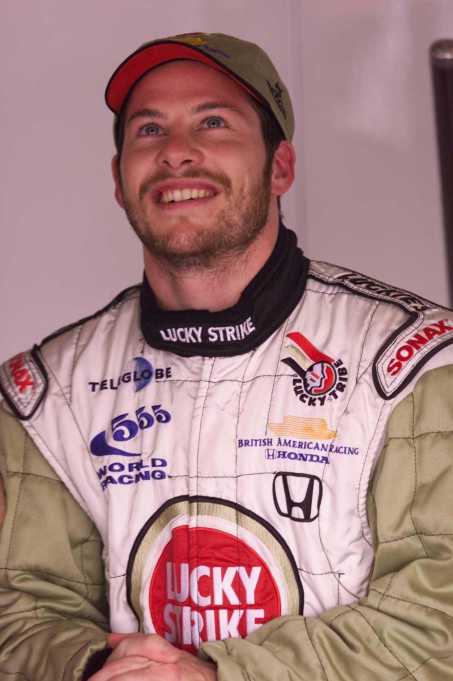
Jacques_vill_2Former Formula One world champion Jacques Villenueve spent Monday and Tuesday at Chicagoland Speedway testing for Bill Davis Racing’s Craftsman Truck Series team in preparation for his series debut for the team at Las Vegas Motor Speedway on Sept. 22.

Bill Davis Racing officials announced Tuesday that Villeneuve will compete in the final seven events of the Craftsman Truck Series season and could possibly make his Nextel Cup Series debut this year. Seemingly all indications are the Villeneuve will likely be running full-time in the Nextel Cup Series next season for Bill Davis Racing.

And it sounds like that scenario would be just fine for the Canadian driver who won the Formula One title in 1997 and the Indianapolis 500 in 1995.

When Villeneuve decided he wanted to get back to oval racing in North America the Indy Racing League wasn’t even a thought in his mind.

“You know, after Formula One, when you want to carry on racing, you want it to be at a tough level,” Villeneuve said. “And in North America, the top level is NASCAR.”

Villeneuve would join Columbian Juan Pablo Montoya as the second former Formula One star joining the Nextel Cup ranks. There’s also rumors flying that American driver Scott Speed, who spent the 2006 season and half of the season in Formula One, is ready to take the NASCAR plunge.

“You know, I certainly think it shows that our sport is being respected on a worldwide scale,” reigning Nextel Cup champion Jimmie Johnson said. “I think that as Juan has come in and lived the experiences of Nextel Cup racing, it has shown how difficult our sport is. It’s unclear what Jacques will bring, and then if Scott Speed is able to come in and run as well, but it can’t hurt. It’s only good for our sport.

“We all know that NASCAR is built on – our sport is built on a different premise than F1 is. Our sport is focused on competition and entertainment, where their sport is focused on or F1 is focused on just technology. So it is going to take these drivers some time to get used to the cars and come in. But I think it helps grow our fan base, and also helps take NASCAR to the next level of respect in the racing world’s eyes.”

Villeneuve and Montoya competed together in Formula One and had their scrapes on the world circuits. Villeneuve isn’t surprised at all by the somewhat chilly welcome Montoya has endured in his first season in Nextel Cup driving for Chip Ganassi.

“Apparently no matter what you’re driving nobody likes the new boy,” Villeneuve said. “Any time anybody got into F1, we didn’t like it, and we made their life hard. So that’s a little bit natural. But [Montoya] was like that in Formula 1, extremely aggressive and got on people’s nerves. I guess he kept the same personality going into NASCAR, which once he settles in, it will be all right. He’s driving hard, he’s fast, and he’s making a name for himself. Now he’s earning respect, so that’s fine. But I’ve never been as aggressive as him, I would say. But at the same time, NASCAR is a different ball game. So if and when I get in there, I’ll figure it out.”

Shawn Courchesne


HADITHA MASSACRE BY MARINES YIELDING LITTLE JUSTICE

Stories

The New York Times


August 30, 2007

CAMP PENDLETON, Calif., Aug.
29 — Last December, when the Marine Corps charged four
infantrymen with killing Iraqi civilians in Haditha, Iraq, in 2005, the
allegation was as dark as it was devastating: after a roadside bomb had
killed their buddy, a group of marines rampaged through nearby homes,
massacring 24 innocent people.

In Iraq and in the United States, the killings were viewed as
cold-blooded vengeance. After a perfunctory military investigation,
Haditha was brushed aside, but once the details were disclosed, the
killings became an ugly symbol of a difficult, demoralizing war. After
a fuller investigation, the Marines promised to punish the guilty.

But now, the prosecutions have faltered. Since May, charges against
two infantrymen and a Marine officer have been dismissed, and dismissal
has been recommended for murder charges against a third infantryman.
Prosecutors were not able to prove even that the killings violated the
American military code of justice.

Now their final attempt to get a murder conviction is set to begin,
with a military court hearing on Thursday for Staff Sgt. Frank D.
Wuterich, the last marine still facing that charge. He is accused of
killing 18 Iraqis, including several women and children, after the
attack on his convoy.

If the legal problems that have thwarted the prosecutors in other
cases are repeated this time, there is a possibility that no marine
will be convicted for what happened in Haditha.

Nor is it yet clear whether officers higher up the chain of command
than Sergeant Wuterich will be held responsible for the inadequate
initial investigation.

At least one of the four Marine officers charged last December for
failing to investigate the civilian deaths appears to be headed to
court-martial. That officer, Lt. Col. Jeffrey R. Chessani, commander of
Third Battalion, First Marines, “did not take personal action to
fully investigate the actions leading to civilian deaths,”
concluded Col. Christopher C. Conlin, the officer who examined the
evidence.

But the case against Capt. Randy W. Stone, the battalion lawyer
charged with failing to find out why so many civilians had been killed,
was thrown out by Lt. Gen. James N. Mattis, whose decisions in the
Haditha prosecutions are final. Charges against First Lt. Andrew A.
Grayson, an intelligence officer, are in limbo because of his argument
that the Marine Corps has discharged him.

In a wide range of cases involving abuses by American troops in Iraq
and Afghanistan, prosecutions have tended to focus on enlisted men and
noncommissioned officers — those accused of having personally
committed the acts — not on officers who commanded the units. And
while there have been numerous convictions, there have also been many
cases in which plea arrangements allowed for lesser punishments, or in
which charges were dropped or found not to be warranted.

The sole officer to face criminal charges in the abuses of prisoners
at Abu Ghraib, Iraq, was convicted Tuesday on only one minor charge and
will be reprimanded, Reuters reported, quoting an Army announcement.
The officer, Lt. Col. Steven L. Jordan, faced five years in prison and
dismissal from the Army, but a court-martial decided on the milder
penalty, the Army said.

The court-martial acquitted him of the charge of being responsible for cruel treatment of detainees at Abu Ghraib.

Experts on military law said the difficulty in prosecuting the
marines for murder is understandable, given that action taken in combat
is often given immunity under the Uniform Code of Military Justice.

“One could view this as a case crumbling around the
prosecutor’s feet, or one could see this as the unique U.C.M.J.
system of justice in operation,” said Gary D. Solis, a former
Marine judge who teaches the laws of war at Georgetown University Law Center and at West Point.

Prosecuting the Haditha case was especially difficult because the
killings were not thoroughly investigated when they first occurred.
Months later, when the details came to light, there were no bodies to
examine, no Iraqi witnesses to testify, no damning forensic evidence.

On the other hand, some scholars said the spate of dismissals has
left them wondering what to think of the young enlisted marines who,
illegally or not, clearly killed unarmed people in a combat zone.

“It certainly erodes that sense that what they did was
wrong,” Elizabeth L. Hillman, a legal historian who teaches
military law at Rutgers University
School of Law at Camden, said of the outcomes so far. “When the
story broke, it seemed like we understood what happened; there
didn’t seem to be much doubt. But we didn’t know.”

Walter B. Huffman, a former Army judge advocate general, said it was
not uncommon in military criminal proceedings to see charges against
troops involved in a single episode to fall away under closer
examination of evidence, winnowing culpability to just one or two
defendants.

When Sergeant Wuterich, the soft-spoken squad leader who faces the
most extensive murder charges in the Haditha matter, walks into court
here on Thursday, “all the prosecutorial attention is now going
to center on him,” Mr. Solis said.

Sergeant Wuterich’s lawyers have an uphill legal fight. First,
unlike the other marines who faced murder charges, Sergeant Wuterich is
charged with the close-range killing of five unarmed men who were
ordered out of a vehicle that rolled up near the scene.

Also, as a noncommissioned officer and the ranking member of the
squad, Sergeant Wuterich may be used by prosecutors to argue that he
had a greater responsibility to discern proper targets and avoid
civilian casualties. He also led the attack against or was present in
every house where civilians were killed.

But the earlier cases show that the defense has some opportunities, too.

The presiding officer, Lt. Col. Paul J. Ware, is the same Marine
lawyer who conducted hearings for Justin L. Sharratt and Stephen B.
Tatum, two other lance corporals accused of killing a total of five
Iraqis in three homes in Haditha.

Colonel Ware later recommended dismissing the charges against those
two men, and he has said the killings should be viewed in the context
of combat against an enemy that ruthlessly employs civilians as cover.
He warned that murder charges against marines could harm the morale of
troops still in Iraq.

General Mattis’s statements expressing sympathy for the plight
of other enlisted marines whom he cleared of wrongdoing in Haditha may
indicate his willingness to see Sergeant Wuterich’s case in a
similar light.

Regardless of what happened to charges against the other defendants,
there is still great public pressure on the Marine Corps to investigate
and punish any wrongdoing in a case in which so many civilians died.

“We can’t say those guys didn’t commit a
crime,” said Michael F. Noone Jr., a retired Air Force lawyer and
law professor at Catholic University of America. “We can only say
that after an investigation, there was not sufficient evidence to
prosecute.”

Marines’ Trials in Iraq Killings Are Withering – New York Times

Powered by ScribeFire.

Gingrich sees immigrants as ‘more deadly’ than terrorists

Stories

The
recent story out of Newark about three college students who were
murdered, execution style, in a school playground was painful. Adding a
political angle to the horrible crime, one of the suspects is
reportedly an immigrant from Peru who entered the country illegally.
Another suspect is a legal immigrant from Nicaragua.

In light of the murders, Newt Gingrich has a message for the nation: immigrants are more dangerous than terrorists.

Former House Speaker Newt Gingrich said Tuesday he is
“sickened” that President Bush and Congress went on
vacation “while young Americans in our cities are
massacred” by illegal immigrants. […]

Gingrich said that the “war here at home” against
illegal immigrants is “even more deadly than the war in Iraq and
Afghanistan.”

“The federal government’s incompetence, timidity and
uncoordinated efforts to identify and deport criminal illegal aliens
have had devastating consequences for innocent Americans,”
Gingrich said, in a newsletter.

Dave Neiwert details just how offensive this really is.

Crooks and Liars » 2007 » August » 15

Powered by ScribeFire.

JOSE PADILLA'S DOCTOR: "What happened at the brig was essentially the destruction of a human being's mind" said Dr. Hegarty

Stories

US citizen Jose Padilla has been found guilty of plotting to kill people overseas and supporting terrorism. His two co-defendants, Lebanese-born Palestinian Adham Amin Hassoun and Jordanian-born Kifah Wael Jayyousi, were convicted on the same counts.Below is a detailed report from Amy Goodman’s Democracy Now! news show describing what has been done to him:

In a Democracy Now! national broadcast exclusive, forensic psychiatrist Dr. Angela Hegarty speaks for the first time about her experience interviewing Jose Padilla for 22 hours to determine the state of his mental health.

20070807_mother_weeping_over_dead_child_baqubah_bombing2.jpg

Padilla is the U.S. citizen who was classified by President Bush as an enemy combatant and held in extreme isolation at a naval brig in South Carolina for over three-and-a-half years. His case is now before a Florida jury. “What happened at the brig was essentially the destruction of a human being’s mind,” said Dr. Hegarty. “[Padilla’s] personality was deconstructed and reformed.” She said the effects of the extreme isolation on Padilla are consistent with brain damage. “I don’t know if he’s guilty or not of the charges that they brought against him,” said Dr. Hegarty. “But, already – before he was ever found guilty – he’s paid a tremendous price for his trip to the Middle East.” [includes rush transcript] A jury began deliberations on Wednesday in Miami in the case of Jose Padilla, the Brooklyn-born man once accused by the Bush administration of plotting to set off a dirty bomb inside the United States.

The FBI initially arrested him in Chicago in 2002 after he got off a plane from Europe. For a month he was held as a material witness. Then Attorney General John Ashcroft made a dramatic announcement – the U.S. government had disrupted an al-Qaeda plot to set off nuclear dirty bombs inside the United States. At the center of the plot, Ashcroft alleged, was Padilla.

President Bush then classified Jose Padilla as an enemy combatant, stripping him of all his rights. He was transferred to a Navy brig in South Carolina where he was held in extreme isolation for forty three months.

The Christian Science Monitor reported: “Padilla’s cell measured nine feet by seven feet. The windows were covered over… He had no pillow. No sheet. No clock. No calendar. No radio. No television. No telephone calls. No visitors. Even Padilla’s lawyer was prevented from seeing him for nearly two years.”

http://vineyardsaker.blogspot.com/2007/08/how-jose-padilla-was-treated-while-in.html

LIFEHACKER AND SEARCH ENGINE LAND TIPS FOR EDITING WIKIPEDIA

Stories

Wikipedia

Fix inaccurate articles the right way

You already have a basic idea of how to contribute to Wikipedia, and you even know how to identify anonymous edits, but how can you correct an inaccurate Wikipedia article that hits close to home without looking suspicious?

Suppose your company… discovers that their Wikipedia
article is wrong, or has subtle inaccuracies that nonetheless paint
them in an unfavorable light? Most people unfamiliar with how Wikipedia
works consider only two solutions: edit the article or sit on their
hands. Unfortunately, neither approach typically results in the optimal
outcome: a factually accurate profile containing trustworthy
information.

Weblog Search Engine Land offers tips for correcting an inaccurate
article straight from a Wikipedia administrator, like contacting
Wikipedia projects specific to your article and getting the page
watchlisted.

The Right Way To Fix Inaccurate Wikipedia Articles [Search Engine Land]

Lifehacker

Powered by ScribeFire.

MICHAEL O'HANLON DECLARES SELF: "DOUCHEBAGARINO"

Stories


On Tom Ashbrook’s radio program today, Brookings Institute “scholar”
and “fierce war opponent” Michael O’Hanlon responds
to a caller’s question about Glenn Greenwald’s column exposing his fraud of a trip to Iraq, organized and supervised entirely by the US Military.

audio_mp3 Download (638) | Play (590)

OHanlon: “Well, I don’t have high regard for the kind of journalism that Mr. Greenwald has carried out here.

“I’m not going to spend a whole lot of time
rebutting Mr. Greenwald because he’s had frankly more time and
more readership than he deserves.”

These people just don’t get it. If you ride the US Military “dog and pony show,” of course there is going to be a semblance of “progress”: You’re traveling only to places pre-approved by the Pentagon — with John McCain-esque military protection — and meeting with commanders; not
the Iraqi people. Try embedding yourself outside the Green Zone (ya
know, 99.9% of Iraq) and tell me how well things are going.

Not too well, I see.

Crooks and Liars

Powered by ScribeFire.