Lehman
Breaking The Bank : Behind The Financial Meltdown ~ Frontline [Video]
Bank of america, Frontline, Hank Paulson, IMF, John Thain, Ken Lewis, Lehman Brothers, Merrill Lynch, Michael Kirk, Simon Johnson, Wall Street
In Breaking the Bank, FRONTLINE producer Michael Kirk (Inside the Meltdown, Bush’s War) draws on a rare combination of high-profile interviews with key players Ken Lewis and former Merrill Lynch CEO John Thain to reveal the story of two banks at the heart of the financial crisis, the rocky merger, and the government’s new role in taking over — some call it “nationalizing” — the American banking system.

It all began on that fateful weekend in September 2008 when the American economy was on the verge of melting down. Then-Secretary of the Treasury Henry Paulson, his former protégé John Thain, and Ken Lewis, one of the most powerful bankers in the country, secretly cut a deal to merge Bank of America and Merrill Lynch.
The merger of the nation’s largest bank and Merrill Lynch was supposed to help save the American financial system by preventing the imminent Lehman Brothers bankruptcy from setting off a destructive chain reaction. But it became immediately clear that it had not worked. Within days, the entire global financial system was collapsing.
In Washington, Secretary Paulson was determined to spend billions of government dollars to prevent the American banking system from dragging the country into a depression. That October, Lewis, Thain and other top bank CEOs found themselves at an emergency meeting at the Treasury Department. Paulson told the group they had no choice but to accept $125 billion of capital from American taxpayers in order to save the financial system. Initially, Bank of America’s CEO Lewis was supportive of the plan. “We are so intertwined with the U.S. that it’s hard to separate what’s good for the United States and what’s good for Bank of America,” Lewis tells FRONTLINE.
But some observers now say that Paulson’s injection of public capital was the beginning of unprecedented government involvement in the nation’s banking system, with consequences few understood.
“I think we nationalized the banks in the U.S. on that day,” former International Monetary Fund chief economist Simon Johnson says. “The government got a lot of say in how they are run, a lot of constraints, a lot of responsibility. A lot of downside risk was taken on that day.”
By December, Lewis was discovering what it meant to have the government as a partial owner. When fourth-quarter losses at Merrill grew to $15 billion, Lewis began to look for a way to get out of the deal. But in tense negotiations with government officials, Lewis was told he had no choice. If he did not go through with the merger, regulators threatened to change the bank’s management.
“Ken Lewis blinked, the full force of the government is being brought upon him. The rules of the game have changed,” Wall Street Journal reporter Dan Fitzpatrick says. “Ken Lewis is on top of the financial services world, but he’s not in charge. The government holds all the cards at the end of the day.”
FRONTLINE’s Breaking the Bank tells the story of Lewis’ struggle to survive in this new financial order, where public outrage and government edicts are now as important to banking as shareholders and deposits. With his bank on the brink, Lewis now finds himself the subject of a shareholder revolt, congressional indignation, presidential pressure and the increasingly conflicting demands of private investors and government officials.
“This is more than a story about just one man or one bank,” says producer Michael Kirk. “This is the story of the most important change in the relationship between government and private business in a generation.”
Government Report: TARP a Complete Clusterf*ck
StoriesMcClatchy Washington Bureau
Wed, Apr. 01, 2009
Watchdogs: Treasury won’t disclose bank bailout details
Chris Adams | McClatchy Newspapers
WASHINGTON — The massive programs designed to rescue the nation’s financial sector are operating without adequate oversight, with vague goals and limited disclosure of their details to the taxpayers who are paying for them, government watchdogs told a Senate panel Tuesday.
The Troubled Asset Relief Program, or TARP, was launched in the midst of last fall’s collapse of the nation’s banking system and is designed to get loans flowing to businesses and individuals.
But “without a clearer explanation” about parts of the program, “it is not possible to exercise meaningful oversight over Treasury’s actions,” said Elizabeth Warren, a Harvard Law School professor who leads a special congressional oversight panel monitoring the TARP program. Her comments came in a Senate Finance Committee hearing on the bailout program.
Noting that TARP passed Congress six months ago, Warren said that her group has repeatedly called on the Treasury Department to provide a clear strategy for the program — and that “the absence of such a vision hampers effective oversight.”
Although she has asked Treasury to explain its strategy, “Congress and the American public have no clear answer to that question.”
TARP is one of several programs the government has launched in recent months to help ailing institutions and even bolster healthy banks. Warren singled out one program, known as TALF, for appearing to involve “substantial downside risk and high costs for the American taxpayer” while offering big potential rewards for private interests. She said the public information about that program was “contradictory, promoting substantial confusion.”
The Government Accountability Office shared some of the same concerns, saying in a new report that “Treasury continues to struggle with developing an effective overall communication strategy” for the TARP program.
Beyond that, the GAO’s report pointed out the difficulty in even measuring whether TARP is working. As of March 27, the Treasury Department had handed out more than $300 billion of the $700 billion in approved TARP funds, the GAO said.
The majority of that money went to banks large and small around the country. And there are signs that credit is flowing from those banks; the GAO said that several hundred billion dollars in new loans were processed by the largest TARP recipients in December and January.
But crediting TARP for that is difficult, given the range of actions the government has taken since October. “Isolating the effect of TARP’s activities continues to be difficult,” the GAO’s Gene Dodaro said in his prepared testimony.
The Treasury Department, in a statement, said that “transparency and accountability are central to ensuring that taxpayer funds are spent wisely,” and noted that the department is actively working to respond to the recommendations of GAO and other oversight bodies. Among other things, the department has hired more staff and expanded its survey on bank lending activities.
Iowa Sen. Charles Grassley, the panel’s ranking Republican, described himself as “disappointed and frustrated” in the amount of information available about the program. “You can’t measure effectiveness when you don’t know what the goals and objectives of a program are, or how the program is being run,” he said.
Warren’s oversight panel made news earlier this year with its report that Treasury’s bailout programs had overpaid by an estimated $78 billion in its transactions with the nation’s ailing financial institutions. She said that issue is still under investigation.
C'Mon, C'Mon Listen To The Money Talk
11 Trillion, Barack Obama. Tim Geithner, Ben Bernanke, China, GDP, National Dept, Treasury DepartmentNational Dept Hits 11 Trillion; Sucker
11 Trillion, Barack Obama. Tim Geithner, Ben Bernanke, China, GDP, National Dept, Treasury Department
The Federal Government’s flood of red ink hit another high-water mark as the Treasury Department quietly reported today that the National Debt hit $11-trillion for the first time ever.
To be exact, the Debt now stands at $11,033,157,578,669.78. Divide it by the U.S. population and it comes up to over $36,000 in debt for every man, woman and child among us.
And the government is running up mountains of debt with increasing speed. It took just over 5 ½ months for Uncle Sam to go another trillion dollars deeper in debt since hitting $10-trillion last September 30th. It’s the fastest jump in U.S. history.
The hundreds of billions of dollars being spent as part of the federal bailout of the financial markets is a leading factor in the rapid increase. Over $400-billion in debt has been accrued in the 57 days since President Obama took office.
And the federal budget he unveiled last month projects even faster increases in the National Debt. It’ll hit $12.7-trillion by the end of the fiscal year on September 30th. The Administration’s four year estimate shows that by the end of September 2012, the Debt will have soared to $16.2-trillion – which amounts to nearly 100% of the projected Gross Domestic Product that year.
The U.S. is running up so much debt so quickly, some investors are worried. Over the weekend, Chinese Premier Wen Jiabao, who says his country has about a trillion dollars invested in U.S. Treasury notes, said he wanted a guarantee.
President Obama said Wen’s got nothing to worry about.
“Not just the Chinese government, but every investor, can have absolute confidence in the soundness of investments in the United States,” he said on Saturday.
That’s because the U.S. government’s power to tax stands behind all of its debt. If Uncle Sam ever needs a bailout, then as now, taxpayers get nailed.
It took the U.S. government 191 years – from 1791 until 1982 – to run up its first trillion dollars in debt. The second and third trillions got on the scoreboard much more quickly – each in just four years.
By the time George W. Bush was inaugurated in 2001, the National Debt stood at $5.7-trillion. He ran up more debt faster than nearly all of his predecessors combined: just under $4.9-trillion.
The National Debt stood at $10.6-trillon on the day Barack Obama took office. But if his budget projections are accurate, he’ll run up nearly as much government debt in four years as President Bush did in eight.
Former AIG Head Hank Greenberg on CNBC With Maria Bartiromo
AIG, Bear Stearns, Ben Bernanke, Citibank, CNBC, Cramer+Stewart, Credit Default Swaps, Deep Capture, Derivatives, Dick Fuld, Gradient Analytics, Hedge Funds, Henry Paulson, Jim Cramer, Jon Stewart, Lehman Brothers, Maria Bartiromo, Mortgage Crisis, Overstock, Patrick ByrneJokerman | Bob Dylan
Music, Politics, Rock and Roll, Ronald ReaganJim Rogers Says Geithner Caused Crisis; Must Let Banks Fail
Banking, Finance, Jim Rodgers, Stimulus Package, Tim Geithner, Wall Street. Peter SchiffThe 20 Senators Who Voted For Wall Street Bailout But Against Auto Industry Rescue
AIG, bailout, Bear Stearns, Ben Bernanke, Biden, Citi, Congress, Credit Default Swaps, D.C. Lobbyists, Detroit, District Of Corruption, Douchebaggery, Federal Reserve, Greenspan, Hank Paulson, Hedge Funds, Kerry. Auto Industry, Lehman, Merrill, Summers, Tim Geitner, Treasury, Wall StreetTHINK PROGRESS DEC 12, 2008
Last night, the Senate failed to approve the auto rescue package, voting 52-35 in favor of proceeding on the bill — just eight short of the 60 votes that were needed. Over on the Wonk Room, Dan Weiss takes a look at the 20 senators who voted for the Wall Street bailout but voted against the auto rescue last night (as well as the 10 others who skipped the vote last night, but voted for the financial bailout):
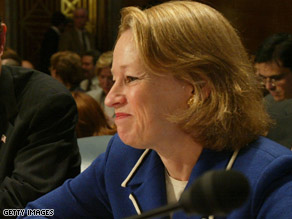
New SEC Chief Mary Schapiro/Getty
| Yes to TARP, No to auto | Yes to TARP, Absent for auto |
| Sen. Max Baucus (D-MT) Sen. Robert Bennett (R-UT) Sen. Richard Burr (R-NC) Sen. Saxby Chambliss (R-GA) Sen. Tom Coburn (R-OK) Sen. Norm Coleman (R-MN) Sen. Bob Corker (R-TN) Sen. John Ensign (R-NV) Sen. Chuck Grassley (R-IA) Sen. Judd Gregg (R-NH) Sen. Orrin Hatch (R-UT) Sen. Kay Hutchison (R-TX) Sen. John Isakson (R-GA) Sen. Jon Kyl (R-AZ) Sen. Blanche Lincoln (D-AR) Sen. Mel Martinez (R-FL) Sen. John McCain (R-AZ) Sen. Mitch McConnell (R-KY) Sen. Lisa Murkowski (R-AK) Sen. John Thune (R-SD) |
Sen. Lamar Alexander (R-TN) Sen. Joe Biden (D-DE) Sen. John Cornyn (R-TX) Sen. Larry Craig (R-ID) Sen. Lindsey Graham (R-SC) Sen. Chuck Hagel (R-NE) Sen. John Kerry (D-MA) Sen. Gordon Smith (R-OR) Sen.Ted Stevens (R-AK) Sen. John Sununu (R-NH) |
Biden was tending to transition duties, while Kerry was in Poznan, Poland, participating in U.N. climate change talks. Alexander was home recovering from surgery. Why did these other Senators feel auto workers weren’t as deserving as Wall Street? We’d like to know. If you see statements from them, please let us know by email or in the comments section.
UpdateSen. Jim Bunning (R-KY), a Hall of Fame baseball pitcher in his heyday, was scheduled to appear Sunday at a sports card show in Taylor, Michigan to sign autographs. “But Bunning was kicked off the schedule after he helped derail an auto-industry loan package in the Senate Thursday night.” (HT: TP commenter cali)
Small Banks Getting Short End of Tarp Bat
Banking, Bernanke, Federal Reserve, Finance, Greenspan, Paulson, TARP, Treasury, Wall StreetSEEKING ALPHA
William Patalon III
Bank of American Corp. (BAC), which is getting $15 billion from the U.S. government as part of the Treasury Department’s $250 billion “recapitalization” effort, is doubling its stake in state-owned China Construction Bank Corp., and will hold a 20% stake worth $24 billion in China’s second-largest lender when that deal is finalized.
PNC Financial Services Group Inc. (PNC), which will get $7.7 billion from Treasury’s Troubled Assets Relief Program (TARP), is using that cash infusion to help finance its $5.2 billion buyout of embattled National City Corp. (NCC).
And U.S. Bancorp (USB), which received a $6.6 billion capital infusion from that same rescue package, has acquired two California lenders – Downey Savings & Loan Association, F.A., a subsidiary of Downey Financial Corp. (DSL), and PFF Bank & Trust, a subsidiary of PFF Bancorp Inc. (OTC: PFFB). U.S. Bank agreed to assume the first $1.6 billion in losses from the two, but says anything beyond that amount is subject to a loss-sharing deal it struck with the Federal Deposit Insurance Corp. (FDIC).
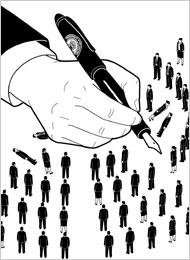
While the Treasury Department’s investment of more than $250 billion in U.S. financial institutions has been billed as a strategy that will bolster the health of the banking system and also jump-start lending, buyout deals such as these three show that the recapitalization plan has actually had a much different result – one that’s left whipsawed U.S. investors and lawmakers alike feeling burned, an ongoing Money Morning investigation continues to show.
Those billions have touched off a banking-sector version of “Let’s Make a Deal,” in which the biggest U.S. banks are using government money to get even bigger. While that’s admittedly removing the smaller, weaker banks from the market – a possible benefit to consumers and taxpayers alike – this trend is also having a detrimental effect: It’s reducing the competition that’s benefited consumers and kept the explosion in banking fees from being far worse than it already is.
This all happens without any of the economic benefits that an actual increase in lending would have had. And it does nothing to address the billions worth of illiquid securities that remain on (or off) banks’ balance sheets – as the recent Citigroup Inc. (C) imbroglio demonstrates.
In fact, Treasury’s TARP program has even managed to create a potentially illegal tax loophole that grants banks a tax-break windfall of as much as $140 billion. Lawmakers are furious – but possibly powerless, afraid that a full-scale assault on the tax change could cause already-done deals to unravel, in turn causing investor confidence to do the same.
One could even argue that since this first bailout (the $700 billion TARP initiative) has fueled takeovers – and not lending – the government had no choice but to roll out the more-recent $800 billion stimulus plan that was aimed at helping consumers and small businesses – a move that may spur lending and spending, but that still adds more debt to the already-sagging federal government balance sheet.
At the end of the day, these buyout deals are bad ones no matter how you evaluate them, says R. Shah Gilani, a retired hedge fund manager and expert on the U.S. credit crisis who is the editor of the Trigger Event Strategist, which identifies trading opportunities emanating from such financial-crisis “aftershocks” as this buyout binge.
“Why in the name of capitalism are taxpayers being fleeced by banks that are being given our money to grow their businesses with the further backstop of more of our money having to be thrown to the FDIC when they fail?” Gilani asked. “Consolidation does not mean that bad loans and illiquid securities are somehow merged out of existence. It means that they are being acquired under the premise that a larger, more consolidated depositor base will better be able to bear the weight of those bad assets. What in heaven’s name prevents depositors from exiting when the merged banks continue to experience massive losses and write-downs? The answer to that question would be … nothing.”
Lining Up for Deal Money
In launching TARP, U.S. Treasury Secretary Henry M. “Hank” Paulson Jr. said the government’s goal was to restore public confidence in the U.S. financial services sector – especially banks – so private investors would be willing to advance money to banks and banks, in turn, would be willing to lend.
“Our purpose is to increase the confidence of our banks, so that they will deploy, not hoard, the capital,” Paulson said.
Whatever Treasury’s actual intent, the reality is that banks are already sniffing out buyout targets, while snuffing out lending – and the TARP money is the reason for both.
Fueled by this taxpayer-supplied capital, the wave of consolidation deals is “absolutely” going to accelerate, says Louis Basenese, a mergers-and-acquisitions expert who is also the editor of The Takeover Trader newsletter. “When it comes to M&A, there’s always a pronounced ‘domino effect.’ Consolidation breeds more consolidation as industry leaders conclude they have to keep acquiring in order to remain competitive.”
Indeed, banking executives have been quite open about their expansionist plans during media interviews, or during conference calls related to quarterly earnings.
Take BB&T Corp. (BBT). During a conference call that dealt with the bank’s third-quarter results, Chief Executive Officer John A. Allison IV said the Winston-Salem, N.C.-based bank “will probably participate” in the government program. Allison didn’t say whether the federal money would induce BB&T to boost its lending. But he did say the bank would likely accept the money in order to finance its expansion plans, The Wall Street Journal said.
“We think that there are going to be some acquisition opportunities – either now or in the near future – and this is a relatively inexpensive way to raise capital [to pay the buyout bill],” Allison said during the conference call.
And BB&T is hardly alone. Zions Bancorporation (ZION), a Salt Lake City-based bank that’s been squeezed by some bad real-estate loans, recently said it would be getting $1.4 billion in federal money. CEO Harris H. Simmons said the infusion would enable Zions to boost “prudent” lending and keep paying its dividend – albeit at a reduced rate.
Sounds good, right? Not so fast. During a conference call about earnings, Zions Chief Financial Officer Doyle L. Arnold said any lending increase wouldn’t be dramatic. Besides, Arnold said, Zions will also use the money “to take advantage of what we would expect will be some acquisition opportunities, including some very low risk FDIC-assisted transactions in the next several quarters.”
Buyouts Already Accelerating
With all the liquidity the world’s governments and central banks have injected into the global financial system, the pace of worldwide deal making is already accelerating. Global deal volume for the year has already passed the $3 trillion level – only the fifth time that’s happened, although it took about three months longer for that to happen this year than it did a year ago.
At a time when the global financial crisis – and the accompanying drop-off in available deal capital (either equity or credit) – has caused about $150 billion in already-announced deals to be yanked off the table since Sept. 1, liquidity from the U.S. and U.K. governments has ignited record levels of financial-sector deal making.
According to Dealogic, government investments in financial institutions has reached $76 billion this year – eight times as much as in all of 2007, which was the previous record year. And that total doesn’t include the $250 billion in TARP money, or other deals that Paulson & Co. are helping engineer – JPMorgan Chase & Co.’s (JPM) buyouts of The Bear Stearns Cos. and Washington Mutual Inc. (WAMUQ), for instance.
If You Can’t Beat ‘em… Buy ‘em?
When it comes to identifying possible buyout targets, M&A experts such as Basenese say there are some very clear frontrunners.
“I’d put regional banks with solid footprints in the Southeast high on the list, and for two reasons,” Basenese said. “First, demographics point to stronger growth [in this region] as retirees migrate to warmer climates – and bring their assets along for the trip. Plus, the Southeast is largely un-penetrated by large national banks. An acquisition of a regional bank like SunTrust Banks Inc. (STI) would provide a distinct competitive advantage.
There’s a very good reason that smaller players may be next: Big banks and small banks have the easiest times – relatively speaking, of course – of raising capital. It’s toughest for the regional players. Big banks can tap into the global financial markets for cash, while the very small – and typically, highly local – banks can raise money from local investors.
The afore-mentioned stealthy shift in the U.S. Tax Code actually gives big U.S. banks a potential windfall of as much as $140 billion, says Gilani, the credit crisis expert and Trigger Event Strategist editor. What does this tax-change do? By acquiring a failed bank whose only real value is the losses on its books, the successful suitor would basically then be able to use the acquired bank’s losses to offset its own gains and thus avoid paying taxes.
 “While everyone was panicking, the Treasury Department slipped through a ruling that allows banks who acquire other banks to fully write-off all the acquired bank’s bad debts,” Gilani says. “For 22 years, the law was such that if you were to buy a company that had losses, say, of $1 billion, you couldn’t just take that loss against your own $1 billion profit and tell Uncle Sam, ‘Gee, now my loss offsets my profit, so I don’t have any profit, and I don’t owe you any tax.’ It was a recipe for tax evasion that demanded an appropriate law that only allows limited write-offs over an extended period of years.”
Given these incentives, who will be doing the buying? Clearly, the biggest U.S.-based banks will be the main hunters. But The Takeover Trader’s Basenese says that even foreign banks will be on the prowl for cheap U.S. banking assets.
Basenese also believes that Goldman Sachs Group Inc. (GS) and Morgan Stanley (MS) will be “big spenders.” Each will use TARP funds to help accelerate its transformation from an investment bank into a bank holding company. The changeover will require each company to build up a big base of deposits. And the best way to do that is to buy other banks, Basenese says.
“One thing [the wave of deals] does is to restore confidence in the sector,” Basenese said. “It will go a long way in convincing CEOs that it’s safe to use excess capital to fund acquisitions, and to grow, instead of using it to defend against a proverbial run on the bank.”
Not everyone agrees with that assessment. Investors who play the merger game correctly will do well. But the game itself won’t necessarily whip the industry into championship form, Gilani says.
“While consolidation, instead of outright collapses, in the banking industry may serve to relieve the FDIC of its burden to make good on failed banks, it in no way guarantees fewer failures,” he said. “In fact, it may only serve to guarantee, in some cases, even larger failures.”
 The New York Herald Sun