Live From The District of Columbia! It's The Nancy and Rahm Show

Barack Obama, Harry Reid, Nancy Pelosi, Rahm Emmanuel, U.S. Congress, U.S. Senate

POLITICO (DRUDGE LIGHT)

In a recent conversation with House Speaker Nancy Pelosi, Rahm Emanuel offered some advice on a Democratic House leadership race. Pelosi’s response, according to several Democratic sources: It is “an internal House Democratic Caucus matter, and we’ll handle it.”

Democratic insiders say there’s no animosity between Pelosi and Emanuel, who’s leaving his post as chairman of the House Democratic Caucus to become the next White House chief of staff.

But the speaker is laying down the law nonetheless.

rahpel

In talks with Emanuel and others, sources say, Pelosi has “set parameters” for what she wants from Barack Obama and his White House staff — no surprises, and no backdoor efforts to go around her and other Democratic leaders by cutting deals with moderate New Democrats or conservative Blue Dogs.

Specifically, Pelosi has told Emanuel that she wants to know when representatives of the incoming administration have any contact with her rank-and-file Democrats — and why, sources say.

During the Bush years, the White House set policy, and Republicans on Capitol Hill were expected to follow it. Former Speaker Dennis Hastert (R-Ill.) occasionally lashed out at former White House chief of staff Andy Card or other senior administration aides when he felt they had gone too far. But in general, Republican lawmakers followed Bush’s lead on every major legislative battle, from Iraq to tax and spending bills to anti-terror policies. With the exception of immigration reform, the House fight over the $700 billion Wall Street bailout package and last week’s meltdown over a bailout for the Big Three automakers, Bush got what he wanted from Congress, especially within his own party.

Pelosi and Senate Majority Leader Harry Reid (D-Nev.) are signaling that they won’t tolerate a repeat with a Democrat in the White House and Democratic majorities in the House and the Senate.

Pelosi “is not going to allow Obama to triangulate her,” said a Democratic source close to the leadership. “It’s not going to happen to her.”

Pelosi’s mantra, in a way, is “no surprises.” The speaker wants to be told when Reid is communicating with the Blue Dogs or other factions with her caucus, and she expects the same from Obama when he arrives in the Oval Office, said Democratic sources.

“We certainly are in frequent communication with the [Obama] transition team,” said Brendan Daly, Pelosi’s communications director. Daly noted that Pelosi and Emanuel have long-standing ties — she appointed him to head up the Democratic Congressional Campaign Committee at the start of 2005 — and added that Emanuel often speaks directly with John Lawrence, Pelosi’s chief of staff.

Daly said Pelosi will work closely with Obama and Reid to craft an economic stimulus package early next year, as well as other economic recovery legislation.

“She and President-elect Obama have the same goals,” Daly added. “It’s a matter of working together to get things done.”

Pelosi herself said the same about Obama in an interview with Bloomberg’s Al Hunt last week, stating that “our priorities are the same about creating good-paying jobs.”

But it won’t always be that easy. Capitol Hill veterans predict that, no matter how much goodwill there is at the start of a new administration, there are always battles over policy and legislative priorities between the White House and Congress.

“There is tension. There is going to be tension,” said a Democratic veteran of Capitol Hill. “This is not Hastert. She wants to know what they are up to.”

The Emanuel-Pelosi relationship is a complex one that defies easy explanation. Emanuel was a rising star inside the Democratic Caucus — with many members convinced he would be speaker one day — until Obama tapped him for the West Wing job. In large part, Emanuel owed his rise to Pelosi, who put him in charge of the DCCC, where he helped lead the Democrats back to the House majority after 12 years out of power.

From the DCCC, Emanuel moved up to the chairmanship of the caucus. But both he and Pelosi had stocked the DCCC with their own loyalists after the 2006 election, and they both tried to influence campaign strategy as subtly as possible through these surrogates. At the same time, Emanuel was often jockeying with other members on major legislation, including immigration reform and the Wall Street bailout, but rarely without the speaker’s blessing.

Pelosi sometimes resisted Emanuel’s desire to always be on the attack, but she did respect his insight and his willingness to work hard to achieve legislative and political goals. She refused to back Emanuel when he made noises about running for majority whip, the post now held by Rep. Jim Clyburn (D-S.C.). But when Obama approached him about the chief of staff job, Emanuel consulted Pelosi first.

Yet the two will find themselves on different ends of Pennsylvania Avenue next year, and that will change the nature of their current relationship profoundly.

“Look, they have different goals now,” said an aide to one top Democrat. “Her job is to protect her members; his job is protect Obama. Those can’t always be the same thing.”

This source added: “I think they will do what they can to work together, but these are two strong-willed people who are used to getting their way. There’s bound to be some areas of disagreement. We’ll just have to see how they handle it.”

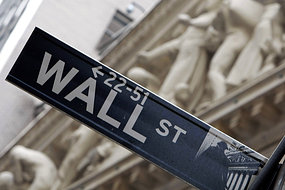
Fed Pumps Further $630 Billion Into Financial System

630 billion, Bernanke, Federal Reserve, Paulson, Wall Street

Sept. 29 (Bloomberg) — The Federal Reserve will pump an additional $630 billion into the global financial system, flooding banks with cash to alleviate the worst banking crisis since the Great Depression.

The Fed increased its existing currency swaps with foreign central banks by $330 billion to $620 billion to make more dollars available worldwide. The Term Auction Facility, the Fed’s emergency loan program, will expand by $300 billion to $450 billion. The European Central Bank, the Bank of England and the Bank of Japan are among the participating authorities.

The Fed’s expansion of liquidity, the biggest since credit markets seized up last year, came hours before the U.S. House of Representatives rejected a $700 billion bailout for the financial industry. The crisis is reverberating through the global economy, causing stocks to plunge and forcing European governments to rescue four banks over the past two days alone.

“Today’s blast of term liquidity will settle the funding markets down, and allow trust to slowly be restored between borrowers and lenders,” said Chris Rupkey, chief financial economist at Bank of Tokyo-Mitsubishi UFJ Ltd. in New York. On the other hand, “the Fed’s balance sheet is about to explode.”

The MSCI World Index of stocks in 23 developed markets sank 6 percent, the most since its creation in 1970. Credit markets deteriorated further as authorities tried to save more financial institutions from collapse.

European Rescue

European governments have rescued four banks in two days and the Federal Deposit Insurance Corp. said today it helped Citigroup Inc. buy the banking operations of Wachovia Corp. after its shares collapsed. The Standard & Poor’s 500 Index fell 3.8 percent and the cost of borrowing dollars for three months rose to the highest since January. The rate for euros hit a record.

“If people think the authorities may give in to fears, they are wrong,” Financial Stability Forum Chairman Mario Draghi said today in Amsterdam, where the international group of regulators and finance officials is meeting. “There is willingness and determination on winning the battle to restore confidence and stability.”

Banks and brokers have slowed lending as they struggle to restore their capital after $586 billion in credit losses and writedowns since the mortgage crisis began a year ago. The bankruptcy of Lehman Brothers Holdings Inc. also sparked fears among banks they wouldn’t be repaid by counterparties, driving up the cost of short-term loans between banks.

Funding Risk

“By committing to provide a very large quantity of term funding, the Federal Reserve actions should reassure financial market participants that financing will be available against good collateral, lessening concerns about funding and rollover risk,” the central bank said.

The Bank of England and the ECB will each double the size of their dollar swap facilities with the Fed to as much as $80 billion and $240 billion, respectively. The Swiss National Bank and the Bank of Japan will also double their dollar swap lines, while the central banks in Australia, Norway, Sweden, Denmark and Canada tripled theirs.

All the banks extended their facilities until the end of April 2009.

The Fed is also increasing the size of its three 84-day TAF sales to $75 billion apiece, from $25 billion. That means the Fed will make a total of $225 billion available in 84-day loans. The central bank will keep the sales of 28-day credit at $75 billion.

Special Sales

In addition, the Fed will hold two special TAF sales in November totaling $150 billion so banks can have funding available for one or two weeks over year-end. The exact timing and terms will be determined later, the Fed said. The TAF program began in December, totaling $40 billion.

The bank-rescue plan being debated by Congress today would give the Fed more power over short-term interest rates by providing authority as of Oct. 1 to pay interest on reserves held at the central bank by financial institutions. That would make it easier for the Fed to pump funds into the banking system.

Paying interest on reserves puts a “floor” under the traded overnight rate, which would allow a central bank “to provide liquidity during times of stress” without affecting the rate, New York Fed economists said in a paper last month.

To contact the reporter on this story: Scott Lanman in Washington at slanman@bloomberg.netCraig Torres in Washington at ctorres3@bloomberg.net.

700 Billion? "We Just Wanted to Choose a Really Large Number"

Stories

“It’s not based on any particular data point,” a Treasury spokeswoman told Forbes.com Tuesday. “We just wanted to choose a really large number.”

Bad News For The Bailout
Brian Wingfield and Josh Zumbrun

FORBES DOT COM 09.23.08, 6:39 PM ET

Lawmakers on Capitol Hill seem determined to work together to pass a bill that will get the credit markets churning again. But will they do it this week, as some had hoped just a few days ago? Don’t count on it.

“Do I expect to pass something this week?” Senate Majority Leader Harry Reid, D-Nev., mused to reporters Tuesday. “I expect to pass something as soon as we can. I think it’s important that we get it done right, not get it done fast.”

Sen. Sherrod Brown, D-Ohio, says his office has gotten “close to zero” calls in support of the $700 billion plan proposed by the administration. He doubts it’ll happen immediately either. “I don’t think it has to be a week” he says. “If we do it right, then we need to take as long as it needs.”

The more Congress examines the Bush administration’s bailout plan, the hazier its outcome gets. At a Senate Banking Committee hearing Tuesday, lawmakers on both sides of the aisle complained of being rushed to pass legislation or else risk financial meltdown.

“The secretary and the administration need to know that what they have sent to us is not acceptable,” says Committee Chairman Chris Dodd, D-Conn. The committee’s top Republican, Alabama Sen. Richard Shelby, says he’s concerned about its cost and whether it will even work.

In fact, some of the most basic details, including the $700 billion figure Treasury would use to buy up bad debt, are fuzzy.

“It’s not based on any particular data point,” a Treasury spokeswoman told Forbes.com Tuesday. “We just wanted to choose a really large number.”

Wow. If it wants to see a bailout bill passed soon, the administration’s going to have to come up with some hard answers to hard questions. Public support for it already seems to be waning. According to a Rasmussen Reports poll released Tuesday, 44% of those surveyed oppose the administration’s plan, up from 37% Monday.

Treasury Secretary Henry Paulson and Federal Reserve Chairman Ben Bernanke, who testified before the Senate committee Tuesday, will get a chance to fine tune their answers Wednesday afternoon, when they appear before the House Financial Services Committee.

A spokesman for House Speaker Nancy Pelosi, D-Calif., says she is optimistic that the House will pass a bill this week. But that doesn’t mean the Senate, which is by nature more sluggish than its larger counterpart on the other side of Capitol Hill, will be so quick to act.

“They will act first,” says Sen. Minority Leader, Mitch McConnell, R-Ky. “Many of our members today were just beginning to have interaction with Secretary Paulson.”

Dodd proposed his own counter-proposal to Paulson’s plan earlier this week. Among other things, it calls for limits on executive compensation at troubled firms and for the Treasury to take a contingent equity stake in those firms. On Tuesday, Paulson rebuffed both ideas, as it might discourage firms from participating in the bailout program.

Those things aside, lawmakers have plenty of other concerns with Treasury’s proposal. Sen. Charles Schumer, D-N.Y., suggested the bailout be doled out perhaps $150 billion at a time, instead of $700 billion all at once. Sen. Mike Enzi, R-Wyo., says it has an initial cost of $2,300 for every man, woman and child in the country. Sen. Jim Bunning, R-Ky., calls it a “financial socialism and it’s un-American.”

Dodd says that in speaking with his Senate colleagues, all are agreed on three issues: that a bailout bill include some oversight accountability for the Treasury, protection for taxpayers and that it address the continuing foreclosure problem.

He also points to one other concern: Paulson, the bill’s chief architect, is scheduled to leave office in just four months.

“I’m not about to give a $700 billion appropriation to a secretary I don’t know yet,” says Dodd.

–Senior writer Liz Moyer contributed to this article.

add to del.icio.us :: Add to Blinkslist :: add to furl :: Digg it :: add to ma.gnolia :: Stumble It! :: add to simpy :: seed the vine :: :: ::

Kos Jumps a Shark

Stories

[Ed. note: I’ve liked Markos since I used to read his baby blog and before he basically
invented the Netroots. With that said, this may not just be his “Jump the Shark” moment but it may also be some of the worst writing in the history of the game]

Daily Kos: State of the Nation

Rewarding good behavior
by kos
Tue Jul 01, 2008 at 11:05:46 AM PDT

So many of you are upset that I pulled back my credit card last night, making a last minute decision to hold back on a $2,300 contribution to Obama. Let me explain further:

First of all, obviously Obama is a great candidate who is running a great 50-state race. That much cannot be denied. But he’s had a rough couple of weeks.

First, he reversed course and capitulated on FISA, not just turning back on the Constitution, but on the whole concept of “leadership”. Personally, I like to see presidents who 1) lead, and 2) uphold their promises to protect the Constitution.

Then, he took his not-so-veiled swipe at MoveOn in his “patriotism” speech.

Finally, he reinforced right-wing and media talking points that Wes Clark had somehow impugned McCain’s military service when, in reality, Clark had done no such thing.

All of a sudden, there was a lot of cowering when, just days ago, we got to read this:

When Mr. Wenner asked how Mr. Obama might respond to harsh attacks from Republicans, suggesting that Democrats have “cowered” in the past, Mr. Obama replied, “Yeah, I don’t do cowering.”

Could’ve fooled me, and maybe he is. Maybe what looks like cowering to me is really part of that “moving to the center” stuff everyone keeps talking about. But there is a line between “moving to the center” and stabbing your allies in the back out of fear of being criticized. And, of late, he’s been doing a lot of unecessary stabbing, betraying his claims of being a new kind of politician. Not that I ever bought it, but Obama is now clearly not looking much different than every other Democratic politician who has ever turned his or her back on the base in order to prove centrist bona fides. That’s not an indictment, just an observation.

Now I know there’s a contingent around here that things Obama can do no wrong, and he must never be criticized, and if you do, well fuck you! I respect the sentiment, but will respectfully disagree. We’re allowed to do that here. But fair notice — I will never pull a Rush Limbaugh and carry water for anyone. Not for the Democratic Congress, and not for our future Democratic president. When anyone does something I don’t care for, I will say so. I’ve never pulled my punches before, so why start now?

Obama will be fine without my contribution, and he may even still get it before this thing is said and done, but it would be at a time when he has done something positive. That’s called rewarding good behavior. And if that opportunity fails to arise because Obama goes on a Sister Souljah’ing rampage, then no worries. Chances are good that the DNC would get the money instead. But at this time, I simply have no desire to reward bad behavior. Some of you don’t care about his behavior, or don’t think it’s bad behavior, or whatever. I didn’t ask any of you to follow suit, and don’t care whether you do or not. I didn’t pull him from the Orange to Blue list. I’m not going to start praising Nader or Barr. I’ll still vote for him. Yadda, yadda, yadda. At the end of the day, I’m pretty irrelevant in the whole affair. Obama is going to raise a ton of dough and win this thing whether I send him money or not.

Ultimately, he’s currently saying that he doesn’t need people like me to win this thing, and he’s right. He doesn’t. If they’ve got polling or whatnot that says that this is his best path to victory, so much the better. I want him to win big. But when the Obama campaign makes those calculations, they have to realize that they’re going to necessarily lose some intensity of support. It’s not all upside. And for me, that is reflected in a lack of interest in making that contribution.

That’s it. No need to freak out. It is what it is. Others will happily pick up the slack. We’re headed toward a massive Democratic wave, and what I decide to do with my money means next to nothing, no matter how much hyperventilating may happen on this site’s comments and diaries about it all.

And if for some crazy hard-to-see reason my money actually is important to the Obama campaign, then they can adjust their behavior to get it.