Dems Strip Specter of Any Illusions

Arlen Specter, Beltway Power, Democrats, GOP, Harry Reid, Republicans, U.S. Senate

SUSIE MADRAK over at Crooks and Liars

specter

[H/t Scarce]

While I’m enjoying the sight of Specter’s seniority reduced, he did bring a lot of money to Pennsylvania and I’m hoping my state doesn’t suffer too much as a result:

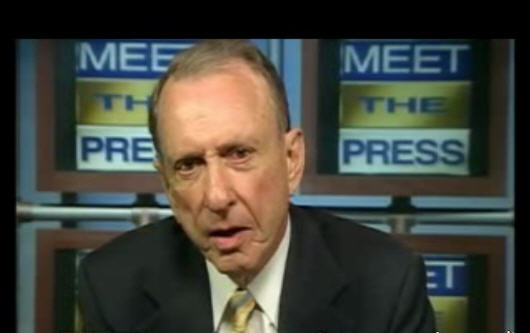
The Senate last night stripped Sen. Arlen Specter (Pa.) of his seniority on committees, a week after the 29-year veteran of the chamber quit the Republican Party to join the Democrats.

In announcing his move across the aisle last week, Specter asserted that Majority Leader Harry M. Reid (D-Nev.) had assured him he would retain his seniority in the Senate and on the five committees on which he serves. Specter’s tenure ranked him ahead of all but seven Democrats.

Instead, though, on a voice vote last night, the Senate approved a resolution that made Specter the most junior Democrat on four committees for the remainder of this Congress. (He will rank second from last on the fifth, the Special Committee on Aging.) Reid himself read the resolution on the Senate floor, underscoring the reversal.

Democrats have suggested that they will consider revisiting Specter’s seniority claim at the committee level only after next year’s midterm elections.

“This is all going to be negotiated next Congress,” Jim Manley, a Reid spokesman, said last night.

Specter’s office declined to comment.

The loss of seniority could prove costly to Specter in his campaign to win reelection in 2010, denying him the ability to distinguish himself from a newcomer in his ability to claim key positions.

Specter said last week that becoming chairman of the Appropriations Committee was a personal goal of his, and his Senate service seemed to put him in position to be the third-ranking Democrat there. Now, though, he will not hold even an Appropriations subcommittee chairmanship in 2011 — a critical foothold Specter has used to send billions of dollars to Pennsylvania.

Stimulus: How to Know If It's Working

Barack Obama, D.C. Groupthink, Economic Stimulus, GOP, Jobs, Media Misinformation, Politics

February 11, 2009

BUSINESS WEEK

Consumer confidence and job creation may be slow to emerge and hard to measure, but boosts in umemployment benefits and food stamps will be fast acting

By Moira Herbst

bama1At his first prime-time press conference, President Obama was asked a central question about the $800 billion-plus economic stimulus package: How will Americans know if it’s working? “My initial measure of success is creating or saving 4 million jobs,” Obama answered.

That was on Feb. 9, a day before the Senate passed an $838 billion version of the bill by a vote of 61-37, following the Jan. 28 passage of an $819 billion version in the House. The House and Senate have begun negotiations to reconcile the measures, which Obama would like to sign into law by Feb. 16, the federal Presidents’ Day holiday. When people have a job, Obama explained, they purchase and invest, allowing companies to do the same and, in turn, to hire more workers as business expands.


Indicators of Success

Yet while job creation is arguably the most important goal of the stimulus package, other parts of the bill will have a much more immediate and visible impact. Food stamp increases and extensions of unemployment benefits will be among the first noticeable effects of the package. Tax credit payments for individuals and families would follow, along with other tax breaks and incentives. Rising consumer confidence and lower unemployment will be far more gradual, and aren’t likely to surface until late 2009 at the earliest.

There’s an understanding among many economists that the sooner a government intervenes in an economic crisis, the more effective it tends to be in getting the economy back on track. That doesn’t mean that precise measurement of success is easy, however. “The problem is, we don’t know what trajectory the economy would take without the stimulus package,” says J. Bradford DeLong, an economics professor at the University of California-Berkeley. “We can’t enter a Star Trek-like divided universe in which we compare what’s happening with the stimulus versus without it. It’s hard to precisely judge its impact.”

DeLong says that looking at interest rates will provide a clearer idea of whether the stimulus plan is working. “If interest rates stay extremely low, the plan is definitely working,” he says. “If Treasury interest rates do start to rise by more than normal levels, then we worry that [the spending] is crowding out private economic activity and discouraging investment.” Specifically, he says that if medium- to long-term Treasury bond interest rates climb two or three percentage points higher in the next year and inflation sets in, the stimulus package is not having its intended effect.

Swift Help for the Neediest

Of course, how one benefits from the stimulus package depends on several factors, including income, professional skills, and where you live. “What you’ll see [in benefit] and when you see it depends on who you are,” says Steve Ellis, vice-president at Taxpayers for Common Sense, a taxpayer advocacy group. “If you are living hand-to-mouth, you should have greater access to food stamps and other assistance right away. If you’re employed and not doing as well but hanging on, you won’t see much change unless a [federally funded] construction project starts up nearby. For them, the government hand will be less visible and less direct.”

Direct assistance for the poor and unemployed, considered as among the most effective stimulus measures, will be the first to take effect. Both the House and Senate bills offer an additional $20.2 billion to extend emergency unemployment benefits for more than 3 million people whose state benefits are set to run out after March. They also offer an extra $25 a week in jobless benefits to millions of workers through the end of the year; the current average weekly benefit is $293.

The packages also would give $7 billion to states that adopt reforms that make it easier for part-time workers, low-wage earners, and women to qualify for benefits. The proposals vary in the amounts by which they would increase food stamp benefits and additional medical assistance for low-income, unemployed workers under Medicaid, but both include spending for these items. An additional $17 billion in the stimulus bills would boost the maximum Pell Grant for higher education by $400 per applicant and provide other financial aid. Along with extended benefits, the unemployed may start to see shorter lines at the unemployment office. Both stimulus bills give states $500 million to help process unemployment applications, which have been overwhelming state systems across the country.

Tax Credits and State Aid

Working and middle-income Americans will benefit from the $82.1 billion in tax credit payments the plans offer. The House plan would give individuals earning up to $75,000 a year a tax credit of $500 and couples earning up to $150,000 a year a tax credit of $1,000. (The Senate bill lowers the income cap to $70,000 for individuals and $140,000 for couples, which critics say would reduce the stimulus effect.) Taxpayers can receive this credit either by claiming a credit on their 2009 and 2010 tax returns or by reducing their withholding from their paychecks. Other tax incentives to encourage auto and home purchases, included in the Senate bill, would be experienced by consumers at the time of purchase.

Later this year, the effects of other spending will become more visible. The bills offer states tens of billions in “state stabilization” money, to fund grants for education and to patch holes that have emerged in many state budgets. (The House bill sets aside $79 billion in state stabilization funds, the Senate bill cuts that to $39 billion.) Another $3 billion is earmarked for state and local law enforcement.

In the meantime, the stimulus plans are expected to create or save jobs in various sectors of the economy. The nonpartisan Congressional Budget Office estimated that the House version of the bill would create between 1.3 million and 3.9 million jobs by the end of 2010. While police officers and teachers might feel the effect immediately, other workers would find jobs later this year on such projects as modernizing electrical grids, building highways, and weatherizing federal buildings.

Metrics May Prove Elusive

Mark Zandi, chief economist at Moodys.com (MCO), says that if the package works according to Washington’s plan, unemployment insurance claims should start to drop in the summer and continue through the fall. He warns, however, that the unemployment rate will be slower to fall because layoffs will offset some of the gains. Some economists say that even as the unemployment rate does begin to fall, it will be hard to measure what would have happened without the economic stimulus plan.

The stimulus is likely to provoke heated “Did it work?” debates for years to come among politicians, economists, and the public. “We are throwing a rock into our nation’s economic pond, and the ripple effects will spread throughout the economy,” says Ellis of the taxpayer group. Still, he says the impact might be more muted than many would hope: the annual U.S. gross domestic product is $13 trillion, while the stimulus package is about $900 billion over several years. Says Ellis: “It’s a big rock, but it’s a very big pond.”

Herbst is a reporter for BusinessWeek in New York.
Live From The District of Columbia! It's The Nancy and Rahm Show

Barack Obama, Harry Reid, Nancy Pelosi, Rahm Emmanuel, U.S. Congress, U.S. Senate

POLITICO (DRUDGE LIGHT)

In a recent conversation with House Speaker Nancy Pelosi, Rahm Emanuel offered some advice on a Democratic House leadership race. Pelosi’s response, according to several Democratic sources: It is “an internal House Democratic Caucus matter, and we’ll handle it.”

Democratic insiders say there’s no animosity between Pelosi and Emanuel, who’s leaving his post as chairman of the House Democratic Caucus to become the next White House chief of staff.

But the speaker is laying down the law nonetheless.

rahpel

In talks with Emanuel and others, sources say, Pelosi has “set parameters” for what she wants from Barack Obama and his White House staff — no surprises, and no backdoor efforts to go around her and other Democratic leaders by cutting deals with moderate New Democrats or conservative Blue Dogs.

Specifically, Pelosi has told Emanuel that she wants to know when representatives of the incoming administration have any contact with her rank-and-file Democrats — and why, sources say.

During the Bush years, the White House set policy, and Republicans on Capitol Hill were expected to follow it. Former Speaker Dennis Hastert (R-Ill.) occasionally lashed out at former White House chief of staff Andy Card or other senior administration aides when he felt they had gone too far. But in general, Republican lawmakers followed Bush’s lead on every major legislative battle, from Iraq to tax and spending bills to anti-terror policies. With the exception of immigration reform, the House fight over the $700 billion Wall Street bailout package and last week’s meltdown over a bailout for the Big Three automakers, Bush got what he wanted from Congress, especially within his own party.

Pelosi and Senate Majority Leader Harry Reid (D-Nev.) are signaling that they won’t tolerate a repeat with a Democrat in the White House and Democratic majorities in the House and the Senate.

Pelosi “is not going to allow Obama to triangulate her,” said a Democratic source close to the leadership. “It’s not going to happen to her.”

Pelosi’s mantra, in a way, is “no surprises.” The speaker wants to be told when Reid is communicating with the Blue Dogs or other factions with her caucus, and she expects the same from Obama when he arrives in the Oval Office, said Democratic sources.

“We certainly are in frequent communication with the [Obama] transition team,” said Brendan Daly, Pelosi’s communications director. Daly noted that Pelosi and Emanuel have long-standing ties — she appointed him to head up the Democratic Congressional Campaign Committee at the start of 2005 — and added that Emanuel often speaks directly with John Lawrence, Pelosi’s chief of staff.

Daly said Pelosi will work closely with Obama and Reid to craft an economic stimulus package early next year, as well as other economic recovery legislation.

“She and President-elect Obama have the same goals,” Daly added. “It’s a matter of working together to get things done.”

Pelosi herself said the same about Obama in an interview with Bloomberg’s Al Hunt last week, stating that “our priorities are the same about creating good-paying jobs.”

But it won’t always be that easy. Capitol Hill veterans predict that, no matter how much goodwill there is at the start of a new administration, there are always battles over policy and legislative priorities between the White House and Congress.

“There is tension. There is going to be tension,” said a Democratic veteran of Capitol Hill. “This is not Hastert. She wants to know what they are up to.”

The Emanuel-Pelosi relationship is a complex one that defies easy explanation. Emanuel was a rising star inside the Democratic Caucus — with many members convinced he would be speaker one day — until Obama tapped him for the West Wing job. In large part, Emanuel owed his rise to Pelosi, who put him in charge of the DCCC, where he helped lead the Democrats back to the House majority after 12 years out of power.

From the DCCC, Emanuel moved up to the chairmanship of the caucus. But both he and Pelosi had stocked the DCCC with their own loyalists after the 2006 election, and they both tried to influence campaign strategy as subtly as possible through these surrogates. At the same time, Emanuel was often jockeying with other members on major legislation, including immigration reform and the Wall Street bailout, but rarely without the speaker’s blessing.

Pelosi sometimes resisted Emanuel’s desire to always be on the attack, but she did respect his insight and his willingness to work hard to achieve legislative and political goals. She refused to back Emanuel when he made noises about running for majority whip, the post now held by Rep. Jim Clyburn (D-S.C.). But when Obama approached him about the chief of staff job, Emanuel consulted Pelosi first.

Yet the two will find themselves on different ends of Pennsylvania Avenue next year, and that will change the nature of their current relationship profoundly.

“Look, they have different goals now,” said an aide to one top Democrat. “Her job is to protect her members; his job is protect Obama. Those can’t always be the same thing.”

This source added: “I think they will do what they can to work together, but these are two strong-willed people who are used to getting their way. There’s bound to be some areas of disagreement. We’ll just have to see how they handle it.”

Kos Jumps a Shark

Stories

[Ed. note: I’ve liked Markos since I used to read his baby blog and before he basically
invented the Netroots. With that said, this may not just be his “Jump the Shark” moment but it may also be some of the worst writing in the history of the game]

Daily Kos: State of the Nation

Rewarding good behavior
by kos
Tue Jul 01, 2008 at 11:05:46 AM PDT

So many of you are upset that I pulled back my credit card last night, making a last minute decision to hold back on a $2,300 contribution to Obama. Let me explain further:

First of all, obviously Obama is a great candidate who is running a great 50-state race. That much cannot be denied. But he’s had a rough couple of weeks.

First, he reversed course and capitulated on FISA, not just turning back on the Constitution, but on the whole concept of “leadership”. Personally, I like to see presidents who 1) lead, and 2) uphold their promises to protect the Constitution.

Then, he took his not-so-veiled swipe at MoveOn in his “patriotism” speech.

Finally, he reinforced right-wing and media talking points that Wes Clark had somehow impugned McCain’s military service when, in reality, Clark had done no such thing.

All of a sudden, there was a lot of cowering when, just days ago, we got to read this:

When Mr. Wenner asked how Mr. Obama might respond to harsh attacks from Republicans, suggesting that Democrats have “cowered” in the past, Mr. Obama replied, “Yeah, I don’t do cowering.”

Could’ve fooled me, and maybe he is. Maybe what looks like cowering to me is really part of that “moving to the center” stuff everyone keeps talking about. But there is a line between “moving to the center” and stabbing your allies in the back out of fear of being criticized. And, of late, he’s been doing a lot of unecessary stabbing, betraying his claims of being a new kind of politician. Not that I ever bought it, but Obama is now clearly not looking much different than every other Democratic politician who has ever turned his or her back on the base in order to prove centrist bona fides. That’s not an indictment, just an observation.

Now I know there’s a contingent around here that things Obama can do no wrong, and he must never be criticized, and if you do, well fuck you! I respect the sentiment, but will respectfully disagree. We’re allowed to do that here. But fair notice — I will never pull a Rush Limbaugh and carry water for anyone. Not for the Democratic Congress, and not for our future Democratic president. When anyone does something I don’t care for, I will say so. I’ve never pulled my punches before, so why start now?

Obama will be fine without my contribution, and he may even still get it before this thing is said and done, but it would be at a time when he has done something positive. That’s called rewarding good behavior. And if that opportunity fails to arise because Obama goes on a Sister Souljah’ing rampage, then no worries. Chances are good that the DNC would get the money instead. But at this time, I simply have no desire to reward bad behavior. Some of you don’t care about his behavior, or don’t think it’s bad behavior, or whatever. I didn’t ask any of you to follow suit, and don’t care whether you do or not. I didn’t pull him from the Orange to Blue list. I’m not going to start praising Nader or Barr. I’ll still vote for him. Yadda, yadda, yadda. At the end of the day, I’m pretty irrelevant in the whole affair. Obama is going to raise a ton of dough and win this thing whether I send him money or not.

Ultimately, he’s currently saying that he doesn’t need people like me to win this thing, and he’s right. He doesn’t. If they’ve got polling or whatnot that says that this is his best path to victory, so much the better. I want him to win big. But when the Obama campaign makes those calculations, they have to realize that they’re going to necessarily lose some intensity of support. It’s not all upside. And for me, that is reflected in a lack of interest in making that contribution.

That’s it. No need to freak out. It is what it is. Others will happily pick up the slack. We’re headed toward a massive Democratic wave, and what I decide to do with my money means next to nothing, no matter how much hyperventilating may happen on this site’s comments and diaries about it all.

And if for some crazy hard-to-see reason my money actually is important to the Obama campaign, then they can adjust their behavior to get it.