Stiglitz on The Great American Economy [must read]

Stories

VANITY FAIR

Reversal of Fortune

Describing how ideology, special-interest pressure, populist politics, and sheer incompetence have left the U.S. economy on life support, the author puts forth a clear, commonsense plan to reverse the Bush-era follies and regain America’s economic sanity.

by Joseph E. Stiglitz November 2008

When the American economy enters a downturn, you often hear the experts debating whether it is likely to be V-shaped (short and sharp) or U-shaped (longer but milder). Today, the American economy may be entering a downturn that is best described as L-shaped. It is in a very low place indeed, and likely to remain there for some time to come.

Virtually all the indicators look grim. Inflation is running at an annual rate of nearly 6 percent, its highest level in 17 years. Unemployment stands at 6 percent; there has been no net job growth in the private sector for almost a year. Housing prices have fallen faster than at any time in memory—in Florida and California, by 30 percent or more. Banks are reporting record losses, only months after their executives walked off with record bonuses as their reward. President Bush inherited a $128 billion budget surplus from Bill Clinton; this year the federal government announced the second-largest budget deficit ever reported. During the eight years of the Bush administration, the national debt has increased by more than 65 percent, to nearly $10 trillion (to which the debts of Freddie Mac and Fannie Mae should now be added, according to the Congressional Budget Office). Meanwhile, we are saddled with the cost of two wars. The price tag for the one in Iraq alone will, by my estimate, ultimately exceed $3 trillion.

McCain Tries To Blame Financial Crisis On Democratic Takeover Of Congress In 2007

Wall Street


T H I N K P R O G R E S S

In April, Sen. John McCain (R-AZ) claimed that “you could make an argument that there’s been great progress economically” since President Bush took office. He then revised that argument in August, releasing an ad that declared “we’re worse off than we were four years ago.”

Now McCain is revising his timeline again. In an interview with right-wing radio host Michael Medved this past Friday, McCain agreed with Medved’s assertion that “the economy was really progressing pretty well under most of President Bush’s term” before Democrats took control of Congress in January 2007:

MEDVED: Let me ask you one other thing senator, which again, I think is on the minds of lots and lots of our listeners. The economy was really progressing pretty well under most of President Bush’s term. Then the Democrats took over in Congress in 2007 and now we’re in this horrible crisis. Coincidence?

MCCAIN: No, it isn’t.

McCain went on to place the blame for the financial crisis on Fannie Mae and Freddie Mac, claiming that Democrats “were willing co-conspirators with this game of three-card monty that went on and then it collapsed.” Listen to it here:

Medved and McCain’s claim that “the economy was progressing really well” before Democrats took control of Congress is laughable. As Center for American Progress Senior Fellow Christian Weller’s economic snapshot from December 2006 shows, the economy was already in rough shape:

Famly Debt Was Rising: By September 2006, household debt rose to an unprecedented 130.9% of disposable income. From March 2001 to September 2006, personal debt relative to disposable income grew each quarter by 1.6 percentage points—almost five times faster than in the 1990s. In the second quarter of 2006, families had to spend 14.4% of their disposable income to service their debt—the largest share since 1980.

The Housing Market Had Slowed: The supply of homes for sale each month averaged 6.9 months of supply for the six months ending in October 2006—the largest supply since 1991.

Savings Had Plummeted: The personal saving rate of -1.3% in the third quarter of 2006 marked the sixth quarter in a row with a negative personal saving rate.

As for McCain’s claim that Fannie Mae and Freddie Mac are the central cause of the current economic crisis, McClatchy thoroughly debunked it over the weekend, writing that “private sector loans, not Fannie or Freddie, triggered crisis.” McClatchy notes that the “weakening of underwriting standards for U.S. subprime mortgages” began in late 2004 while Republicans controlled both the House and the Senate.

Transcript:

MEDVED: Let me ask you one other thing senator, which again, I think is on the minds of lots and lots of our listeners. The economy was really progressing pretty well under most of President Bush’s term. Then the Democrats took over in Congress in 2007 and now we’re in this horrible crisis. Coincidence?

MCCAIN: No, it isn’t. Although, as you know, and you and I have had this discussion in the past, the Bush administration let these spending bills be signed and him not doing what Ronald Reagan used to do and that is veto them, make them famous, and fight against it. But also, more interestingly, 2006, there was a group of us, as a result of an investigation, and I think it was the Inspector General, that said, look, this Fannie Mae and Freddie Mac are completely out of control, if we don’t do something about it, we’re going to have an incredible financial crisis. And we sent a letter about it. We introduced legislation to rein them in and Senator Obama at the time said that these subprime loans were, quote, “a good idea.” And the Democrats in Congress were specifically talking about, the ones who got all the money, were defending, defending, and saying we can’t re-regulations on Fannie and Freddie and were actually encouraging, as you know, people to borrow money that they couldn’t pay back. A fundamental of economics, so they were willing co-conspirators with this game of three-card monty that went on and then it collapsed, you know.

It's an Eminence Front, Dress Yourself to Kill

Stories

People Forget….

Alec Baldwin on SNL | "It's A Great Time To Invest"

Stories

From the Vaults at 30 Rock:Classic SNL with Alec Baldwin

Vodpod videos no longer available.

Bill Maher's RealTime | Alec Baldwin, Christine Amanpour and Gary Shandling | Oct. 3, 2008

Alec Baldwin, bailout, Barack Obama, Barney Frank, Ben Bernanke, Christine Amanpour, Garry Shandling, Henry Paulson, Iraq, John McCain, Jor Biden, Politics, Sarah Palin, Surge, Wall Street

Fed Pumps Further $630 Billion Into Financial System

630 billion, Bernanke, Federal Reserve, Paulson, Wall Street

Sept. 29 (Bloomberg) — The Federal Reserve will pump an additional $630 billion into the global financial system, flooding banks with cash to alleviate the worst banking crisis since the Great Depression.

The Fed increased its existing currency swaps with foreign central banks by $330 billion to $620 billion to make more dollars available worldwide. The Term Auction Facility, the Fed’s emergency loan program, will expand by $300 billion to $450 billion. The European Central Bank, the Bank of England and the Bank of Japan are among the participating authorities.

The Fed’s expansion of liquidity, the biggest since credit markets seized up last year, came hours before the U.S. House of Representatives rejected a $700 billion bailout for the financial industry. The crisis is reverberating through the global economy, causing stocks to plunge and forcing European governments to rescue four banks over the past two days alone.

“Today’s blast of term liquidity will settle the funding markets down, and allow trust to slowly be restored between borrowers and lenders,” said Chris Rupkey, chief financial economist at Bank of Tokyo-Mitsubishi UFJ Ltd. in New York. On the other hand, “the Fed’s balance sheet is about to explode.”

The MSCI World Index of stocks in 23 developed markets sank 6 percent, the most since its creation in 1970. Credit markets deteriorated further as authorities tried to save more financial institutions from collapse.

European Rescue

European governments have rescued four banks in two days and the Federal Deposit Insurance Corp. said today it helped Citigroup Inc. buy the banking operations of Wachovia Corp. after its shares collapsed. The Standard & Poor’s 500 Index fell 3.8 percent and the cost of borrowing dollars for three months rose to the highest since January. The rate for euros hit a record.

“If people think the authorities may give in to fears, they are wrong,” Financial Stability Forum Chairman Mario Draghi said today in Amsterdam, where the international group of regulators and finance officials is meeting. “There is willingness and determination on winning the battle to restore confidence and stability.”

Banks and brokers have slowed lending as they struggle to restore their capital after $586 billion in credit losses and writedowns since the mortgage crisis began a year ago. The bankruptcy of Lehman Brothers Holdings Inc. also sparked fears among banks they wouldn’t be repaid by counterparties, driving up the cost of short-term loans between banks.

Funding Risk

“By committing to provide a very large quantity of term funding, the Federal Reserve actions should reassure financial market participants that financing will be available against good collateral, lessening concerns about funding and rollover risk,” the central bank said.

The Bank of England and the ECB will each double the size of their dollar swap facilities with the Fed to as much as $80 billion and $240 billion, respectively. The Swiss National Bank and the Bank of Japan will also double their dollar swap lines, while the central banks in Australia, Norway, Sweden, Denmark and Canada tripled theirs.

All the banks extended their facilities until the end of April 2009.

The Fed is also increasing the size of its three 84-day TAF sales to $75 billion apiece, from $25 billion. That means the Fed will make a total of $225 billion available in 84-day loans. The central bank will keep the sales of 28-day credit at $75 billion.

Special Sales

In addition, the Fed will hold two special TAF sales in November totaling $150 billion so banks can have funding available for one or two weeks over year-end. The exact timing and terms will be determined later, the Fed said. The TAF program began in December, totaling $40 billion.

The bank-rescue plan being debated by Congress today would give the Fed more power over short-term interest rates by providing authority as of Oct. 1 to pay interest on reserves held at the central bank by financial institutions. That would make it easier for the Fed to pump funds into the banking system.

Paying interest on reserves puts a “floor” under the traded overnight rate, which would allow a central bank “to provide liquidity during times of stress” without affecting the rate, New York Fed economists said in a paper last month.

To contact the reporter on this story: Scott Lanman in Washington at slanman@bloomberg.netCraig Torres in Washington at ctorres3@bloomberg.net.
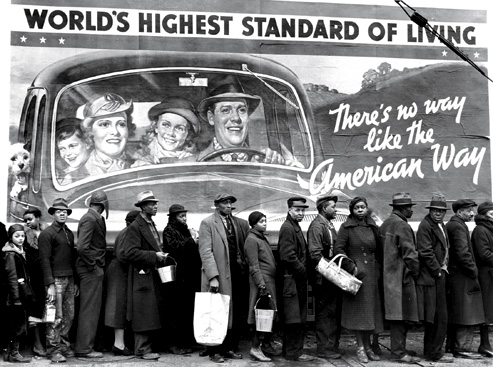

New Rules | Bill Maher | September 26, 2008

Bernanke, Daly, Frank, Goldman, McCain, Nader, Obama, Paulson, Politics, Tullycast, Wall Street, Youtube Tags: Politics

"Obama Is Walking Into a Quagmire" Ralph Nader on Bill Maher

Bernanke, Daly, Frank, Goldman, McCain, Nader, Obama, Paulson, Politics, Tullycast, Wall Street, Youtube Tags: Politics

Ron Suskind on Real Time w/Bill Maher | September 26, 2008

Bernanke, Daly, Frank, Goldman, McCain, Nader, Obama, Paulson, Politics, Tullycast, Wall Street, Youtube Tags: Politics

King George IV: "Give me 700 Billion" Ralph Nader w/ Bill Maher

Bernanke, Daly, Frank, Goldman, McCain, Nader, Obama, Paulson, Politics, Tullycast, Wall Street, Yoitube Tags: Politics