Guess What? It Turns Out That J.P. Morgan Chase Suspected Madoff Tomfoolery Ten Months Before The Ponzi Scheme Blew Up

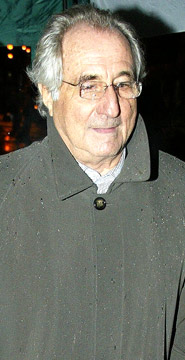
Bernie Madoff
February 3, 2011
JPMorgan Hid Doubts on Madoff, Documents Suggest

Senior executives at JPMorgan Chase expressed serious doubts about the legitimacy of Bernard L. Madoff’s investment business more than 18 months before his Ponzi schemecollapsed but continued to do business with him, according to internal bank documents made public in a lawsuit that was unsealed on Thursday.

On June 15, 2007, an obviously high-level risk management officer for Chase’s investment bank sent a lunchtime e-mail to colleagues to report that another bank executive “just told me that there is a well-known cloud over the head of Madoff and that his returns are speculated to be part of a ponzi scheme.”

Even before that, a top private banking executive had been consistently steering clients away from investments linked to Mr. Madoff because his “Oz-like signals” were “too difficult to ignore.” And the first Chase risk analyst to look at a Madoff feeder fund, in February 2006, reported to his superiors that its returns did not make sense because it did far better than the securities that were supposedly in its portfolio.

Despite those suspicions and many more, the bank allowed Mr. Madoff to move billions of dollars of investors’ cash in and out of his Chase bank accounts right up until the day of his arrest in December 2008 — although by then, the bank had withdrawn all but $35 million of the $276 million it had invested in Madoff-linked hedge funds , according to the litigation.

Bernie Madoff’s Guide to New York Restaurants

Bankers, Bernie Madoff, New York, Restaurants, Wall Street

By Pete Wells

In an inspired piece of forensic accounting, Eater analyzes Bernie Madoff’s American Express statements to discover where the Ponzi schemer ate, what he spent, and how he tipped. His go-to restaurant for the period in 2008 covered by the statements was Lure. (But if he liked it so much, how come he only tipped six percent?) Lure was followed closely by Houston’s; perhaps Mr. Madoff found their spinach-artichoke dip irresistible. Or maybe it was just close to his office.

Live Blogging the Madoff Hearing: The Victims Speak

Bernie Madoff, Economy, Fraud, Live Blogging, Twitter, Wall Street Scam

Live Blogging the Madoff Hearing: The Victims Speak

Posted by Brian Baxter

AM LAW DAILY

The first Madoff victim–a Mr. Nuremberg–has approached the court to speak. He begins by challenging Madoff to look him in the eye. Madoff started to turn towards Nuremberg before Judge Chin ordered Nuremberg to return to the podium.

Nuremberg did as instructed and stated that a conspiracy count should be included in the plea. He said other individuals were undoubtedly involved in pulling together “the reams of data” that Madoff used to

build his fraudulent business.

Nuremberg urged Chin to reject the plea. Another victim has approached the podium and urged more of the same.

A third victim, who the audio dipped out on and we couldn’t get her name, says that Chin should push for a trial for Madoff that will show the true extent of his crimes and others allegedly involved

“We are a country that learns from our mistakes,” she said. “And then we can reexamine and improve the mechanisms that have failed us so completely here…with this horrendous crime. Mr. Madoff has

inflicted so much pain on the young, the old, and the infirm. No man is above the law.”

At this point, Chin says there will be no more statements from victims.

via Live Blogging the Madoff Hearing: The Victims Speak.

Government Bailout Hits $8.5 trillion

Adjustable Rate Mortgages, AIG, Alan Greenspan, bailout, Banking Regulation, Banks, Ben Bernanke, Bernie Madoff, BofA, Citi, Credit, Credit Default Swaps, Fannie Mae, Federal Reserve, Finance, Freddy Mac, Henry Paulson, Lehman, Merrill, Mrs. Andrea Mitchell, Treasury, Wachovia, Wall Street, World Savings

chia-obama-animated-21

Kathleen Pender

The San Francisco Chronicle

November 26, 2008

The federal government committed an additional $800 billion to two new loan programs on Tuesday, bringing its cumulative commitment to financial rescue initiatives to a staggering $8.5 trillion, according to Bloomberg News.

That sum represents almost 60 percent of the nation’s estimated gross domestic product.

Given the unprecedented size and complexity of these programs and the fact that many have never been tried before, it’s impossible to predict how much they will cost taxpayers. The final cost won’t be known for many years.

The money has been committed to a wide array of programs, including loans and loan guarantees, asset purchases, equity investments in financial companies, tax breaks for banks, help for struggling homeowners and a currency stabilization fund.

Most of the money, about $5.5 trillion, comes from the Federal Reserve, which as an independent entity does not need congressional approval to lend money to banks or, in “unusual and exigent circumstances,” to other financial institutions.

To stimulate lending, the Fed said on Tuesday it will purchase up to $600 billion in mortgage debt issued or backed by Fannie Mae, Freddie Mac and government housing agencies. It also will lend up to $200 billion to holders of securities backed by consumer and small-business loans. All but $20 billion of that $800 billion represents new commitments, a Fed spokeswoman said.

About $1.1 trillion of the $8.5 trillion is coming from the Treasury Department, including $700 billion approved by Congress in dramatic fashion under the Troubled Asset Relief Program.

The rest of the commitments are coming from the Federal Deposit Insurance Corp. and the Federal Housing Administration.

Only about $3.2 trillion of the $8.5 trillion has been tapped so far, according to Bloomberg. Some of it might never be.

Relatively little of the money represents direct outlays of cash with no strings attached, such as the $168 billion in stimulus checks mailed last spring.

Where it’s going

Most of the money is going into loans or loan guarantees, asset purchases or stock investments on which the government could see some return.

“If the economy were to miraculously recover, the taxpayer could make money. That’s not my best guess or even a likely scenario,” but it’s not inconceivable, says Anil Kashyap, a professor at the University of Chicago’s Booth School of Business.

The risk/reward ratio for taxpayers varies greatly from program to program.

For example, the first deal the government made when it bailed out insurance giant AIG had little risk and a lot of potential upside for taxpayers, Kashyap said. “Then it turned out the situation (at AIG) was worse than realized, and the terms were so brutal (to AIG) that we had to renegotiate. Now we have given them a lot more credit on more generous terms.”

Kashyap says the worst deal for taxpayers could be the Citigroup deal announced late Sunday. The government agreed to buy an additional $20 billion in preferred stock and absorb up to $249 billion in losses on troubled assets owned by Citi.

Given that Citigroup’s entire market value on Friday was $20.5 billion, “instead of taking that $20 billion in preferred shares we could have bought the company,” he says.

It’s hard to say how much the overall rescue attempt will add to the annual deficit or the national debt because the government accounts for each program differently.

If the Treasury borrows money to finance a program, that money adds to the federal debt and must eventually be paid off, with interest, says Diane Lim Rogers, chief economist with the Concord Coalition, a nonpartisan group that aims to eliminate federal deficits.

The federal debt held by the public has risen to $6.4 trillion from $5.5 trillion at the end of August. (Total debt, including that owed to Social Security and other government agencies, stands at more than $10 trillion.)

However, a $1 billion increase in the federal debt does not necessarily increase the annual budget deficit by $1 billion because it is expected to be repaid over time, Rogers said.

Annual deficit

A deficit arises when the government’s expenditures exceed its revenues in a particular year. Some estimate that the federal deficit will exceed $1 trillion this fiscal year as a result of the economic slowdown and efforts to revive it.

The Fed’s activities to shore up the financial system do not show up directly on the federal budget, although they can have an impact. The Fed lends money from its own balance sheet or by essentially creating new money. It has been doing both this year.

The problem is, “if you print money all the time, the money becomes worth less,” Rogers says. This usually leads to higher inflation and higher interest rates. The value of the dollar also falls because foreign investors become less willing to invest in the United States.

Today, interest rates are relatively low and the dollar has been mostly strengthening this year because U.S. Treasury securities “are still for the moment a very safe thing to be investing in because the financial market is so unstable,” Rogers said. “Once we stabilize the stock market, people will not be so enamored of clutching onto Treasurys.”

At that point, interest rates and inflation will rise. Increased borrowing by the Treasury will also put upward pressure on interest rates.

Deflation a big concern

Today, however, the Fed is more worried about deflation than inflation and is willing to flood the market with money if necessary to prevent an economic collapse.

Federal Reserve Chairman Ben Bernanke “has ordered the helicopters to get ready,” said Axel Merk, president of Merk Investments. “The helicopters are hovering and the first cash is making it through the seams. Soon, a door may be opened.”

Rogers says her biggest fear is not hyperinflation and the social unrest it could unleash. “I’m more worried about a lot of federal dollars being committed and not having much to show for it. My worst fear is we are leaving our children with a huge debt burden and not much left to pay it back.”

Economic rescue

Key dates in the federal government’s campaign to alleviate the economic crisis.

March 11: The Federal Reserve announces a rescue package to provide up to $200 billion in loans to banks and investment houses and let them put up risky mortgage-backed securities as collateral.

March 16: The Fed provides a $29 billion loan to JPMorgan Chase & Co. as part of its purchase of investment bank Bear Stearns.

July 30: President Bush signs a housing bill including $300 billion in new loan authority for the government to back cheaper mortgages for troubled homeowners.

Sept. 7: The Treasury takes over mortgage giants Fannie Mae and Freddie Mac, putting them into a conservatorship and pledging up to $200 billion to back their assets.

Sept. 16: The Fed injects $85 billion into the failing American International Group, one of the world’s largest insurance companies.

Sept. 16: The Fed pumps $70 billion more into the nation’s financial system to help ease credit stresses.

Sept. 19: The Treasury temporarily guarantees money market funds against losses up to $50 billion.

Oct. 3: President Bush signs the $700 billion economic bailout package. Treasury Secretary Henry Paulson says the money will be used to buy distressed mortgage-related securities from banks.

Oct. 6: The Fed increases a short-term loan program, saying it is boosting short-term lending to banks to $150 billion.

Oct. 7: The Fed says it will start buying unsecured short-term debt from companies, and says that up to $1.3 trillion of the debt may qualify for the program.

Oct. 8: The Fed agrees to lend AIG $37.8 billion more, bringing total to about $123 billion.

Oct. 14: The Treasury says it will use $250 billion of the $700 billion bailout to inject capital into the banks, with $125 billion provided to nine of the largest.

Oct. 14: The FDIC says it will temporarily guarantee up to a total of $1.4 trillion in loans between banks.

Oct. 21: The Fed says it will provide up to $540 billion in financing to provide liquidity for money market mutual funds.

Nov. 10: The Treasury and Fed replace the two loans provided to AIG with a $150 billion aid package that includes an infusion of $40 billion from the government’s bailout fund.

Nov. 12: Paulson says the government will not buy distressed mortgage-related assets, but instead will concentrate on injecting capital into banks.

Nov. 17: Treasury says it has provided $33.6 billion in capital to another 21 banks. So far, the government has invested $158.6 billion in 30 banks.

Sunday: The Treasury says it will invest $20 billion in Citigroup Inc., on top of $25 billion provided Oct. 14. The Treasury, Fed and FDIC also pledge to backstop large losses Citigroup might absorb on $306 billion in real estate-related assets.

Tuesday: The Fed says it will purchase up to $600 billion more in mortgage-related assets and will lend up to $200 billion to the holders of securities backed by various types of consumer loans.

Source: Associated Press

Net Worth runs Tuesdays, Thursdays and Sundays. E-mail Kathleen Pender at kpender@sfchronicle.com.


Madoff Records Are "Utterly Unreliable"

Arthur Levitt, Banking Crisis, Bernie Madoff, Carlyle Group, Christopher Cox, Ponzi Scheme, Wall Street Fraud
bab

Dec. 17 (Bloomberg)Bernard Madoff’s ability to avoid scrutiny from U.S. regulators for years shows that the monitoring system is “broken and has to be fixed,” former Securities and Exchange Commission Chairman Arthur Levitt said.

Levitt, a senior adviser to Carlyle Group, said today in a Bloomberg Radio interview that the SEC must respond to allegations that it failed to act on tips of wrongdoing by Madoff that it had received since the 1990s.

“The system is obviously flawed and it’s got to be rethought in terms of how investors can be protected,” Levitt said. SEC Chairman Christopher Cox “is doing the right thing” by calling for a probe of the agency’s role, Levitt said.

Madoff was arrested Dec. 11 after telling his two sons and federal investigators that he’d been using money from new investors to pay off old ones in a Ponzi scheme. He said clients of his New York-based investment-advisory firm lost $50 billion.

Levitt said Madoff may have run a conventional business for a while and “shifted gears,” when the market turned against him. Madoff “clearly lied” to avoid registering with the SEC, which has shrunk as the financial industry has grown, Levitt said.

In 2004, the agency had 477 people in its inspection office, overseeing about 8,000 investment advisers, Levitt said. Today, 430 people regulate 11,300 advisers, along with about 16,000 mutual funds, he said.

Cox said yesterday the SEC failed to act for almost a decade on “credible and specific allegations” against Madoff. He announced an internal probe to review the “deeply troubling” revelations.

Levitt is a board member of Bloomberg LP, the parent company of Bloomberg News.

SEC Under Scrutiny in Madoff Case

Bernie Madoff, Fraud, Grassley, Madoff Securities, Palm Beach, SEC, Wall Street, Wiesel. Spielberg, Zuckerman

Senator: The SEC “Letting Down the American People”

mad-money

ABC NEWS

By BRIAN ROSS and RICHARD ESPOSITO

Dec. 15, 2008—

As the list of victims continues to grow and investigators examine how Bernard Madoff allegedly ran his massive scam, some are questioning how Madoff avoided detection for so long. As a registered investment advisor since 2006, he was subject to scrutiny by the Securities and Exchange Commission, yet he managed to maintain a clean record even after complaints from whistleblowers started nine years ago.

“The Securities and Exchange Commission is letting down the American people,” Sen. Charles Grassley (R-Iowa) said of the SEC. “They failed. This person was registered as a broker dealer, they should have known what he was doing all the time, and particularly if you have whistleblowers.”

The head of enforcement at the SEC attempted to duck questions about the failure of the agency to detect what may be the biggest investment fraud in history.

“It is hard to directly respond given the fact that so much of what we have done historically is non-public and needs to remain non-public until someone decides otherwise,” said Linda Thomsen.

Meanwhile, the list of Madoff’s victims keeps growing. European banks have lost billions, as have charities run by Elie Wiesel, director Steven Spielberg, and New York billionaire Mort Zuckerman, whose charitable trust lost $30 million.

Authorities say Madoff didn’t hesitate to scam even close friends and fellow members of the Palm Beach Country Club.

“They’re going to have to sell their 20, 30 million dollar mansions,” said Larry Leamer, author of “Madness Under the Royal Palms”. “It’s all over. Some of these people crazily put all their money with him so they’re finished.”

Some Were Sent a Warning Sign on Madoff

While many trusted Madoff with their life savings, others were sending out a warning signal. The research firm Aksia, which also provides advice to pensions, endowments, foundations and insurance companies, says it has long been steering clients away from Madoff’s hedge fund based on a “host of red flags.”

According to a letter to its clients, Aksia “published extensive reports on several of the ‘feeder funds’ which allocated their capital to Madoff Securities … Our judgment was swift, given the extensive list of red flags.”

Aksia said in its letter that when the firm checked the auditor of Madoff’s fund they found the operation was quite small, given the amount of money being handled.

The accounting firm, says Aksia, had just three employees, “of which one was 78 years old and living in Florida, one was a secretary, and one was an active 47-year-old accountant (and the office in Rockland County, N.Y., was only 13 ft x 18 ft large).”

The 17th Floor, Where Wealth Went to Vanish

Bankers, Banking and Finance, Bernie Madoff, Derivitives, Fraud, Hedge Funds, New York, Ponzi Scheme, Proprietary System, Wall Street
International Herald Tribune
The 17th floor, where wealth went to vanish
Monday, December 15, 2008

madoff_448510a

The epicenter of what may be the largest Ponzi scheme in history was the 17th floor of the Lipstick Building, an oval red-granite building rising 34 floors above Third Avenue in Midtown Manhattan.

A busy stock-trading operation occupied the 19th floor, and the computers and paperwork filled the 18th floor of Bernard L. Madoff Investment Securities.

But the 17th floor was Bernie Madoff’s sanctum, occupied by fewer than two dozen staff members and rarely visited by other employees. They called it the “hedge fund” floor, but U.S. prosecutors now say the work Madoff did there was actually a fraud scheme whose losses Madoff himself estimates at $50 billion.

The tally of reported losses climbed through the weekend to nearly $20 billion, with a giant Spanish bank, Banco Santander, reporting on Sunday that clients of one of its Swiss subsidiaries have lost $3 billion. Some of the biggest losers were members of the Palm Beach Country Club, where many of Madoff’s wealthy clients were recruited.

The list of prominent fraud victims grew as well. According to a person familiar with the business of the real estate and publishing magnate Mort Zuckerman, he is also on a list of victims that already included the owners of the New York Mets, a former owner of the Philadelphia Eagles and the chairman of GMAC.

And the 17th floor is now an occupied zone, as investigators and forensic auditors try to piece together what Madoff did with the billions entrusted to him by individuals, banks and hedge funds around the world.

So far, only Madoff, the firm’s 70-year-old founder, has been arrested in the scandal. He is free on a $10 million bond and cannot travel far outside the New York area.

But a question still dominates the investigation: How one person could have pulled off such a far-reaching, long-running fraud, carrying out all the simple practical chores the scheme required, like producing monthly statements, annual tax statements, trade confirmations and bank transfers.

Firms managing money on Madoff’s scale would typically have hundreds of people involved in these administrative tasks. Prosecutors say he claims to have acted entirely alone.

“Our task is to find the records and follow the money,” said Alexander Vasilescu, a lawyer in the New York office of the Securities and Exchange Commission. As of Sunday night, he said, investigators could not shed much light on the fraud or its scale. “We do not dispute his number — we just have not calculated how he made it,” he said.

Scrutiny is also falling on the many banks and money managers who helped steer clients to Madoff and now say they are among his victims.

While many investors were friends or met Madoff at country clubs or on charitable boards, even more had entrusted their money to professional advisory firms that, in turn, handed it on to Madoff — for a fee.

Investors are now questioning whether these paid advisers were diligent enough in investigating Madoff to ensure that their money was safe. Where those advisers work for big institutions like Banco Santander, investors will most likely look to them, rather than to the remnants of Madoff’s firm, for restitution.

Santander may face $3.1 billion in losses through its Optimal Investment Services, a Geneva-based fund of hedge funds that is owned by the bank. At the end of 2007, Optimal had 6 billion euros, or $8 billion, under management, according to the bank’s annual report — which would mean that its Madoff investments were a substantial part of Optimal’s portfolio.

A spokesman for Santander declined to comment on the case.

Other Swiss institutions, including Banque Bénédict Hentsch and Neue Privat Bank, acknowledged being at risk, with Hentsch confirming about $48 million in exposure.

BNP Paribas said it had not invested directly in the Madoff funds but had 350 million euros, or about $500 million, at risk through trades and loans to hedge funds. And the private Swiss bank Reichmuth said it had 385 million Swiss francs, or $327 million, in potential losses. HSBC, one of the world’s largest banks, also said it had made loans to institutions that invested in Madoff but did not disclose the size of its potential losses.

Losses of this scale simply do not seem to fit into the intimate business that Madoff operated in New York.

With just over 200 employees, it was tight-knit and friendly, according to current and former employees. Madoff was gregarious and empathetic, known for visiting sick employees in their hospitals and hosting warmly generous staff parties.

By the elevated standards of Wall Street, the Madoff firm did not pay exceptionally well, but it was loyal to employees even in bad times. Madoff’s family filled the senior positions, but his was not the only family at the firm — generations of employees had worked for Madoff.

Even before Madoff collapsed, some employees were mystified by the 17th floor. In recent regulatory filings, Madoff claimed to manage $17 billion for clients — a number that would normally occupy a staff of at least 200 employees, far more than the 20 or so who worked on 17.

One Madoff employee said he and other workers assumed that Madoff must have a separate office elsewhere to oversee his client accounts.

Nevertheless, Madoff attracted and held the trust of companies that prided themselves on their diligent investigation of investment managers.

One of them was Walter Noel Jr., who struck up a business relationship with Madoff 20 years ago that helped earn his investment firm, the Fairfield Greenwich Group, millions of dollars in fees.

Indeed, over time, one Fairfield’s strongest selling points for its largest fund was its access to Madoff.

But now, Noel and Fairfield are the biggest known losers in the scandal, facing potential losses of $7.5 billion, more than half its assets.

Jeffrey Tucker, a Fairfield co-founder and former U.S. regulator, said in a statement posted on the firm’s Web site: “We have worked with Madoff for nearly 20 years, investing alongside our clients. We had no indication that we and many other firms and private investors were the victims of such a highly sophisticated, massive fraudulent scheme.”

The huge loss comes at a time when the hedge fund industry has already been wounded by the volatile markets. Several weeks ago, Fairfield had halted investor redemptions at two of its other funds, citing the tough market conditions as dozens of hedge funds have done. The firm reported a drop of $2 billion in assets between September and November.

Fairfield was founded in 1983 by Noel, the former head of international private banking at Chemical Bank, and Tucker, a former Securities and Exchange Commission official. It grew dramatically over the years, attracting investors in Europe, Latin America and Asia.

Noel first met Madoff in the 1980s, and Fairfield’s fortunes grew along with the returns Madoff reported. The two men were very different: Madoff hailed from eastern Queens and was tied closely to the Jewish community, while Noel, a native of Tennessee, moved in the Greenwich social scene with his wife, Monica.

“Walter was always really confident in Bernie and the strategy he employed,” said one hedge fund manager who declined to be named because for fear of jeopardizing his relationship with Noel.

“He was a person of superb ethics, and this has to cut him to the quick,” said George Ball, a former executive at E. F. Hutton and Prudential-Bache Securities who knows Noel.

Fairfield touted its investigative skills. On its Web site, the firm claimed to investigate hedge fund managers for six to 12 months before investing. As part of the process, a team of examiners conducted personal background checks, audited brokerage records and trading reports and interviewed hedge fund executives and compliance officials.

In 2001, Madoff called Fairfield and invited the firm to inspect his books after two news reports questioned the validity of his returns, according to a person close to Fairfield. Outside auditors hired to inspect Madoff’s operations concluded that “everything checked out,” this person said.

“FGG performed comprehensive and conscientious due diligence and risk monitoring,” Marc Kasowitz, a lawyer for Fairfield, said in a statement. “FGG like so many other Madoff clients was a victim of a highly-sophisticated massive fraud that escaped the detection of top institutional and private investors, industry organizations, auditors, examiners, and regulatory authorities.”

Now, Fairfield is seeking to recover what it can from Madoff.

“It is our intention to aggressively pursue the recovery of all assets related to Bernard L. Madoff Investment Securities,” Tucker said in a statement.

Working alongside the U.S. investigators on Madoff’s 17th floor, staffers for Lee Richards 3d, the court-appointed receiver for the firm, are trying to determine what parts of the firm can keep operating to preserve assets for investors.

A hotline number had been posted on the company Web site, madoff.com, but on Sunday night, Richards said that there was little reason to call.

“We don’t have anything to report to investors at this time,” he said. “We are doing everything we can to protect the assets of the Madoff entities that are subject to the receivership, and to learn what we can about the operations of those entities.”


Guess What? That Whole "Limit on Executive Pay" Thingy in Bailout is Bunk

401k, AIG, bailout, Banking, Bankruptcy, Barack Obama, Barney Frank, Bear Stearns, Bernanke, Bernie Madoff, Citi, Congress, Corporate Greed, D.C., Executive Pay, Lehman, Merrill, Morgan Stanley, Mortgage Backed Securities, U.S. Congress, U.S. Senate, U.S. Treasury, Wall Street

Executive Pay Limits May Prove Toothless
Loophole in Bailout Provision Leaves Enforcement in Doubt

By Amit R. Paley
Washington Post Staff Writer
Monday, December 15, 2008; A01

248_4890

Congress wanted to guarantee that the $700 billion financial bailout would limit the eye-popping pay of Wall Street executives, so lawmakers included a mechanism for reviewing executive compensation and penalizing firms that break the rules.

But at the last minute, the Bush administration insisted on a one-sentence change to the provision, congressional aides said. The change stipulated that the penalty would apply only to firms that received bailout funds by selling troubled assets to the government in an auction, which was the way the Treasury Department had said it planned to use the money.

Now, however, the small change looks more like a giant loophole, according to lawmakers and legal experts. In a reversal, the Bush administration has not used auctions for any of the $335 billion committed so far from the rescue package, nor does it plan to use them in the future. Lawmakers and legal experts say the change has effectively repealed the only enforcement mechanism in the law dealing with lavish pay for top executives.

“The flimsy executive-compensation restrictions in the original bill are now all but gone,” said Sen. Charles E. Grassley (Iowa), ranking Republican on of the Senate Finance Committee.

The modification reflects how the rapidly shifting nature of the crisis and the government’s response to it have led to unexpected results that are just now beginning to be understood. The Government Accountability Office, the investigative arm of Congress, issued a critical report this month about the financial industry rescue package that said it was unclear how the Treasury would determine whether banks were following the executive-compensation rules.

Michele A. Davis, spokeswoman for the Treasury, said the agency is working to develop a policy for how it will enforce the executive-compensation rules. She would not say when the guidance would be issued or what penalties it might impose. But she said the companies promised to follow the rules in contracts with the department.

The final legislation contained unprecedented restrictions on executive compensation for firms accepting money from the bailout fund. The rules limited incentives that encourage top executives to take excessive risks, provided for the recovery of bonuses based on earnings that never materialize and prohibited “golden parachute” severance pay. But several analysts said that perhaps the most effective provision was the ban on companies deducting more than $500,000 a year from their taxable income for compensation paid to their top five executives.

That tax provision, which amended the Internal Revenue Code, was the only part of the law that contained an explicit enforcement mechanism. The provision means the IRS must review the pay of those executives as part of its normal review of tax filings. If a company does not comply, the IRS can impose a tax penalty. The law did not create an enforcement mechanism for reviewing the other restrictions on executive pay.

If a firm violates the executive-compensation limits, department officials said, the Treasury could seek damages, go to court to force compliance, or even rescind the contracts and recover the bailout money. “We therefore have all the remedies available to us for a breach of contract,” Davis wrote in an e-mail.

Legal experts said those efforts could be complicated if the Treasury outlines the penalties after companies have received bailout money. David M. Lynn, former chief counsel of the Securities and Exchange Commission‘s division of corporation finance, said courts have sometimes placed limits on the government’s ability to impose penalties if there was no fair warning.

“Treasury might find its hands tied down the road,” said Lynn, who is also co-author of “The Executive Compensation Disclosure Treatise and Reporting Guide.”

Congressional leaders are also concerned that the Treasury might simply choose not to enforce the rules or be unwilling to impose financial penalties that could further weaken a firm and send the economy deeper into a tailspin.

The Bush administration at first opposed any restrictions on executive pay, congressional aides said. The original three-page bailout proposal presented to lawmakers in September contained no mention of such limits. “Treasury was pretty clear that they thought doing this exec-comp stuff would limit the effectiveness of the program,” said a Democratic congressional aide involved in the negotiations, who, like others interviewed for this story, spoke on condition of anonymity. “They felt companies might not take part if we put in these rules.”

Congressional leaders disagreed. By the morning of Saturday, Sept. 27, the final day of marathon negotiations on the bill, draft language relating to taxes and containing the enforcement provision applied to all companies participating in the bailout programs, Democratic and Republican congressional aides said. But then Treasury Secretary Henry M. Paulson Jr. and his deputies began pushing for the compensation rules to differentiate between companies whose assets are purchased at auction and those whose assets or equity are purchased directly by the government, the aides said.

Congressional leaders from both parties thought Paulson wanted the distinction for extraordinary cases like American International Group, which the government seized in September. He wanted to be able to push executives out of companies that the government controlled and have the flexibility to bring in strong new executives, said one senior congressional aide.

“The argument that they were making at the time is that the direct investment was going to be used only in circumstances where the company was AIGed, so to speak,” said a senior Democratic congressional aide.

Davis, the Treasury spokeswoman, confirmed that the Treasury pushed to place fewer restrictions on executives at companies receiving capital infusions, but she gave a different explanation. She said many of those firms are more stable and are being encouraged to participate in the bailout to strengthen the overall system. “The provisions for failing institutions should come with more onerous conditions than those for healthy institutions whose participation benefits the entire system,” she said.

Lawmakers agreed to the Treasury’s request that the measure apply only to executives at companies whose assets were bought by the government through auctions. In the executive-compensation tax section, a new sentence saying that eventually was inserted.

Meanwhile, Paulson repeatedly told lawmakers that he did not plan to use bailout funds to inject capital directly into financial institutions. Privately, however, his staff was developing plans to do just that, Paulson acknowledged in an interview.

Although lawmakers hailed the rules as unprecedented new limits on executive pay, several were unhappy that the law was not stricter.

Under pressure from Congress, the Treasury issued regulations in October on executive compensation and applied the tax-deduction limits to all companies receiving bailout funds, although the legislation did not require it for firms that received direct capital injections. But the Treasury failed to issue guidelines requiring the IRS or any other agency to enforce the rules, and it also failed to explain how the restrictions would be enforced.

The Treasury’s regulations also instructed firms to disclose more compensation information to the Securities and Exchange Commission. But officials at the SEC do not think they have the authority to force companies to disclose the kind of pay information required by the bailout law, according to people familiar with the matter, though they hope companies will cooperate. John Nester, an SEC spokesman, declined to comment.

Senators on the Finance Committee have expressed concern to Paulson and are now considering whether they should amend the law to apply the enforcement mechanism to all firms participating in the bailout.

The Douchebag Who Conned The World

Ben Bernanke, Bernie Madoff, Chris Cox, Citibank, Fairfield, Funds of Funds, Greenspan, Hedge Funds, Henry Paulson, Merrill, Spielberg, Summers

Stephen Foley (From New York)

The Independant

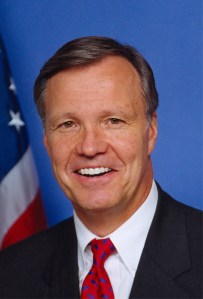
cox-hiresCHRIS COX

Investors around the world are counting the spiralling cost of the biggest fraud in history, a $50bn scam that has ensnared billionaire businessmen and tiny charities alike and whose tentacles have stretched further and deeper than anyone imagined.

The fallout from the arrest of the Wall Street grandee Bernard Madoff was continuing to grow last night, as institution after institution detailed the extent of their possible losses, and the victims in the UK were headlined by HSBC and the Royal Bank of Scotland, which is majority-owned by the British Government.

A charity set up by the Hollywood director Steven Spielberg was among those revealed to be among the victims, along with a foundation set up by Mort Zuckerman, one of the richest media and property magnates in the United States, dozens of Jewish organisations, sports team owners and a New Jersey senator.

But the biggest confessions were coming from Wall Street, from the City of London and from the headquarters of European banks and from banks around the world. They have poured billions of dollars into Mr Madoff’s too-good-to-be-true investment fund, which appeared to post double-digit annual returns come rain or shine.

RBS said that it could take a hit of £400m if American authorities find there is nothing left of the money Mr Madoff had pretended to be investing for many years. HSBC, Britain’s largest bank, said a “small number” of its clients had exposure totalling $1bn in Mr Madoff’s funds.

The Spanish bank Santander, which owns Abbey and the savings business of Bradford & Bingley in the UK, could be on the hook for $3.1bn. Japan’s Nomura said it has hundreds of millions of dollars at risk. City analysts said that even banks who invested only on behalf of clients could end up on the hook, because clients are almost certain to sue for bad advice.

Mr Madoff confessed last week that his business was “all one great big lie”. The investment returns were fake, and he had been paying old clients with money from new ones. In its conception, the scam is a classic. In its size, it is breathtaking, eclipsing anything seen before. He personally estimated the losses at $50bn, according to the FBI, and as investors owned up to their exposure yesterday that did not seem impossible. For 48 years, until Thursday morning, Mr Madoff was one of Wall Street’s best-respected investment managers, able to harvest money from a vast network of contacts and to trade on his name as a former chairman of the Nasdaq stock exchange.

His arrest has further shaken confidence in the barely regulated hedge fund industry, which is already suffering some of the worst times in its short history. Mr Madoff – who is now on a $10m bail and under orders not to leave the New York area – was able to operate his fraud under the noses of regulators for many years.

Mort Zuckerman, the owner of the New York Daily News and one of the 200 richest Americans, said that one of the managers of his charitable trust had been so taken by Mr Madoff that he invested $9bn with him, including all the money from Mr Zuckerman’s trust. “These are astonishing numbers to be placed with one fund manager,” he said. “I think we have another break in whatever level confidence needs to exist in money markets.”

Nicola Horlick, the British fund manager known as Superwoman for juggling her high-flying City career with bringing up five children, turned her fire on US regulators. Her Bramdean Alternatives investment fund had put 9 per cent – about £10m – with Mr Madoff. She told BBC Radio: “This is the biggest financial scandal, probably in the history of the markets.”

Bernie Madoff's Son Mark Worked For New SEC Head

Andrew Madoff, Bernie Madoff, Madoff, Mark Madoff, Obama, Peter Madoff, Schapiro, SEC

New SEC chief gave Bernard Madoff’s son a job

Mary Schapiro, Barack Obama’s choice to lead the Securities and Exchange Commission (SEC), previously appointed one of Bernard Madoff’s sons to a regulatory body that oversees American securities firms.

It has emerged that in 2001, Ms Schapiro, currently chief executive of the Financial Industry Regulatory Authority (Finra), employed Mark Madoff to serve on the board of the National Adjudicatory Council — the division that reviews disciplinary decisions made by Finra.

Mr Madoff is under house arrest in his $7 million Manhattan apartment and will be electronically tagged after he failed to secure further signatories to guarantee his $10 million bail.

Both sons have emphatically denied any involvement in what could be the biggest fraud perpetrated by an individual.

However, the link with Mark Madoff may prove controversial for Ms Schapiro and the President-elect, who has moved fast to replace Christopher Cox, the current head of the SEC. The watchdog has came under fire for failing to detect Mr Madoff’s activities.

Earlier this week, Mr Cox admitted the regulator had repeatedly failed to follow up on tip-offs about Mr Madoff’s business dealings.

At the time of Mark Madoff’s appointment, Ms Schapiro was serving as president of the National Association of Securities Dealers (NASD), according to the Wall Street Journal, which was consolidated with the New York Stock Exchange Member Regulation in 2007 to form Finra.

She has served as a commissioner of the SEC under three administrations since the 1980s: President Reagan appointed her in 1988, she returned for the first President Bush in 1989, and she was named acting chairman by President Clinton in 1993.

Ms Schapiro chaired the Commodities Future Trading Commission in the mid-1990s, during the downfall of Barings Bank, and first joined NASD in 1996 as president of regulation.

Mr Madoff was himself closely involved in NASD, the self-regulatory organisation for brokers and dealer firms, in the 1970s.

The NASD went on to found Nasdaq, the screen-based equity exchange, in 1971, and Mr Madoff became its chairman in 1990.

Mark Madoff began working at his father’s firm, Bernard L. Madoff Securities, in 1986. He was the third member of Mr Madoff’s family to join the business, following his uncle, Peter Madoff, and his cousin, Charles Wiener, son of Bernard’s sister, Sandra. Andrew Madoff, his younger brother, followed in 1988, and Roger and Shana, children of Peter Madoff, joined in the 1990s.

It emerged yesterday that Shana Madoff’s relationship with her husband, Eric Swanson, is at the centre of an SEC probe. Mr Swanson is a former SEC attorney.

In a profile of the Madoff family, published in 2000, Mark Madoff said: “What makes it fun for all of us is to walk into the office in the morning and see the rest of your family sitting there. That’s a good feeling to have. To Bernie and Peter, that’s what it’s all about.”

Last week, Mark Madoff, with his brother, Andrew, were understood to have approached the authorities after their father apparently confessed to orchestrating a $50 billion securities fraud.