Bin Laden
May 6, 2011 ~ Real Time With Bill Maher
Barack Obama, Bin Laden, George W. Bush, Iraq, Politics, TullycastHBO Real Time Guests May 6, 2011
Top-of-show is Peter Bergen, journalist and author of The Longest War: The Enduring Conflict Between America and al-Qaeda
Mid-show is Irshad Manji, author of the upcoming Allah: Liberty and Love and director of the Moral Courage Project at NYU.
Panel:
Michael Eric Dyson, author of Can You Hear Me Now, professor at Georgetown University, and host of “The Michael Eric Dyson Show”
David Frum, FrumForum.com
Jeremy Scahill, National Security Correspondent for The Nation and author of Blackwater
TULLYCAST
On The Death of Bin Laden
Barack Obama, Bin Laden, George W. Bush, Politics, TullycastOn The Death of Bin Laden
by John Tully
Now I lay me down to sleep while people cheer in the streets like creeps
Of course I love and respect our troops but wonder why they get treated like poop
Having to buy body armor-on their fifth deployment, while people fetishize them- a video game for their enjoyment
All those dead Americans-Iraqis and Afghans too, will the War on Terror ever be through
Ten years gone by-trillions of dollars spent, while ordinary Americans can’t even pay their rent
All this vengeance and all this hate, what have we accomplished, what is our fate?
Don’t feel any safer, we worry more than ever, while the politicians posture and try to be clever
The rest of the World wonders just what to say and thinks to themselves how our country lost it’s way
But I’m a true Patriot and so I ask questions, our Founders would demand this, that we learn our lessons
JT
Chris Hitchens Puffs Himself Up With Nightmares of Bin Laden and Heaps of Scotch :: Throws Up on Dante Beze
Bin Laden, Chris Hitchens, Hitchens, Mos Def, Overtime, Politics, Realtime, Rushdie, Taliban, TullycastThis grizzled old hippie once whispered to me in the parking lot of a Dead Show at the Spectrum in Philadelphia, that the Craft Service on “Where’s Marlowe” was outstanding…
Bill Maher With Madeline Albright | March 20, 2009
Afghanistan, Al Qaeda, Bin Laden, George Bush, Madeline Albright, Pakistan, Politics, Tullycast4Bill Maher | Opening Monologue
Afghanistan, AIG. Bonus, Al Qaeda, Albright, Bin Laden, Bush, Cheney, Geuthner, Greenspan, Pakistan, Politics, Saddam, TullycastBill Maher | Opening Monologue
TULLYCAST Abides…
Dick Cheney is a man of principles. Disastrous principles
Alan Greenspan, Ben Bernanke, Bin Laden, Cheney Energy Task Force, Condoleezza Rice, Dick Cheney, Donald Rumsfeld, George W. Bush, Gerald Ford, Iraq, John Snow, Karl Rove, Larry Lindsey, Molly Tully, National Economic Council, Office of Homeland Security, Paul O'Neill, Saddam Hussein, Scooter Libby, Torture, U.N., WyomingVICE GRIP
THE WASHINGTON MONTHLY :: FEB/MARCH 2003
JOSHUA MICAH MARSHALL
Early last December, Vice President Dick Cheney was dispatched to inform his old friend, Treasury Secretary Paul O’Neill, that he was being let go. O’Neill, the president’s advisers felt, had made too many missteps, given too much bad advice, uttered too many gaffes. He had become a liability to the administration. As Cheney himself once said in a different context, it was time for him to go. It couldn’t have been a fun conversation–especially since it was Cheney who had picked O’Neill two years earlier.
O’Neill stormed off to Pittsburgh and within days the White House had announced his replacement. Yet the new treasury secretary nominee turned out not to be much of an improvement. Like O’Neill, John Snow was a veteran of the Ford administration who ran an old-economy titan (the railroad firm CSX) and seemed to lack the global market financial experience demanded of modern day treasury secretaries. Like other Bush appointees, Snow came from a business that traded heavily on the Washington influence game. And–again typical of the president and his men–the size of Snow’s compensation package seemed inversely proportional to the returns he made for his shareholders. Of the three new members of the president’s economic team nominated in early December, Snow was the only one to get almost universally poor reviews. He was also Dick Cheney’s pick.
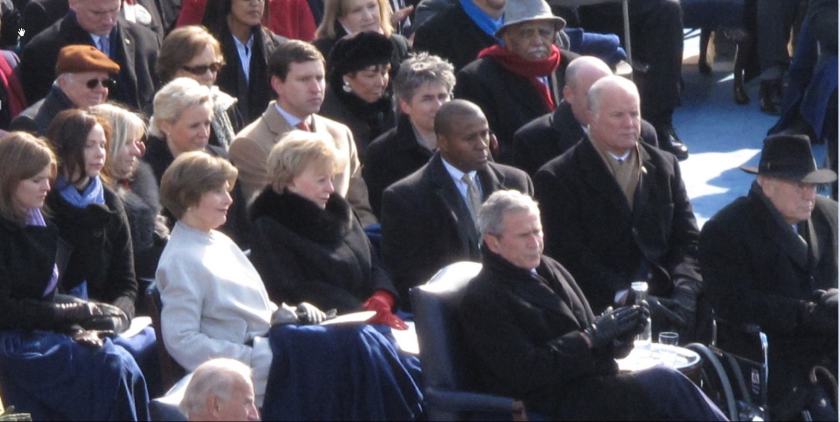
Week after week, one need only read the front page of The Washington Post to find similar Cheney lapses. Indeed, just a few days after Cheney hand-picked Snow, Newsweek magazine featured a glowing profile of National Security Adviser Condoleezza Rice that began with an anecdote detailing her deft efforts to clean up another Cheney mess. In a July speech, the vice president had argued that weapons inspections in Iraq were useless and shouldn’t even be tried. That speech nearly upended the administration’s careful late-summer repositioning in favor of a new United Nations-backed inspections program. As the article explained, Rice–the relatively junior member of the president’s inner circle of foreign policy advisers–had to take the vice president aside and walk him through how to repair the damage he’d done, with a new statement implicitly retracting his earlier gaffe. Such mistakes–on energy policy, homeland security, corporate reform–abound. Indeed, on almost any issue, it’s usually a sure bet that if Cheney has lined up on one side, the opposite course will turn out to be the wiser.
Yet somehow, in Washington’s collective mind, Cheney’s numerous stumbles and missteps have not displaced the reputation he enjoys as a sober, reliable, skilled inside player. Even the Newsweek article, so eager to convey Rice’s competence, seemed never to explicitly note the obvious subtext: Cheney’s evident incompetence. If there were any justice or logic in this administration as to who should or shouldn’t keep their job, there’d be another high-ranking official in line for one of those awkward conversations: Dick Cheney.
Overruling Dick
Consider the evidence. Last year, Cheney’s White House energy task force produced an all-drilling-and-no-conservation plan that failed not just on policy grounds but as a political matter as well, saddling the administration with a year-long public relations headache after Cheney insisted on running his outfit with a near-Nixonian level of secrecy. (To this day, Cheney and his aides have refused to provide the names of most of those industry executives who “advised” him on the task force’s recommendations, though a federal judge has now rejected the Government Accounting Office’s effort to make them do so.) During the spring of 2001, rather than back congressional efforts to implement the findings of the Hart-Rudman commission that called for forceful action to combat terrorism (including the creation of a department of homeland security), Cheney opted to spearhead his own group–not because he disagreed with the commission’s proposals, but to put the administration’s stamp on whatever anti-terrorism reforms did get adopted. Cheney’s security task force did nothing for four months, lurching into action only after terrorists actually attacked America on September 11. In the months that followed, Cheney was one of several key advisers arguing that the White House should keep Tom Ridge’s Office of Homeland Security within the White House rather than upgrade it to a cabinet department and thus open it to congressional scrutiny. Cheney’s obstinacy ensured that the administration’s efforts were stuck in neutral for nearly eight months.
Cheney has not fared much better in the diplomatic arena. Last March, he went on a tour of Middle Eastern capitals to line up America’s allies for our war against Saddam. He returned a week later with the Arabs lining up behind Saddam and against us–a major embarrassment for the White House. Much of the success of the administration’s Iraq policy came only after it abandoned the strategy of unilateral action against Saddam, the strategy Cheney championed, to one of supporting a U.N. inspections regime–a necessary and successful course correction that Cheney resisted and almost halted. Indeed, broadly speaking, the evolution of White House Iraq policy might be described fairly as a slow process of overruling Dick Cheney.
And there’s more. Remember those corporate scandals that came close to crippling Bush? Last summer, White House advisers were pondering whether to back the sort of tough corporate accountability measures that Democrats and the press were demanding. The president was scheduled to deliver a big speech on Wall Street in early July. His advisers were divided. Some argued that strong reforms were at the least a political necessity. But Cheney, along with National Economic Council chair Larry Lindsey, opposed the idea, arguing that new restrictions on corporations would further weaken the economy. The president took Cheney’s advice, and gave a speech on Wall Street that recommended only mild and unspecific reforms. “He mentioned a lot of things in the speech that the Securities and Exchange Commission already does,” one non-plussed Wall Streeter told The Washington Post with a yawn. The day after the president’s speech, the Dow shed 282 points, the biggest single-day drop since the post-terrorist tailspin of Sept. 20. Within days the president was backpedaling and supporting what Cheney had said he shouldn’t. Lindsey got the boot later in the year. Cheney is still in the West Wing shaping economic policy.
Cartel Capitalists
Much of the reason Cheney so often calls things wrong–even on those business issues that would seem his area of expertise–can be traced to the culture in which he’s spent most of his professional life. Despite his CEO credentials and government experience, Dick Cheney has been surprisingly insulated from the political and financial marketplace. He began his career as a Nixon-administration functionary under Donald Rumsfeld. Later, he joined the Ford administration as a deputy assistant to the president before becoming White House chief of staff. From there he moved into elective office, but to the ultra-safe House seat from Wyoming, a post only slightly less shielded from the tides of American politics than were his posts in the Ford administration.
Cheney resigned his House seat in 1989 and moved back to the executive branch where he belonged, serving–with distinction–as defense secretary under the first President Bush. From there he moved to the corporate suite at Halliburton, where he eventually earned tens of millions of dollars. But Halliburton is a peculiar kind of enterprise. It doesn’t market shoes or design software. Rather, its business–providing various products and services to the oil industry and the military–is based on securing lucrative contracts and concessions from a handful of big customers, primarily energy companies and the U.S. and foreign governments. Success in that business comes not by understanding and meeting the demands of millions of finicky customers, but by cementing relationships with and winning the support of a handful of powerful decision-makers.
Indeed, that’s why Halliburton came to Cheney in the first place. His ties with the Bush family, his post-Gulf War friendships with Arab emirs, and the Rolodex he’d compiled from a quarter century in Washington made him a perfect rainmaker. And though he did rather poorly on the management side–he shepherded Halliburton’s disastrous merger with Dresser Industries, which saddled the new company with massive asbestos liabilities–he handled the schmoozing part of the enterprise well.
Cheney is conservative, of course, but beneath his conservatism is something more important: a mindset rooted in his peculiar corporate-Washington-insider class. It is a world of men–very few women–who have been at the apex of both business and government, and who feel that they are unique in their mastery of both. Consequently, they have an extreme assurance in their own judgment about what is best for the country and how to achieve it. They see themselves as men of action. But their style of action is shaped by the government bureaucracies and cartel-like industries in which they have operated. In these institutions, a handful of top officials make the plans, and then the plans are carried out. Ba-da-bing. Ba-da-boom.
In such a framework all information is controlled tightly by the principals, who have “maximum flexibility” to carry out the plan. Because success is measured by securing the deal rather than by, say, pleasing millions of customers, there’s no need to open up the decision-making process. To do so, in fact, is seen as governing by committee. If there are other groups (shareholders, voters, congressional committees) who agree with you, fine, you use them. But anyone who doesn’t agree gets ignored or, if need be, crushed. Muscle it through and when the results are in, people will realize we were right is the underlying attitude.
The danger of this mindset is obvious. No single group of people has a monopoly on the truth. Whether it be plumbers, homemakers, or lobbyist bureaucrats, any group will inevitably see the world through its own narrow, mostly self-interested, prism. But few groups are so accustomed to self-dealing and self-aggrandizement as the cartel-capitalist class. And few are more used to equating their own self-interest with the interests of the country as a whole.
Not since the Whiz Kids of the Kennedy-Johnson years has Washington been led by men of such insular self-assurance. Their hierarchical, old economy style of management couldn’t be more different from the loose, non-hierarchical style of, say, high-tech corpor-ations or the Clinton White House, with all their open debate, concern with the interests of “stake-holders,” manic focus on pleasing customers (or voters), and constant reassessment of plans and principles. The latter style, while often sloppy and seemingly juvenile, tends to produce pretty smart policy. The former style, while appearing so adult and competent, often produces stupid policy.
Over time, people in the White House have certainly had to deal with enough examples of Cheney’s poor judgment. It’s fallen to the White House’s political arm, led by the poll-conscious Karl Rove, to rein in or overrule him. Yet the vice president has apparently lost little stature within the White House. That may be because his get-it-done-and-ignore-the-nay-sayers attitude is one that others in the administration share. Cheney stands up for the cartel-capitalist principles they admire. He is right, in a sense, even when he’s wrong.
Why, though, has the press failed to grasp Cheney’s ineptitude? The answer seems to lie in the power of political assumptions. The historian of science Thomas Kuhn famously observed that scientific theories or “paradigms”–Newtonian physics, for instance–could accommodate vast amounts of contradictory evidence while still maintaining a grip on intelligent people’s minds. Such theories tend to give way not incrementally, as new and conflicting data slowly accumulates, but in sudden crashes, when a better theory comes along that explains the anomalous facts. Washington conventional wisdom works in a similar way. It doesn’t take long for a given politician to get pegged with his or her own brief story line. And those facts and stories that get attention tend to be those that conform to the established narrative. In much the same way, Cheney’s reputation as the steady hand at the helm of the Bush administration–the CEO to Bush’s chairman–is so potent as to blind Beltway commentators to the examples of vice presidential incompetence accumulating, literally, under their noses. Though far less egregious, Cheney’s bad judgment is akin to Trent Lott’s ugly history on race: Everyone sort of knew it was there, only no one ever really took notice until it was pointed out in a way that was difficult to ignore. Cheney is lucky; as vice president, he can’t be fired. But his terrible judgment will, at some point, become impossible even for the Beltway crowd not to see.
Joshua Micah Marshall, author of the Talking Points Memo, is a Washington Monthly contributing writer.
The White Van: Were Israelis Detained on Sept. 11 Spies?
9/11, 9/11 Crime Investigation, Bin Laden, Dick Cheney, George W. Bush, Israel, Manhattan, Mossad, New York City, Saudi Arabia, Twin Towers, WTC, wtc7
Were Israelis Detained on Sept. 11 Spies?
June 21 —2002
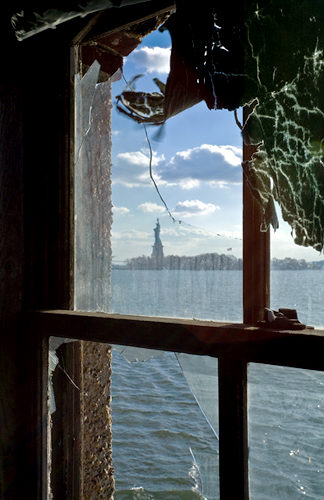
Millions saw the horrific images of the World Trade Center attacks, and those who saw them won’t forget them. But a New Jersey homemaker saw something that morning that prompted an investigation into five young Israelis and their possible connection to Israeli intelligence.
Maria, who asked us not to use her last name, had a view of the World Trade Center from her New Jersey apartment building. She remembers a neighbor calling her shortly after the first plane hit the towers.
She grabbed her binoculars and watched the destruction unfolding in lower Manhattan. But as she watched the disaster, something else caught her eye.
Maria says she saw three young men kneeling on the roof of a white van in the parking lot of her apartment building. “They seemed to be taking a movie,” Maria said.
The men were taking video or photos of themselves with the World Trade Center burning in the background, she said. What struck Maria were the expressions on the men’s faces. “They were like happy, you know … They didn’t look shocked to me. I thought it was very strange,” she said.
She found the behavior so suspicious that she wrote down the license plate number of the van and called the police. Before long, the FBI was also on the scene, and a statewide bulletin was issued on the van.
The plate number was traced to a van owned by a company called Urban Moving. Around 4 p.m. on Sept. 11, the van was spotted on a service road off Route 3, near New Jersey’s Giants Stadium. A police officer pulled the van over, finding five men, between 22 and 27 years old, in the vehicle. The men were taken out of the van at gunpoint and handcuffed by police.
The arresting officers said they saw a lot that aroused their suspicion about the men. One of the passengers had $4,700 in cash hidden in his sock. Another was carrying two foreign passports. A box cutter was found in the van. But perhaps the biggest surprise for the officers came when the five men identified themselves as Israeli citizens.
‘We Are Not Your Problem’
According to the police report, one of the passengers told the officers they had been on the West Side Highway in Manhattan “during the incident” — referring to the World Trade Center attack. The driver of the van, Sivan Kurzberg, told the officers, “We are Israeli. We are not your problem. Your problems are our problems. The Palestinians are the problem.” The other passengers were his brother Paul Kurzberg, Yaron Shmuel, Oded Ellner and Omer Marmari.
When the men were transferred to jail, the case was transferred out of the FBI’s Criminal Division, and into the bureau’s Foreign Counterintelligence Section, which is responsible for espionage cases, ABCNEWS has learned.
One reason for the shift, sources told ABCNEWS, was that the FBI believed Urban Moving may have been providing cover for an Israeli intelligence operation.
After the five men were arrested, the FBI got a warrant and searched Urban Moving’s Weehawken, N.J., offices.
The FBI searched Urban Moving’s offices for several hours, removing boxes of documents and a dozen computer hard drives. The FBI also questioned Urban Moving’s owner. His attorney insists that his client answered all of the FBI’s questions. But when FBI agents tried to interview him again a few days later, he was gone.
Three months later 2020’s cameras photographed the inside of Urban Moving, and it looked as if the business had been shut down in a big hurry. Cell phones were lying around; office phones were still connected; and the property of dozens of clients remained in the warehouse.
The owner had also cleared out of his New Jersey home, put it up for sale and returned with his family to Israel.
‘A Scary Situation’
Steven Gordon, the attorney for the five Israeli detainees, acknowledged that his clients’ actions on Sept. 11 would easily have aroused suspicions. “You got a group of guys that are taking pictures, on top of a roof, of the World Trade Center. They’re speaking in a foreign language. They got two passports on ’em. One’s got a wad of cash on him, and they got box cutters. Now that’s a scary situation.”
But Gordon insisted that his clients were just five young men who had come to America for a vacation, ended up working for a moving company, and were taking pictures of the event.
The five Israelis were held at the Metropolitan Detention Center in Brooklyn, ostensibly for overstaying their tourist visas and working in the United States illegally. Two weeks after their arrest, an immigration judge ordered them to be deported. But sources told ABCNEWS that FBI and CIA officials in Washington put a hold on the case.
The five men were held in detention for more than two months. Some of them were placed in solitary confinement for 40 days, and some of them were given as many as seven lie-detector tests.
Plenty of Speculation
Since their arrest, plenty of speculation has swirled about the case, and what the five men were doing that morning. Eventually, The Forward, a respected Jewish newspaper in New York, reported the FBI concluded that two of the men were Israeli intelligence operatives.
Vince Cannistraro, a former chief of operations for counterterrorism with the CIA who is now a consultant for ABCNEWS, said federal authorities’ interest in the case was heightened when some of the men’s names were found in a search of a national intelligence database.
Israeli Intelligence Connection?
According to Cannistraro, many people in the U.S. intelligence community believed that some of the men arrested were working for Israeli intelligence. Cannistraro said there was speculation as to whether Urban Moving had been “set up or exploited for the purpose of launching an intelligence operation against radical Islamists in the area, particularly in the New Jersey-New York area.”
Under this scenario, the alleged spying operation was not aimed against the United States, but at penetrating or monitoring radical fund-raising and support networks in Muslim communities like Paterson, N.J., which was one of the places where several of the hijackers lived in the months prior to Sept. 11.
For the FBI, deciphering the truth from the five Israelis proved to be difficult. One of them, Paul Kurzberg, refused to take a lie-detector test for 10 weeks — then failed it, according to his lawyer. Another of his lawyers told us Kurzberg had been reluctant to take the test because he had once worked for Israeli intelligence in another country.
Sources say the Israelis were targeting these fund-raising networks because they were thought to be channeling money to Hamas and Islamic Jihad, groups that are responsible for most of the suicide bombings in Israel. “[The] Israeli government has been very concerned about the activity of radical Islamic groups in the United States that could be a support apparatus to Hamas and Islamic Jihad,” Cannistraro said.
The men denied that they had been working for Israeli intelligence out of the New Jersey moving company, and Ram Horvitz, their Israeli attorney, dismissed the allegations as “stupid and ridiculous.”
Mark Regev, the spokesman for the Israeli Embassy in Washington, goes even further, asserting the issue was never even discussed with U.S. officials.
“These five men were not involved in any intelligence operation in the United States, and the American intelligence authorities have never raised this issue with us,” Regev said. “The story is simply false.”
No ‘Pre-Knowledge’
Despite the denials, sources tell ABCNEWS there is still debate within the FBI over whether or not the young men were spies. Many U.S. government officials still believe that some of them were on a mission for Israeli intelligence. But the FBI told ABCNEWS, “To date, this investigation has not identified anybody who in this country had pre-knowledge of the events of 9/11.”
Sources also said that even if the men were spies, there is no evidence to conclude they had advance knowledge of the terrorist attacks on Sept. 11. The investigation, at the end of the day, after all the polygraphs, all of the field work, all the cross-checking, the intelligence work, concluded that they probably did not have advance knowledge of 9/11,” Cannistraro noted.
As to what they were doing on the van, they say they read about the attack on the Internet, couldn’t see it from their offices and went to the parking lot for a better view. But no one has been able to find a good explanation for why they may have been smiling with the towers of the World Trade Center burning in the background. Both the lawyers for the young men and the Israeli Embassy chalk it up to immature conduct.
According to ABCNEWS sources, Israeli and U.S. government officials worked out a deal — and after 71 days, the five Israelis were taken out of jail, put on a plane, and deported back home.
While the former detainees refused to answer ABCNEWS’ questions about their detention and what they were doing on Sept. 11, several of the detainees discussed their experience in America on an Israeli talk show after their return home.
Said one of the men, denying that they were laughing or happy on the morning of Sept. 11, “The fact of the matter is we are coming from a country that experiences terror daily. Our purpose was to document the event.” 
ABCNEWS’ Chris Isham, John Miller, Glenn Silber and Chris Vlasto contributed to this report.
 The New York Herald Sun