The Madness of Jim Cramer – Day After Pathetic Evisceration by “Comedian”
Vodpod videos no longer available.
Citibank
What We Should Learn from Jim Cramer vs. The Daily Show’s Jon Stewart
AIG, Bear Stearns, Ben Bernanke, Citibank, CNBC, Cramer+Stewart, Credit Default Swaps, Deep Capture, Derivatives, Dick Fuld, Gradient Analytics, Hedge Funds, Henry Paulson, Jim Cramer, Jon Stewart, Lehman Brothers, Maria Bartiromo, Mortgage Crisis, Overstock, Patrick Byrne::What We Should Learn from Jim Cramer vs. the Daily Show’s Jon Stewart::
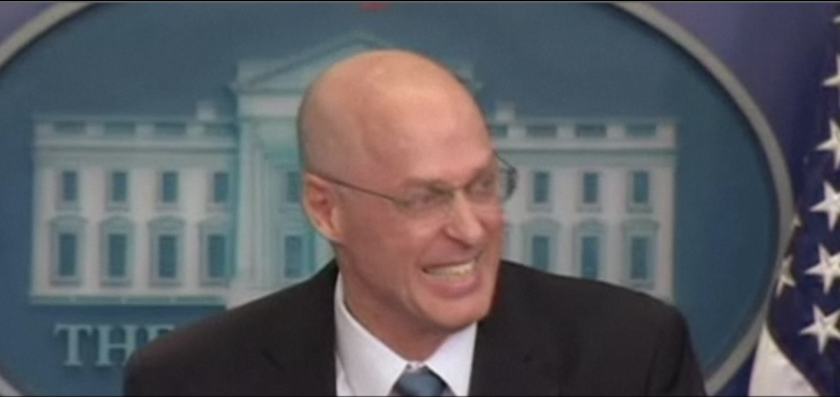
March 12th, 2009 by Patrick Byrne
What should we learn from the fact that “The Daily Show’s” Jon Stewart has in four evenings (1 2 3 and 4) exposed Jim Cramer in a way that, in any sane world, he would have been exposed a decade ago? To answer that, consider these associated facts: while the Jim Cramer constellation of journalists (Mitchell’s Media Mob) backed each other up while covering-up the subject of criminally abusive short selling by hedge funds to whom they were close, four channels of the media broke rank:
- Two years ago Bloomberg did a half-hour documentary that broke away from the Party Line;
- Liz Moyer at Forbes has covered the real issues fairly and diligently, and another Forbes reporter named Nathan Vardi took a good swipe at the story (”Sewer Pipes“);
- Rolling Out Magazine (”an UrbanStyle Weekly serving the African American community”) called me up a couple years ago and did precisely the fair, non-disorted interview of which the remainder of the New York financial media was entirely incapable;
- Now, “The Daily Show” has broken ranks by stating the obvious: there are journalists shilling for favored hedge funds.
Could the lesson be that the first news organizations that can break ranks with the Party Line are either fringe (”Rolling Out Magazine” and “The Daily Show”) or the properties of billionaires (Bloomberg and Forbes) who cannot be intimidated?
Perhaps someday, a journalist will look into the pressures that were brought on news organizations (e.g., on Bloomberg leading up to their running “Phantom Shares”). Just a few weeks ago I got the story, again, from a journalist: “I was working on a story about naked short selling and Deep Capture. Then, suddenly I was stopped. It’s weird because I have been a journalist here for 9 years. I have built a great reputation with my editor, and have never had a story interfered with. But I got a couple months into this story, and suddenly I was stopped from above. I’ve never seen that happen before.” I replied, If you only knew how many times a journalist has said that to me in the last couple years….
The Real Scandal That Will Bring Jim Cramer Down: The Story of Deep Capture
AIG, Bear Stearns, Ben Bernanke, Citibank, CNBC, Cramer+Stewart, Credit Default Swaps, Deep Capture, Derivatives, Dick Fuld, Gradient Analytics, Hedge Funds, Henry Paulson, Jim Cramer, Jon Stewart, Lehman Brothers, Maria Bartiromo, Mortgage Crisis, Overstock, Patrick ByrneThe Columbia School of Journalism is our nation’s finest. They grant the Pulitzer Prize, and their journal, The Columbia Journalism Review, is the profession’s gold standard. CJR reporters are high priests of a decaying temple, tending a flame in a land going dark.
In 2006 a CJR editor (a seasoned journalist formerly with Time magazine in Asia, The Wall Street Journal Europe, and The Far Eastern Economic Review) called me to discuss suspicions he was forming about the US financial media. I gave him leads but warned, “Chasing this will take you down a rabbit hole with no bottom.” For months he pursued his story against pressure and threats he once described as, “something out of a Hollywood B movie, but unlike the movies, the evil corporations fighting the journalist are not thugs burying toxic waste, they are Wall Street and the financial media itself.”
His exposé reveals a circle of corruption enclosing venerable Wall Street banks, shady offshore financiers, and suspiciously compliant reporters at The Wall Street Journal, Fortune, CNBC, and The New York Times. If you ever wonder how reporters react when a journalist investigates them (answer: like white-collar crooks they dodge interviews, lie, and hide behind lawyers), or if financial corruption interests you, then this is for you. It makes Grisham read like a book of bedtime stories, and exposes a scandal that may make Enron look like an afternoon tea.
By Patrick M. Byrne
Make a pot of strong coffee and read this incredible story
Unedited | Cramer Vs. Stewart | Part Three
AIG, Bear Stearns, Ben Bernanke, Citibank, CNBC, Cramer+Stewart, Credit Default Swaps, Deep Capture, Derivatives, Dick Fuld, Gradient Analytics, Hedge Funds, Henry Paulson, Jim Cramer, Jon Stewart, Lehman Brothers, Maria Bartiromo, Mortgage Crisis, Overstock, Patrick ByrnePart Two | Cramer Vs. Stewart | Unedited
AIG, Bear Stearns, Ben Bernanke, Citibank, CNBC, Cramer+Stewart, Credit Default Swaps, Derivatives, Dick Fuld, Gradient Analytics, Hedge Funds, Henry Paulson, Jim Cramer, Jon Stewart, Lehman Brothers, Maria Bartiromo, Mortgage Crisis, Overstock, Patrick ByrnePart One | Cramer Vs. Stewart | Unedited
AIG, Bear Stearns, Ben Bernanke, Citibank, CNBC, Cramer+Stewart, Credit Default Swaps, Derivatives, Dick Fuld, Gradient Analytics, Hedge Funds, Henry Paulson, Jim Cramer, Jon Stewart, Lehman Brothers, Maria Bartiromo, Mortgage Crisis, Overstock, Patrick ByrneIntro | Cramer Vs. Stewart | Unedited
AIG, Bear Stearns, Ben Bernanke, Citibank, CNBC, Cramer+Stewart, Credit Default Swaps, Deep Capture, Derivatives, Dick Fuld, Gradient Analytics, Hedge Funds, Henry Paulson, Jim Cramer, Jon Stewart, Lehman Brothers, Maria Bartiromo, Mortgage Crisis, Overstock, Patrick ByrneBank of America Throws Ten Million Dollar Super Bowl Party
AIG, Bank of america, Banking, Bear Stearns, CDS, Citibank, Derivatives, Finance, Hedge Funds, Merrill, Sports Business
Just weeks ago, the federal government extended $20 billion to Bank of America to keep it afloat, bringing its total in federal bailout dollars received to $45 billion. ABC News reports, however, that the bank managed to scrounge up millions of dollars to be an NFL sponsor and for “a five day carnival-like” Super Bowl party just outside the stadium:
The event — known as the NFL Experience — was 850,000 square feet of sports games and interactive entertainment attractions for football fans and was blanketed in Bank of America logos and marketing calls to sign up for football-themed banking products. […]
The bank refused to tell ABC News how much it is spending as an NFL corporate sponsor, but insiders have put the figure at close to $10 million. The NFL Experience was on top of that and was inked last summer, according to the bank.
The NFL said it was a “multi-million dollar” event and that it was also spending money to put on the event. A Super Bowl insider said the tents alone cost over $800,000.
The Huffington Post notes that this is the latest in a series of bailed-out banks that continue to spend lavishly on sports sponsorships.
The Douchebag Who Conned The World
Ben Bernanke, Bernie Madoff, Chris Cox, Citibank, Fairfield, Funds of Funds, Greenspan, Hedge Funds, Henry Paulson, Merrill, Spielberg, SummersStephen Foley (From New York)
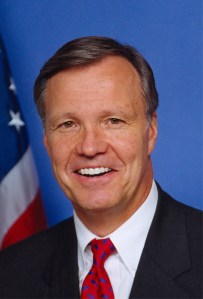 CHRIS COX
Investors around the world are counting the spiralling cost of the biggest fraud in history, a $50bn scam that has ensnared billionaire businessmen and tiny charities alike and whose tentacles have stretched further and deeper than anyone imagined.
The fallout from the arrest of the Wall Street grandee Bernard Madoff was continuing to grow last night, as institution after institution detailed the extent of their possible losses, and the victims in the UK were headlined by HSBC and the Royal Bank of Scotland, which is majority-owned by the British Government.
A charity set up by the Hollywood director Steven Spielberg was among those revealed to be among the victims, along with a foundation set up by Mort Zuckerman, one of the richest media and property magnates in the United States, dozens of Jewish organisations, sports team owners and a New Jersey senator.
But the biggest confessions were coming from Wall Street, from the City of London and from the headquarters of European banks and from banks around the world. They have poured billions of dollars into Mr Madoff’s too-good-to-be-true investment fund, which appeared to post double-digit annual returns come rain or shine.
RBS said that it could take a hit of £400m if American authorities find there is nothing left of the money Mr Madoff had pretended to be investing for many years. HSBC, Britain’s largest bank, said a “small number” of its clients had exposure totalling $1bn in Mr Madoff’s funds.
The Spanish bank Santander, which owns Abbey and the savings business of Bradford & Bingley in the UK, could be on the hook for $3.1bn. Japan’s Nomura said it has hundreds of millions of dollars at risk. City analysts said that even banks who invested only on behalf of clients could end up on the hook, because clients are almost certain to sue for bad advice.
Mr Madoff confessed last week that his business was “all one great big lie”. The investment returns were fake, and he had been paying old clients with money from new ones. In its conception, the scam is a classic. In its size, it is breathtaking, eclipsing anything seen before. He personally estimated the losses at $50bn, according to the FBI, and as investors owned up to their exposure yesterday that did not seem impossible. For 48 years, until Thursday morning, Mr Madoff was one of Wall Street’s best-respected investment managers, able to harvest money from a vast network of contacts and to trade on his name as a former chairman of the Nasdaq stock exchange.
His arrest has further shaken confidence in the barely regulated hedge fund industry, which is already suffering some of the worst times in its short history. Mr Madoff – who is now on a $10m bail and under orders not to leave the New York area – was able to operate his fraud under the noses of regulators for many years.
Mort Zuckerman, the owner of the New York Daily News and one of the 200 richest Americans, said that one of the managers of his charitable trust had been so taken by Mr Madoff that he invested $9bn with him, including all the money from Mr Zuckerman’s trust. “These are astonishing numbers to be placed with one fund manager,” he said. “I think we have another break in whatever level confidence needs to exist in money markets.”
Nicola Horlick, the British fund manager known as Superwoman for juggling her high-flying City career with bringing up five children, turned her fire on US regulators. Her Bramdean Alternatives investment fund had put 9 per cent – about £10m – with Mr Madoff. She told BBC Radio: “This is the biggest financial scandal, probably in the history of the markets.”
 The New York Herald Sun