An Iraq Contractor Speaks

Stories

October 15, 2004

Tales From the Titan’s Mouth
An Iraq Contractor Speaks
by Christopher Deliso

balkanalysis.com

At first he didn’t want to talk, but after a few beers the Turkish translator and former employee of Titan
– one of the largest American companies providing “human
resources” to the U.S. armed forces in Iraq – loosened up and
started to let me in on his riveting story of life in the field with
American soldiers. The experiences recounted by the young translator,
“Massoud,” proved that low morale and the kind of lurid misconduct that
have plagued the army since last April’s Abu Ghraib scandal were
actually endemic since the war began in March 2003.

Titan’s Travails

Titan,
of course, became infamous partially because of Abu Ghraib. At least
one of its contract workers, Adel Nahkla, was allegedly involved with
chronic torture and abuse of Iraqi prisoners. Other civilian
contractors like the mysterious Stephen Stephanowicz and John Israel of CACI – another “human resources” company with a checkered past and gilded future – were also accused of being involved. These allegations spawned a lawsuit filed in San Diego in June on behalf of the Iraqi victims.

Simultaneously,
Titan’s problems were compounded when aerospace giant Lockheed Martin
dropped plans to buy up the company “because a Justice Dept.
investigation into possible bribery of foreign officials by Titan
subsidiaries or consultants continued past a Lockheed deadline for the
purchase.” The company’s numerous indiscretions led to the hiring of a “vice president for ethics” on Sept. 28.

Most
recently, the San Diego-based firm was hit by the news that one of its
translators, an Iraqi Kurd named Luqman Mohammed Kurdi Hussein, was found beheaded in Iraq
on Oct. 11. The Ansar al-Sunnah Army, which also claimed responsibility
for the beheading of 12 Nepalese workers and three Iraqi Kurds on Aug.
31, took responsibility for the slaying.

Despite its ongoing
problems, NBC reports, the U.S. military on Sept. 17 extended Titan’s
contract to provide 4,500 translators and assistants for Army
operations worldwide “for six months with an option for another six
months, for a potential value of up to $400 million. It is the
contractor’s largest single source of revenue.” Although announced as a
short-term “bridging contract,”
the deal came as sweet relief to a company that has been strung up on
the rack in more ways than one since the Iraq War began in March 2003.

An Opportunity Too Good to Be True?

Massoud,
fortunately, had departed Iraq long before the situation deteriorated,
spending only a few months with the company before deciding to get out.
I spoke with the young man, a Turk of Kurdish origin, in Istanbul. It
took several days to arrange a meeting – partially because he was
considering working again for the U.S. in Iraq, if the situation
someday becomes more stable. However, as he admitted, this looks to be
a long time off.

When we finally met, it was in the bar of one of
this enormous city’s down-and-out hotels, where a clientele of
small-time shuttle traders and other invariably non-English speakers go
to get serviced by prostitutes from Russia and the Ukraine.

By
contrast, Massoud spoke excellent English, a result of both time spent
in the West and his daily dealings with Istanbul’s steady stream of
tourists buying carpets and other goods. Like many other young men in
this line of work, Massoud was impeccably dressed, hair well-oiled and
flashing a gaudy gold watch. Nevertheless, I imagined that he was not
in fact so wealthy as all that – one of the reasons why he was
anxious not to be identified. “Maybe someday I will need to get work
again with the U.S. Army,” he disclosed with a bemused grin.

Massoud
had been hired in the months leading up to war by a Turkish
subcontractor, Ankara-based Core Resources Management (CRM). To
alleviate any doubts about the veracity of his story, he laid out for
me a Pentagon-issued ID card as well as the lengthy original contract
from Titan. He also named several of his then superiors, but asked that
their names not be mentioned.

Why had Massoud considered working
for the U.S. Army in the first place? “Well, I considered that it would
be an easy way to make money fast, and not be so dangerous.” He tried,
unsuccessfully, to convince other Turkish friends to sign up as well.
In the beginning, there hardly seemed reason for worry. Originally,
Massoud and other Kurdish-speaking translators had been slated to work
with the American troops that were to have been operating from remote
bases in the mountainous Kurdish-inhabited region of southern Turkey,
bordering on Iraq. Far away from the fighting, in the vicinity of
friends and family, the job seemed like a maximum gain, minimum
investment situation.

However, when Turkish parliamentarians
astonished the Bush administration by refusing to allow American troops
to use their country as a launching pad for war in late February 2003,
everything changed. The translators would instead be shipped straight
to Iraq – with or without Turkish support.

A Rocky Start

And so on the 2nd or 3rd
of April 2003, Massoud recounts, he and 30 or so other translators were
flown from Ramstein Air Base in Germany (another country that allegedly
refused to go along with U.S. plans, by the way) to northern Iraq,
under cover of darkness. “The flight was terrible,” he recounts.
“Turbulence, and we couldn’t use any lights. When we finally got there,
to a place called Bashut near Kirkuk, they told us that a Major Sanchez
was waiting for us. “‘Where?’ we asked. Nobody knew.”

The Turkish
translators were hastily processed that night, and shown to their
large, 30-man tent – which had apparently been constructed even
more hastily, as it promptly proceeded to collapse once the new
arrivals had gone to bed. “It was a little chaotic,” recounts Massoud.
“Fortunately, we all had done our military service, so we knew how to
handle the situation. Still, it wasn’t a very good introduction to Iraq
… and then we had to wake up at 5:00 or 6:00 in the morning.”

According
to Massoud, Titan’s vice-president had issued an urgent call to get the
translators sent to Iraq immediately, because they “didn’t have anyone
else there.” However, daylight revealed “hundreds of Kurdish, Turkish
and Arabic translators. They had gotten there well before us,” Massoud
explained. According to him, most were over 40 years old and had
allegedly been trained in translation after the first Gulf War –
in faraway Guantanamo Bay, no less. “Since many of these older people
had become American citizens, the soldiers trusted them more than us,”
Massoud attested. “And they were paid much better than us, at $5,000 a
month. However, I don’t think their level of translating was any
better.”

From the beginning, the mission was plagued with problems for both the translators and the U.S. forces.

“The
local Iraqi Kurds were not so nice to us, kind of mistrustful,” said
Massoud. “They didn’t think that we were supportive enough of the PKK
[the militant Kurdistan Worker’s Party, long active in the southeast of
Turkey]. Because of their experiences under Saddam, and the much worse
living conditions in Iraq compared to Turkey, they were fairly
radicalized.”

Despite being Kurdish, Massoud had little sympathy
for the Kurdish militant cause. “Even if my roots are from the south of
Turkey, the reality is I live in Istanbul and I am happy to be
Turkish,” he said.

The Americans, on the other hand, were greeted
with suspicion from ethnic groups of all nationalities. “They [the
soldiers] did not understand the local cultures … and with only
limited chance for communicating, it was easy to understand why they
remained outsiders.”

Despite the apparent mistrust between the
Turkish and Iraqi Kurds, everyone realized that there was business to
be done. “In Istanbul,” Massoud disclosed, “we all know other ways to
make a little money on the side. It was the same in Iraq. For some
reason, all the soldiers had to have souvenirs, like old Iraqi flags.
So I would ask the locals, who of course don’t speak any English, how
much they cost. They’d tell me, say, $5. Then the soldiers I was
translating for would ask, ‘Well, so how much did he say?’ To which I
would answer something like, ‘sir, it’ll be $45.’ And they gladly paid
out the money.”

Loneliness, Poverty and Sex

If
it seemed like money was no object to the Americans at the beginning,
this began to change as the weeks wore on. “After two months in Iraq,”
said Massoud, “the base commanders had still failed to get a proper
bank set up. The first thing on every base has to be a bank. The
soldiers were depressed, trapped on the base, and had by that time
started to run out of money – meaning they couldn’t buy anything
in the PX [army store], and had to eat only the MREs,
meals-read-to-eat, which are pretty terrible, whereas we could use our
local connections to buy whole chickens for $5. So, with this situation
dragging on, the weather starting to warm up and the war continuing in
the south, it started to affect the troop morale.”

Having to cope
with loneliness, malnutrition and basically captive status inside a
heavily-fortified base took its toll. The lack of a bank to dispense
funds, in particular, facilitated some of the most lurid events to have
transpired at the base – illicit sex and prostitution.

“On
the base, there was a big gymnasium,” Massoud explained. “It could fit
about 2,000 people and had many little side rooms on the second level,
like for weight rooms or showers, for example. And a lot of the
soldiers would use these rooms for sex, with each other or sometimes
with translators, of course all against the rules. The shower room was
the most popular.”

In fact, he continued, the soldiers’ steadily
dwindling stock of cash led some female soldiers even to prostitute
themselves. “There was this beautiful, 30-year-old woman soldier who I
was friends with,” Massoud recalled. “And she would sell herself
regularly to the other soldiers – for only $20. I couldn’t
believe it.” When asked if he had ever solicited the woman, the suave,
dark-eyed Turk just laughed and said, “Come on, you think that I had to pay?”

Intrigue and Incompetence

When
asked about other types of scandalous behavior, Massoud alluded to
incidents of procurement fraud, but didn’t provide details. He did not
recall any instances of torture having taken place on base: “Because of
my job position, I was not in a position to know yes or no about that,
anyway.”

Aside from being lonely and slightly depraved, Army life
was dangerous. “We were fired on, on more than one occasion,” Massoud
recalled. “I saw killing and destruction in Iraq … and those
memories will always be with me.”

Located in the ethnically
mixed, oil-rich north of Iraq, the U.S. base and its environs were
“swarming with intelligence officers from all different countries
– Americans, Turkish, Israeli, Syrian, etc.,” attested Massoud.
According to him, the Turkish government’s early concern for the Iraqi
Turkoman minority had led them to send six Turkish army officers along
to Kirkuk with the Americans. “Our site manager told us not to talk to
them or ask them what they were doing there,” said Massoud. “And even
though we thought they were ‘our guys,’ and might protect us if need
be, we never did get beyond a cup of tea, the usual small talk, you
know.”

According to Massoud, it was easy to tell the spooks from
the legitimate workers for Titan or Brown & Root, who were also
there. “The spies were so obvious,” he said. “They’d be the kind of
guys who looked really out of place and would ask too many questions,
things that they didn’t have any reason to ask about – especially
funny since they were asking me, and I was just a translator.”

When
asked what nationality’s agents were most easy to identify, Massoud
chuckled. “You can pick out our guys [Turks] from a mile away. Even if
they were dressed like regular civilians, they were the ones wearing
these standard-issue military boots.”

Local Overtures and Innuendo

Although
he apparently knew nothing more than the soldiers did about potential
external threats, Massoud did have one advantage: his ability to
communicate with the locals.

“We translators were always able to
live much better than the soldiers,” he reminisced. “Whereas they were
stuck with MREs for dinner, we all had fresh and cheap local vegetables
and chicken from the Kurdish people in the area.”

In fact, this
relationship became somewhat more provocative when, aside from the
usual buying and selling, local Iraqi women started showing up outside
the base.

“They were inviting us, saying, ‘come on, come out and
visit us in our homes,'” Massoud said. “But how? We were trapped on the
base like the soldiers. … It was hard to explain this concept to
them.”

Apparently, some of these women were looking for a
husband, and thought they might find one among the ranks of ostensibly
well-off Turkish Kurds working for the U.S. However, since the local
women also were asking for soldiers, there were suspicions that the
even wealthier Americans were being sought out, too. Yet could an
American soldier really be successfully integrated into the tight-knit
and conservative Kurdish tribal culture, even if he wanted to?

“I don’t know if they were interested in marriage,” Massoud reflected. “Maybe just sex.”

I
marveled at how such an act could transpire, given the nature of
Kurdish society and the fact that the Americans weren’t especially
popular, to say the least. “Well, yes, they possibly could have sex
with a soldier,” he nodded, pausing for a final sip of beer.
“Afterwards they might get to kill him too, of course.”

And with
that, apologizing that the hour was late, Massoud shook my hand and
disappeared as quickly as he’d come into the wet, foggy Istanbul night.

Powered by ScribeFire.

R.I.P. Sean Taylor

Stories

THE WASHINGTON POST

mike.jpg

Dying Young, Black

By Michael Wilbon
Wednesday, November 28, 2007; E01

If you’re hoping to read about the on-field exploits of Sean Taylor, or a retrospective of his time with the Washington Redskins, it would probably be better if you cast your eyes to a piece elsewhere in this newspaper.

Seriously, you should stop right here.

Because we’re going to have a different conversation in this space — about the violent and senseless nature of the act that took his life, about trying to change course when those around you might not embrace such a change, about dying young and black in America, about getting the hell out of Dodge if at all possible.

I wasn’t surprised in the least when I heard the news Monday morning that Sean Taylor had been shot in his home by an intruder. Angry? Yes. Surprised? Not even a little. It was only in June 2006 that Taylor, originally charged with a felony, pleaded no contest to assault and battery charges after brandishing a gun during a battle over who took his all-terrain vehicles in Florida. After that, an angry crew pulled up on Taylor and his boys and pumped at least 15 bullets into his sport-utility vehicle. So why would anybody be surprised? Had it been Shawn Springs, I would have been stunned. But not Sean Taylor.

It wasn’t long after avoiding jail time and holding on to his football career that Taylor essentially said, “That’s it, I’m out,” to the world of glamorized violence he seemed comfortable negotiating earlier. Anybody you talk to, from Coach Joe Gibbs to Jeremy Shockey, his college teammate, will cite chapter and verse as to how Taylor was changing his life in obvious ways every day. He had a daughter he took everywhere. Gibbs said he attended team chapel services regularly. Everybody saw a difference, yet it didn’t help him avoid a violent, fatal, tragic end.

Coincidence? We have no idea, not yet anyway. Could have been a random act, a break-in, something that happens every day in America, something that could happen to any one of us no matter how safe we think our neighborhood is. Could have been just that. But would it surprise me if it was more than that, if there was a distinct reason Taylor was sleeping with a machete under his bed? A machete. Even though his attorney and friend Richard Sharpstein says his instincts tell him “this was not a murder or a hit,” would it stun me if Taylor was specifically targeted? Not one bit.

You see, just because Taylor was changing his life, don’t assume the people who pumped 15 bullets into his SUV a couple of years ago were in the process of changing theirs. Maybe it was them, maybe not. Maybe it was somebody else who had a beef with Taylor a year earlier, maybe not. Maybe it was retribution or envy or some volatile combination.

Here’s something we know: People close to Taylor, people he trusted to advise him, told him he’d be better off if he left South Florida, that anybody looking for him could find him in the suburbs of Miami just as easily as they could have found him at the U a few years ago. I’m told that Taylor was told to go north, to forget about Miami. I can understand why he would want to have a spot in or near his home town, but I sure wish he hadn’t.

The issue of separating yourself from a harmful environment is a recurring theme in the life of black men. It has nothing to do with football, or Sean Taylor or even sports. To frame it as a sports issue is as insulting as it is naive. Most of us, perhaps even the great majority of us who grew up in big urban communities, have to make a decision at some point to hang out or get out.

The kid who becomes a pharmaceutical rep has the same call to make as the lawyer or delivery guy or accountant or sportswriter or football player: Cut off anybody who might do harm, even those who have been friends from the sandbox, or go along to get along.

Mainstream folks — and, yes, this is a code word for white folks — see high-profile athletes dealing with this dilemma and think it’s specific to them, while black folks know it’s everyday stuff for everybody, for kids with aspirations of all kinds — even for a middle-class kid with a police-chief father, such as Taylor — from South Central to Southeast to the South Side. Some do, some don’t. Some will, some won’t. Some can, some cannot. Often it’s gut-wrenching. Usually, it’s necessary. For some, it takes a little bit too long.

A recently retired future Hall of Fame NFL player called me the day Taylor was drafted by the Redskins, essentially recruiting a mentor for Taylor, somebody who knew D.C. well enough to tell Taylor what and who to avoid. The old pro thought Taylor wasn’t that far from a pretty safe path but was worried about the trouble that can find a kid here in D.C., and certainly in Miami. The old pro had all the right instincts, didn’t he? Taylor was only 24 when he died yesterday morning and from all credible accounts he seemed to be getting it in the last 18 months or so. But it’s difficult to outrun the past, even with 4.4 speed in the 40. Running away from the kind of trouble we’re talking about is harder than running in quicksand.

It’s senseless and tragic either way, much in the same way Len Bias’s death was senseless and tragic, and sparked so much examination, much of it resented. I drove to Redskins Park yesterday morning and left rather quickly. It was way too much like the aftermath of Bias’s death. We, the media, were camped out. Teammates walked in, not wanting to say anything, understandably. Some things are eerily similar. Bias was 22. Each had been with his institution, Bias at Maryland and Taylor with the Redskins, for four years. Everywhere you went in D.C. yesterday, Taylor was the conversation. And people of a certain age, from Dulles International Airport to Georgia Avenue, talked about how they were reminded of Bias’s death. For many of us it’s a defining moment in our lives.

Of course, there are enormous differences. We were so much more innocent in June 1986, and Bias’s death was a complete shock. There was no warning, no hint that he had ever courted danger or that it had ever gone looking for him. And Bias, though unintentionally, harmed himself. Taylor, no matter what he might have been involved in at one time, was a victim in this violent episode, a man in his bedroom minding his own business.

But what they do share is dying too soon, unnecessarily so, while young and athletic, seemingly on top of the world. Though we’re likely to struggle in great frustration to understand the circumstances of how Taylor left so soon, how dare we not put forth an honest if sometimes uncomfortable effort to examine his life in some greater context than football.

 Here’s The Post’s Comments section for this piece:

It's Academic! Grateful Dead Symposium At UMass

Stories

UMass gets dose of Grateful Dead at symposium

By Kristin Palpini
Staff Writer

November 23, 2007

syf

AMHERST – For many fans of the Grateful Dead, the band’s songs are more than music, they’re a home.

The wandering rock guitar rifts of Jerry Garcia, the deep, soulful voice of Bob Weir, the driving bass lines of Phil Lesh and the primal drumming of Mickey Hart built a kind of mobile home for the band’s estimated 500,000 diehard fans, the Deadheads.

This musical community and why the Dead keeps on trucking is the subject of symposium last weekend at the University of Massachusetts. “Unbroken Chain” explored the band’s social, economic, musical and historic impact on America.

“It’s really about one thing: getting your mind blown,” said Jeffrey King, a 46-year-old Merrick, N.Y., man who has attended 300 Grateful Dead concerts. “When something like (the Grateful Dead’s music) occurs in a group of people, a sense of community, musicianship and intellectualism is born.”

On Friday morning, King, along with hundreds of Deadheads from around the country, congregated at UMass for the symposium’s inaugural address, “Strangers Stopping Strangers: The Deadhead Community.”

The gathering felt more like a family reunion than an academic festival, as people dressed in jeans, well-worn sweaters, Bohemian shirts and vests hugged each other and shared concert stories.

Why thousands of people, separated by hundreds of miles and a lack of communication between concerts, have formed a thriving subculture that persists are among the questions that University of North Carolina sociology professor Rebecca Adams tried to address in “Strangers Stopping Strangers.”

Adams leads the Deadhead Community Project, a collection of sociological field notes and surveys collected by Adams and some of her students beginning in 1989. The research has since been condensed into five analytical books.

Deadheads, Adams explained, elevated the band’s music from mere albums to a subculture based on the spiritual experience of attending Grateful Dead shows.

“The music brought people together, even though they didn’t live near one another. Their friendship was the basis for the portable community,” said Adams, who is an unabashed Deadhead.

“It’s difficult to explain how we all feel inside,” Adams said, trying to give words to what it is like to listen to the Grateful Dead. “It’s like talking about or describing why we love another person.”

Deadheads had a lot to bond and form friendships over, Adams said. In addition to their love of the Dead’s wildly improvised, but fluid music, the fans connected over their dedication to charity (providing free food, concert tickets and shelter, among other things, to fellow concertgoers), the “dirty hippie” stigma attached to the group by non-fans, and drug use.

But perhaps the most important link between Deadheads is spirituality, the feeling that attending a Grateful Dead concert is a religious and enlightening experience.

“It’s a multilayered experience for true Deadheads,” said Paul Freedman, 58, of Washington, D.C., trying to describe the importance of the Dead’s music. “It’s like flat land and then the Dead comes along and says, ‘No you’re a cube, man.’ It opens up different dimensions, different ways to think about things, to experience things. It’s not just music, it’s a live culture.”

“Unbroken Chain” is part of a semester-long graduate history seminar titled “American Beauty: Music, Culture and Society, 194595,” and an undergraduate course titled “How Does the Song Go: The Grateful Dead as a Window into American Culture.”

The Grateful Dead study was made possible by Dennis McNally, the Grateful Dead’s longtime publicist, who earned his doctorate in history at UMass in 1978.

“We all know this is a special trip,” McNally said in his opening remarks Friday. “I’m very proud to come back here and do this.”

In the future, UMass plans to hold similar studies that focus intensely on a single aspect of American culture.

“I was afraid people would look at this as a joke, not as a rigorous academic investigation, just some aging hippies back on campus,” said John Mullin, dean of the UMass graduate school. “We’re here because this is a new way of giving knowledge. This will be the first of [a number of] deep interdisciplinary looks into different cultural aspects of life.”

Symposium activities included more than 50 presenters for 20 panel sessions, ranging from music composition and improvisation to an examination of the band’s business model. The weekend also included concerts, gallery exhibits and presentations.

THE BEST OF THE JAMMYS VOLUME ONE – DVD OUT

Stories

“A Music Industry Phenomenon” –NY Daily News

“The Grammys for the jamband music scene” –The New Yorker

“The Jammys feature the crème de la crème of the jamband community” –Entertainment Weekly

“The most pervasive underground movement in music today” -The Village Voice


Phil Lesh

The Jammys celebrate the best in live, improvisational music. Founded
in 2000 as an alternative to mainstream award shows, the event has
become the premier grassroots music event in the country. The Jammys
pays tribute to the musicians who take chances, and whose musicianship
is exceptional, original and thrives in a live setting. The best way to
illustrate the power of live music is to bring together a diversity of
musicians who may have never before performed together. We have
captured the magic of the Jammys on film and include here not only the
“Best of the Jammys,” but some of the most original and authentic music
collaborations ever.

1. Richie Havens and The Mutaytor, “Freedom”: The epic traditional that made Havens a star during his opening set at the 1969 Woodstock festival opens The Best of The Jammys, Volume 1, reborn with help from The Mutaytor.

2. String Cheese Incident with Perry Farrell and The Soulive Horns, “Idiot’s Rule”: The Jane’s Addiction frontman beams from ear to ear as the jam kings recreate one of his old band’s chestnuts.

3. Buddy Guy, Phil Lesh, John Mayer and ?uestlove, “Hoochie Coochie Man”:
With the help of an old friend (the Grateful Dead’s Phil Lesh) and a
pair of new ones, the blues legend and company sizzle while paying
homage to Guy’s old boss, Muddy Waters.

4. North Mississippi Allstars with Kris Myers of Umphrey’s McGee, “Psychedelic Sex Machine”: Allstars drummer Cody Dickinson busts out the washboard and reveals a funkier, grittier, psychedelic side of Southern rock.

5. moe. and Blue Öyster Cult, “Don’t Fear the Reaper”:
There’s not only more cowbell here, but more guitars and drums and
size—moe. Help the ’70s classic sound bigger and trippier than
ever.

6. Benevento/Russo Duo with Les Claypool, Mike Gordon, Gabby La La and Phil Lesh, “Dee’s Diner”: Careful with this: You don’t want to blow your speakers: Enough to low end to get you evicted.

7. The Disco Biscuits with Travis Tritt, “House Dog Party Favor” > “Honky Tonk History” > “House Dog Party Favor”:
Second-generation jam faves The Disco Biscuits burn through an
incendiary version of one of their staples, before veering off the
musical highway into a rock roadhouse, thanks to the guests guitar and
vocals of Travis Tritt.

8. Peter Frampton with Guster and Martin Sexton, “Do You Feel Like We Do?”:
Guster propel an electrified, grinning Frampton through his classic.
Acclaimed singer/songwriter Martin Sexton trades guests on talkbox and
guitar.

9. Phil Lesh with Ryan Adams and the Cardinals, “Wharf Rat”:
Ryan Adams, an unabashed Grateful Dead fan and one of today’s most
critically acclaimed songwriters, takes viewers on a journey through
the Dead’s epic “Wharf Rat,” with the Dead’s own Phil Lesh serving as
guide.

Powered by ScribeFire.

The Dumbest Anchorwoman On The Planet

Stories

(Paraphrasing)

“How do you know about the Iraq War”

Waiting For That Deal to Be Done; Broadway Stagehands Fail After Day One

Stories

att00007.jpg

N EW YORK DAILY NEWS

BY JOE DZIEMIANOWICZ, ELIZABETH HAYS and MELISSA GRACE

No deal after the first day of talks between stagehands and producers over the Broadway strike comes to an end.

Negotiators hunkered down at a Times Square hotel all day Saturday to try to end the Broadway strike but couldn’t reach a deal.

Representatives of the striking stagehands and theater producers are expected to return to the bargaining table Sunday.

The closed-door discussions began at 10 a.m. in a fourth-floor ballroom at the Westin Hotel on W. 43rd St. – where prestrike talks broke down 11 days ago.

As the day dragged on, both sides refused to comment.

Negotiations didn’t wrap up until about 11:45 p.m.

“Now’s the pressure time, and everyone knows it,” said Barry Peek, a labor lawyer who is not involved in the talks. “I would expect that they’ll stay at the bargaining table this weekend until they get a deal.”

Thanksgiving week is second only to the week between Christmas and New Year’s Day as Broadway’s most profitable time.

At midday Saturday, some union delegates broke away from the negotiations to visit picketing colleagues at a nearby theater and tell them there was no progress.

“We’re just waiting around,” shrugged a Local 1 union captain.

Later, the talks seemed to pick up more steam, but both sides adhered to a news blackout.

“It would be unwise, disrespectful and could sidetrack the negotiations to say anything,” one union leader said. Representatives for the producer’s league also declined to comment.

Delegates and picketers wore black armbands in a show of respect for stagehand Francis Lavaia, 57, who died after collapsing on a W. 45th St. picket line Friday night.

The two sides last talked Nov. 8, two days before the union walked off the job, shutting down 27 plays and musicals.

Seemingly everyone in Times Square – theater producers, stagehands, restaurateurs, cabbies and food vendors – wants the theater lights back on soon.

“I’m hoping that we can resolve this and go back on stage,” said Scott Ellis, director of the mystery musical “Curtains.”

But as curtain time came and went yesterday, the only show at the Richard Rodgers Theatre was the stern-faced picketers handing out leaflets.

The stagehands – prop handlers, carpenters and lighting and sound technicians – have been working without a contract since the end of July.

Negotiations are focused on pay and work rules.

“We’re here as long as it takes,” said a 49-year-old stagehand, who had been working on the highly anticipated “Cyrano de Bergerac,” starring Jennifer Garner, before the strike began Nov. 10.

The strike is costing the city an estimated $2 million a day. Restaurants in the district began offering 15% discounts Saturday to fill their empty tables.

Thousands of theater fans have been disappointed.

Jane Pealver, 41, of Milwaukee had hoped to celebrate her anniversary at “Monty Python’s Spamalot” Saturday night.

“We’ve had our tickets for eight months,” she said angrily.

mgrace@nydailynews.com

Sidney Blumenthal Departs Salon For HRC Campaign

Stories


Sidney Blumenthal departs

An editor’s note at the top of Sidney Blumenthal’s column this week
breaks the news, but I thought I’d share it here as well: He’s leaving
Salon to join the Hillary Clinton campaign as a senior advisor. His
incisive thinking and incomparable writing will be missed. Sidney was
our Washington bureau chief during the 2004 election, presided over one
of the best accounts of George W. Bush’s missing year
in the Texas Air National Guard, and has been a weekly Salon columnist
since 2003. As the Bush administration destroyed most of what it
touched, from Iraq to the Justice Department, his column has been must
reading, for the way it captures big-picture themes as well as the
small, sad portraits of major players, from Colin Powell to Alberto Gonzales to Scooter Libby to Karen Hughes.
It’s too bad we’ll have to live through the closing days of the Bush
administration without his weekly illumination, but we wish him well on
the campaign front.

— Joan Walsh

Powered by ScribeFire.

MONSTERS AND CRITICS

Stories

MONSTERS AND CRITICS

By Stone Martindale Sep 4, 2007

There is no such thing as bad publicity in show business. Case in point, the controversial CBS series that chronicles kids left to their own devices out in the New Mexican desert.

CBS’ new reality series, “Kid Nation,” will be broadcast starting Sept. 19, in spite of lawsuits and negative articles alleging child abuse and labor law infractions.

Network executives and the program’s producer continued to exude confidence that the reality show would go on as scheduled.

“Everybody’s questions about the show will be answered when it airs,” the show’s executive producer, Tom Forman, said to the New York Times.

According to the Times, CBS has started a series of screenings of the first episode for advertising executives, with some taking place last week and more scheduled for this week.

The show premise is that 40 children, ages 8 to 15, are placed in a “ghost town” in New Mexico to see if they can build a working society without the help of adults.

But soon after the production ended in May, the parent of a child in the production complained about her child being injured and about sub-standard working conditions on the set.

Now, CBS has allegedly made some plans to produce a second edition of the series. It has already held some casting sessions for new children, claims the Times.

Forman told the Times the producers need to be ready to start shooting again if the network likes the early ratings, and orders a second series.

But the problems with the labor law infractions that the state of New Mexico cited for the “Kid Nation” production will have an effect on what state will house the future location of any kid based reality series.

The Times reports that the “attorney general’s office in New Mexico had dropped an investigation into the show, but reopened it two weeks ago after the complaints began to surface.”

Most states have tougher laws than New Mexico’s regarding children and labor.

The negative attention that has popped up over “Kid Nation” has made it too hot a potato for any state to permit future filming, one unnamed CBS executive said to the Times.

Asked if the show could be relocated to Mexico or elsewhere, Mr. Forman said to the Times, “Nothing is off the table.”

Thomas A. Wood :: Rest In Peace

Stories

taw1.jpg

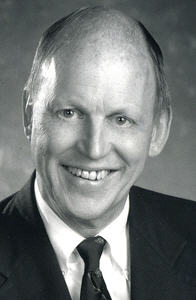
Thomas A. Wood, 76, former headmaster


Thomas A. Wood, 76, former headmaster of Friends’ Central School in Wynnewood, died of heart failure Oct. 27 at Plymouth Harbor, a retirement community in Sarasota, Fla. Dr. Wood headed Friends’ Central, a coed Quaker school, for 17 years. During his tenure, he oversaw the construction of a building, Shallcross Hall; the conversion of an 18th-century barn into a library; and the purchase of the Montgomery School on Old Gulph Road in Wynnewood, which became Friends’ Central’s lower school campus.

“Tom Wood had strong vision and foresight,” said Friends’ Central’s present headmaster, David M. Felsen. “The purchase of the second campus allowed for tremendous growth and development of the school,” he said.

He had “a remarkable eye for talent,” Felsen said, “and drew to the school wonderful teachers and administrators.”

When Dr. Wood resigned as headmaster in 1987, the 19th-century stone structure that housed the upper school and administrative offices was named the Wood Building.

After leaving Friends’ Central, he was director of consulting for Independent Educational Services in Princeton for five years.

Dr. Wood grew up in West Chester and graduated from Choate School in Wallingford, Conn. He earned a bachelor’s degree from Haverford College and a doctorate in Elizabethan literature from the University of Birmingham in England. He retained a fondness for English diction and proper grammar, his cousin Betsy Neese said.

Before becoming headmaster at Friends’ Central in 1970, Dr. Wood taught at the Hill School in Pottstown; was an administrator at Phillips Exeter Academy in Exeter, N.H., and Athens College in Greece; and then was assistant headmaster at Friends Academy in Locust Valley, N.Y.

He enjoyed politics and in 1984 took a six-month sabbatical from Friends’ Central to head the Philadelphia presidential campaign of Democrat Alan Cranston, then a U.S. senator from California.

Dr. Wood loved spending time at his vacation home on Lake Wallenpaupack in the Poconos. He often invited students from Friends’ Central, and friends and family to visit, Neese said, and would fill up as many as six supermarket carts to feed all of his guests. “He was the consummate host,” she said.

Dr. Wood is survived by sisters Posey Jones and Molly Tully; stepchildren Alexander Otey and Olivia Brady; three step-grandchildren; and his former wife, Patricia Otey Wood.

A memorial service will be at 3 p.m. Dec. 16 in Shallcross Hall at Friends’ Central School, 1101 City Ave., Wynnewood.