
Howard Stern, Don Imus, Wolfman Jack and Soupy Sales Publicity Photo
Don Imus, Howard Stern, New York City, Radio, Soupy Sales, WNBC, Wolfman Jack
THE ONION
AV CLUB
by Michaelangelo Matos June 1, 2009
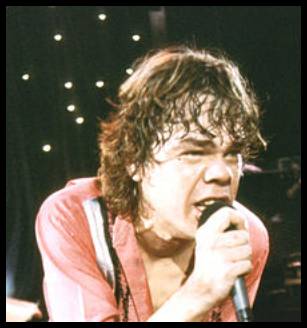
The shuffler: David Johansen, the New York rock legend who formed the New York Dolls in the early ’70s and paved the loud, unkempt, pop-savvy road that would eventually lead to punk. He’s released many solo albums, worked with groups such as the Harry Smiths (traditional Americana), and performed as the infamous tropical novelty act Buster Poindexter. Johansen talked to The A.V. Club from Los Angeles as the Dolls, reunited since 2005, revved up their new tour.
The Larks, “My Reverie”
David Johansen: It’s from Debussy, Claude Debussy. [Johansen’s partner Mara interjects.] No—Mara’s saying it’s “Deb-you-see.” I just say “Deh-bussy.”
The A.V. Club: Are you a Debussy fan as well?
DJ: I like the Larks and I like Deb-you-say. And here they are together.
AVC: Do you remember when you first heard it?
DJ: I have an older brother, and when I was a kid, he had a lot of doo-wop records; I imagine that’s when I heard it. He used to get a lot of records, and I used to covet them when I was 4 years old or whatever. I would play these records on a Victrola, endlessly. I used to sing along to these songs when I was a little kid. The Platters, you know; the ones with really good singers. The Diablos was another biggie.
AVC: When did you start buying your own records?
DJ: When I was 12 or something. There was a rock ’n’ roll record store not far from my house. It was called Du-Dels. I think the first single I bought was “Tail Dragger” by Howlin’ Wolf, and I think the first LP I bought was Lightnin’ Hopkins; I don’t remember what it was called.
AVC: You were a blues fan when you were 12?
DJ: Yeah. When I was 12, I don’t know if I knew it was blues or not, but I liked it. When I was a kid, they had this Hootenanny era. There was a radio station in New York—I can’t remember what it was called—but every night from 9 to 10, there was a pretty hip cat who would play folk music and blues, and the blues kind of got my ear.
AVC: A lot of songs on the new Dolls album have a pretty bluesy feel. Is that deliberate?
DJ: I think we as a band, as individuals, understand that all popular music stems from blues and jazz and even pop, but rock ’n’ roll especially comes from blues. What we’re trying to do is play rock ’n’ roll, but other people call it different things.
Charles Lloyd, “Beyond Darkness”
DJ: He’s a very hip cat. He made a double record a couple years ago called Lift Every Voice. It’s so great; I can’t recommend it enough.
AVC: How did you encounter it?
DJ: When I was a kid, I had some Charles Lloyd records. In the ’60s, when I was in high school, he was hip and happening—I wouldn’t say to the general public in my school, but maybe 10 of us considered ourselves connoisseurs. A lot of people in that group had Charles Lloyd records; that’s how I got onto it. I must have read about this particular record. I think music writers, most of them, aren’t very good, but sometimes someone is eloquent enough to put you onto something. I read about music—not just anything, but if I saw something about Charles Lloyd, I would read that. And if it was done well, I would finish reading it, instead of taking the newspaper and going “ACK!”
Dirty Rotten Scoundrels, with Piscopo and Doran, Plays Gateway Playhouse
By Andrew Gans
August 26, 2009
“Saturday Night Live” alum Joe Piscopo plays Lawrence in the Gateway Playhouse’s production of Dirty Rotten Scoundrels, which begins performances Aug. 26 in Long Island.
Directed and choreographed by Keith Andrews with musical direction by Jeff Buchsbaum, the production will run through Sept. 12 in the Patchogue Theatre.
The cast also features Nell Mooney as Christine, Harris Doran as Freddy, Nathan Klau as Andre, Hallie Metcalf as Jolene and New York stage veteran Rebecca Baxter as Muriel.
The ensemble comprises Mary Giattino, Kelli Joelle Bartlett, Emily Bender, Drew Humphrey, Alex Jorth, Robert McCaffrey, Matt Nowak, Anne Otto, Vincent Ortega, Sean Quinn, Bryant Smith, Meghan Starr and Chelsey Whitelock.
The design team includes Tony-nominated and Drama Desk Award-winning lighting designer Marcia Madeira; Dom Ruggiero is the production stage manager.
Based on the popular 1988 MGM film, Dirty Rotten Scoundrels was penned by composer-lyricist David Yazbek and librettist Jeffrey Lane. The musical, according to the Gateway, “centers on two con men living on the French Riviera.”
The Patchogue Theatre is located at 71 E. Main Street in Patchogue. For tickets call (631)… or 1-888-4TIXNOW.



By Stephen C. Webster
Published: September 2, 2009
The mercenary group formerly known as Blackwater International, which was banned from Iraq by its government after a Baghdad massacre which killed 17 civilians, will see its contract extended in the country by the U.S. State Department, according to a published report.
ABC News reporter Kirit Radia notes: “Sources say the department has agreed to temporarily continue using the subsidiary known as Presidential Airways to provide helicopter transport for embassy employees around Iraq until a new contract with another security company, Dyncorp International, is fully implemented. Presidential Airways is an arm of U.S. Training Center, which is a subsidiary of the company Xe, formerly and still commonly known as Blackwater.”
Controversy has surrounded the private security firm practically since it was founded, but erupted anew recently when former employees accused Blackwater’s founder and former CEO of murdering or facilitating the murders of other employees who were preparing to blow the whistle on his alleged criminal activities.
The sworn statements also say that founder Erik Prince and Blackwater executives were involved in illegal weapons smuggling and had, on numerous occasions, ordered incriminating documents, e-mails, photos and video destroyed. The former employees described Blackwater as “having young girls provide oral sex to Enterprise members in the ‘Blackwater Man Camp’ in exchange for one American dollar.” They add even though Prince frequently visited this camp, he “failed to stop the ongoing use of prostitutes, including child prostitutes, by his men.”
One of the statements also charges that “Prince’s North Carolina operations had an ongoing wife-swapping and sex ring, which was participated in by many of Mr. Prince’s top executives.”
The former employees additionally claim that Prince was engaged in illegal arms dealing, money laundering, and tax evasion, that he created “a web of companies in order to obscure wrong-doing, fraud, and other crimes,” and that Blackwater’s chief financial officer had “resigned … stating he was not willing to go to jail for Erik Prince.”
The company was also allegedly involved in the planning stages of the CIA’s assassination program, which was reportedly never used, then scrapped by CIA chief Leon Panetta.
Prince has repeatedly insisted his company has done nothing wrong and Blackwater continues to fulfill its contracts with the United States government.
For the massacre of Iraqi civilians, five Blackwater guards were arrested and charged with manslaughter. A sixth guard flipped and agreed to testify against the others. Government informants later claimed the company tried to gather up and destroy weapons involved in the slaughter.
The State Department announced last January that it would not be renewing Blackwater’s contract for security services in Iraq when it was set to expire in May, however the Obama administration decided to extend it through Sept. 3, according to The Nation Jeremy Scahill.
ABC reported the new contract extension is for an unspecified amount of time and could end “within weeks or months.”
When it is finally allowed to expire, Blackwater’s involvement with Iraq will have ended, completely.

Reduced season-ticket sales for some N.F.L. teams could result in a greater than usual number of local television blackouts.
“It’s all part of the challenges that we’re seeing in the economy and what our clubs are going through,” Roger Goodell told reporters Tuesday at the Washington Redskins’ training camp in Ashburn, Va. “Our clubs have been working hard in the off-season to create other ways to try to get people in the stadiums and to have policies that are a little more flexible, and hopefully, they’re going to pay dividends for us.”
He said that the Jacksonville Jaguars, whose season tickets have fallen to 25,000 this season from 42,000 last season, were one of the teams whose games could be blacked out if their home games are not sold out.
N.F.L. rules require that games be blacked out in local markets if they are not sold out 72 hours before kickoff.
A USA Today survey found that the fans of a dozen teams might face some blackouts this season.
CBS and Fox said they did not expect the blackouts to significantly affect ratings or cause them to provide givebacks to advertisers.
“Very simply, it’s about the overall ratings,” Ed Goren, the president of Fox Sports, wrote in an e-mail message. “A few blackouts may not have any real effect on our full-season ratings.”
LeslieAnne Wade, a spokeswoman for CBS Sports, said, “It won’t be in every market, so we don’t expect blackouts to affect the rating we’re selling for national advertising.

Civilian contractors working for the Pentagon in Afghanistan not only outnumber the uniformed troops, according to a report by a Congressional research group, but also form the highest ratio of contractors to military personnel recorded in any war in the history of the United States.
On a superficial level, the shift means that most of those representing the United States in the war will be wearing the scruffy cargo pants, polo shirts, baseball caps and other casual accouterments favored by overseas contractors rather than the fatigues and flight suits of the military.
More fundamentally, the contractors who are a majority of the force in what has become the most important American enterprise abroad are subject to lines of authority that are less clear-cut than they are for their military colleagues.
What is clear, the report says, is that when contractors for the Pentagon or other agencies are not properly managed — as when civilian interrogators committed abuses at Abu Ghraib in Iraq or members of the security firm Blackwater shot and killed 17 Iraqi citizens in Baghdad — the American effort can be severely undermined.
As of March this year, contractors made up 57 percent of the Pentagon’s force in Afghanistan, and if the figure is averaged over the past two years, it is 65 percent, according to the report by the Congressional Research Service.
The contractors — many of them Afghans — handle a variety of jobs, including cooking for the troops, serving as interpreters and even providing security, the report says.
The report says the reliance on contractors has grown steadily, with just a small percentage of contractors serving the Pentagon in World War I, but then growing to nearly a third of the total force in the Korean War and about half in the Balkans and Iraq. The change, the report says, has gradually forced the American military to adapt to a far less regimented and, in many ways, less accountable force.
The growing dependence on contractors is partly because the military has lost some of its logistics and support capacity, especially since the end of the cold war, according to the report. Some of the contractors have skills in critical areas like languages and digital technologies that the military needs.
The issue of the role of contractors in war has been a subject of renewed debate in Washington in recent weeks with disclosures that the Central Intelligence Agency used the company formerly known as Blackwater to help with a covert program, now canceled, to assassinate leaders of Al Qaeda. Lawmakers have demanded to know why such work was outsourced.
The State Department also uses contractors in Iraq and Afghanistan, although both the department and the C.I.A. have said they want to reduce their dependence on outside workers.
Responding to the Congressional research report, Frederick D. Barton, a senior adviser to the Center for Strategic and International Studies in Washington, said it was highly questionable whether contractors brought the same commitment and willingness to take risks as the men and women of the military or the diplomatic services.
He also questioned whether using contractors was cost effective, saying that no one really knew whether having a force made up mainly of contractors whose salaries were often triple or quadruple those of a corresponding soldier or Marine was cheaper or more expensive for the American taxpayer.
With contractors focused on preserving profits and filing paperwork with government auditors, he said, “you grow the part of government that, probably, the taxpayers appreciate least.”
Congress appropriated at least $106 billion for Pentagon contractors in Iraq and Afghanistan from 2003 through the first half of the 2008 fiscal year, the report says.
The report said the combined forces in Iraq and Afghanistan still had more uniformed military personnel than contractors over all: 242,657 contractors and about 282,000 troops as of March 31
 The New York Herald Sun