BabaBooey Throws Out the First Pitch at the Mets Citi Field
Artie Lange, Baba Booey, Bababooey, Baseball, Howard Stern, New York MetsTa Ta Toothey screws it up royally…:
Banks Got Cheatsheet For Their "Stress Tests"
Bank of america, Citicorp, Federal Reserve, Fifth Third, Morgan Stanley, PNC, Sun Trust, WELLS FARGOBanks Won Concessions on Tests
Fed Cut Billions Off Some Initial Capital-Shortfall Estimates;
Tempers Flare at Wells
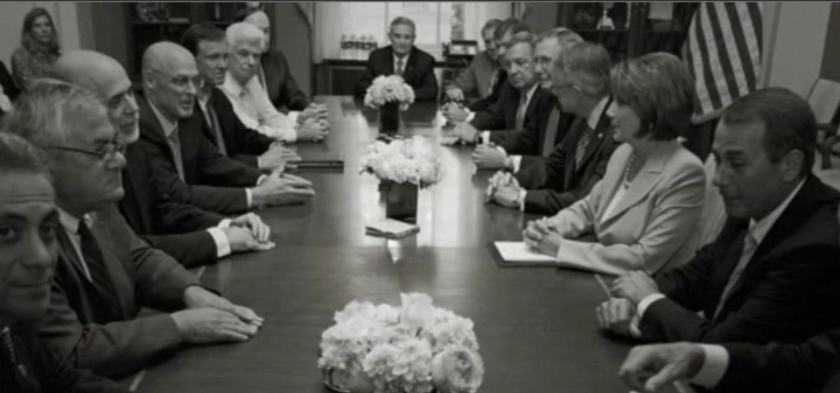
WALL STREET JOURNAL
By DAVID ENRICH, DAN FITZPATRICK and MARSHALL ECKBLAD
The Federal Reserve significantly scaled back the size of the capital hole facing some of the nation’s biggest banks shortly before concluding its stress tests, following two weeks of intense bargaining.
In addition, according to bank and government officials, the Fed used a different measurement of bank-capital levels than analysts and investors had been expecting, resulting in much smaller capital deficits.
The overall reaction to the stress tests, announced Thursday, has been generally positive. But the haggling between the government and the banks shows the sometimes-tense nature of the negotiations that occurred before the final results were made public.
Government officials defended their handling of the stress tests, saying they were responsive to industry feedback while maintaining the tests’ rigor.
Interactives: Compare Banks Tested

Bank by Bank Findings

When the Fed last month informed banks of its preliminary stress-test findings, executives at corporations including Bank of America Corp., Citigroup Inc. and Wells Fargo & Co. were furious with what they viewed as the Fed’s exaggerated capital holes. A senior executive at one bank fumed that the Fed’s initial estimate was “mind-numbingly” large. Bank of America was “shocked” when it saw its initial figure, which was more than $50 billion, according to a person familiar with the negotiations.
At least half of the banks pushed back, according to people with direct knowledge of the process. Some argued the Fed was underestimating the banks’ ability to cover anticipated losses with revenue growth and aggressive cost-cutting. Others urged regulators to give them more credit for pending transactions that would thicken their capital cushions.
At times, frustrations boiled over. Negotiations with Wells Fargo, where Chairman Richard Kovacevich had publicly derided the stress tests as “asinine,” were particularly heated, according to people familiar with the matter. Government officials worried San Francisco-based Wells might file a lawsuit contesting the Fed’s findings.
The Fed ultimately accepted some of the banks’ pleas, but rejected others. Shortly before the test results were unveiled Thursday, the capital shortfalls at some banks shrank, in some cases dramatically, according to people familiar with the matter.
![[fed changed estimates]](https://i0.wp.com/s.wsj.net/public/resources/images/P1-AP848A_stres_NS_20090508215242.gif)
Bank of America’s final gap was $33.9 billion, down from an earlier estimate of more than $50 billion, according to a person familiar with the negotiations.
A Bank of America spokesman wouldn’t comment on how much the previous gap was reduced, though he said it resulted from an adjustment for first-quarter results and errors made by regulators in their analysis. “It wasn’t lobbying,” he said.
Wells Fargo’s capital hole shrank to $13.7 billion, according to people familiar with the matter. Before adjusting for first-quarter results and other factors, the figure was $17.3 billion, according to a federal document.
“In the end we agreed with the number. We didn’t necessarily like the number,” said Wells Fargo Chief Financial Officer Howard Atkins. He said the company was particularly unhappy with the Fed’s assumptions about Wells Fargo’s revenue outlook.
At Fifth Third Bancorp, the Fed was preparing to tell the Cincinnati-based bank to find $2.6 billion in capital, but the final tally dropped to $1.1 billion. Fifth Third said the decline stemmed in part from regulators giving it credit for selling a part of a business line.
Citigroup’s capital shortfall was initially pegged at roughly $35 billion, according to people familiar with the matter. The ultimate number was $5.5 billion. Executives persuaded the Fed to include the future capital-boosting impacts of pending transactions.
SunTrust Banks Inc. also persuaded the Fed to significantly reduce the size of its estimated capital gap to $2.2 billion, after identifying mathematical errors in the Fed’s earlier calculations, according to a person familiar with the matter.
PNC Financial Services Group Inc., saw a capital hole materialize at the last minute. As recently as Wednesday, PNC executives were under the impression they wouldn’t need to find any new capital, according to people familiar with the matter. Thursday morning, the Fed informed PNC that it had a $600 million shortfall.
Regulators said other banks also were told they needed more capital than initially projected.
The Fed’s findings were less severe than some experts had been bracing for. A weeklong rally in bank stocks continued Friday, with the KBW Bank Stocks index surging 10%. Investors were especially relieved by the relatively small capital holes at regional banks. Shares of Fifth Third soared 59%, while Regions Financial Corp.’s $2.5 billion deficit led to a 25% leap in its stock.
With the stress tests, government officials were walking a fine line. If the regulators were too tough on banks, they risked angering their constituents and spooking markets. But if they were too soft, the tests could have lost credibility, defeating their basic confidence-building purpose.
![[Chart]](https://i0.wp.com/s.wsj.net/public/resources/images/P1-AP851_STRESS_NS_20090508232418.gif)
All the back-and-forth is typical of the way regulators traditionally wrap up their examinations of banks: Regulators often present preliminary findings to lenders and then give them time to respond. The process can result in changes to the regulators’ initial conclusions. Some of the stress-test revisions, for instance, were made to account for the beneficial impact of the industry’s strong first-quarter profits.
On Friday, some analysts questioned the yardstick, known as Tier 1 common capital, that regulators chose to assess capital levels. Many experts had assumed the Fed would use a better-known metric called tangible common equity.
According to Gerard Cassidy, an analyst with RBC Capital Markets, the 19 banks’ cumulative shortfall would have been more than $68 billion deeper if the government had used the latter metric, which accounts for unrealized losses.
Federal officials said their projections reflected the most comprehensive analysis ever conducted of the industry.
The test results showed that the 19 banks faced a total of $599 billion in losses over the next two years under the government’s worst-case, Depression-like scenario. The Fed directed 10 banks to add a total of nearly $75 billion to their capital buffers to insulate themselves from potential losses.
Banks pressed ahead on Friday with plans to fill their capital holes by tapping public markets. Wells Fargo raised $7.5 billion in stock through a public offering. The bank originally planned to raise $6 billion, but expanded the offering, which was valued at $22 a share, due to robust demand. Shares of Wells Fargo rallied $3.42, or 14% to $28.18.
Morgan Stanley, which is facing a $1.8 billion capital hole, raised $4 billion by selling stock. Shares of Morgan rose $1.06, or 4%, to $28.20.
—Robin Sidel and Maurice Tamman contributed to this article.
Your Country is Not Coming Back to You; She's Found Somebody New – And It's a Black Guy
Barack Obama, Dijon, Douchebags, G.O.P., Grey Poupon, John Kerry, MSNBC, Mustard, Ray's Hell, Recession, Republicans, Sean Hannity, Swine Flu, White House Correspondents DinnerAmid recession, two wars and swine flu, conservatives assail Obama over Dijon

WASHINGTON — The United States is in the midst of a devastating recession, mired in two overseas wars and grappling with a swine flu outbreak, but conservative critics are assailing President Barack Obama on another pressing issue: his choice of burger topping.
Dijongate is in full force, with Fox News and a conservative blogger leading the charge against the president for his choice of the apparently un-American mustard atop his cheeseburger during a recent impromptu lunch stop with Vice-President Joe Biden.
There’s no evidence of wiretapped hotel rooms or a Deep Throat lurking in the shadows, but there are indeed accusations of a coverup – MSNBC, apparently, edited out the president’s request for Dijon in order to help Obama maintain his “man of the people” street cred.
Fox’s Sean Hannity has been telling his viewers that MSNBC – and reporter Andrea Mitchell in particular – are trying to hide Obama’s Dijon-loving ways from the public.
Hannity has been referring to the president’s lunch as his “fancy burger.”
“It was Grey Poupon, which is equally snotty,” alleged one commenter on Hannity’s website.
William Jacobson, a Cornell law school professor who has also been blogging about Dijongate, noted that Mitchell “didn’t mention one arugula-like fact” about Obama’s order earlier this week at Ray’s Hell Burger in Arlington, Va.
Jacobson said the MSNBC video of the stop at Ray’s cuts out just as Obama asks for Dijon. He refers to MSNBC as “Obama’s favourite network.”
“MSNBC edited out the audio when Obama ordered his Hell Burger just at the moment when Obama asked for Dijon mustard,” Jacobson wrote in a Thursday post entitled “Thou Shalt Not Mock Obama’s Mustard.”
“Now, I have nothing against Dijon mustard, but the image didn’t fit with the image being spun by the White House and MSNBC. Dijon mustard on a Hell Burger had a very John Kerry-ish quality about it.”
Jacobson blogged about other incidents in which Obama has revealed his weakness for the spicy French condiment.
It’s a key ingredient, for example, in the president’s favourite tuna salad, and he also had the gall to request it during his first trip on Air Force One.
“And the mainstream media didn’t cover it,” Jacobson wrote.
It all hearkens back to those silly days of “freedom fries,” the name given to French fries by hawkish conservatives in 2003 when France expressed strong opposition to the U.S. invasion of Iraq.
The French stance resulted in a call from American right-wingers for a boycott of French goods and the removal of the country’s name from products. That left America’s best-selling mustard – French’s – in a bit of a quandary.
French’s, in fact, figures prominently in a Dijon-related anecdote Obama himself chronicled in his book, “The Audacity of Hope.”
He told the story of his first tour through Illinois, when he ordered Dijon on his cheeseburger at a TGI Friday’s.
His panicked political aide assured the waitress that Obama didn’t want Dijon at all and waved her away, thrusting a bottle of French’s at him instead. The waitress, perplexed, assured Obama that she had Dijon if he wanted it.
“As the waitress walked away, I leaned over and whispered that I didn’t think there were any photographers around,” Obama wrote.
The anecdote underscored Obama’s thoughts on what he viewed as the absurdity of focusing on non-issues in politics.
“What’s troubling is the gap between the magnitude of our challenges and the smallness of our politics-the ease with which we are distracted by the petty and trivial,” he wrote.
One commenter on Jacobson’s blog mocked Dijongate on Thursday: “Wait till the right finds out he eats guacamole, then he’ll be seen as a pro-immigrant nut job. God forbid he ever takes a bite of hummus!”
Jacobson, however, insists that alleged efforts to cover up Obama’s choice of mustard this week are newsworthy.
“I don’t think anyone is ‘upset’ with his choice of mustard, although that is how some are spinning it,” Jacobson said in an e-mail. “It is the absurd level of image control, which is not trivial.”
Nonetheless, some of the right’s attacks on Obama have bordered on the inane, subjecting conservatives to ridicule.
Comedian Bill Maher, a longtime libertarian, recently maligned the right and their fixation on the trivial in an opinion piece in the Los Angeles Times.
“Here are the big issues for normal people: the war, the economy, the environment, mending fences with our enemies and allies, and the rule of law,” Maher wrote.
“And here’s the list of Republican obsessions since President Obama took office: that his birth certificate is supposedly fake, he uses a TelePrompTer too much, he bowed to a Saudi guy, Europeans like him, he gives inappropriate gifts, his wife shamelessly flaunts her upper arms, and he shook hands with Hugo Chavez and slipped him the nuclear launch codes.”
Conservatives, Maher wrote, are now behaving like “the bitter divorced guy whose country has left him – obsessing over it, haranguing it, blubbering one minute about how much you love it and vowing the next that if you cannot have it, nobody will,” he wrote.
“But … your country is not coming back to you. She’s found somebody new. And it’s a black guy.”
Is The United States of America Using White Phosphorus Against the Afghans?
Afghans, Hamid Karzai, white phosphorusMay 10, 6:33 AM (ET)

By JASON STRAZIUSO and RAHIM FAIEZKABUL (AP) – Afghanistan’s leading human rights organization said Sunday it was investigating the possibility that white phosphorus was used in a U.S.-Taliban battle that killed scores of Afghans. The U.S. military rejected speculation it had used the weapon but left open the possibility Taliban militants did.
Afghan doctors are concerned over what they are calling “unusual” burns on Afghans wounded in last Monday’s battle in Farah province, which President Hamid Karzai has said may have killed 125 to 130 civilians.
Allegations that white phosphorus or another chemical may have been used threatens to deepen the controversy over what Afghan officials say could be the worst case of civilian deaths since the 2001 U.S. invasion that ousted the Taliban regime. The incident in Farah drew the condemnation of Karzai who called for an end to airstrikes.
Nader Nadery, a commissioner for the Afghan Independent Human Rights Commission, said officials were concerned white phosphorus may have been used, but he said more investigation was needed.
“Our teams have met with patients,” Nadery told The Associated Press. “They are investigating the cause of the injuries and the use of white phosphorus.”
White phosphorus is a spontaneously flammable material that can cause painful chemical burns. It is used to mark targets, create smoke screens or as a weapon, and can be delivered by shells, flares or hand grenades, according to GlobalSecurity.org.
Human rights groups denounce its use for the severe burns it causes, though it is not banned by any treaty to which the United States is a signatory.
The U.S. military used white phosphorus in the battle of Fallujah in Iraq in November 2004. Israel’s military used it in January against Hamas targets in Gaza.
Col. Greg Julian, the top U.S. military spokesman in Afghanistan, said the U.S. did not use white phosphorus as a weapon in last week’s battle. The U.S. does use white phosphorous to illuminate the night sky, he said.
Julian noted that military officials believe that Taliban militants have used white phosphorus at least four times in Afghanistan in the past two years. “I don’t know if they (militants) had it out there or not, but it’s not out of the question,” he said.
A spokesman for the Taliban could not be reached for comment Sunday.
The U.S. military on Saturday said that Afghan doctors in Farah told American officials that the injuries seen in wounded Afghans from two villages in the province’s Bala Baluk district could have resulted from hand grenades or exploding propane tanks.
Dr. Mohammad Aref Jalali, the head of the burn unit at the Herat Regional Hospital in western Afghanistan who has treated five patients wounded in the battle, described the burns as “unusual.”
“I think it’s the result of a chemical used in a bomb, but I’m not sure what kind of chemical. But if it was a result of a burning house – from petrol or gas cylinders – that kind of burn would look different,” he said.
Gul Ahmad Ayubi, the deputy head of Farah’s health department, said the province’s main hospital had received 14 patients after the battle, all with burn wounds.
“There has been other airstrikes in Farah in the past. We had injuries from those battles, but this is the first time we have seen such burns on the bodies. I’m not sure what kind of bomb it was,” he said.
U.N. human rights investigators have also seen “extensive” burn wounds on victims and have raised questions about how the injuries were caused, said a U.N. official who asked not to be identified talking about internal deliberations. The U.N. has reached no conclusions about whether any chemical weapons may have been used, the official said.
Afghan officials say up to 147 people may have died in the battle in Farah, though the U.S. says that number is exaggerated.
The U.S. on Saturday blamed Taliban militants for causing the deaths by using villagers as human shields in the hopes they would be killed. A preliminary U.S. report did not say how many people died in the battle.
The investigation into the Farah battle coincides with an appeal by Human Rights Watch for NATO forces to release results of an investigation into a March 14 incident in which an 8-year-old Afghan girl was burned by white phosphorus munitions in Kapisa province.
The New York-based group said Saturday white phosphorus “causes horrendous burns and should not be used in civilian areas.”
Big U.S. Banks Will Soon Disappear
AMERICAN EXPRESS, American International Group, Bank of america, Banks, Citigroup, Economy, FIFTH THIRD BANCORP, Goldman Sachs, JPMORGAN CHASE, METLIFE, Morgan Stanley, STRESS TESTS, US BANCORP, WELLS FARGOBig US Banks May Be Headed For Extinction—And Soon
CNBC.com
| 08 May 2009 | 02:30 PM ET
In the world of banking, too-big-to-fail may be in the process of morphing into too-big-to-exist.
After hundreds of billions in federal aid and even more in lost investment capital, both the government and investors may be ready for a big sea change.
The only question, for some, is how quickly it will happen.
“In the next few months, we’ll see the tacitly nationalized banks—Bank of America, Citigroup —sold off rapidly into pieces, turned into much smaller banks,” Sanders Morris Harris Group Chairman George Ball predicted on CNBC Thursday, adding the government wants to send a strong message, to “punish too-big-to-fail banks that have blotted their copy and not exonerate their management.”
“Five years from now, these banks will be broken up,” is how FBR Capital Markets bank analyst Paul J Miller sees it.
From Washington to Wall Street to Main Street, a dramatic change in conventional thinking appears to underway.
“Some institutions are too big to exist, because they are too interconnected,” Sen. Richard Shelby (R-Ala.) told CNBC earlier this week. “The regulators can’t regulate them.”
That conclusion became painfully obvious in the two faces of the financial crisis.
On one side, the federal government had to provide billions in aid —and on more than one occasion—to the likes of to Bank of America , Citigroup and the giant insurer AIG , which has its own lending unit, to prop them up.
On the other side, the failure of Lehman Brothers—which might have been averted with federal intervention—reverberated throughout the global economy.
Months later, the Obama administration and Congress now appear keenly focused on the dilemma and are expected to create legislation that will empower regulators to intervene in the affairs of big financial institutions and essentially wind down their operations in an orderly fashion with limited collateral damage to the economy. Such authority would also apply to investment banks tirned bank holding companies, such as Goldman Sachs .
“They need it and they’ll get it,” said Robert Glauber, who was a top Treasury official during the government rescue of the savings and loan industry two decades ago.
Regulatory reform is also likely to include new antitrust authority to block mega-mergers creating financial firms whose problems could adversely affect the overall system. Analysts say, if that’s the case, the government won’t want the too-big-to-fail companies of the past essentially hanging around.
Exactly how the government does that is unclear, but experts say there are ways without resorting to a heavy-handed approach such as nationalization.
“If once there is some kind of coherent policy toward systemic risk, whomever is managing that policy can start to make life difficult for an entity that is too big to fail,” says former S&L regulator and White House economist Lawrence White, at NYU’s Stern School of Business. “It wouldn’t upset if they were providing subtle nudges.
“The Fed doesn’t want them that big and might make them hold more capital,” suggests Miller.
Some speculate that any further government aid to certain firms might come with such strings attached.
Others say a fresh look at regulation will help the process and unveil the complex, diverse and, at times, incompatible operations of the bank holding companies and their commercial bank subsidiaries.
“They can’t assess the risks of the big banks,” says Frank Sorrentino, Chairman and CEO of North Jersey Community Bank, which recently acquired a failing bank in a transaction assisted by federal regulators at the FDIC.
Risk, or a disregard of risk, may also have factored into the decision-making of big bank executives, who assumed the too-big-to-fail doctrine would catch them if they fell, which the bailouts obviously did.
Small banks clearly have a financial interest in seeing the end of the big bank era, but that alone doesn’t undercut their arguments. In some cases it may be good for business, consumers and the overall marketplace.
“It’s an appealing idea to our clients because it will make them more competitive,” says Robert C. Schwartz, a partner at Smith, Gambrell & Russell, which represents big and small banks in the Southeast. “Changes may leave gaps for the regional banks and the community banks.”
“If the government does the right thing, it will be the private sector that forces these companies to do what they need to do for the benefit of their shareholders,” says Sorrentino, whose bank has $400 million in assets. (By contrasts, the 19 firms involved in the government’s recently completed stress tests have assets of $100-billion or more.)
Investors have clearly been focused on shrinking earnings and stock prices and what some consider diminished prospects for the future, even with a positive resolution to the financial crisis.
“I also think investors are going to realize that they’ll be low-single digit growth rates,” says Miller
Some analysts say recent events highlight a fundamental problem that has been somewhat ignored for years; the financial supermarket structure of the big institutions makes them difficult, if not, impossible to operate with great success.
“Investors will say,That business unit hidden in there; let’s spin that off,” says Sorrentino. “Either the regulators are going to force it or the shareholders are going force it.”
Bill Maher's New Rules For May 8, 2009
Matt Taibbi, Naomi Klein, Politics, Reza Aslan, TullycastJustice Department Drops Case Against Army Deserter
Court Martial, Ehren Watada, Justice Department, U.S. Army
The U.S. Justice Department under the Obama administration has decided to drop its appeal of a federal judge’s ruling that 1st Lt. Ehren Watada cannot face a second court-martial resulting from his high-profile 2006 refusal to go to Iraq with his Fort Lewis brigade.
The Ninth Circuit Court of Appeals Wednesday granted the Justice Department’s request to drop its appeal of a federal judge’s earlier ruling that the second court-martial of 1st Lt. Ehren Watada on that count would represent double jeopardy and a violation of Watada’s constitutional rights.
This is the latest development in the long legal battle of Watada, whose 2006 decision not to join his Stryker brigade in Iraq turned the Hawaiian-born officer into a national symbol of the anti-war movement.
But Watada’s legal troubles may not be over.
He could still face a military tribunal for two other counts of conduct unbecoming an officer, according to a Fort Lewis spokesman.
Those counts were not thrown out by the federal court. They result from two interviews Watada gave in 2006, in which, among other comments, he attacked then-President George Bush for betraying the trust of the American people. He also said that Bush’s conduct made him ashamed to wear his Army uniform.
“At this point the leadership at Fort Lewis is considering a full range of judical and adminstrative options, which could range from court martial to adminstrative actions and discharge,” said Joe Piek, a Fort Lewis spokesman.
Watada’s first court martial, in February 2007, ended with a mistrial.
To block a second court martial, Watada’s attorneys sued in U.S. District Court. The unusual move left the U.S. Justice Department arguing the case on behalf of the Army.
In October, U.S. District Judge Benjamin Settle in Tacoma ruled that Watada could not be prosecuted again by the Army on charges of missing his deployment to Iraq. He also blocked court-martial for comments made in a news conference and while speaking at a Veterans for Peace national convention.
But Settle left open the possibility that the Army could retry Watada on the two counts of conduct unbecoming an officer.
The Army has consistently maintained that a second trial on all the counts would not be double jeopardy. In December, in the waning days of the Bush Administration, the Justice Department filed a notice of appeal that kept open the option of trying to overturn Settle’s ruling.
After a more lengthy review, the Justice Department in the Obama administration opted to withdraw that appeal. That decision was made by the department’s Office of Solicitor General, which determines what cases should be appealed, according to Emily Langlie, a spokeswoman for the U.S. Attorneys Office in Western Washington.
Through the course of this legal battle, Watada has been assigned a desk job at Fort Lewis. Eventually, he hopes to return to civilian life and attend law school, said Kenneth Kagan, one of Watada’s attorneys.
The 3rd Brigade, 2nd Infantry Division that left for Iraq without Watada was deployed for 15 months. The brigade returned to Fort Lewis and is preparing to serve again in Iraq later this year.
Hal Bernton: hbernton@seattletimes.com.
Franken and Biden
Al Franken, Barack Obama, Joe Biden, Politics, White HouseFranken: “I Deeply Appreciate” Opportunity To Meet With Biden

The Franken campaign has released this statement on Al Franken’s meeting today at the White House with Vice President Biden:
MINNEAPOLIS [05/06/09] – This afternoon, Senator-elect Al Franken visited the White House to meet with Vice President Biden. Franken updated the Vice President on the state of Minnesota’s second U.S. Senate seat, and discussed the administration’s agenda and its potential benefits for the people of Minnesota. Franken was accompanied by his wife, Franni.
Al Franken:
“I deeply appreciate the administration’s ongoing support and the opportunity to meet with Vice President Biden today. Minnesotans are eager to see Congress make progress on the administration’s agenda – and I’m eager to do my part in that effort. From investments in alternative energy to the expansion of high-speed rail to the Twin Cities, we have a lot to do to help Minnesota’s working families, and I was pleased to discuss these important issues with the Vice President.”
……
Late Update: Vice President Biden has released this statement:
“The election process and recount in Minnesota have lived up to the state’s reputation for organization, transparency, and bipartisanship. The officials have been meticulous and every ruling has been unanimous.
“While Senator Amy Klobuchar is one of the hardest working members of the United States Senate, Minnesotans deserve their full representation.
“Once the Minnesota Supreme Court has issued its final ruling in this case, the President and I look forward to working with Mr. Franken on building an economy for the 21st century.”
If We’re Going to Let The Bloggers Run The Country, Then The Country’s Best Days Are Behind Us
Bloggers, Blogs, Dirty Fucking Hippies, Jeff Sessions, Judiciary Committee, Lindsey Graham, RepublicansThe Madness of Lindsey “Poo-Poo” Graham
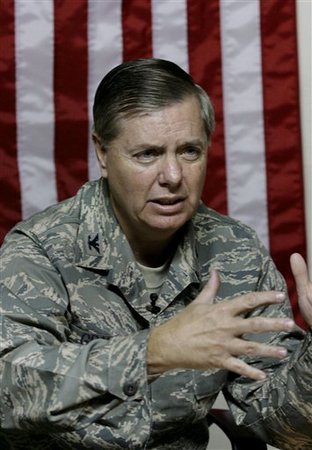
After it was announced earlier this week that Sen. Jeff Sessions (R-AL) would replace Sen. Arlen Specter (D-PA) as the ranking member on the Senate Judiciary Committee, bloggers, including ThinkProgress, noted that Sessions had a record of racial insensitivity that stopped his appointment to the federal bench in 1986. Now, Sen. Lindsey Graham (R-SC) is hitting back at the blogs:
Sen. Lindsey Graham (R-S.C.) said Republicans would fight back hard if Democrats or liberal groups try to make the Supreme Court confirmation process about Sessions’ record, rather than about Obama’s nominee to replace Justice David Souter.
“If people try to go down that road, it’ll blow up in their face, because Jeff is a good guy,” Graham said. “My hope is that our Democratic colleagues — if you start listening to the bloggers — if we’re going to let the bloggers run the country, then the country’s best days are behind us.”
 The New York Herald Sun