We are the most powerful nation in the world. There is no excuse, only corruption.
Barack Obama
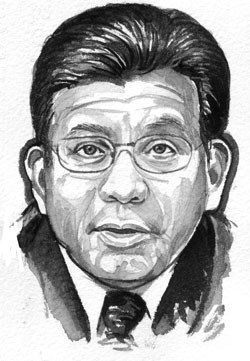
Obama Takes Bush Secrecy on Wiretaps and Doubles Down
Alberto Gonzales, Barack Obama, Dick Cheney, George W. Bush, Illegal Wiretapping, Justice Department, NSAGovernment opts for secrecy in wiretap suit
Tuesday, April 7, 2009
(04-06) 15:26 PDT SAN FRANCISCO — The Obama administration is again invoking government secrecy in defending the Bush administration’s wiretapping program, this time against a lawsuit by AT&T customers who claim federal agents illegally intercepted their phone calls and gained access to their records.
Disclosure of the information sought by the customers, “which concerns how the United States seeks to detect and prevent terrorist attacks, would cause exceptionally grave harm to national security,” Justice Department lawyers said in papers filed Friday in San Francisco.
Kevin Bankston of the Electronic Frontier Foundation, a lawyer for the customers, said Monday the filing was disappointing in light of the Obama presidential campaign’s “unceasing criticism of Bush-era secrecy and promise for more transparency.”
In a 2006 lawsuit, the AT&T plaintiffs accused the company of allowing the National Security Agency to intercept calls and e-mails and inspect records of millions of customers without warrants or evidence of wrongdoing.
The suit followed President George W. Bush’s acknowledgement in 2005 that he had secretly authorized the NSA in 2001 to monitor messages between U.S. residents and suspected foreign terrorists without seeking court approval, as required by a 1978 law.
Congress passed a new law last summer permitting the surveillance after Bush allowed some court supervision, the extent of which has not been made public. The law also sought to grant immunity to AT&T and other telecommunications companies from suits by customers accusing them of helping the government spy on them.
Nearly 40 such suits from around the nation, all filed after Bush’s 2005 disclosure, have been transferred to San Francisco and are pending before Chief U.S. District Judge Vaughn Walker. He is now reviewing a constitutional challenge to last year’s immunity law, which the Obama administration is defending.
Walker is also considering a challenge to the surveillance program by the Al-Haramain Islamic Foundation, a now-defunct charity that was inadvertently given a government document in 2004, reportedly showing that its lawyers had been wiretapped during an investigation that landed the group on the government’s terrorist list.
The Obama administration is also opposing that suit and has challenged Walker’s order to let Al-Haramain’s lawyers examine the still-classified surveillance document.
The administration’s new filing asks Walker to dismiss a second suit filed in September by AT&T customers that sought to sidestep the telecommunications immunity law by naming only the government, Bush and other top officials as defendants.
Like the earlier suit, the September case relies on a former AT&T technician’s declaration that he saw equipment installed at the company’s San Francisco office to allow NSA agents to copy all incoming e-mails. The plaintiffs’ lawyers say the declaration, and public statements by government officials, revealed a “dragnet” surveillance program that indiscriminately scooped up messages and customer records.
The Justice Department said Friday that government agents monitored only communications in which “a participant was reasonably believed to be associated with al Qaeda or an affiliated terrorist organization.” But proving that the surveillance program did not sweep in ordinary phone customers would require “disclosure of highly classified NSA intelligence sources and methods,” the department said.
Individual customers cannot show their messages were intercepted, and thus have no right to sue, because all such information is secret, government lawyers said. They also said disclosure of whether AT&T took part in the program would tell the nation’s enemies “which channels of communication may or may not be secure.”
E-mail Bob Egelko at begelko@sfchronicle.com.
Greenwald: The Individuals Obama Chose to be His Top Economic Officials Embody Exactly the Corruption He Repeatedly Vowed to End
AIG, Alan Greenspan, Bear Stearns, Citibank, Goldman Sachs, Henry Paulson, Larry Summers, Robert Rubin, Tim GeithnerLarry Summers, Tim Geithner and Wall Street’s ownership of government
Apr. 04, 2009 |
White House officials yesterday released their personal financial disclosure forms, and included in the millions of dollars which top Obama economics adviser Larry Summers made from Wall Street in 2008 is this detail:

Lawrence H. Summers, one of President Obama’s top economic advisers, collected roughly $5.2 million in compensation from hedge fund D.E. Shaw over the past year and was paid more than $2.7 million in speaking fees by several troubled Wall Street firms and other organizations. . . .
Financial institutions including JP Morgan Chase, Citigroup, Goldman Sachs, Lehman Brothers and Merrill Lynch paid Summers for speaking appearances in 2008. Fees ranged from $45,000 for a Nov. 12 Merrill Lynch appearance to $135,000 for an April 16 visit to Goldman Sachs, according to his disclosure form.
That’s $135,000 paid by Goldman Sachs to Summers — for a one-day visit. And the payment was made at a time — in April, 2008 — when everyone assumed that the next President would either be Barack Obama or Hillary Clinton and that Larry Summers would therefore become exactly what he now is: the most influential financial official in the U.S. Government (and the $45,000 Merrill Lynch payment came 8 days after Obama’s election). Goldman would not be able to make a one-day $135,000 payment to Summers now that he is Obama’s top economics adviser, but doing so a few months beforehand was obviously something about which neither parties felt any compunction. It’s basically an advanced bribe. And it’s paying off in spades. And none of it seemed to bother Obama in the slightest when he first strongly considered naming Summers as Treasury Secretary and then named him his top economics adviser instead (thereby avoiding the need for Senate confirmation), knowing that Summers would exert great influence in determining who benefited from the government’s response to the financial crisis.
Last night, former Reagan-era S&L regulator and current University of Missouri Professor Bill Black was on Bill Moyers’ Journal and detailed the magnitude of what he called the on-going massive fraud, the role Tim Geithner played in it before being promoted to Treasury Secretary (where he continues to abet it), and — most amazingly of all — the crusade led by Alan Greenspan, former Goldman CEO Robert Rubin (Geithner’s mentor) and Larry Summers in the late 1990s to block the efforts of top regulators (especially Brooksley Born, head of the Commodities Futures Trading Commission) to regulate the exact financial derivatives market that became the principal cause of the global financial crisis. To get a sense for how deep and massive is the on-going fraud and the key role played in it by key Obama officials, I highly recommend watching that Black interview (it can be seen here and the transcript is here).
This article from Stanford Magazine — an absolutely amazing read — details how Summers, Rubin and Greenspan led the way in blocking any regulatory efforts of the derivatives market whatsoever on the ground that the financial industry and its lobbyists were objecting:
As chairperson of the CFTC, Born advocated reining in the huge and growing market for financial derivatives. . . . One type of derivative—known as a credit-default swap—has been a key contributor to the economy’s recent unraveling. . .
Back in the 1990s, however, Born’s proposal stirred an almost visceral response from other regulators in the Clinton administration, as well as members of Congress and lobbyists. . . . But even the modest proposal got a vituperative response. The dozen or so large banks that wrote most of the OTC derivative contracts saw the move as a threat to a major profit center. Greenspan and his deregulation-minded brain trust saw no need to upset the status quo. The sheer act of contemplating regulation, they maintained, would cause widespread chaos in markets around the world.
Born recalls taking a phone call from Lawrence Summers, then Rubin’s top deputy at the Treasury Department, complaining about the proposal, and mentioning that he was taking heat from industry lobbyists. . . . The debate came to a head April 21, 1998. In a Treasury Department meeting of a presidential working group that included Born and the other top regulators, Greenspan and Rubin took turns attempting to change her mind. Rubin took the lead, she recalls.
“I was told by the secretary of the treasury that the CFTC had no jurisdiction, and for that reason and that reason alone, we should not go forward,” Born says. . . . “It seemed totally inexplicable to me,” Born says of the seeming disinterest her counterparts showed in how the markets were operating. “It was as though the other financial regulators were saying, ‘We don’t want to know.’”
She formally launched the proposal on May 7, and within hours, Greenspan, Rubin and Levitt issued a joint statement condemning Born and the CFTC, expressing “grave concern about this action and its possible consequences.” They announced a plan to ask for legislation to stop the CFTC in its tracks.
Rubin, Summers and Greenspan succeeded in inducing Congress — funded, of course, by these same financial firms — to enact legislation blocking the CFTC from regulating these derivative markets. More amazingly still, the CFTC, headed back then by Born, is now headed by Obama appointee Gary Gensler, a former Goldman Sachs executive (naturally) who was as instrumental as anyone in blocking any regulations of those derivative markets (and then enriched himself by feeding on those unregulated markets).
Just think about how this works. People like Rubin, Summers and Gensler shuffle back and forth from the public to the private sector and back again, repeatedly switching places with their GOP counterparts in this endless public/private sector looting. When in government, they ensure that the laws and regulations are written to redound directly to the benefit of a handful of Wall St. firms, literally abolishing all safeguards and allowing them to pillage and steal. Then, when out of government, they return to those very firms and collect millions upon millions of dollars, profits made possible by the laws and regulations they implemented when in government. Then, when their party returns to power, they return back to government, where they continue to use their influence to ensure that the oligarchical circle that rewards them so massively is protected and advanced. This corruption is so tawdry and transparent — and it has fueled and continues to fuel a fraud so enormous and destructive as to be unprecedented in both size and audacity — that it is mystifying that it is not provoking more mass public rage.
All of that leads to things like this, from today’s Washington Post:
The Obama administration is engineering its new bailout initiatives in a way that it believes will allow firms benefiting from the programs to avoid restrictions imposed by Congress, including limits on lavish executive pay, according to government officials. . . .
The administration believes it can sidestep the rules because, in many cases, it has decided not to provide federal aid directly to financial companies, the sources said. Instead, the government has set up special entities that act as middlemen, channeling the bailout funds to the firms and, via this two-step process, stripping away the requirement that the restrictions be imposed, according to officials. . . .
In one program, designed to restart small-business lending, President Obama’s officials are planning to set up a middleman called a special-purpose vehicle — a term made notorious during the Enron scandal — or another type of entity to evade the congressional mandates, sources familiar with the matter said.
If that isn’t illegal, it is as close to it as one can get. And it is a blatant attempt by the White House to brush aside — circumvent and violate — the spirit if not the letter of Congressional restrictions on executive pay for TARP-receiving firms. It was Obama, in the wake of various scandals over profligate spending by TARP firms, who pretended to ride the wave of populist anger and to lead the way in demanding limits on compensation. And ever since his flamboyant announcement, Obama — adopting the same approach that seems to drive him in most other areas — has taken one step after the next to gut and render irrelevant the very compensation limits he publicly pretended to champion (thereafter dishonestly blaming Chris Dodd for doing so and virtually destroying Dodd’s political career). And the winners — as always — are the same Wall St. firms that caused the crisis in the first place while enriching and otherwise co-opting the very individuals Obama chose to be his top financial officials.
Worse still, what is happening here is an exact analog to what is happening in the realm of Bush war crimes — the Obama administration’s first priority is to protect the wrongdoers and criminals by ensuring that the criminality remains secret. Here is how Black explained it last night:
Black: Geithner is charging, is covering up. Just like Paulson did before him. Geithner is publicly saying that it’s going to take $2 trillion — a trillion is a thousand billion — $2 trillion taxpayer dollars to deal with this problem. But they’re allowing all the banks to report that they’re not only solvent, but fully capitalized. Both statements can’t be true. It can’t be that they need $2 trillion, because they have masses losses, and that they’re fine.
These are all people who have failed. Paulson failed, Geithner failed. They were all promoted because they failed, not because…
Moyers: What do you mean?
Black: Well, Geithner has, was one of our nation’s top regulators, during the entire subprime scandal, that I just described. He took absolutely no effective action. He gave no warning. He did nothing in response to the FBI warning that there was an epidemic of fraud. All this pig in the poke stuff happened under him. So, in his phrase about legacy assets. Well he’s a failed legacy regulator. . . .
The Great Depression, we said, “Hey, we have to learn the facts. What caused this disaster, so that we can take steps, like pass the Glass-Steagall law, that will prevent future disasters?” Where’s our investigation?
What would happen if after a plane crashes, we said, “Oh, we don’t want to look in the past. We want to be forward looking. Many people might have been, you know, we don’t want to pass blame. No. We have a nonpartisan, skilled inquiry. We spend lots of money on, get really bright people. And we find out, to the best of our ability, what caused every single major plane crash in America. And because of that, aviation has an extraordinarily good safety record. We ought to follow the same policies in the financial sphere. We have to find out what caused the disasters, or we will keep reliving them. . . .
Moyers: Yeah. Are you saying that Timothy Geithner, the Secretary of the Treasury, and others in the administration, with the banks, are engaged in a cover up to keep us from knowing what went wrong?
Black: Absolutely.
Moyers: You are.
Black: Absolutely, because they are scared to death. . . . What we’re doing with — no, Treasury and both administrations. The Bush administration and now the Obama administration kept secret from us what was being done with AIG. AIG was being used secretly to bail out favored banks like UBS and like Goldman Sachs. Secretary Paulson’s firm, that he had come from being CEO. It got the largest amount of money. $12.9 billion. And they didn’t want us to know that. And it was only Congressional pressure, and not Congressional pressure, by the way, on Geithner, but Congressional pressure on AIG.
Where Congress said, “We will not give you a single penny more unless we know who received the money.” And, you know, when he was Treasury Secretary, Paulson created a recommendation group to tell Treasury what they ought to do with AIG. And he put Goldman Sachs on it.
Moyers: Even though Goldman Sachs had a big vested stake.
Black: Massive stake. And even though he had just been CEO of Goldman Sachs before becoming Treasury Secretary. Now, in most stages in American history, that would be a scandal of such proportions that he wouldn’t be allowed in civilized society.
This is exactly what former IMF Chief Economist Simon Johnson warned about in his vital Atlantic article: “that the finance industry has effectively captured our government — a state of affairs that more typically describes emerging markets, and is at the center of many emerging-market crises.” This is the key passage where Johnson described the hallmark of how corrupt oligarchies that cause financial crises then attempt to deal with the fallout:
Squeezing the oligarchs, though, is seldom the strategy of choice among emerging-market governments. Quite the contrary: at the outset of the crisis, the oligarchs are usually among the first to get extra help from the government, such as preferential access to foreign currency, or maybe a nice tax break, or—here’s a classic Kremlin bailout technique — the assumption of private debt obligations by the government. Under duress, generosity toward old friends takes many innovative forms. Meanwhile, needing to squeeze someone, most emerging-market governments look first to ordinary working folk—at least until the riots grow too large. . . .
As much as he campaigned against anything, Obama railed against precisely this sort of incestuous, profoundly corrupt control by narrow private interests of the Government, yet he has chosen to empower the very individuals who most embody that corruption. And the results are exactly what one would expect them to be.
* * * * *
I was on the Moyers program last night after the Black interview — along with Amy Goodman — discussing the media’s role in this establishment corruption (that segment can be viewed here), and yesterday morning I was on C-SPAN’s Washington Journal with the primary topic being this blatant, sleazy oligarchical control of both the Executive and legislative branches (which can be seen here).
UPDATE: Just to get a sense for how propagandistic, sycophantic and fact-free are the most extreme Obama worshippers in our “journalist” class, consider this recent article from The New Republic‘s Noam Scheiber in which he urged the White House to “free its economic oracle” — Summers — and defended and praised Summers on the ground that “his exposure to Wall Street over the years has been limited.” As Jonathan Schwarz asks, citing the massive compensation on which Summers engorged himself by feeding at the Wall Street trough last year: “I wonder what would have constituted ‘significant’ exposure to Wall Street? Maybe if he’d worked for D.E. Shaw full time? (Amazingly, Summers was paid $5.2 million for a part-time position.)”
— Glenn Greenwald
State of the Union | Barack Obama | February 24, 2009 [Complete Video]
Barack Obama, State Of The UnionParts Two through Seven:

Inauguration 2009
Barack Obama, Inauguration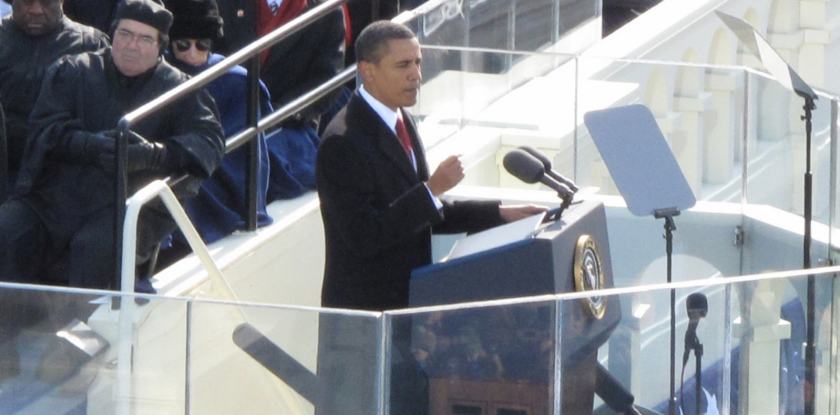
B.O. by Tullycast
Kool Kid Sanjay Gupta Annoyed by That Guy Michael Moore and His Annoying Facts
Cabinet, Douchebaggery, Gupta, Moore, Obama, Sicko, Surgeon GeneralAl Gore Might Get The Last Laugh, Douchebags
Al Gore, Barack Obama, Obama's People, Politics
WASHINGTON (CNN) — Former Vice President Al Gore is set to meet with President-elect Barack Obama and Vice President-elect Joe Biden Tuesday, leading to speculation Obama is eyeing Gore for a slot in his administration.
According to the Obama transition office, the meeting will focus on issues relating to energy and climate change, and how the new administration’s environmental policies can spur job creation.
Democratic officials have said Obama is not looking to tap Gore for a Cabinet-level post or any other position in the administration.
But a Gore appointment would almost certainly be greeted with celebration from members of the party’s liberal wing, many of whom are still angry he lost the White House in 2000 despite winning the popular vote.
Gore has also rocketed to stardom in the years since his failed presidential bid, winning a Nobel Peace Prize last year for his work to raise awareness on the dangers of global warming. The former vice president’s documentary on climate change, “An Inconvenient Truth,” also won two Oscars in 2007.
But Gore, who has made millions in the private sector since his days at the White House, has suggested he has little interest in returning to government.
A spokesman for Gore flatly said last week the former vice president has no interest in serving the Obama administration.
Nonetheless, Gore’s high profile visit to Chicago, Illinois, to meet Obama and Biden is raising eyebrows, even among some of Gore’s close advisers.
“The Gore trip is for more than just a chat,” a close friend of Gore told CNN’s John King. “He wouldn’t burn that much carbon flying to Chicago just to talk.”
But Obama, who eagerly courted Gore’s endorsement during the heated presidential race, has long said he would welcome the Democratic elder into his White House, at least as an informal adviser.
“I will make a commitment that Al Gore will be at the table and play a central part in us figuring out how we solve this [climate change] problem,” Obama said in April.
While this is the first time Gore is set to sit down with the president-elect since Election Day, the two regularly speak, aides have said. The meeting comes as the Obama transition team turns its focus toward naming its energy secretary and Environmental Protection Agency administrator — two key posts that remain vacant.
Gore notably sat on the sidelines during the prolonged Democratic primary process, refusing to endorse a candidate until the outcome became clear — a move viewed by some as a snub to Sen. Hillary Clinton who was engaged in a closely fought race with Obama at the time.
The former vice president made his debut on the campaign trail days after Clinton formally conceded the race, hailing Obama as a leader able to transcend Washington’s poisonous partisanship.
“For America to lead the world through the dangers we’re facing, to seize the opportunities before us, we’ve got to have new leadership,” he said then. “Not only a new president, but new policies. Not only a new head of state, but a new vision for America’s future.”
[Must See] Don Imus Calls Chris Matthews "Gutless" About Autism With RFK Jr.
Autism, Barack Obama, Big Pharma, Don Imus, Mercury Poisoning, Pharmaceutical Companies, Rahm Emmanuel, Robert F. Kennedy, ThimerosalPart Two
TULLYCAST ALWAYS DELIVERS


Lobbyists Jonesing U.S. Treasury For Helping Of Sweet Bailout Pie
Barack Obama, community banks, Congress, Henry Paulson Jr, Lobbyists, Treasury Department, U.S. Treasury

IHT DOT COM
DEELICIOUS!!
Lobbyists swarm the U.S. Treasury for a helping of bailout pie
Wednesday, November 12, 2008
WASHINGTON: When the U.S. government said it would spend $700 billion to rescue the American financial industry, it seemed to be an ocean of money. But after one of the biggest lobbying free-for-alls in memory, it suddenly looks like a dwindling pool.
Many new supplicants are lining up for an infusion of capital as billions of dollars are channeled to other beneficiaries like the American International Group, and possibly soon American Express.
Of the initial $350 billion that Congress freed up, out of the $700 billion in bailout money contained in the law that passed last month, the Treasury Department has committed all but $60 billion. The shrinking pie and the growing uncertainty over who qualifies has thrown Washington’s legal and lobbying establishment into a mad scramble.
The Treasury Department is under siege by an army of hired guns for banks, savings and loan associations and insurers as well as for improbable candidates like a Hispanic business group representing plumbing and home-heating specialists. That last group wants the Treasury to hire its members as contractors to take care of houses that the government may end up owning through buying distressed mortgages.
The lobbying frenzy worries many traditional bankers the original targets of the rescue program who fear that it could blur, or even undermine, the government’s effort to stabilize the financial system after its worst crisis since the 1930s.
Among the most rattled are community bankers.
“By the time they get to the community banks, there may not be enough money left,” said Edward Yingling, the president of the American Bankers Association. “The marketplace is looking at this so rapidly that those who have the money first may have some advantage.”
Adding to the frenzy is the possibility that the next Congress and White House could change the rules further. President-elect Barack Obama has added his voice by proposing that the struggling automakers get U.S. government aid, which could mean giving them access to the fund something the Treasury secretary, Henry Paulson Jr., has resisted.
Despite the line outside its door, the Treasury is not worried about running out of money, according to a senior official. It has no plans to ask lawmakers to free the second $350 billion of the rescue package during the special session of Congress that could begin next week.
That could limit the pot of money available, at least until the next Congress is sworn in next January. Meanwhile, the list of candidates for a piece of the bailout keeps growing.
On Monday, the Treasury announced it would inject an additional $40 billion into AIG, amid signs that the government’s original bailout plan was putting too much strain on the company. American Express won approval Monday to transform itself into a bank holding company, making the giant marketer of credit cards eligible for an infusion.
Then there is the National Marine Manufacturers Association, which is asking whether boat financing companies might be eligible for aid to ensure that dealers have access to credit to stock their showrooms with boats costs have gone up as the credit markets have calcified. Using much the same rationale, the National Automobile Dealers Association is pleading that car dealers get consideration, too.
“Unfortunately, I don’t have a lot of good news for them individually,” said Jeb Mason, who as the Treasury’s liaison to the business community is the first port-of-call for lobbyists. “The government shouldn’t be in the business of picking winners and losers among industries.”
Mason, 32, a lanky Texan in black cowboy boots who once worked in the White House for Karl Rove, shook his head over the dozens of phone calls and e-mail messages he gets every week. “I was telling a friend, ‘this must have been how the Politburo felt,’ ” he said.
The congressional bailout law gave the Treasury broad authority to decide how to spend the $700 billion. Under the terms of the $250 billion capital purchase program announced last month, cash infusions are available to “qualifying U.S. banks, savings associations, and certain bank and savings and loan holding companies, engaged only in financial activities.”
That definition has grown to include private banks and insurers like Allstate and MetLife, which own savings and loans. It may also encompass industrial lenders like GE Capital and GMAC, the financing arm of General Motors, provided they win approval to reclassify themselves as a bank or savings and loan holding company.
The Treasury set a deadline of Friday for institutions to apply for capital investments, which has meant a grueling few weeks for already overworked officials like Mason.
“Jeb is like the customer service agent at Verizon when the power lines go down,” said Robert Nichols, president of the Financial Services Forum, a trade group for big institutions like Citigroup, Fidelity and Allstate Insurance, some of which have received U.S. government money.
The influential independent and community bankers group, which represents smaller institutions, won an extension of the deadline for privately held banks while the Treasury considers a way for them to participate in its program as well.
The Treasury, several industry executives said, wants to avoid too strict a definition of eligible institutions, in case the Obama administration decides it wants to tweak the requirements for an investment, or even overhaul the rescue program.
Several lobbyists said the Treasury’s model contract acknowledges the possibility that Congress could impose new requirements on recipients of the money, and some Democratic lawmakers have talked about further restricting executive compensation, shareholder dividends or other uses of the money as part of the deal.
“We are like a tenant signing a lease contract with the landlord where the landlord can come back and change the terms after the fact, and in fact we are going to have a new landlord in a couple of weeks,” said Yingling of the bankers association.
The first wave of lobbying came in early October when Paulson announced the plan to buy troubled mortgage-related assets from banks. The Treasury said it would hire several outside firms to handle the purchases, and would dispense with U.S. contracting rules.
Law and lobbying firms that specialize in government contracting fired off dispatches to clients and potential clients explaining opportunities in the new program. Capitalizing on the surge of interest, several large firms, including Patton Boggs; Akin Gump; P & L Gates; Fried, Frank, Harris, Shriver & Jacobson; and Alston & Bird, have set up financial rescue shops.
Alston & Bird, for example, highlights its two biggest stars former Senator Bob Dole and former Senator Tom Daschle. Dole “knows Hank Paulson very well” and has been “very helpful” with the financial rescue groups, said David Brown, an Alston & Bird partner involved in its effort.
“And of course, Senator Daschle is national co-chair of the Obama campaign,” Brown added, noting that because Daschle is not a registered lobbyist, his involvement is limited to “high level advisory and strategic advice.”
Ambac Financial Group, in the relatively obscure bond insurance business, never needed lobbyists before, said Diane Adams, a managing director. But its clients persuaded the company to hire two Washington veterans Edward Kutler and John O’Rourke who helped arrange a recent meeting with Phillip Swagel, an assistant Treasury secretary. “We haven’t really asked for much in the past,” Adams said.
Initially, the banks reacted coolly to the prospect of the government taking direct stakes in them. They worried about restrictions on executive pay, and whether there would be a stigma attached. In conference calls with industry groups, Mason helped explain the Treasury proposal a job he and his colleagues did well, judging by the change of heart among banks.
“The biggest surprise was how quickly it went from ‘I don’t need this,’ to ‘How do I get in?’ ” said Michele Davis, the head of public affairs at the Treasury, who is Mason’s boss.
Underscoring the many ways companies can take part in the rescue fund, the Hispanic Chamber of Commerce and other Hispanic business groups met with Paulson to push for minority contracts in asset management, legal, accounting, mortgage services and maintenance jobs, like plumbing and masonry.
“They are going to need a lot of folks in minority communities that are able to service their own communities,” said David Ferreira, head of government relations for the Hispanic Chamber of Commerce.
As the automakers have pushed for U.S. government help, the trade groups for car dealerships and even boat dealerships are pressing their own cases. They argue that showrooms are feeling a squeeze between higher borrowing costs to finance their inventory and slowing consumer sales to move it out the door.
“We have been encouraged by reports that Secretary Paulson is looking to broaden the program,” said Mathew Dunn, head of government relations for the National Marine Manufacturers Association.
On Friday, the automobile dealers sent Paulson a letter urging him to keep them in mind.
“A well-capitalized, financially sound dealer network is essential to the success of every automobile manufacturer,” wrote Annette Sykora, a car dealer in Slaton, Texas, and the chairwoman of the National Automobile Dealers Association. “Any government intervention should include provisions to preserve the viability of dealers.”
Some , Mason said, had called him even though they did not have any clients looking to get into the program or worried about its restrictions. They were merely seeking intelligence on which industries would be deemed eligible for assistance. He suspects they were representing hedge funds that wanted to trade on that information.
Election 2008's Best Douchebag Moment | That Baldwin Brother Challenges Obama To A Fight
Barack Obama, Douche-Chills, Election 2008, GOP, Joe Biden, John McCain, Neocon, Republicans, Sarah Palin
Stephen Baldwin, who has threatened to move to Canada if Barack Obama is elected, has now challenged the candidate to box for charity. “I’d like to knock some good sense into Barack,” Alec’s right-wing bro said at the Printing House Gym in the Village. “I wouldn’t hurt him. But if he wins the election, he’ll hurt me. He’s a cultural terrorist.” This from the man who enriched us all with “Sex Monster” and “Snakeman.”
 The New York Herald Sun