
New Rules From Bill Maher For October 24, 2008
Stories


NEW YORK (AP) — Federal prosecutors and New York’s attorney general said Monday they had taken the unusual step of joining forces to probe the multitrillion-dollar credit-default swap market, an unregulated area of finance blamed for helping to fuel the credit crisis.
The offices of U.S. Attorney Michael Garcia and New York Attorney General Andrew Cuomo acknowledged the unique arrangement in separate statements.
“The attorney general believes that these unprecedented times call for unprecedented levels of effort and cooperation to ensure that our markets are stable, free of fraud and purged of corruption,” Cuomo spokesman Alex Detrick said.
He said the joint probe was “aimed at restoring and promoting confidence and stability in the market” and avoiding multiple competing investigations.
Yusill Scribner, a Garcia spokeswoman, said prosecutors wanted to determine if federal laws were violated.
The announcements came after The New York Times reported on the investigation in its Monday editions.
A credit-default swap is a contract that offers insurance for lenders worried about a borrower’s ability to repay loans. Banks have used credit-default swaps to cover the risk of default in mortgage and other debt securities. Many credit-default swaps collapsed in value along with the mortgage-backed securities they were meant to protect.
Fear of what would happen if the swaps fully unraveled prompted the government in September to lend $85 billion to insurer American International Group Inc.
An official in Cuomo’s office who asked not to be indentified by name because he was not authorized to speak about the matter publicly said the joint investigation began about three weeks ago after a meeting between Garcia and Cuomo.
As part of the arrangement, some investigators from Cuomo’s office will become special assistant U.S. attorneys, a designation that will allow them to present evidence to a grand jury should the investigation reach that stage.
“We’re not at that stage yet,” the official said, acknowledging that criminal charges may never result. “At this point, we have been receiving documents and we are sharing them with the U.S. attorney’s office and are meeting on a regular basis.”
The probe will focus in part on finding out whether the credit-default market, which is estimated to be worth tens of trillions of dollars, was manipulated, the official said.
“Our concern is that areas of misconduct that we used to see in the major markets moved to the credit default market because of that market’s opaqueness and lack of regulatory oversight,” the official said.
The investigation will focus on all of the large financial firms including banks and hedge funds that made use of the credit-default swaps.
Although the default-swap market operated primarily in New York and London, banks in Switzerland and elsewhere were also likely to be part of the probe, the official said.
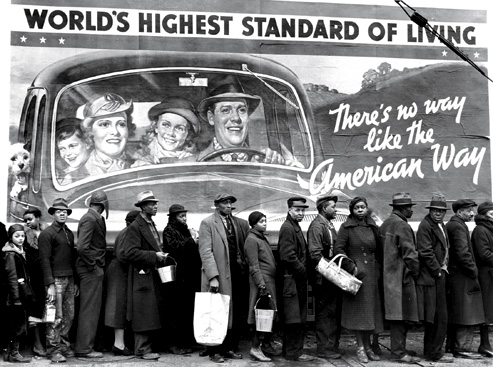
Describing how ideology, special-interest pressure, populist politics, and sheer incompetence have left the U.S. economy on life support, the author puts forth a clear, commonsense plan to reverse the Bush-era follies and regain America’s economic sanity.
When the American economy enters a downturn, you often hear the experts debating whether it is likely to be V-shaped (short and sharp) or U-shaped (longer but milder). Today, the American economy may be entering a downturn that is best described as L-shaped. It is in a very low place indeed, and likely to remain there for some time to come.
Virtually all the indicators look grim. Inflation is running at an annual rate of nearly 6 percent, its highest level in 17 years. Unemployment stands at 6 percent; there has been no net job growth in the private sector for almost a year. Housing prices have fallen faster than at any time in memory—in Florida and California, by 30 percent or more. Banks are reporting record losses, only months after their executives walked off with record bonuses as their reward. President Bush inherited a $128 billion budget surplus from Bill Clinton; this year the federal government announced the second-largest budget deficit ever reported. During the eight years of the Bush administration, the national debt has increased by more than 65 percent, to nearly $10 trillion (to which the debts of Freddie Mac and Fannie Mae should now be added, according to the Congressional Budget Office). Meanwhile, we are saddled with the cost of two wars. The price tag for the one in Iraq alone will, by my estimate, ultimately exceed $3 trillion.
In April, Sen. John McCain (R-AZ) claimed that “you could make an argument that there’s been great progress economically” since President Bush took office. He then revised that argument in August, releasing an ad that declared “we’re worse off than we were four years ago.”
Now McCain is revising his timeline again. In an interview with right-wing radio host Michael Medved this past Friday, McCain agreed with Medved’s assertion that “the economy was really progressing pretty well under most of President Bush’s term” before Democrats took control of Congress in January 2007:
MEDVED: Let me ask you one other thing senator, which again, I think is on the minds of lots and lots of our listeners. The economy was really progressing pretty well under most of President Bush’s term. Then the Democrats took over in Congress in 2007 and now we’re in this horrible crisis. Coincidence?
MCCAIN: No, it isn’t.
McCain went on to place the blame for the financial crisis on Fannie Mae and Freddie Mac, claiming that Democrats “were willing co-conspirators with this game of three-card monty that went on and then it collapsed.” Listen to it here:
Medved and McCain’s claim that “the economy was progressing really well” before Democrats took control of Congress is laughable. As Center for American Progress Senior Fellow Christian Weller’s economic snapshot from December 2006 shows, the economy was already in rough shape:
Famly Debt Was Rising: By September 2006, household debt rose to an unprecedented 130.9% of disposable income. From March 2001 to September 2006, personal debt relative to disposable income grew each quarter by 1.6 percentage points—almost five times faster than in the 1990s. In the second quarter of 2006, families had to spend 14.4% of their disposable income to service their debt—the largest share since 1980.
The Housing Market Had Slowed: The supply of homes for sale each month averaged 6.9 months of supply for the six months ending in October 2006—the largest supply since 1991.
Savings Had Plummeted: The personal saving rate of -1.3% in the third quarter of 2006 marked the sixth quarter in a row with a negative personal saving rate.
As for McCain’s claim that Fannie Mae and Freddie Mac are the central cause of the current economic crisis, McClatchy thoroughly debunked it over the weekend, writing that “private sector loans, not Fannie or Freddie, triggered crisis.” McClatchy notes that the “weakening of underwriting standards for U.S. subprime mortgages” began in late 2004 while Republicans controlled both the House and the Senate.
Transcript:
MEDVED: Let me ask you one other thing senator, which again, I think is on the minds of lots and lots of our listeners. The economy was really progressing pretty well under most of President Bush’s term. Then the Democrats took over in Congress in 2007 and now we’re in this horrible crisis. Coincidence?
MCCAIN: No, it isn’t. Although, as you know, and you and I have had this discussion in the past, the Bush administration let these spending bills be signed and him not doing what Ronald Reagan used to do and that is veto them, make them famous, and fight against it. But also, more interestingly, 2006, there was a group of us, as a result of an investigation, and I think it was the Inspector General, that said, look, this Fannie Mae and Freddie Mac are completely out of control, if we don’t do something about it, we’re going to have an incredible financial crisis. And we sent a letter about it. We introduced legislation to rein them in and Senator Obama at the time said that these subprime loans were, quote, “a good idea.” And the Democrats in Congress were specifically talking about, the ones who got all the money, were defending, defending, and saying we can’t re-regulations on Fannie and Freddie and were actually encouraging, as you know, people to borrow money that they couldn’t pay back. A fundamental of economics, so they were willing co-conspirators with this game of three-card monty that went on and then it collapsed, you know.

 The New York Herald Sun