President-Elect Obama's Nuclear Decision

Barack Obama, Nuclear, Politics

Nuclear weapons decision awaits Obama

APTOPIX Democratic ConventionOAK RIDGE, Tenn. — One of the most important national security decisions facing President-elect Barack Obama will unfold in this remote valley of aging factories, where workers enriched uranium for the first atomic bomb of World War II.

The site is a linchpin in a hotly contested Bush administration plan to build the first new U.S. warheads since the end of the Cold War. Following Congress’ demand that decisions on new warheads be deferred until an assessment of U.S. nuclear weapons needs is finished next year, the issue is set to come to a head early in Obama’s presidency.

The outcome will determine whether Oak Ridge focuses on maintaining existing warheads and storing uranium from weapons pulled out of a shrinking arsenal — or whether it becomes a cornerstone in a new production enterprise. The implications go far beyond Oak Ridge and the seven other research and manufacturing compounds nationwide that make up the U.S. nuclear weapons production complex.

“This is not just a decision about the future of U.S. nuclear weapons, but about how the United States will address the challenges of … nuclear terrorism, nuclear proliferation and our entire 21st-century nuclear strategy,” says Clark Murdock, a senior adviser at the Center for Strategic and International Studies.

“These challenges have been maturing for some time, and the Obama administration is going to have to deal with them,” adds Murdock, a former staffer for the Pentagon and Congress.

During the campaign, Obama said that he seeks “a world without nuclear weapons,” but he also said that the nation must “always maintain a strong (nuclear) deterrent as long as nuclear weapons exist.”

Among other things, Obama has promised to strengthen non-proliferation programs, reach disarmament deals with Russia and bolster sanctions against North Korea, Iran and other states with rogue nuclear programs. He has vowed to seek a verifiable global ban on production of nuclear weapons material — and to “stop the development of new nuclear weapons.”

Obama’s statements offer no definitive stance on the Bush plan to build a new breed of warheads. His transition office declined to elaborate further.

Those on both sides of the issue say his comments leave room for him to support their positions.

Debating deterrence

The Bush plan focuses on producing a “Reliable Replacement Warhead,” or RRW, which the administration touts as a better, more durable substitute for warheads in the U.S. stockpile. The new warhead would have features to ensure it could not be detonated if stolen by terrorists or other foes.

The warhead “is about the future credibility of our nuclear deterrent,” Defense Secretary Robert Gates said in an October speech.

Great Britain, France, Russia and China are modernizing their nuclear arsenals, Gates said, and the United States must follow suit. As a signer of the nuclear test ban treaty, the United States cannot detonate its nuclear weapons to see whether age has weakened them. That means, he said, that sharp cuts in U.S. warheads required by disarmament treaties raise questions about the power of remaining weapons.

“There is no way we can maintain a credible deterrent and reduce the number of weapons in our stockpile without either resorting to testing or pursuing a modernization program,” Gates said.

Gates’ comments, made before he agreed to stay on as Defense secretary for Obama, don’t necessarily reflect the new administration’s views.

Congress is skeptical. After providing money previously for warhead research, it refused this year to pay for further development. Lawmakers cited recent studies that found no immediate threat that the aging of warheads and other critical weapons components has significantly eroded their capabilities.

Members of both parties said it would be wrong to embark on a major, multibillion-dollar program to produce a new warhead without determining what sort of nuclear weapons the nation will need in future years, how many will be required and how they will be used. So Congress required the independent review that’s due next year.

“We have to make certain that our nuclear deterrent is reliable … but the decision (on new production) has to be made in the context of all the national security issues we face, including non-proliferation,” says Sen. Byron Dorgan, D-N.D., head of a Senate appropriations subcommittee that controls nuclear weapons spending.

Building the warhead could affect Obama’s goal of getting other nations to curb nuclear programs, he says. “It’s our responsibility to be a leader in trying to, first, stop the spread of nuclear weapons, and second, in reducing the number of nuclear weapons on the planet.”

Indeed, any move on warhead production will come in the context of several other big, international decisions Obama will face on nuclear weapons policy during his first term. Among them: whether to extend or renegotiate the Strategic Arms Reduction Treaty with Russia, which expires at the end of 2009, and whether to push for ratification of the Comprehensive Nuclear Test Ban Treaty, which the United States complies with voluntarily.

Obama’s challenge

Obama has signaled he will give great weight to the implications that resuming warhead production might have on his non-proliferation agenda.

In an article in the July/August issue of Foreign Affairs, then-candidate Obama wrote of “de-emphasizing” the role of nuclear weapons worldwide and said “America must not rush to produce a new generation of nuclear warheads.” More recently, he chose former Georgia senator Sam Nunn, an ardent advocate of reducing global nuclear weapons inventories, to advise his transition team.

The question of whether to adopt the Bush administration’s plans “will be one of the most momentous (nuclear policy) decisions since the end of the Cold War … and Obama has spoken in support of moving toward a nuclear weapons-free world,” says Susan Gordon, president of the Alliance for Nuclear Accountability, a coalition of nuclear watchdog groups.

The new warhead has more capabilities than current warheads, she adds, and would “move us further down this road of a world of nuclear haves and have-nots.”

Advocates of the new warhead say it can help Obama’s agenda to prevent the spread of nuclear weapons.

“This isn’t about building new weapons — exotic bunker busters or suitcase bombs — but reliable, more secure and less costly weapons,” says Sen. Pete Domenici, R-N.M. The warhead “would allow deeper cuts in our nuclear stockpile” because remaining weapons would be more dependable.

“If you believe nuclear weapons are still relevant, RRW is a good thing. If you believe they should go away, it’s a great thing,” says Robert Smolen, deputy administrator of the National Nuclear Security Administration, which runs the weapons complex.

Some lawmakers who will review any decision Obama makes aren’t ready to back that argument.

“My fear is, for all our talk and our actions (on non-proliferation), the international perception will be that we simply want to proceed with a new weapon,” says Rep. Pete Visclosky, D-Ind., who chairs a House panel that oversees the weapons complex.

Obama’s challenge is working with Congress to set a weapons policy that is consistent with U.S. security needs and broader goals of limiting nuclear weapons, he adds. “It’s not just a burden, it’s a fundamental opportunity.”

Al Gore Might Get The Last Laugh, Douchebags

Al Gore, Barack Obama, Obama's People, Politics
By Alexander Mooney
CNN

goreWASHINGTON (CNN) — Former Vice President Al Gore is set to meet with President-elect Barack Obama and Vice President-elect Joe Biden Tuesday, leading to speculation Obama is eyeing Gore for a slot in his administration.

According to the Obama transition office, the meeting will focus on issues relating to energy and climate change, and how the new administration’s environmental policies can spur job creation.

Democratic officials have said Obama is not looking to tap Gore for a Cabinet-level post or any other position in the administration.

But a Gore appointment would almost certainly be greeted with celebration from members of the party’s liberal wing, many of whom are still angry he lost the White House in 2000 despite winning the popular vote.

Gore has also rocketed to stardom in the years since his failed presidential bid, winning a Nobel Peace Prize last year for his work to raise awareness on the dangers of global warming. The former vice president’s documentary on climate change, “An Inconvenient Truth,” also won two Oscars in 2007.

But Gore, who has made millions in the private sector since his days at the White House, has suggested he has little interest in returning to government.

A spokesman for Gore flatly said last week the former vice president has no interest in serving the Obama administration.

Nonetheless, Gore’s high profile visit to Chicago, Illinois, to meet Obama and Biden is raising eyebrows, even among some of Gore’s close advisers.

“The Gore trip is for more than just a chat,” a close friend of Gore told CNN’s John King. “He wouldn’t burn that much carbon flying to Chicago just to talk.”

But Obama, who eagerly courted Gore’s endorsement during the heated presidential race, has long said he would welcome the Democratic elder into his White House, at least as an informal adviser.

“I will make a commitment that Al Gore will be at the table and play a central part in us figuring out how we solve this [climate change] problem,” Obama said in April.

While this is the first time Gore is set to sit down with the president-elect since Election Day, the two regularly speak, aides have said. The meeting comes as the Obama transition team turns its focus toward naming its energy secretary and Environmental Protection Agency administrator — two key posts that remain vacant.

Gore notably sat on the sidelines during the prolonged Democratic primary process, refusing to endorse a candidate until the outcome became clear — a move viewed by some as a snub to Sen. Hillary Clinton who was engaged in a closely fought race with Obama at the time.

The former vice president made his debut on the campaign trail days after Clinton formally conceded the race, hailing Obama as a leader able to transcend Washington’s poisonous partisanship.

“For America to lead the world through the dangers we’re facing, to seize the opportunities before us, we’ve got to have new leadership,” he said then. “Not only a new president, but new policies. Not only a new head of state, but a new vision for America’s future.”

[Must See] Don Imus Calls Chris Matthews "Gutless" About Autism With RFK Jr.

Autism, Barack Obama, Big Pharma, Don Imus, Mercury Poisoning, Pharmaceutical Companies, Rahm Emmanuel, Robert F. Kennedy, Thimerosal

Part Twomeet_linus_big

TULLYCAST ALWAYS DELIVERS

TULLYCAST ALWAYS DELIVERS

Lobbyists Jonesing U.S. Treasury For Helping Of Sweet Bailout Pie

Barack Obama, community banks, Congress, Henry Paulson Jr, Lobbyists, Treasury Department, U.S. Treasury

International Herald Tribune

12lobby550

IHT DOT COM

DEELICIOUS!!

Lobbyists swarm the U.S. Treasury for a helping of bailout pie

Wednesday, November 12, 2008

WASHINGTON: When the U.S. government said it would spend $700 billion to rescue the American financial industry, it seemed to be an ocean of money. But after one of the biggest lobbying free-for-alls in memory, it suddenly looks like a dwindling pool.

Many new supplicants are lining up for an infusion of capital as billions of dollars are channeled to other beneficiaries like the American International Group, and possibly soon American Express.

Of the initial $350 billion that Congress freed up, out of the $700 billion in bailout money contained in the law that passed last month, the Treasury Department has committed all but $60 billion. The shrinking pie — and the growing uncertainty over who qualifies — has thrown Washington’s legal and lobbying establishment into a mad scramble.

The Treasury Department is under siege by an army of hired guns for banks, savings and loan associations and insurers — as well as for improbable candidates like a Hispanic business group representing plumbing and home-heating specialists. That last group wants the Treasury to hire its members as contractors to take care of houses that the government may end up owning through buying distressed mortgages.

The lobbying frenzy worries many traditional bankers — the original targets of the rescue program — who fear that it could blur, or even undermine, the government’s effort to stabilize the financial system after its worst crisis since the 1930s.

Among the most rattled are community bankers.

“By the time they get to the community banks, there may not be enough money left,” said Edward Yingling, the president of the American Bankers Association. “The marketplace is looking at this so rapidly that those who have the money first may have some advantage.”

Adding to the frenzy is the possibility that the next Congress and White House could change the rules further. President-elect Barack Obama has added his voice by proposing that the struggling automakers get U.S. government aid, which could mean giving them access to the fund — something the Treasury secretary, Henry Paulson Jr., has resisted.

Despite the line outside its door, the Treasury is not worried about running out of money, according to a senior official. It has no plans to ask lawmakers to free the second $350 billion of the rescue package during the special session of Congress that could begin next week.

That could limit the pot of money available, at least until the next Congress is sworn in next January. Meanwhile, the list of candidates for a piece of the bailout keeps growing.

On Monday, the Treasury announced it would inject an additional $40 billion into AIG, amid signs that the government’s original bailout plan was putting too much strain on the company. American Express won approval Monday to transform itself into a bank holding company, making the giant marketer of credit cards eligible for an infusion.

Then there is the National Marine Manufacturers Association, which is asking whether boat financing companies might be eligible for aid to ensure that dealers have access to credit to stock their showrooms with boats — costs have gone up as the credit markets have calcified. Using much the same rationale, the National Automobile Dealers Association is pleading that car dealers get consideration, too.

“Unfortunately, I don’t have a lot of good news for them individually,” said Jeb Mason, who as the Treasury’s liaison to the business community is the first port-of-call for lobbyists. “The government shouldn’t be in the business of picking winners and losers among industries.”

Mason, 32, a lanky Texan in black cowboy boots who once worked in the White House for Karl Rove, shook his head over the dozens of phone calls and e-mail messages he gets every week. “I was telling a friend, ‘this must have been how the Politburo felt,’ ” he said.

The congressional bailout law gave the Treasury broad authority to decide how to spend the $700 billion. Under the terms of the $250 billion capital purchase program announced last month, cash infusions are available to “qualifying U.S. banks, savings associations, and certain bank and savings and loan holding companies, engaged only in financial activities.”

That definition has grown to include private banks and insurers like Allstate and MetLife, which own savings and loans. It may also encompass industrial lenders like GE Capital and GMAC, the financing arm of General Motors, provided they win approval to reclassify themselves as a bank or savings and loan holding company.

The Treasury set a deadline of Friday for institutions to apply for capital investments, which has meant a grueling few weeks for already overworked officials like Mason.

“Jeb is like the customer service agent at Verizon when the power lines go down,” said Robert Nichols, president of the Financial Services Forum, a trade group for big institutions like Citigroup, Fidelity and Allstate Insurance, some of which have received U.S. government money.

The influential independent and community bankers group, which represents smaller institutions, won an extension of the deadline for privately held banks while the Treasury considers a way for them to participate in its program as well.

The Treasury, several industry executives said, wants to avoid too strict a definition of eligible institutions, in case the Obama administration decides it wants to tweak the requirements for an investment, or even overhaul the rescue program.

Several lobbyists said the Treasury’s model contract acknowledges the possibility that Congress could impose new requirements on recipients of the money, and some Democratic lawmakers have talked about further restricting executive compensation, shareholder dividends or other uses of the money as part of the deal.

“We are like a tenant signing a lease contract with the landlord where the landlord can come back and change the terms after the fact, and in fact we are going to have a new landlord in a couple of weeks,” said Yingling of the bankers association.

The first wave of lobbying came in early October when Paulson announced the plan to buy troubled mortgage-related assets from banks. The Treasury said it would hire several outside firms to handle the purchases, and would dispense with U.S. contracting rules.

Law and lobbying firms that specialize in government contracting fired off dispatches to clients and potential clients explaining opportunities in the new program. Capitalizing on the surge of interest, several large firms, including Patton Boggs; Akin Gump; P & L Gates; Fried, Frank, Harris, Shriver & Jacobson; and Alston & Bird, have set up financial rescue shops.

Alston & Bird, for example, highlights its two biggest stars — former Senator Bob Dole and former Senator Tom Daschle. Dole “knows Hank Paulson very well” and has been “very helpful” with the financial rescue groups, said David Brown, an Alston & Bird partner involved in its effort.

“And of course, Senator Daschle is national co-chair of the Obama campaign,” Brown added, noting that because Daschle is not a registered lobbyist, his involvement is limited to “high level advisory and strategic advice.”

Ambac Financial Group, in the relatively obscure bond insurance business, never needed lobbyists before, said Diane Adams, a managing director. But its clients persuaded the company to hire two Washington veterans — Edward Kutler and John O’Rourke — who helped arrange a recent meeting with Phillip Swagel, an assistant Treasury secretary. “We haven’t really asked for much in the past,” Adams said.

Initially, the banks reacted coolly to the prospect of the government taking direct stakes in them. They worried about restrictions on executive pay, and whether there would be a stigma attached. In conference calls with industry groups, Mason helped explain the Treasury proposal — a job he and his colleagues did well, judging by the change of heart among banks.

“The biggest surprise was how quickly it went from ‘I don’t need this,’ to ‘How do I get in?’ ” said Michele Davis, the head of public affairs at the Treasury, who is Mason’s boss.

Underscoring the many ways companies can take part in the rescue fund, the Hispanic Chamber of Commerce and other Hispanic business groups met with Paulson to push for minority contracts in asset management, legal, accounting, mortgage services and maintenance jobs, like plumbing and masonry.

“They are going to need a lot of folks in minority communities that are able to service their own communities,” said David Ferreira, head of government relations for the Hispanic Chamber of Commerce.

As the automakers have pushed for U.S. government help, the trade groups for car dealerships and even boat dealerships are pressing their own cases. They argue that showrooms are feeling a squeeze between higher borrowing costs to finance their inventory and slowing consumer sales to move it out the door.

“We have been encouraged by reports that Secretary Paulson is looking to broaden the program,” said Mathew Dunn, head of government relations for the National Marine Manufacturers Association.

On Friday, the automobile dealers sent Paulson a letter urging him to keep them in mind.

“A well-capitalized, financially sound dealer network is essential to the success of every automobile manufacturer,” wrote Annette Sykora, a car dealer in Slaton, Texas, and the chairwoman of the National Automobile Dealers Association. “Any government intervention should include provisions to preserve the viability of dealers.”

Some , Mason said, had called him even though they did not have any clients looking to get into the program or worried about its restrictions. They were merely seeking intelligence on which industries would be deemed eligible for assistance. He suspects they were representing hedge funds that wanted to trade on that information.

Barack Obama's Grandmother Has Died

401k, bailout, Banks, Barack Obama, Bin Laden, Bozell, Buffett, Chevy Chase Club, CIA, Colin Powell, Condi Rice, Credit, Credit Default Swaps, David Iglesias, Dow Jones, Duke Zeiberts, Equity Market, FBI, Finance, FISA, Fournier, George Tenet, Gonzalez, Grover Nordquist, Hedge Funds, Iran, Joe Klein, Justice Department, K Street, Karl Rove, Katrina, Lee Atwater, Lehman. AIG, Lobbyists, Money Market, NSA, Retail Investors, Saddam, Stock Market, The Palm, The Plank, Tullycast, Wall Street, Washington D.C., Watergate, Youtube

Last update: November 3, 2008 – 4:08 PM

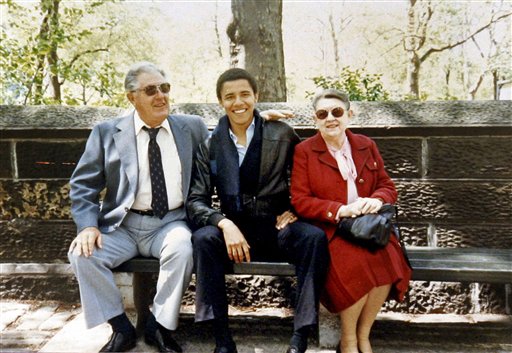
HONOLULU – Barack Obama’s grandmother, whose personality and bearing shaped much of the life of the Democratic presidential contender, has died, Obama announced Monday, 1 day before the election. Madelyn Payne Dunham was 86. Obama announced the news from the campaign trail in Charlotte, N.C. The joint statement with his sister Maya Soetoro-Ng said Dunham died peacefully late Sunday night after a battle with cancer.

They said: “She was the cornerstone of our family, and a woman of extraordinary accomplishment, strength, and humility. She was the person who encouraged and allowed us to take chances.”

Obama learned of her death Monday morning while he was campaigning in Jacksonville, Fla. He planned to go ahead with campaign appearances.

The family said a private ceremony would be held later.

Last month, Obama took a break from campaigning and flew to Hawaii to be with Dunham as her health declined.

Obama said the decision to go to Hawaii was easy to make, telling CBS that he “got there too late” when his mother died of ovarian cancer in 1995 at 53, and wanted to make sure “that I don’t make the same mistake twice.”

The Kansas-born Dunham and her husband, Stanley, raised their grandson for several years so he could attend school in Honolulu while their daughter and her second husband lived overseas. Her influence on Obama’s manner and the way he viewed the world was substantial, the candidate himself told millions watching him accept his party’s nomination in Denver in August.

“She’s the one who taught me about hard work,” he said. “She’s the one who put off buying a new car or a new dress for herself so that I could have a better life. She poured everything she had into me.”

Obama’s nickname for his grandmother was “Toot,” a version of the Hawaiian word for grandmother, tutu. Many of his speeches describe her working on a bomber assembly line during World War II.

Election 2008's Best Douchebag Moment | That Baldwin Brother Challenges Obama To A Fight

Barack Obama, Douche-Chills, Election 2008, GOP, Joe Biden, John McCain, Neocon, Republicans, Sarah Palin

NEW YORK DAILY NEWS

Stephen Baldwin, who has threatened to move to Canada if Barack Obama is elected, has now challenged the candidate to box for charity. “I’d like to knock some good sense into Barack,” Alec’s right-wing bro said at the Printing House Gym in the Village. “I wouldn’t hurt him. But if he wins the election, he’ll hurt me. He’s a cultural terrorist.” This from the man who enriched us all with “Sex Monster” and “Snakeman.”


Norman Mailer on Iraq | Part Two

9/11, Barack Obama, Bin Laden, Election 2008, Mainstream Media, Politics, Propaganda, Tullycast, Voting, War

Norman Mailer on Iraq

9/11, Barack Obama, Bin Laden, Charlie Rose, Dick Cheney, Election 2008, G.W. Bush, Iraq, Norman Mailer, Politics, Tullycast, Wall Street