Bush

Sarah Palin:: An Offensive Choice | Real Time W/ Bill Maher
401k, AEI, Al Qaeda, Ashcroft, Bin Laden, Bremer, Britain, Broadcatching, Buffett, Bush, Bush Apologists, California, Children, CIA, Coalition Provisional Authority, Consensus Journalism, Conservatism, Constitution, Corn, Credit, Credit Default Swaps, Debates, Democrats, District Of Corruption, Dow Jones, Equity Market, Evolution, Framing, Freepers, Global Warming, Gonzales, Gootube, Guns, Habeas Corpus, Healthcare, Hedge Funds, Hillary, Immigration, Iran, Iraq, Jeff Gannon, Jeff Guckert, Kerry, Lehman. AIG, Luntz, Media Landscape, Money Market, Moonbats, New York, New York Herald Sun, Obama, Olbermann, Politics, Politics Rundown, Poverty, Republic_Party, Retail Investors, Right-Wing Conspiracy, Rosie, Rumsfeld, Saddam, Shiite, Soldiers, Stock Market, Sunni, Surge, Taxes, Tullycast, Vandenheuvel, veterans, War Criminals, web 2.0, Wingnuttia, Wolfowitz, Youtube
Michael Moore on Maher | We Need A Landslide Tuesday
401k, ABC, ABC News, Abrams, Addington, AEI, Al Qaeda, Ari Fleisher, Ashcroft, bailout, Baker Botts, Banks, Bechtel, Beltway Groupthink, Beltway Journalism, Bin Laden, Blackwater, Bozell, Bremer, Britain, Broadcatching, Brown and Root, Buffett, Bush, Bush Apologists, Byron York, California, Campbell Brown, Carlyle Group, Charlie Gibson, Chevy Chase Club, Children, CIA, Coalition Provisional Authority, Cokie Roberts, Colin Powell, Condi Rice, Consensus Journalism, Conservatism, Constitution, Corn, Credit, Credit Default Swaps, Dan Rather, Dan Senor, Dana Perino, David Brooks, David Iglesias, Debates, Democrats, Dick Cheney, District Of Corruption, Dow Jones, Duke Zeiberts, Equity Market, Evolution, FBI, Feith, Finance, FISA, Fournier, Framing, Freepers, George Stephanopoulos, George Tenet, George W. Bush, George Will, Global Warming, Gonzales, Gonzalez, Gootube, Grey, Grover Nordquist, Guantanamo, Guns, Habeas Corpus, Halliburton, Hannity, Healthcare, Hedge Funds, Hillary, Hume, Immigration, Iran, Iraq, Jeff Gannon, Jeff Guckert, Joe Biden, Joe Klein, John Yoo, Joseph Wilson, Judith Miller, Justice Department, K Street, Karen Hughes, Karl Rove, Katrina, Kellog, Kerry, Kristol, Lee Atwater, Lehman. AIG, Libby, Limbaugh, Lobbyists, Luntz, Malkin, Maria Bartiromo, Mary Mapes, Matalin, Matt Cooper, Matt Drudge, Media Landscape, Medved, Meet The Press, Money Market, Moonbats, New York, New York Herald Sun, New York Times, NSA, O'Reilly, Obama, Olbermann, Patriot Act, Perle, PNAC, Politico, Politics, Politics Rundown, Poverty, Prager, Republic_Party, Retail Investors, Rich Lowry, Rick Sanchez, Right-Wing Conspiracy, Robert Luskin, Robert Novak, Roger Ailes, Rosie, Rumsfeld, Rupert Murdoch, Saddam, Sarah Palin, Scott McClellan, Shiite, Smerconish, Soldiers, Stock Market, Sunni, Surge, Taxes, terrorism, The Palm, The Plank, Tim Russert, Tony snow, Torture, Tullycast, Valerie Plame, Vandenheuvel, veterans, Viveca Novak, Wall Street, War Criminals, Washington D.C., Watergate, web 2.0, William Kristol, Wingnuttia, Wolfowitz, Youtube
New Rules From Bill Maher For October 31, 2008
401k, ABC, ABC News, Abrams, Addington, AEI, Al Qaeda, Ari Fleisher, Ashcroft, bailout, Baker Botts, Banks, Bechtel, Beltway Groupthink, Beltway Journalism, Bin Laden, Blackwater, Bozell, Bremer, Britain, Broadcatching, Brown and Root, Buffett, Bush, Bush Apologists, Byron York, California, Campbell Brown, Carlyle Group, Charlie Gibson, Chevy Chase Club, Children, CIA, Coalition Provisional Authority, Cokie Roberts, Colin Powell, Condi Rice, Consensus Journalism, Conservatism, Constitution, Corn, Credit, Credit Default Swaps, Dan Rather, Dan Senor, Dana Perino, David Brooks, David Iglesias, Debates, Democrats, Dick Cheney, District Of Corruption, Dow Jones, Duke Zeiberts, Equity Market, Evolution, FBI, Feith, Finance, FISA, Fournier, Framing, Freepers, George Stephanopoulos, George Tenet, George W. Bush, George Will, Global Warming, Gonzales, Gonzalez, Gootube, Grey, Grover Nordquist, Guantanamo, Guns, Habeas Corpus, Halliburton, Hannity, Healthcare, Hedge Funds, Hillary, Hume, Immigration, Iran, Iraq, Jeff Gannon, Jeff Guckert, Joe Biden, Joe Klein, John Yoo, Joseph Wilson, Judith Miller, Justice Department, K Street, Karen Hughes, Karl Rove, Katrina, Kellog, Kerry, Kristol, Lee Atwater, Lehman. AIG, Libby, Limbaugh, Lobbyists, Luntz, Malkin, Maria Bartiromo, Mary Mapes, Matalin, Matt Cooper, Matt Drudge, Media Landscape, Medved, Meet The Press, Money Market, Moonbats, New York, New York Herald Sun, New York Times, NSA, O'Reilly, Obama, Olbermann, Patriot Act, Perle, PNAC, Politico, Politics, Politics Rundown, Poverty, Prager, Republic_Party, Retail Investors, Rich Lowry, Rick Sanchez, Right-Wing Conspiracy, Robert Luskin, Robert Novak, Roger Ailes, Rosie, Rumsfeld, Rupert Murdoch, Saddam, Sarah Palin, Scott McClellan, Shiite, Smerconish, Soldiers, Stock Market, Sunni, Surge, Taxes, terrorism, The Palm, The Plank, Tim Russert, Tony snow, Torture, Tullycast, Valerie Plame, Vandenheuvel, veterans, Viveca Novak, Wall Street, War Criminals, Washington D.C., Watergate, web 2.0, William Kristol, Wingnuttia, Wolfowitz, Youtube
Studs Terkel, Dead at 96
Studs TerkelStuds Terkel, writer and radio personality, dies at 96
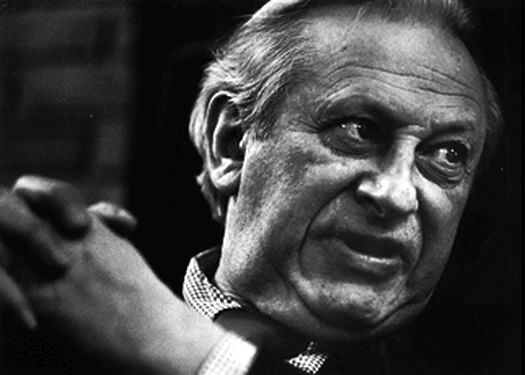
The Chicago fixture used his knack for conversation to capture oral histories on World War II, the Great Depression and more.
By Stephanie Simon
2:54 PM PDT, October 31, 2008
Studs Terkel, who made his name listening to ordinary folks talk about their ordinary lives — and who turned that knack for conversation into a much-honored literary career — died today. He was 96.
Terkel died at his home in Chicago, his son said.
“He lived a long, eventful, satisfying, though sometimes tempestuous, life,” Dan Terkel said. “I think that pretty well sums it up.”
The author of blockbuster oral histories on World War II, the Great Depression, and contemporary attitudes toward work, Terkel roamed the country engaging an astounding cross-section of Americans in tape-recorded chats — about their dreams, their fears, their chewing gum, about racism, courage, dirty floors, the Beatles.
With his loud laugh and raspy voice, plus his inept fumbles with his tape recorder, he set his subjects at ease and tugged from them memories, predictions and simple truths about their everyday existence. Terkel transcribed and edited the interviews, then compiled them into books at once intimate and sweeping, among them “Division Street,” “Hard Times,” “Working,” and “The Good War,” which won the Pulitzer Prize in 1984.
Terkel was also a legendary radio personality, hosting a daily music and interview show on Chicago’s WFMT for 45 years.
He never prepared his questions in advance. He interrupted his guests often. Yet Terkel was known as a master interviewer, able to establish an easy rapport with just about anyone. His secret, he once said, was simple: “It’s listening.”
And listen he did: to sultry jazz singers and insecure housewives; to a repentant Ku Klux Klan leader; to Bob Dylan, the Rev. Martin Luther King Jr., Marlene Dietrich, Bertrand Russell; to a parking lot attendant and a lesbian grandmother; to a piano tuner; to a barber.
As the late CBS newsman Charles Kuralt once said: “When Studs Terkel listens, everybody talks.”
Reviewers called Terkel’s oral histories accessible, powerful and deeply moving. “Readers will experience emotions they didn’t know they had,” the Cleveland Plain Dealer wrote of his World War II book. Though they were lengthy — some more than 600 pages — most of Terkel’s books shot straight to the best-seller list and much of his work was translated for publication abroad.
“I think he was the most extraordinary social observer this country has produced,” said Dr. Robert Coles, a Harvard professor of psychiatry who considered Terkel a friend and inspiration.
Though Terkel did interview the rich and famous, “he recognized the need to pay attention to the poor, the vulnerable, the ordinary people,” Coles said. “I pray for the day when American universities will understand that Studs Terkel is worth many departments of sociology. He’s an institution in himself.”
Louis “Studs” Terkel was born May 16, 1912, in New York City. His family moved to Chicago when he was a boy, and he quickly grew to love the city.
“It’s not that Chicago is that great,” he once said. “In fact, it’s horrible. But living here is like being married to a woman with a broken nose. There may be lovelier lovelies, but never a lovely so real.”
Real was what Terkel always wanted to get at: real people, real lives, real emotions.
He did not claim to be a social scientist. He did not seek to conduct a statistically valid poll. He simply talked to people he found interesting. He didn’t hide his liberal politics, and at times his cross-sections seemed tilted heavily to the left. In general, though, Terkel sought to reach across lines of politics, race, class, education and geography to coax America’s history from its varied voices.
” ‘Statistics’ become persons, each one unique,” he once wrote. “I am constantly astonished.”
Terkel developed his taste for gabbing as a child hanging out with the blue-collar workers who lived in his family’s Chicago rooming house. The men would get drunk on a Saturday night and talk to young Terkel for hours.
His father, a tailor, died when Terkel was 19. His mother, Anna, was able to put him through the University of Chicago for both an undergraduate and a law-school education. Yet Terkel graduated disillusioned with the law. So he worked for a time as a federal statistician. He acted in radio soap operas (usually playing a gangster, with lines of “stunning banality,” he later recalled).
Finally, in the 1940s, he moved into radio full time, first as a newscaster, then as a disc jockey and variety-show host on Chicago’s WFMT. By this time, he had thrown off his given name in favor of Studs — a tribute to the fictional Studs Lonigan, a rough-and-ready character created by novelist James T. Farrell.
Well on his way to becoming a Chicago institution, Terkel expanded into television in 1949 with “Studs’ Place.” An informal mix of banter and jazz, the show was set in a restaurant. “It was kind of like a ‘Cheers.’ But better,” Terkel said years later.
The breezy-but-smart informality of his programs won Terkel a devoted audience on both radio and TV.
“Studs’ Place” ran for four years, from 1949 to 1953 — and was only canceled, Terkel later maintained, because he was blacklisted by Sen. Joseph McCarthy for his liberal leanings. (He supported causes like rent control, desegregation and the abolition of the poll tax. “In those days, it was all quite radical,” he recalled.)
Throughout the 1950s and 60s, Terkel continued to broadcast his radio interviews while writing newspaper columns, acting in Chicago theaters and even penning plays of his own.
He hit upon oral history as an outlet for his insatiable curiosity in 1967, when at the age of 55 he published “Division Street: America” — a series of conversations about race with Chicago residents. The New York Times praised the book as “a modern morality play, a drama with as many conflicts as life itself.”
Terkel had a new career.
Blending journalism, history, sociology and literature, Terkel traipsed across the country, tape recorder at the ready, for the next three and half decades.
“I tape, therefore I am,” Terkel used to say. “Only one other man has used the tape recorder with as much fervor as I — Richard Nixon.”
Terkel’s techniques came in for some criticism, especially after “The Good War” won a Pulitzer Prize. Some called his work overly sentimental. Others accused him of letting his liberal politics taint both his selection of interview subjects and his editing of conversations. Still others wondered aloud how Terkel could be considered a master author when he did little more than transcribe other people’s memories.
In response, Terkel said he had but one goal for each of his books: to open new worlds for his readers. He wanted them to feel what it was like to be a laid-off factory hand during the Depression. Or a soldier facing his first enemy fire. Or a black businessman, or a poor Latino. Or a Miss USA.
“If I can get that in a book,” Terkel said, “that’s what it’s all about.”
Thus, in “Hard Times,” he probed the guilt many senior citizens felt for having survived the Great Depression. In “Working,” he let Americans vent about their jobs — and found a depressing majority saw themselves as automatons. In “The Good War,” he got his subjects to discuss racism, officers shot in the back by their own troops, and other topics that mainstream historians had shied away from.
“No one has done more to expand the American library of voices,” President Clinton said upon awarding Terkel a National Arts Medal in 1997.
“People would say the truth to him even when they had lied to themselves for their [whole] lives,” Terkel’s longtime editor, Andre Schiffrin, added. “The key thing was his respect for them. He wasn’t there to use them. He wasn’t there to make a point. He really wanted to hear what they had to say, and he respected them.”
Terkel, his editor added, was “a true democrat.”
Editing his interviews into book-ready segments took great discipline; often, Terkel had room for less than 10% of his material. Exchanging draft after draft with Schiffrin — who published all his books at New Press — Terkel would struggle to distill an evening’s conversation into an essential, honest portrait of just five or six pages.
In his later years, Terkel returned to his original tapes to mine material for new books — and to catalog reel after dusty reel in the Chicago Historical Society archive. (The society has put excerpts from those interviews online at www.studsterkel.org.) The exercise was his way of combating what he described as “national Alzheimer’s disease” — the rush-rush, live-for-the-minute pace he deplored as both irreverent and dangerous.
“We don’t remember anything. There’s no yesterday in this country,” he often complained. “I want to recreate those yesterdays.”
Despite his passion for the past, Terkel didn’t live in it; he kept a hectic schedule of travel, interviews and writing even after signing off from his daily radio show on Jan. 1, 1988. That same year he appeared in “Eight Men Out,” a film about the Black Sox scandal of 1919, in the role of a savvy newspaperman.
In 1996, Terkel had quintuple bypass surgery — and emerged hale as ever, still dedicated to his daily routine of two martinis, two cigars, and too many hours at the electric typewriter. His book of interviews about death and dying, “Hope Dies Last,” was released in 2004, when he was 92.
In 2005, at the age of 93, Terkel had another round of open-heart surgery, which doctors described as terribly risky for a man his age. He was back at work within weeks, promoting his 16th book, “And They All Sang,” an eclectic collection of interviews from his half-century on the radio.
When officials from Rutgers University knocked on Terkel’s door in May 2007 to present him with the Stephen E. Ambrose Oral History Award, they could hear furious typing inside. At the age of 95, he was polishing his memoir.
Though he was nearly deaf by then, Terkel’s memory for names, dates and bawdy anecdotes was impeccable.
Dressed in his trademark red-and-white-checked shirt and red socks, Terkel would entertain visitors at his Chicago home with long rants against President George W. Bush. His monologues were sprinkled with a dizzying array of allusions: He’d quote Shakespeare and Henry Kissinger and “Ode on a Grecian Urn” — and then, moments later, delve into the details of the 1920s Teapot Dome scandal.
Though rarely given to introspection, Terkel did tell one interviewer that he felt he had shortchanged his family by being so absorbed in his work. His wife of 60 years, Ida, died in 1999. He is survived by their son.
Terkel planned his funeral years in advance. He wanted readings from Mark Twain and George Bernard Shaw; music from Schubert and Mississippi bluesman Big Bill Broonzy. He wanted his ashes — and Ida’s — to be scattered in the Chicago square where, as a young man, he’d stand atop a soapbox and shout out his leftist views.
And Studs Terkel wanted this as his epitaph: “Curiosity did not kill this cat.”
Simon is a former Times staff writer.
Wassup? 2008 | Old and New
401k, ABC, ABC News, Abrams, Addington, AEI, Al Qaeda, Ari Fleisher, Ashcroft, bailout, Baker Botts, Banks, Bechtel, Beltway Groupthink, Beltway Journalism, Bin Laden, Blackwater, Bozell, Bremer, Britain, Broadcatching, Brown and Root, Buffett, Bush, Bush Apologists, Byron York, California, Campbell Brown, Carlyle Group, Charlie Gibson, Chevy Chase Club, Children, CIA, Cokie Roberts, Colin Powell, Condi Rice, Consensus Journalism, Conservatism, Constitution, Corn, Credit, Credit Default Swaps, Dan Rather, Dan Senor, Dana Perino, David Brooks, David Iglesias, Debates, Democrats, Dick Cheney, District Of Corruption, Dow Jones, Duke Zeiberts, Equity Market, Evolution, FBI, Feith, Finance, FISA, Fournier, Framing, Freepers, George Stephanopoulos, George Tenet, George W. Bush, George Will, Global Warming, Gonzales, Gonzalez, Gootube, Grey, Grover Nordquist, Guantanamo, Guns, Habeas Corpus, Halliburton, Hannity, Healthcare, Hedge Funds, Hillary, Hume, Immigration, Iran, Iraq, Jeff Gannon, Jeff Guckert, Joe Biden, Joe Klein, John Yoo, Joseph Wilson, Judith Miller, Justice Department, K Street, Karen Hughes, Karl Rove, Katrina, Kellog, Kerry, Kristol, Lee Atwater, Lehman. AIG, Libby, Limbaugh, Lobbyists, Luntz, Malkin, Maria Bartiromo, Mary Mapes, Matalin, Matt Cooper, Matt Drudge, Media Landscape, Medved, Meet The Press, Money Market, Moonbats, New York, New York Herald Sun, New York Times, NSA, O'Reilly, Obama, Olbermann, Patriot Act, Perle, PNAC, Politico, Politics, Politics Rundown, Poverty, Prager, Republic_Party, Retail Investors, Rich Lowry, Rick Sanchez, Right-Wing Conspiracy, Robert Luskin, Robert Novak, Roger Ailes, Rosie, Rumsfeld, Rupert Murdoch, Saddam, Sarah Palin, Scott McClellan, Shiite, Smerconish, Soldiers, Stock Market, Sunni, Surge, Taxes, terrorism, The Palm, The Plank, Tim Russert, Tony snow, Torture, Tullycast, Valerie Plame, Vandenheuvel, veterans, Viveca Novak, Wall Street, War Criminals, Washington D.C., Watergate, web 2.0, William Kristol, Wingnuttia, Wolfowitz, Youtube

Brand New Channel | Tullycast 3
401k, ABC, ABC News, Abrams, Addington, AEI, Al Qaeda, Ari Fleisher, Ashcroft, bailout, Baker Botts, Banks, Bechtel, Beltway Groupthink, Beltway Journalism, Bin Laden, Blackwater, Bozell, Bremer, Britain, Broadcatching, Brown and Root, Buffett, Bush, Bush Apologists, Byron York, California, Campbell Brown, Carlyle Group, Charlie Gibson, Chevy Chase Club, Children, CIA, Cokie Roberts, Colin Powell, Condi Rice, Consensus Journalism, Conservatism, Constitution, Corn, Credit, Credit Default Swaps, Dan Rather, Dan Senor, Dana Perino, David Brooks, David Iglesias, Debates, Democrats, Dick Cheney, District Of Corruption, Dow Jones, Duke Zeiberts, Equity Market, Evolution, FBI, Feith, Finance, FISA, Fournier, Framing, Freepers, George Stephanopoulos, George Tenet, George W. Bush, George Will, Global Warming, Gonzales, Gonzalez, Gootube, Grey, Grover Nordquist, Guantanamo, Guns, Habeas Corpus, Halliburton, Hannity, Healthcare, Hedge Funds, Hillary, Hume, Immigration, Iran, Iraq, Jeff Gannon, Jeff Guckert, Joe Biden, Joe Klein, John Yoo, Joseph Wilson, Judith Miller, Justice Department, K Street, Karen Hughes, Karl Rove, Katrina, Kellog, Kerry, Kristol, Lee Atwater, Lehman. AIG, Libby, Limbaugh, Lobbyists, Luntz, Malkin, Maria Bartiromo, Mary Mapes, Matalin, Matt Cooper, Matt Drudge, Media Landscape, Medved, Meet The Press, Money Market, Moonbats, New York, New York Herald Sun, New York Times, NSA, O'Reilly, Obama, Olbermann, Patriot Act, Perle, PNAC, Politico, Politics, Politics Rundown, Poverty, Prager, Republic_Party, Retail Investors, Rich Lowry, Rick Sanchez, Right-Wing Conspiracy, Robert Luskin, Robert Novak, Roger Ailes, Rosie, Rumsfeld, Rupert Murdoch, Saddam, Sarah Palin, Scott McClellan, Shiite, Smerconish, Soldiers, Stock Market, Sunni, Surge, Taxes, terrorism, The Palm, The Plank, Tim Russert, Tony snow, Torture, Tullycast, Valerie Plame, Vandenheuvel, veterans, Viveca Novak, Wall Street, War Criminals, Washington D.C., Watergate, web 2.0, William Kristol, Wingnuttia, Wolfowitz, Youtube
Hackoff Anyone?
401k, ABC, ABC News, Abrams, Addington, AEI, Al Qaeda, Ari Fleisher, Ashcroft, bailout, Baker Botts, Banks, Bechtel, Beltway Groupthink, Beltway Journalism, Bin Laden, Blackwater, Bozell, Bremer, Britain, Broadcatching, Brown and Root, Buffett, Bush, Bush Apologists, Byron York, California, Campbell Brown, Carlyle Group, Charlie Gibson, Chevy Chase Club, Children, CIA, Cokie Roberts, Colin Powell, Condi Rice, Consensus Journalism, Conservatism, Constitution, Corn, Credit, Credit Default Swaps, Dan Rather, Dan Senor, Dana Perino, David Brooks, David Iglesias, Debates, Democrats, Dick Cheney, District Of Corruption, Dow Jones, Duke Zeiberts, Equity Market, Evolution, FBI, Feith, Finance, FISA, Fournier, Framing, Freepers, George Stephanopoulos, George Tenet, George W. Bush, George Will, Global Warming, Gonzales, Gonzalez, Gootube, Grey, Grover Nordquist, Guantanamo, Guns, Habeas Corpus, Halliburton, Hannity, Healthcare, Hedge Funds, Hillary, Hume, Immigration, Iran, Iraq, Jeff Gannon, Jeff Guckert, Joe Biden, Joe Klein, John Yoo, Joseph Wilson, Judith Miller, Justice Department, K Street, Karen Hughes, Karl Rove, Katrina, Kellog, Kerry, Kristol, Lee Atwater, Lehman. AIG, Libby, Limbaugh, Lobbyists, Luntz, Malkin, Maria Bartiromo, Mary Mapes, Matalin, Matt Cooper, Matt Drudge, Media Landscape, Medved, Meet The Press, Money Market, Moonbats, New York, New York Herald Sun, New York Times, NSA, O'Reilly, Obama, Olbermann, Patriot Act, Perle, PNAC, Politico, Politics, Politics Rundown, Poverty, Prager, Republic_Party, Retail Investors, Rich Lowry, Rick Sanchez, Right-Wing Conspiracy, Robert Luskin, Robert Novak, Roger Ailes, Rosie, Rumsfeld, Rupert Murdoch, Saddam, Sarah Palin, Scott McClellan, Shiite, Smerconish, Soldiers, Stock Market, Sunni, Surge, Taxes, terrorism, The Palm, The Plank, Tim Russert, Tony snow, Torture, Tullycast, Valerie Plame, Vandenheuvel, veterans, Viveca Novak, Wall Street, War Criminals, Washington D.C., Watergate, web 2.0, William Kristol, Wingnuttia, Wolfowitz, Youtube

First U.S. Army Battalion to Be Stationed Inside American Borders
Army, Government, Homeland Security, Politics, Security State, USBrigade homeland tours start Oct. 1

3rd Infantry’s 1st BCT trains for a new dwell-time mission. Helping ‘people at home’ may become a permanent part of the active Army
The 3rd Infantry Division’s 1st Brigade Combat Team has spent 35 of the last 60 months in Iraq patrolling in full battle rattle, helping restore essential services and escorting supply convoys.
Now they’re training for the same mission — with a twist — at home.
Beginning Oct. 1 for 12 months, the 1st BCT will be under the day-to-day control of U.S. Army North, the Army service component of Northern Command, as an on-call federal response force for natural or manmade emergencies and disasters, including terrorist attacks.
It is not the first time an active-duty unit has been tapped to help at home. In August 2005, for example, when Hurricane Katrina unleashed hell in Mississippi and Louisiana, several active-duty units were pulled from various posts and mobilized to those areas.
But this new mission marks the first time an active unit has been given a dedicated assignment to NorthCom, a joint command established in 2002 to provide command and control for federal homeland defense efforts and coordinate defense support of civil authorities.
After 1st BCT finishes its dwell-time mission, expectations are that another, as yet unnamed, active-duty brigade will take over and that the mission will be a permanent one.
“Right now, the response force requirement will be an enduring mission. How the [Defense Department] chooses to source that and whether or not they continue to assign them to NorthCom, that could change in the future,” said Army Col. Louis Vogler, chief of NorthCom future operations. “Now, the plan is to assign a force every year.”
The command is at Peterson Air Force Base in Colorado Springs, Colo., but the soldiers with 1st BCT, who returned in April after 15 months in Iraq, will operate out of their home post at Fort Stewart, Ga., where they’ll be able to go to school, spend time with their families and train for their new homeland mission as well as the counterinsurgency mission in the war zones.
Stop-loss will not be in effect, so soldiers will be able to leave the Army or move to new assignments during the mission, and the operational tempo will be variable.
Don’t look for any extra time off, though. The at-home mission does not take the place of scheduled combat-zone deployments and will take place during the so-called dwell time a unit gets to reset and regenerate after a deployment.
The 1st of the 3rd is still scheduled to deploy to either Iraq or Afghanistan in early 2010, which means the soldiers will have been home a minimum of 20 months by the time they ship out.
In the meantime, they’ll learn new skills, use some of the ones they acquired in the war zone and more than likely will not be shot at while doing any of it.
They may be called upon to help with civil unrest and crowd control or to deal with potentially horrific scenarios such as massive poisoning and chaos in response to a chemical, biological, radiological, nuclear or high-yield explosive, or CBRNE, attack.
Training for homeland scenarios has already begun at Fort Stewart and includes specialty tasks such as knowing how to use the “jaws of life” to extract a person from a mangled vehicle; extra medical training for a CBRNE incident; and working with U.S. Forestry Service experts on how to go in with chainsaws and cut and clear trees to clear a road or area.
The 1st BCT’s soldiers also will learn how to use “the first ever nonlethal package that the Army has fielded,” 1st BCT commander Col. Roger Cloutier said, referring to crowd and traffic control equipment and nonlethal weapons designed to subdue unruly or dangerous individuals without killing them.
The package is for use only in war-zone operations, not for any domestic purpose.
“It’s a new modular package of nonlethal capabilities that they’re fielding. They’ve been using pieces of it in Iraq, but this is the first time that these modules were consolidated and this package fielded, and because of this mission we’re undertaking we were the first to get it.”
The package includes equipment to stand up a hasty road block; spike strips for slowing, stopping or controlling traffic; shields and batons; and, beanbag bullets.
“I was the first guy in the brigade to get Tasered,” said Cloutier, describing the experience as “your worst muscle cramp ever — times 10 throughout your whole body.
“I’m not a small guy, I weigh 230 pounds … it put me on my knees in seconds.”
The brigade will not change its name, but the force will be known for the next year as a CBRNE Consequence Management Response Force, or CCMRF (pronounced “sea-smurf”).
“I can’t think of a more noble mission than this,” said Cloutier, who took command in July. “We’ve been all over the world during this time of conflict, but now our mission is to take care of citizens at home … and depending on where an event occurred, you’re going home to take care of your home town, your loved ones.”
While soldiers’ combat training is applicable, he said, some nuances don’t apply.
“If we go in, we’re going in to help American citizens on American soil, to save lives, provide critical life support, help clear debris, restore normalcy and support whatever local agencies need us to do, so it’s kind of a different role,” said Cloutier, who, as the division operations officer on the last rotation, learned of the homeland mission a few months ago while they were still in Iraq.
Some brigade elements will be on call around the clock, during which time they’ll do their regular marksmanship, gunnery and other deployment training. That’s because the unit will continue to train and reset for the next deployment, even as it serves in its CCMRF mission.
Should personnel be needed at an earthquake in California, for example, all or part of the brigade could be scrambled there, depending on the extent of the need and the specialties involved.
Other branches included
The active Army’s new dwell-time mission is part of a NorthCom and DOD response package.
Active-duty soldiers will be part of a force that includes elements from other military branches and dedicated National Guard Weapons of Mass Destruction-Civil Support Teams.
A final mission rehearsal exercise is scheduled for mid-September at Fort Stewart and will be run by Joint Task Force Civil Support, a unit based out of Fort Monroe, Va., that will coordinate and evaluate the interservice event.
In addition to 1st BCT, other Army units will take part in the two-week training exercise, including elements of the 1st Medical Brigade out of Fort Hood, Texas, and the 82nd Combat Aviation Brigade from Fort Bragg, N.C.
There also will be Air Force engineer and medical units, the Marine Corps Chemical, Biological Initial Reaction Force, a Navy weather team and members of the Defense Logistics Agency and the Defense Threat Reduction Agency.
One of the things Vogler said they’ll be looking at is communications capabilities between the services.
“It is a concern, and we’re trying to check that and one of the ways we do that is by having these sorts of exercises. Leading up to this, we are going to rehearse and set up some of the communications systems to make sure we have interoperability,” he said.
“I don’t know what America’s overall plan is — I just know that 24 hours a day, seven days a week, there are soldiers, sailors, airmen and Marines that are standing by to come and help if they’re called,” Cloutier said. “It makes me feel good as an American to know that my country has dedicated a force to come in and help the people at home.”
———
Correction:
A non-lethal crowd control package fielded to 1st Brigade Combat Team, 3rd Infantry Division, described in the original version of this story, is intended for use on deployments to the war zone, not in the U.S., as previously stated.
Fed Pumps Further $630 Billion Into Financial System
630 billion, Bernanke, Federal Reserve, Paulson, Wall StreetSept. 29 (Bloomberg) — The Federal Reserve will pump an additional $630 billion into the global financial system, flooding banks with cash to alleviate the worst banking crisis since the Great Depression.

The Fed increased its existing currency swaps with foreign central banks by $330 billion to $620 billion to make more dollars available worldwide. The Term Auction Facility, the Fed’s emergency loan program, will expand by $300 billion to $450 billion. The European Central Bank, the Bank of England and the Bank of Japan are among the participating authorities.
The Fed’s expansion of liquidity, the biggest since credit markets seized up last year, came hours before the U.S. House of Representatives rejected a $700 billion bailout for the financial industry. The crisis is reverberating through the global economy, causing stocks to plunge and forcing European governments to rescue four banks over the past two days alone.
“Today’s blast of term liquidity will settle the funding markets down, and allow trust to slowly be restored between borrowers and lenders,” said Chris Rupkey, chief financial economist at Bank of Tokyo-Mitsubishi UFJ Ltd. in New York. On the other hand, “the Fed’s balance sheet is about to explode.”
The MSCI World Index of stocks in 23 developed markets sank 6 percent, the most since its creation in 1970. Credit markets deteriorated further as authorities tried to save more financial institutions from collapse.
European Rescue
European governments have rescued four banks in two days and the Federal Deposit Insurance Corp. said today it helped Citigroup Inc. buy the banking operations of Wachovia Corp. after its shares collapsed. The Standard & Poor’s 500 Index fell 3.8 percent and the cost of borrowing dollars for three months rose to the highest since January. The rate for euros hit a record.
“If people think the authorities may give in to fears, they are wrong,” Financial Stability Forum Chairman Mario Draghi said today in Amsterdam, where the international group of regulators and finance officials is meeting. “There is willingness and determination on winning the battle to restore confidence and stability.”
Banks and brokers have slowed lending as they struggle to restore their capital after $586 billion in credit losses and writedowns since the mortgage crisis began a year ago. The bankruptcy of Lehman Brothers Holdings Inc. also sparked fears among banks they wouldn’t be repaid by counterparties, driving up the cost of short-term loans between banks.
Funding Risk
“By committing to provide a very large quantity of term funding, the Federal Reserve actions should reassure financial market participants that financing will be available against good collateral, lessening concerns about funding and rollover risk,” the central bank said.
The Bank of England and the ECB will each double the size of their dollar swap facilities with the Fed to as much as $80 billion and $240 billion, respectively. The Swiss National Bank and the Bank of Japan will also double their dollar swap lines, while the central banks in Australia, Norway, Sweden, Denmark and Canada tripled theirs.
All the banks extended their facilities until the end of April 2009.
The Fed is also increasing the size of its three 84-day TAF sales to $75 billion apiece, from $25 billion. That means the Fed will make a total of $225 billion available in 84-day loans. The central bank will keep the sales of 28-day credit at $75 billion.
Special Sales
In addition, the Fed will hold two special TAF sales in November totaling $150 billion so banks can have funding available for one or two weeks over year-end. The exact timing and terms will be determined later, the Fed said. The TAF program began in December, totaling $40 billion.
The bank-rescue plan being debated by Congress today would give the Fed more power over short-term interest rates by providing authority as of Oct. 1 to pay interest on reserves held at the central bank by financial institutions. That would make it easier for the Fed to pump funds into the banking system.
Paying interest on reserves puts a “floor” under the traded overnight rate, which would allow a central bank “to provide liquidity during times of stress” without affecting the rate, New York Fed economists said in a paper last month.
To contact the reporter on this story: Scott Lanman in Washington at slanman@bloomberg.netCraig Torres in Washington at ctorres3@bloomberg.net.
 The New York Herald Sun