Captain America And Spiderman Blew Millions In Pro-Troop Propaganda Scam

Stories

capn

EXCLUSIVE FROM  W I R E D

By Noah ShachtmanWhile the Pentagon preps for a new administration, a scandal from an earlier era is rearing its head.

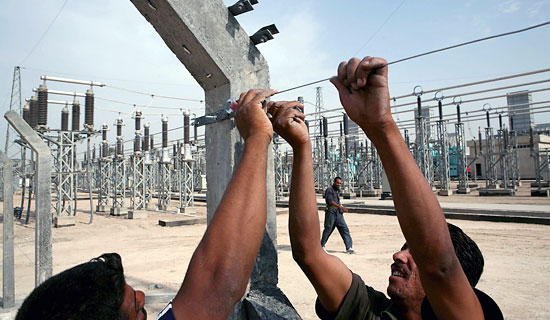
A Defense Department project, supposedly designed to support U.S. troops, was used instead to channel millions of dollars to personal friends and allies of its chief. The “America Supports You,” or ASY, program was led in a “questionable and unregulated manner,” according to a Department of Defense Inspector General report, obtained by Danger Room. At least $9.2 million was “inappropriately transferred” by the project’s managers. Much of that money served only to further promote ASY, instead of assisting servicemembers.

In 2004, the office of then-Secretary of Defense Donald Rumsfeld set up ASY as a six-month effort to showcase the U.S. public’s backing for the troops and their families. “If you’re serving overseas, and you watch the mainstream media coverage, sometimes you can’t tell if America knows you’re there,” one official overseeing the program says. America Supports You was seen as a way to counteract that sense.

In time, however, the program grew. Pro-troop rallies were organized. Special wristband and dog tags were made. Special-edition comic books were printed up. Processions were held on the National Mall, on the 9/11 anniversary. Sesame Street characters were enlisted to make DVDs that encouraged families with young children to talk about overseas deployments. America Supports You became a kind of umbrella group for all sorts of charity-related work for service members and military families.

Meanwhile, ASY began to spend millions — not to help the troops, the Inspector General says, but to help itself. “Instead of focusing on its primary mission of showcasing and communicating support to the troops and their families, the ASY program focus [turned to] building or soliciting support from the public,” the Inspector General’s report notes. In 2006 and 2007, for instance, more than $600,000 was spent ginning up support for America Supports You among schoolchildren. Another $165,000 went to a pro-ASY concert aboard the USS Intrepid, docked on Manhattan’s west side. And $15,000 went to actor and musician Gary Sinise’s “Lt. Dan Band” to play a separate show. The report calls all of these “questionable and unregulated actions.”

By mid-2007, allegations began to surface that the Pentagon official in charge of the program, Armed Forces Information Service chief Alison Barber (pictured, left), was improperly redirecting millions of dollars in public funds.

From fiscal years 2004 to 2007, the Inspector General’s report notes, Barber funneled $8.8 million in contracts to the public relations firm Susan Davis International — to set up the myriad events, and to promote the ASY “brand.” The work was incredibly lucrative; Davis’ executives made as much as $312,821 to $662,691 per year. “Paying a public relations contractor annual salaries approaching three-quarters of a million dollars does not appear to be a cost-effective means to support the ASY program and the war fighter,” the report observes.

But what made it even harder to stomach was that Davis was a friend of Barber’s, and a well-known Republican operative, according to former Defense Department lawyer Diane Beaver. Another half-million went to media consultant Mitch Semel, for web work.

Worse still, in the eyes of many, was that Barber used the Stars & Stripes newspaper as a kind of money-laundering service, to pay Davis and Semel. The paper is partially financed by the Pentagon, and was part of Barber’s American Forces Information Service. But Stripes has a decades-long tradition of fierce independence. Editors were galled to discover that Barber’s office was pouring money into the paper’s coffers — and then paying Davis and Semel out of accounts with less congressional oversight and fewer spending restrictions than typical Defense Department funds.

Readers need to know that the newspaper they trust to provide them independent, accurate, credible news is not in any way operating in a compromised position,” managing editor Doug Clawson said. “If, in fact, Stripes was helping handle public relations work on behalf of a political appointee it doesn’t look good, and could taint the editorial department, and thereby the readers’ perceptions of this newspaper’s mission.”

The Department of Defense’s Inspector General had already launched investigations into financial wrongdoing and organizational mismanagement at America Supports You, the Armed Forces Information Service, and the Defense’ Secretary’s public affairs office. In October 2007, the Inspector General widened its review to include Stars & Stripes.

Barber is no longer at the Pentagon. Two months ago, she abruptly resigned as the heads of both American Supports You and of Defense Media Activity, the new organization that oversees Stars & Stripes. America Supports You has been moved under the Defense Department’s community relations office. “A lot of the big issues have been addressed — how we do contracting, how we use appropriated funds,” one member of that office tells Danger Room. “We’re back in the comfort zone, running a program in the way that the government is used to running it.”

Sneaky George W. Bush Pushing Through Dozens of Last-Minute Legislative Scams

Coal, D.C. Lobbyists, EPA, George W. Bush, National Parks

THE OBSERVER

PAUL HARRIS

DEC 14 2008

chinatown110ec

After spending eight years at the helm of one of the most ideologically driven administrations in American history, George W. Bush is ending his presidency in characteristically aggressive fashion, with a swath of controversial measures designed to reward supporters and enrage opponents.

By the time he vacates the White House, he will have issued a record number of so-called ‘midnight regulations’ – so called because of the stealthy way they appear on the rule books – to undermine the administration of Barack Obama, many of which could take years to undo.

Dozens of new rules have already been introduced which critics say will diminish worker safety, pollute the environment, promote gun use and curtail abortion rights. Many rules promote the interests of large industries, such as coal mining or energy, which have energetically supported Bush during his two terms as president. More are expected this week.

America’s attention is focused on the fate of the beleaguered car industry, still seeking backing in Washington for a multi-billion-dollar bail-out. But behind the scenes, the ‘midnight’ rules are being rushed through with little fanfare and minimal media attention. None of them would be likely to appeal to the incoming Obama team.

The regulations cover a vast policy area, ranging from healthcare to car safety to civil liberties. Many are focused on the environment and seek to ease regulations that limit pollution or restrict harmful industrial practices, such as dumping strip-mining waste.

The Bush moves have outraged many watchdog groups. ‘The regulations we have seen so far have been pretty bad,’ said Matt Madia, a regulatory policy analyst at OMB Watch. ‘The effects of all this are going to be severe.’

Bush can pass the rules because of a loophole in US law allowing him to put last-minute regulations into the Code of Federal Regulations, rules that have the same force as law. He can carry out many of his political aims without needing to force new laws through Congress. Outgoing presidents often use the loophole in their last weeks in office, but Bush has done this far more than Bill Clinton or his father, George Bush sr. He is on track to issue more ‘midnight regulations’ than any other previous president.

Many of these are radical and appear to pay off big business allies of the Republican party. One rule will make it easier for coal companies to dump debris from strip mining into valleys and streams. The process is part of an environmentally damaging technique known as ‘mountain-top removal mining’. It involves literally removing the top of a mountain to excavate a coal seam and pouring the debris into a valley, which is then filled up with rock. The new rule will make that dumping easier.

Another midnight regulation will allow power companies to build coal-fired power stations nearer to national parks. Yet another regulation will allow coal-fired stations to increase their emissions without installing new anti-pollution equipment.

The Environmental Defence Fund has called the moves a ‘fire sale of epic size for coal’. Other environmental groups agree. ‘The only motivation for some of these rules is to benefit the business interests that the Bush administration has served,’ said Ed Hopkins, a director of environmental quality at the Sierra Club. A case in point would seem to be a rule that opens up millions of acres of land to oil shale extraction, which environmental groups say is highly pollutant.

There is a long list of other new regulations that have gone onto the books. One lengthens the number of hours that truck drivers can drive without rest. Another surrenders government control of rerouting the rail transport of hazardous materials around densely populated areas and gives it to the rail companies.

One more chips away at the protection of endangered species. Gun control is also weakened by allowing loaded and concealed guns to be carried in national parks. Abortion rights are hit by allowing healthcare workers to cite religious or moral grounds for opting out of carrying out certain medical procedures.

A common theme is shifting regulation of industry from government to the industries themselves, essentially promoting self-regulation. One rule transfers assessment of the impact of ocean-fishing away from federal inspectors to advisory groups linked to the fishing industry. Another allows factory farms to self-regulate disposal of pollutant run-off.

The White House denies it is sabotaging the new administration. It says many of the moves have been openly flagged for months. The spate of rules is going to be hard for Obama to quickly overcome. By issuing them early in the ‘lame duck’ period of office, the Bush administration has mostly dodged 30- or 60-day time limits that would have made undoing them relatively straightforward.

Obama’s team will have to go through a more lengthy process of reversing them, as it is forced to open them to a period of public consulting. That means that undoing the damage could take months or even years, especially if corporations go to the courts to prevent changes.

At the same time, the Obama team will have a huge agenda on its plate as it inherits the economic crisis. Nevertheless, anti-midnight regulation groups are lobbying Obama’s transition team to make sure Bush’s new rules are changed as soon as possible. ‘They are aware of this. The transition team has a list of things they want to undo,’ said Madia.

The Official Failures of Rebuilding Iraq

Bechtel, Blackwater, CACI, Commission on Wartime Contracting, Congress, Dick Cheney, DOD, Erik Prince, George W. Bush, Halliburton, Irag, Iraqi Infrastructure, KBR, Lobbyists, Pentagon, Senate, Stuart Bowen Jr., Water
Official history details failures of rebuilding Iraq
Sunday, December 14, 2008
14iraq550

BAGHDAD: An unpublished, 513-page federal history of the U.S.-led reconstruction of Iraq depicts an effort crippled before the invasion by Pentagon planners who were hostile to the idea of rebuilding a foreign country, and then molded into a $100 billion failure by bureaucratic turf wars, spiraling violence and ignorance of the basic elements of Iraqi society and infrastructure.

“Hard Lessons: The Iraq Reconstruction Experience,” the first official account of its kind, is circulating in draft form here and in Washington among a tight circle of technical reviewers, policy experts and senior officials. It also concludes that when the reconstruction began to lag – particularly in the critical area of rebuilding the Iraqi police and army – the Pentagon simply put out inflated measures of progress to cover up the failures.

In one passage, for example, former Secretary of State Colin Powell is quoted as saying that in the months after the 2003 invasion, the Defense Department “kept inventing numbers of Iraqi security forces – the number would jump 20,000 a week! ‘We now have 80,000, we now have 100,000, we now have 120,000.”‘

Powell’s assertion that the Pentagon inflated the number of competent Iraqi security forces is backed up by Lieutenant General Ricardo Sanchez, the former commander of ground troops in Iraq, and L. Paul Bremer 3rd, the top civilian administrator until an Iraqi government took over in June 2004.

Among the overarching conclusions of the history is that five years after embarking on its largest foreign reconstruction project since the Marshall Plan in Europe after World War II, the U.S. government has in place neither the policies and technical capacity nor the organizational structure that would be needed to undertake such a program on anything approaching this scale.

The bitterest message of all for the reconstruction program may be the way the history ends. The hard figures on basic services and industrial production compiled for the report reveal that for all the money spent and promises made, the rebuilding effort never did much more than restore what was destroyed during the invasion and the convulsive looting that followed.

By mid-2008, the history says, $117 billion had been spent on the reconstruction of Iraq, including some $50 billion in U.S. taxpayer money.

The history contains a catalog of new revelations that show the chaotic and often poisonous atmosphere prevailing in the reconstruction effort.

When the Office of Management and Budget balked at the U.S. occupation authority’s abrupt request for about $20 billion in new reconstruction money in August 2003, a veteran Republican lobbyist working for the authority made a bluntly partisan appeal to Joshua Bolten, then the Office of Management and Budget director and now the White House chief of staff. “To delay getting our funds would be a political disaster for the President,” wrote the lobbyist, Tom Korologos. “His election will hang for a large part on show of progress in Iraq and without the funding this year, progress will grind to a halt.” With administration backing, Congress allocated the money later that year.

In an illustration of the hasty and haphazard planning, a civilian official at the U.S. Agency for International Development was at one point given four hours to determine how many miles of Iraqi roads would need to be reopened and repaired. The official searched through the agency’s reference library, and his estimate went directly into a master plan. Whatever the quality of the agency’s plan, it eventually began running what amounted to a parallel reconstruction effort in the provinces that had little relation with the rest of the U.S. effort.

Money for many of the local construction projects still under way is divided up by a spoils system controlled by neighborhood politicians and tribal chiefs. “Our district council chairman has become the Tony Soprano of Rasheed, in terms of controlling resources,” said a U.S. Embassy official working in a dangerous Baghdad neighborhood, referring to the popular TV mob boss. “‘You will use my contractor or the work will not get done.”‘

The United States could soon have reason to consult this cautionary tale of deception, waste and poor planning, as both troop levels and reconstruction efforts in Afghanistan are likely to be stepped up under the new administration.

The incoming Obama administration’s rebuilding experts are expected to focus on smaller-scale projects and emphasize political and economic reform. Still, such programs do not address one of the history’s main contentions: that the reconstruction effort has failed because no single agency in the U.S. government has responsibility for the job.

Five years after the invasion of Iraq, the history concludes, “the government as a whole has never developed a legislatively sanctioned doctrine or framework for planning, preparing and executing contingency operations in which diplomacy, development and military action all figure.”

“Hard Lessons” was compiled by the Office of the Special Inspector General for Iraq Reconstruction, led by Stuart Bowen Jr., a Republican lawyer who regularly travels to Iraq and has a staff of engineers and auditors based here. Copies of several drafts of the history were provided to reporters at The New York Times and ProPublica by two people outside the inspector general’s office who have read the draft but are not authorized to comment publicly.

Bowen’s deputy, Ginger Cruz, declined to comment for publication on the substance of the history. But she said it would be presented Feb. 2 at the first hearing of the Commission on Wartime Contracting, which was created this year as a result of legislation sponsored by Senators Jim Webb of Virginia and Claire McCaskill of Missouri, both Democrats.

The manuscript is based on about 500 new interviews, as well as more than 600 audits, inspections and investigations on which Bowen’s office has reported individually over the years. Laid out for the first time in a connected history, the material forms the basis for broad judgments on the entire rebuilding program.

In the preface, Bowen gives a searing critique of what he calls the “blinkered and disjointed prewar planning for Iraq’s reconstruction” and the botched expansion of the program from a modest initiative to improve Iraqi services to a multibillion-dollar enterprise.

Bowen also swipes at the endless revisions and reversals of the program, which at various times gyrated from a focus on giant construction projects led by large Western contractors to modest community-based initiatives carried out by local Iraqis. While Bowen concedes that deteriorating security had a hand in spoiling the program’s hopes, he suggests, as he has in the past, that the program did not need much outside help to do itself in.

Despite years of studying the program, Bowen writes that he still has not found a good answer to the question of why the program was even pursued as soaring violence made it untenable. “Others will have to provide that answer,” Bowen writes.

“But beyond the security issue stands another compelling and unavoidable answer: The U.S. government was not adequately prepared to carry out the reconstruction mission it took on in mid-2003,” he concludes.

The history cites some projects as successes. The review praises community outreach efforts by the Agency for International Development, the Treasury Department’s plan to stabilize the Iraqi dinar after the invasion and a joint effort by the Departments of State and Defense to create local rebuilding teams.

But the portrait that emerges overall is one of a program’s officials operating by the seat of their pants in the middle of a critical enterprise abroad, where the reconstruction was supposed to convince the Iraqi citizenry of U.S. good will and support the new democracy with lights that turned on and taps that flowed with clean water. Mostly, it is a portrait of a program that seemed to grow exponentially as even those involved from the inception of the effort watched in surprise.

On the eve of the invasion, as it began to dawn on a few U.S. officials that the price for rebuilding Iraq would be vastly greater than they had been told, the degree of miscalculation was illustrated in an encounter between Donald Rumsfeld, then the defense secretary, and Jay Garner, the retired lieutenant general who had hastily been named the chief of what would be a short-lived civilian authority called the Office of Reconstruction and Humanitarian Assistance.

The history records how Garner presented Rumsfeld with several alternative rebuilding plans, including one that would include projects across Iraq.

“What do you think that’ll cost?” Rumsfeld asked of the more expansive plan.

“I think it’s going to cost billions of dollars,” Garner said.

“My friend,” Rumsfeld replied, “if you think we’re going to spend a billion dollars of our money over there, you are sadly mistaken.”

In a way he never anticipated, Rumsfeld turned out to be correct: Before that year was out, the United States had appropriated more than $20 billion for the reconstruction, which would indeed involve projects across the entire country.

Rumsfeld declined comment on the report, but a spokesman, Keith Urbahn, said quotes attributed to him in the document “appear to be accurate.” Powell also declined to comment.

The secondary effects of the invasion and its aftermath were among the most important factors that radically changed the outlook. Tables in the history show that measures of things like the production of electricity and oil; public access to potable water, mobile and landline telephone service; and the presence of Iraqi security forces all plummeted at least 70 percent, and in some cases all the way to zero, in the weeks after the invasion. Subsequent tables in the history give a fast-forward view of what happened as the avalanche of money tumbled into Iraq over the next five years. By the time a sovereign Iraqi government took over from the Americans in June 2004, none of those services – with a single exception, mobile phones – had returned to prewar levels. And by the time of the security improvements in 2007 and 2008, electricity output had, at best, a precarious 10 percent lead on its levels under Saddam Hussein; oil production was still below prewar levels; and access to potable water had increased about 30 percent, although with the nation’s ruined piping system it was unclear how much actually reached people’s homes uncontaminated.

Whether the rebuilding effort could have succeeded in a less violent setting will never be known. In April 2004, thousands of the Iraqi security forces that had been oversold by the Pentagon were overrun, abruptly mutinied or simply abandoned their posts as the insurgency broke out, sending Iraq down a violent path from which it has never completely recovered.

At the end of his narrative, Bowen chooses a line from “Great Expectations” by Charles Dickens as the epitaph of the U.S.-led attempt to rebuild Iraq: “We spent as much money as we could, and got as little for it as people could make up their minds to give us.”

James Glanz reported from Baghdad, and T. Christian Miller, of the nonprofit investigative Web site ProPublica, reported from Washington.

Here's a Fella (GW Bush) Who is Probably Responsible For Close to a Million Iraqi Deaths

Bush, Iraq, John Tully

shoe-throwing

Here’s a fella (GW Bush) who is probably responsible for close to a million Iraqi deaths and you’ve got assbite American media-types pontificating on teevee about how outrageous it is that this man, who has lost family members to Bush’s folly would be so full of sadness and anger that he would have the audacity to direct his vitriol at exactly the man responsible-..hard to believe.

John Tully

Iraq Man Who Threw Shoes at George W. Bush Beaten in Jail

Stories
news1

Shoe thrower ‘beaten in custody’

The brother of the Iraqi journalist who threw his shoes at US President George W Bush has said that the reporter has been beaten in custody.

Muntadar al-Zaidi has suffered a broken hand, broken ribs and internal bleeding, as well as an eye injury, his older brother, Dargham, told the BBC.

Mr Zaidi threw his shoes at Mr Bush at a news conference, calling him “a dog”.

The head of Iraq’s journalists’ union told the BBC that officials told him Mr Zaidi was being treated well.

The union head, Mouyyad al-Lami, said he hoped to visit his colleague later.

An Iraqi official said Mr Zaidi had been handed over to the judicial authorities, according to the AFP news agency.

Earlier, Dargham al-Zaidi told the BBC’s Caroline Wyatt in Baghdad he believed his brother had been taken to a US military hospital in the Iraqi capital.

A second day of rallies in support of Mr Zaidi have been held across Iraq, calling for his release.

Meanwhile, offers to buy the shoes are being made around the Arab world, reports say.

Hero figure

Mr Zaidi told our correspondent that despite offers from many lawyers his brother has not been given access to a legal representative since being arrested by forces under the command of Mowaffaq al-Rubaie, Iraq’s national security adviser.

The Iraqi authorities have said the 28-year-old will be prosecuted under Iraqi law, although it is not yet clear what the charges might be. Iraqi lawyers have speculated that he could face charges of insulting a foreign leader and the Iraqi Prime Minister, Nouri Maliki, who was standing next to President Bush during the incident. The offence carries a maximum penalty of two years in jail.

Our correspondent says that the previously little-known journalist from the private Cairo-based al-Baghdadia TV has become a hero to many, not just in Iraq but across the Arab world, for what many saw as a fitting send-off for a deeply unpopular US president.

As he flung the shoes, Mr Zaidi shouted: “This is a goodbye kiss from the Iraqi people, dog.”

Dargham al-Zaidi told the BBC that his brother deliberately bought Iraqi-made shoes, which were dark brown with laces. They were bought from a shop on al-Khyam street, a well-known shopping street in central Baghdad.

However, not everyone in Iraq has been supportive of the journalist’s action.

Speaking earlier in Baghdad, Mouyyad al-Lami described Mr Zaidi’s action as “strange and unprofessional”, but urged Mr Maliki to show compassion.

“Even if he has made a mistake, the government and the judiciary are broad-minded and we hope they consider his release because he has a family and he is still young,” he told the Associated Press news agency.

“We hope this case ends before going to court.”

Abducted by insurgents

The shoes themselves are said to have attracted bids from around the Arab world.

According to unconfirmed newspaper reports, the former coach of the Iraqi national football team, Adnan Hamad, has offered $100,000 (£65,000) for the shoes, while a Saudi citizen has apparently offered $10m (£6.5m).

The daughter of Libyan leader Muammar Gaddafi, Aicha, said her charity would honour the reporter with a medal of courage, saying his action was a “victory for human rights”. The charity called on the media to support Mr Zaidi and put pressure on the Iraqi government to free him.

Mr Zaidi, who lives in Baghdad, has worked for al-Baghdadia for three years.

Muzhir al-Khafaji, programming director for the channel, described him as a “proud Arab and an open-minded man”.

He said that Mr Zaidi was a graduate of communications from Baghdad University.

“He has no ties with the former regime. His family was arrested under Saddam’s regime,” he said.

Mr Zaidi has previously been abducted by insurgents and held twice for questioning by US forces in Iraq.

In November 2007 he was kidnapped by a gang on his way to work in central Baghdad and released three days later without a ransom.

He said at the time that the kidnappers had beaten him until he lost consciousness, and used his necktie to blindfold him.

Mr Zaidi never learned the identity of his kidnappers, who questioned him about his work before letting him go.

General Barry McCaffrey Exposed For The Ultimate Spineless Shill That He Is

401k, ABC, ABC News, Abrams, Addington, AEI, Al Qaeda, Ari Fleisher, Ashcroft, bailout, Baker Botts, Banks, Bechtel, Beltway Groupthink, Beltway Journalism, Bin Laden, Blackwater, Bozell, Bremer, Britain, Broadcatching, Brown and Root, Buffett, Bush, Bush Apologists, Byron York, California, Campbell Brown, Carlyle Group, Charlie Gibson, Chevy Chase Club, Children, CIA, Coalition Provisional Authority, Cokie Roberts, Colin Powell, Condi Rice, Consensus Journalism, Conservatism, Constitution, Corn, Credit, Credit Default Swaps, Dan Rather, Dan Senor, Dana Perino, David Brooks, David Iglesias, Debates, Democrats, Dick Cheney, District Of Corruption, Dow Jones, Duke Zeiberts, Equity Market, Evolution, FBI, Feith, Finance, FISA, Fournier, Framing, Freepers, George Stephanopoulos, George Tenet, George W. Bush, George Will, Global Warming, Gonzales, Gonzalez, Gootube, Grey, Grover Nordquist, Guantanamo, Guns, Habeas Corpus, Halliburton, Hannity, Healthcare, Hedge Funds, Hillary, Hume, Immigration, Iran, Iraq, Jeff Gannon, Jeff Guckert, Joe Biden, Joe Klein, John Yoo, Joseph Wilson, Judith Miller, Justice Department, K Street, Karen Hughes, Karl Rove, Katrina, Kellog, Kerry, Kristol, Lee Atwater, Lehman. AIG, Libby, Limbaugh, Lobbyists, Luntz, Malkin, Maria Bartiromo, Mary Mapes, Matalin, Matt Cooper, Matt Drudge, Media Landscape, Medved, Meet The Press, Money Market, Moonbats, New York, New York Herald Sun, New York Times, NSA, O'Reilly, Obama, Olbermann, Patriot Act, Perle, PNAC, Politico, Politics, Politics Rundown, Poverty, Prager, Republic_Party, Retail Investors, Rich Lowry, Rick Sanchez, Right-Wing Conspiracy, Robert Luskin, Robert Novak, Roger Ailes, Rosie, Rumsfeld, Rupert Murdoch, Saddam, Sarah Palin, Scott McClellan, Shiite, Smerconish, Soldiers, Stock Market, Sunni, Surge, Taxes, terrorism, The Palm, The Plank, Tim Russert, Tony snow, Torture, Tullycast, Valerie Plame, Vandenheuvel, veterans, Viveca Novak, Wall Street, War Criminals, Washington D.C., Watergate, web 2.0, William Kristol, Wingnuttia, Wolfowitz, Youtube

THE NEW YORK TIMES

November 30, 2008

One Man’s Military-Industrial-Media Complex

In the spring of 2007 a tiny military contractor with a slender track record went shopping for a precious Beltway commodity.

The company, Defense Solutions, sought the services of a retired general with national stature, someone who could open doors at the highest levels of government and help it win a huge prize: the right to supply Iraq with thousands of armored vehicles.

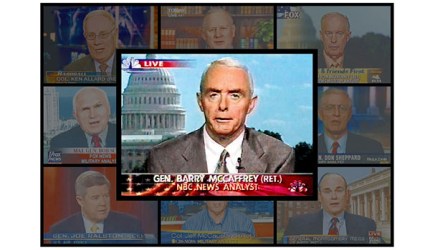
Access like this does not come cheap, but it was an opportunity potentially worth billions in sales, and Defense Solutions soon found its man. The company signed Barry R. McCaffrey, a retired four-star Army general and military analyst for NBC News, to a consulting contract starting June 15, 2007.

Four days later the general swung into action. He sent a personal note and 15-page briefing packet to David H. Petraeus, the commanding general in Iraq, strongly recommending Defense Solutions and its offer to supply Iraq with 5,000 armored vehicles from Eastern Europe. “No other proposal is quicker, less costly, or more certain to succeed,” he said.

Thus, within days of hiring General McCaffrey, the Defense Solutions sales pitch was in the hands of the American commander with the greatest influence over Iraq’s expanding military.

“That’s what I pay him for,” Timothy D. Ringgold, chief executive of Defense Solutions, said in an interview.

President-Elect Barack Obama's Press Conference | Dec 1 2008

401k, ABC, ABC News, Abrams, Addington, AEI, Al Qaeda, Ari Fleisher, Ashcroft, bailout, Baker Botts, Banks, Bechtel, Beltway Groupthink, Beltway Journalism, Bin Laden, Blackwater, Bozell, Bremer, Britain, Broadcatching, Brown and Root, Buffett, Bush, Bush Apologists, Byron York, California, Campbell Brown, Carlyle Group, Charlie Gibson, Chevy Chase Club, Children, CIA, Coalition Provisional Authority, Cokie Roberts, Colin Powell, Condi Rice, Consensus Journalism, Conservatism, Constitution, Corn, Credit, Credit Default Swaps, Dan Rather, Dan Senor, Dana Perino, David Brooks, David Iglesias, Debates, Democrats, Dick Cheney, District Of Corruption, Dow Jones, Duke Zeiberts, Equity Market, Evolution, FBI, Feith, Finance, FISA, Fournier, Framing, Freepers, George Stephanopoulos, George Tenet, George W. Bush, George Will, Global Warming, Gonzales, Gonzalez, Gootube, Grey, Grover Nordquist, Guantanamo, Guns, Habeas Corpus, Halliburton, Hannity, Healthcare, Hedge Funds, Hillary, Hume, Immigration, Iran, Iraq, Jeff Gannon, Jeff Guckert, Joe Biden, Joe Klein, John Yoo, Joseph Wilson, Judith Miller, Justice Department, K Street, Karen Hughes, Karl Rove, Katrina, Kellog, Kerry, Kristol, Lee Atwater, Lehman. AIG, Libby, Limbaugh, Lobbyists, Luntz, Malkin, Maria Bartiromo, Mary Mapes, Matalin, Matt Cooper, Matt Drudge

Part Two

Good Ol' Charlie Gibson Gets In One Final Bootlicking Of President George "W/Torture" Bush

Grover Nordquist, Guantanamo, Guns, Habeas Corpus, Halliburton, Hannity, Healthcare, Hedge Funds, Hillary, Hume, Immigration, Iran, Iraq, Jeff Gannon, Jeff Guckert, Joe Biden, Joe Klein, John Yoo, Joseph Wilson, Judith Miller, Justice Department, K Street, Karen Hughes, Karl Rove, Katrina, Kellog, Kerry, Kristol, Lee Atwater, Lehman. AIG, Libby, Limbaugh, Lobbyists, Luntz, Malkin, Maria Bartiromo, Mary Mapes, Matalin, Matt Cooper, Matt Drudge, Media Landscape, Medved, Meet The Press, Money Market, Moonbats, New York, New York Herald Sun, New York Times, NSA, O'Reilly, Obama, Olbermann, Patriot Act, Perle, PNAC, Politico, Politics, Politics Rundown, Poverty, Prager, Republic_Party, Retail Investors, Rich Lowry, Rick Sanchez, Right-Wing Conspiracy, Robert Luskin, Robert Novak, Roger Ailes, Rosie, Rumsfeld, Rupert Murdoch, Saddam, Sarah Palin, Scott McClellan, Shiite, Smerconish, Soldiers, Stock Market, Sunni, Surge, Taxes, terrorism, The Palm, The Plank, Tim Russert, Tony snow, Torture, Tullycast, Valerie Plame, Vandenheuvel, veterans, Viveca Novak, Wall Street, War Criminals, Washington D.C., Watergate, web 2.0, William Kristol, Wingnuttia, Wolfowitz, Youtube

HOLLYWOOD REPORTER

Charles Gibson aboard for Bush interview

cg

ABC anchor will boat to Camp David with first family

By Paul J. Gough

Nov 25, 2008, 06:18 PM ET

NEW YORK — During the same week Barbara Walters interviews the president-elect in Chicago, ABC’s “World News” anchor Charles Gibson will interview President George W. Bush and first lady Laura Bush during the holiday weekend.

Gibson will ride with the first family on Marine One from the White House to Camp David, then interview Mr. and Mrs. Bush there. Gibson will ask about the past eight years, the couple’s future plans and if they have any advice for Bush’s successor, Sen. Barack Obama, and his family.

The interview will air on Monday’s “World News With Charles Gibson” plus that show’s webcast, “Good Morning America” and elsewhere.

Best New Rules Ever

401k, ABC, ABC News, Abrams, Addington, AEI, Al Qaeda, Ari Fleisher, Ashcroft, bailout, Baker Botts, Banks, Bechtel, Beltway Groupthink, Beltway Journalism, Bin Laden, Blackwater, Bozell, Bremer, Britain, Broadcatching, Brown and Root, Buffett, Bush, Bush Apologists, Byron York, California, Campbell Brown, Carlyle Group, Charlie Gibson, Chevy Chase Club, Children, CIA, Coalition Provisional Authority, Cokie Roberts, Colin Powell, Condi Rice, Consensus Journalism, Conservatism, Constitution, Corn, Credit, Credit Default Swaps, Dan Rather, Dan Senor, Dana Perino, David Brooks, David Iglesias, Debates, Democrats, Dick Cheney, District Of Corruption, Dow Jones, Duke Zeiberts, Equity Market, Evolution, FBI, Feith, Finance, FISA, Fournier, Framing, Freepers, George Stephanopoulos, George Tenet, George W. Bush, George Will, Global Warming, Gonzales, Gonzalez, Gootube, Grey, Grover Nordquist, Guantanamo, Guns, Habeas Corpus, Halliburton, Hannity, Healthcare, Hedge Funds, Hillary, Hume, Immigration, Iran, Iraq, Jeff Gannon, Jeff Guckert, Joe Biden, Joe Klein, John Yoo, Joseph Wilson, Judith Miller, Justice Department, K Street, Karen Hughes, Karl Rove, Katrina, Kellog, Kerry, Kristol, Lee Atwater, Lehman. AIG, Libby, Limbaugh, Lobbyists, Luntz, Malkin, Maria Bartiromo, Mary Mapes, Matalin, Matt Cooper, Matt Drudge, Media Landscape, Medved, Meet The Press, Money Market, Moonbats, New York, New York Herald Sun, New York Times, NSA, O'Reilly, Obama, Olbermann, Patriot Act, Perle, PNAC, Politico, Politics, Politics Rundown, Poverty, Prager, Republic_Party, Retail Investors, Rich Lowry, Rick Sanchez, Right-Wing Conspiracy, Robert Luskin, Robert Novak, Roger Ailes, Rosie, Rumsfeld, Rupert Murdoch, Saddam, Sarah Palin, Scott McClellan, Shiite, Smerconish, Soldiers, Stock Market, Sunni, Surge, Taxes, terrorism, The Palm, The Plank, Tim Russert, Tony snow, Torture, Tullycast, Valerie Plame, Vandenheuvel, veterans, Viveca Novak, Wall Street, War Criminals, Washington D.C., Watergate, web 2.0, William Kristol, Wingnuttia, Wolfowitz, Youtube

tcbred1

An Open Letter To: People Who Ever Thought This War Was a Good Idea | Subtitle: You Know Who You Are

Stories

A LETTER FROM THE EDITOR:

You don’t get to sneer about how the evidence was there.

You don’t get to scoff about how even Bill Clinton, Germany and France thought there were WMD’s.

You don’t get to shriek about media-elite liberals just Bush-hating, conspiracy theorists whining about Halliburton, and Saddam gassing his own people:

…Not when our leaders were so fully unprepared for this war that there was no legitimate flank or rear security support for the thousands of vehicles, many endlessly breaking down, in that convoy that stretched across the Iraqi desert at the beginning of the war.

…Not when they couldn’t even bribe Turkey into letting us enter Iraq from the north.

…Not when there weren’t enough MRE’s, tanks that would work in the sand and flack-jackets for our troops

…Not when our Marines suddenly became gendarmes on the streets of Baghdad while we completely disbanded both the Iraqi army and police and the country was being destroyed from the bottom up as the looters demolished everything that the precision guided bombs didn’t

…and Dick Lugar had been screaming about the need for a plan post-war Iraq and what to do about the Shiites/Sunnis/Kurds on The News Hour and Charlie Rose virtually every night forthe twelve months leading up to the start of the attack.

…Not when there was no budget for the war, funding was asked for on the eve of the initial strike and there have been no plans to pay for the ever-increasing cost.

…Not when Deputy Secretary Of Defense Paul Wolfowitz is asked to give the number of Americans killed in Iraq during a congressional commitee on April 29 2004 and he’s off by over two hundred soldiers.

…Not when they won’t let us see the bodies at Dover and undercount casualties received in combat by the thousands.

Now bugger off and prepare for the trials.

JT

logomini6gq

add to del.icio.us :: Add to Blinkslist :: add to furl :: Digg it :: add to ma.gnolia :: Stumble It! :: add to simpy :: seed the vine :: ::