Obama

Michael Moore on Maher | We Need A Landslide Tuesday
401k, ABC, ABC News, Abrams, Addington, AEI, Al Qaeda, Ari Fleisher, Ashcroft, bailout, Baker Botts, Banks, Bechtel, Beltway Groupthink, Beltway Journalism, Bin Laden, Blackwater, Bozell, Bremer, Britain, Broadcatching, Brown and Root, Buffett, Bush, Bush Apologists, Byron York, California, Campbell Brown, Carlyle Group, Charlie Gibson, Chevy Chase Club, Children, CIA, Coalition Provisional Authority, Cokie Roberts, Colin Powell, Condi Rice, Consensus Journalism, Conservatism, Constitution, Corn, Credit, Credit Default Swaps, Dan Rather, Dan Senor, Dana Perino, David Brooks, David Iglesias, Debates, Democrats, Dick Cheney, District Of Corruption, Dow Jones, Duke Zeiberts, Equity Market, Evolution, FBI, Feith, Finance, FISA, Fournier, Framing, Freepers, George Stephanopoulos, George Tenet, George W. Bush, George Will, Global Warming, Gonzales, Gonzalez, Gootube, Grey, Grover Nordquist, Guantanamo, Guns, Habeas Corpus, Halliburton, Hannity, Healthcare, Hedge Funds, Hillary, Hume, Immigration, Iran, Iraq, Jeff Gannon, Jeff Guckert, Joe Biden, Joe Klein, John Yoo, Joseph Wilson, Judith Miller, Justice Department, K Street, Karen Hughes, Karl Rove, Katrina, Kellog, Kerry, Kristol, Lee Atwater, Lehman. AIG, Libby, Limbaugh, Lobbyists, Luntz, Malkin, Maria Bartiromo, Mary Mapes, Matalin, Matt Cooper, Matt Drudge, Media Landscape, Medved, Meet The Press, Money Market, Moonbats, New York, New York Herald Sun, New York Times, NSA, O'Reilly, Obama, Olbermann, Patriot Act, Perle, PNAC, Politico, Politics, Politics Rundown, Poverty, Prager, Republic_Party, Retail Investors, Rich Lowry, Rick Sanchez, Right-Wing Conspiracy, Robert Luskin, Robert Novak, Roger Ailes, Rosie, Rumsfeld, Rupert Murdoch, Saddam, Sarah Palin, Scott McClellan, Shiite, Smerconish, Soldiers, Stock Market, Sunni, Surge, Taxes, terrorism, The Palm, The Plank, Tim Russert, Tony snow, Torture, Tullycast, Valerie Plame, Vandenheuvel, veterans, Viveca Novak, Wall Street, War Criminals, Washington D.C., Watergate, web 2.0, William Kristol, Wingnuttia, Wolfowitz, Youtube
New Rules From Bill Maher For October 31, 2008
401k, ABC, ABC News, Abrams, Addington, AEI, Al Qaeda, Ari Fleisher, Ashcroft, bailout, Baker Botts, Banks, Bechtel, Beltway Groupthink, Beltway Journalism, Bin Laden, Blackwater, Bozell, Bremer, Britain, Broadcatching, Brown and Root, Buffett, Bush, Bush Apologists, Byron York, California, Campbell Brown, Carlyle Group, Charlie Gibson, Chevy Chase Club, Children, CIA, Coalition Provisional Authority, Cokie Roberts, Colin Powell, Condi Rice, Consensus Journalism, Conservatism, Constitution, Corn, Credit, Credit Default Swaps, Dan Rather, Dan Senor, Dana Perino, David Brooks, David Iglesias, Debates, Democrats, Dick Cheney, District Of Corruption, Dow Jones, Duke Zeiberts, Equity Market, Evolution, FBI, Feith, Finance, FISA, Fournier, Framing, Freepers, George Stephanopoulos, George Tenet, George W. Bush, George Will, Global Warming, Gonzales, Gonzalez, Gootube, Grey, Grover Nordquist, Guantanamo, Guns, Habeas Corpus, Halliburton, Hannity, Healthcare, Hedge Funds, Hillary, Hume, Immigration, Iran, Iraq, Jeff Gannon, Jeff Guckert, Joe Biden, Joe Klein, John Yoo, Joseph Wilson, Judith Miller, Justice Department, K Street, Karen Hughes, Karl Rove, Katrina, Kellog, Kerry, Kristol, Lee Atwater, Lehman. AIG, Libby, Limbaugh, Lobbyists, Luntz, Malkin, Maria Bartiromo, Mary Mapes, Matalin, Matt Cooper, Matt Drudge, Media Landscape, Medved, Meet The Press, Money Market, Moonbats, New York, New York Herald Sun, New York Times, NSA, O'Reilly, Obama, Olbermann, Patriot Act, Perle, PNAC, Politico, Politics, Politics Rundown, Poverty, Prager, Republic_Party, Retail Investors, Rich Lowry, Rick Sanchez, Right-Wing Conspiracy, Robert Luskin, Robert Novak, Roger Ailes, Rosie, Rumsfeld, Rupert Murdoch, Saddam, Sarah Palin, Scott McClellan, Shiite, Smerconish, Soldiers, Stock Market, Sunni, Surge, Taxes, terrorism, The Palm, The Plank, Tim Russert, Tony snow, Torture, Tullycast, Valerie Plame, Vandenheuvel, veterans, Viveca Novak, Wall Street, War Criminals, Washington D.C., Watergate, web 2.0, William Kristol, Wingnuttia, Wolfowitz, Youtube
Studs Terkel, Dead at 96
Studs TerkelStuds Terkel, writer and radio personality, dies at 96
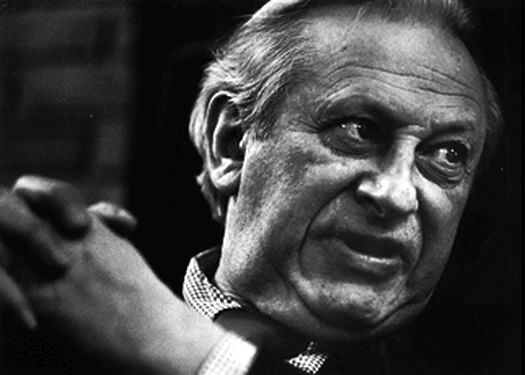
The Chicago fixture used his knack for conversation to capture oral histories on World War II, the Great Depression and more.
By Stephanie Simon
2:54 PM PDT, October 31, 2008
Studs Terkel, who made his name listening to ordinary folks talk about their ordinary lives — and who turned that knack for conversation into a much-honored literary career — died today. He was 96.
Terkel died at his home in Chicago, his son said.
“He lived a long, eventful, satisfying, though sometimes tempestuous, life,” Dan Terkel said. “I think that pretty well sums it up.”
The author of blockbuster oral histories on World War II, the Great Depression, and contemporary attitudes toward work, Terkel roamed the country engaging an astounding cross-section of Americans in tape-recorded chats — about their dreams, their fears, their chewing gum, about racism, courage, dirty floors, the Beatles.
With his loud laugh and raspy voice, plus his inept fumbles with his tape recorder, he set his subjects at ease and tugged from them memories, predictions and simple truths about their everyday existence. Terkel transcribed and edited the interviews, then compiled them into books at once intimate and sweeping, among them “Division Street,” “Hard Times,” “Working,” and “The Good War,” which won the Pulitzer Prize in 1984.
Terkel was also a legendary radio personality, hosting a daily music and interview show on Chicago’s WFMT for 45 years.
He never prepared his questions in advance. He interrupted his guests often. Yet Terkel was known as a master interviewer, able to establish an easy rapport with just about anyone. His secret, he once said, was simple: “It’s listening.”
And listen he did: to sultry jazz singers and insecure housewives; to a repentant Ku Klux Klan leader; to Bob Dylan, the Rev. Martin Luther King Jr., Marlene Dietrich, Bertrand Russell; to a parking lot attendant and a lesbian grandmother; to a piano tuner; to a barber.
As the late CBS newsman Charles Kuralt once said: “When Studs Terkel listens, everybody talks.”
Reviewers called Terkel’s oral histories accessible, powerful and deeply moving. “Readers will experience emotions they didn’t know they had,” the Cleveland Plain Dealer wrote of his World War II book. Though they were lengthy — some more than 600 pages — most of Terkel’s books shot straight to the best-seller list and much of his work was translated for publication abroad.
“I think he was the most extraordinary social observer this country has produced,” said Dr. Robert Coles, a Harvard professor of psychiatry who considered Terkel a friend and inspiration.
Though Terkel did interview the rich and famous, “he recognized the need to pay attention to the poor, the vulnerable, the ordinary people,” Coles said. “I pray for the day when American universities will understand that Studs Terkel is worth many departments of sociology. He’s an institution in himself.”
Louis “Studs” Terkel was born May 16, 1912, in New York City. His family moved to Chicago when he was a boy, and he quickly grew to love the city.
“It’s not that Chicago is that great,” he once said. “In fact, it’s horrible. But living here is like being married to a woman with a broken nose. There may be lovelier lovelies, but never a lovely so real.”
Real was what Terkel always wanted to get at: real people, real lives, real emotions.
He did not claim to be a social scientist. He did not seek to conduct a statistically valid poll. He simply talked to people he found interesting. He didn’t hide his liberal politics, and at times his cross-sections seemed tilted heavily to the left. In general, though, Terkel sought to reach across lines of politics, race, class, education and geography to coax America’s history from its varied voices.
” ‘Statistics’ become persons, each one unique,” he once wrote. “I am constantly astonished.”
Terkel developed his taste for gabbing as a child hanging out with the blue-collar workers who lived in his family’s Chicago rooming house. The men would get drunk on a Saturday night and talk to young Terkel for hours.
His father, a tailor, died when Terkel was 19. His mother, Anna, was able to put him through the University of Chicago for both an undergraduate and a law-school education. Yet Terkel graduated disillusioned with the law. So he worked for a time as a federal statistician. He acted in radio soap operas (usually playing a gangster, with lines of “stunning banality,” he later recalled).
Finally, in the 1940s, he moved into radio full time, first as a newscaster, then as a disc jockey and variety-show host on Chicago’s WFMT. By this time, he had thrown off his given name in favor of Studs — a tribute to the fictional Studs Lonigan, a rough-and-ready character created by novelist James T. Farrell.
Well on his way to becoming a Chicago institution, Terkel expanded into television in 1949 with “Studs’ Place.” An informal mix of banter and jazz, the show was set in a restaurant. “It was kind of like a ‘Cheers.’ But better,” Terkel said years later.
The breezy-but-smart informality of his programs won Terkel a devoted audience on both radio and TV.
“Studs’ Place” ran for four years, from 1949 to 1953 — and was only canceled, Terkel later maintained, because he was blacklisted by Sen. Joseph McCarthy for his liberal leanings. (He supported causes like rent control, desegregation and the abolition of the poll tax. “In those days, it was all quite radical,” he recalled.)
Throughout the 1950s and 60s, Terkel continued to broadcast his radio interviews while writing newspaper columns, acting in Chicago theaters and even penning plays of his own.
He hit upon oral history as an outlet for his insatiable curiosity in 1967, when at the age of 55 he published “Division Street: America” — a series of conversations about race with Chicago residents. The New York Times praised the book as “a modern morality play, a drama with as many conflicts as life itself.”
Terkel had a new career.
Blending journalism, history, sociology and literature, Terkel traipsed across the country, tape recorder at the ready, for the next three and half decades.
“I tape, therefore I am,” Terkel used to say. “Only one other man has used the tape recorder with as much fervor as I — Richard Nixon.”
Terkel’s techniques came in for some criticism, especially after “The Good War” won a Pulitzer Prize. Some called his work overly sentimental. Others accused him of letting his liberal politics taint both his selection of interview subjects and his editing of conversations. Still others wondered aloud how Terkel could be considered a master author when he did little more than transcribe other people’s memories.
In response, Terkel said he had but one goal for each of his books: to open new worlds for his readers. He wanted them to feel what it was like to be a laid-off factory hand during the Depression. Or a soldier facing his first enemy fire. Or a black businessman, or a poor Latino. Or a Miss USA.
“If I can get that in a book,” Terkel said, “that’s what it’s all about.”
Thus, in “Hard Times,” he probed the guilt many senior citizens felt for having survived the Great Depression. In “Working,” he let Americans vent about their jobs — and found a depressing majority saw themselves as automatons. In “The Good War,” he got his subjects to discuss racism, officers shot in the back by their own troops, and other topics that mainstream historians had shied away from.
“No one has done more to expand the American library of voices,” President Clinton said upon awarding Terkel a National Arts Medal in 1997.
“People would say the truth to him even when they had lied to themselves for their [whole] lives,” Terkel’s longtime editor, Andre Schiffrin, added. “The key thing was his respect for them. He wasn’t there to use them. He wasn’t there to make a point. He really wanted to hear what they had to say, and he respected them.”
Terkel, his editor added, was “a true democrat.”
Editing his interviews into book-ready segments took great discipline; often, Terkel had room for less than 10% of his material. Exchanging draft after draft with Schiffrin — who published all his books at New Press — Terkel would struggle to distill an evening’s conversation into an essential, honest portrait of just five or six pages.
In his later years, Terkel returned to his original tapes to mine material for new books — and to catalog reel after dusty reel in the Chicago Historical Society archive. (The society has put excerpts from those interviews online at www.studsterkel.org.) The exercise was his way of combating what he described as “national Alzheimer’s disease” — the rush-rush, live-for-the-minute pace he deplored as both irreverent and dangerous.
“We don’t remember anything. There’s no yesterday in this country,” he often complained. “I want to recreate those yesterdays.”
Despite his passion for the past, Terkel didn’t live in it; he kept a hectic schedule of travel, interviews and writing even after signing off from his daily radio show on Jan. 1, 1988. That same year he appeared in “Eight Men Out,” a film about the Black Sox scandal of 1919, in the role of a savvy newspaperman.
In 1996, Terkel had quintuple bypass surgery — and emerged hale as ever, still dedicated to his daily routine of two martinis, two cigars, and too many hours at the electric typewriter. His book of interviews about death and dying, “Hope Dies Last,” was released in 2004, when he was 92.
In 2005, at the age of 93, Terkel had another round of open-heart surgery, which doctors described as terribly risky for a man his age. He was back at work within weeks, promoting his 16th book, “And They All Sang,” an eclectic collection of interviews from his half-century on the radio.
When officials from Rutgers University knocked on Terkel’s door in May 2007 to present him with the Stephen E. Ambrose Oral History Award, they could hear furious typing inside. At the age of 95, he was polishing his memoir.
Though he was nearly deaf by then, Terkel’s memory for names, dates and bawdy anecdotes was impeccable.
Dressed in his trademark red-and-white-checked shirt and red socks, Terkel would entertain visitors at his Chicago home with long rants against President George W. Bush. His monologues were sprinkled with a dizzying array of allusions: He’d quote Shakespeare and Henry Kissinger and “Ode on a Grecian Urn” — and then, moments later, delve into the details of the 1920s Teapot Dome scandal.
Though rarely given to introspection, Terkel did tell one interviewer that he felt he had shortchanged his family by being so absorbed in his work. His wife of 60 years, Ida, died in 1999. He is survived by their son.
Terkel planned his funeral years in advance. He wanted readings from Mark Twain and George Bernard Shaw; music from Schubert and Mississippi bluesman Big Bill Broonzy. He wanted his ashes — and Ida’s — to be scattered in the Chicago square where, as a young man, he’d stand atop a soapbox and shout out his leftist views.
And Studs Terkel wanted this as his epitaph: “Curiosity did not kill this cat.”
Simon is a former Times staff writer.
Wassup? 2008 | Old and New
401k, ABC, ABC News, Abrams, Addington, AEI, Al Qaeda, Ari Fleisher, Ashcroft, bailout, Baker Botts, Banks, Bechtel, Beltway Groupthink, Beltway Journalism, Bin Laden, Blackwater, Bozell, Bremer, Britain, Broadcatching, Brown and Root, Buffett, Bush, Bush Apologists, Byron York, California, Campbell Brown, Carlyle Group, Charlie Gibson, Chevy Chase Club, Children, CIA, Cokie Roberts, Colin Powell, Condi Rice, Consensus Journalism, Conservatism, Constitution, Corn, Credit, Credit Default Swaps, Dan Rather, Dan Senor, Dana Perino, David Brooks, David Iglesias, Debates, Democrats, Dick Cheney, District Of Corruption, Dow Jones, Duke Zeiberts, Equity Market, Evolution, FBI, Feith, Finance, FISA, Fournier, Framing, Freepers, George Stephanopoulos, George Tenet, George W. Bush, George Will, Global Warming, Gonzales, Gonzalez, Gootube, Grey, Grover Nordquist, Guantanamo, Guns, Habeas Corpus, Halliburton, Hannity, Healthcare, Hedge Funds, Hillary, Hume, Immigration, Iran, Iraq, Jeff Gannon, Jeff Guckert, Joe Biden, Joe Klein, John Yoo, Joseph Wilson, Judith Miller, Justice Department, K Street, Karen Hughes, Karl Rove, Katrina, Kellog, Kerry, Kristol, Lee Atwater, Lehman. AIG, Libby, Limbaugh, Lobbyists, Luntz, Malkin, Maria Bartiromo, Mary Mapes, Matalin, Matt Cooper, Matt Drudge, Media Landscape, Medved, Meet The Press, Money Market, Moonbats, New York, New York Herald Sun, New York Times, NSA, O'Reilly, Obama, Olbermann, Patriot Act, Perle, PNAC, Politico, Politics, Politics Rundown, Poverty, Prager, Republic_Party, Retail Investors, Rich Lowry, Rick Sanchez, Right-Wing Conspiracy, Robert Luskin, Robert Novak, Roger Ailes, Rosie, Rumsfeld, Rupert Murdoch, Saddam, Sarah Palin, Scott McClellan, Shiite, Smerconish, Soldiers, Stock Market, Sunni, Surge, Taxes, terrorism, The Palm, The Plank, Tim Russert, Tony snow, Torture, Tullycast, Valerie Plame, Vandenheuvel, veterans, Viveca Novak, Wall Street, War Criminals, Washington D.C., Watergate, web 2.0, William Kristol, Wingnuttia, Wolfowitz, Youtube

Brand New Channel | Tullycast 3
401k, ABC, ABC News, Abrams, Addington, AEI, Al Qaeda, Ari Fleisher, Ashcroft, bailout, Baker Botts, Banks, Bechtel, Beltway Groupthink, Beltway Journalism, Bin Laden, Blackwater, Bozell, Bremer, Britain, Broadcatching, Brown and Root, Buffett, Bush, Bush Apologists, Byron York, California, Campbell Brown, Carlyle Group, Charlie Gibson, Chevy Chase Club, Children, CIA, Cokie Roberts, Colin Powell, Condi Rice, Consensus Journalism, Conservatism, Constitution, Corn, Credit, Credit Default Swaps, Dan Rather, Dan Senor, Dana Perino, David Brooks, David Iglesias, Debates, Democrats, Dick Cheney, District Of Corruption, Dow Jones, Duke Zeiberts, Equity Market, Evolution, FBI, Feith, Finance, FISA, Fournier, Framing, Freepers, George Stephanopoulos, George Tenet, George W. Bush, George Will, Global Warming, Gonzales, Gonzalez, Gootube, Grey, Grover Nordquist, Guantanamo, Guns, Habeas Corpus, Halliburton, Hannity, Healthcare, Hedge Funds, Hillary, Hume, Immigration, Iran, Iraq, Jeff Gannon, Jeff Guckert, Joe Biden, Joe Klein, John Yoo, Joseph Wilson, Judith Miller, Justice Department, K Street, Karen Hughes, Karl Rove, Katrina, Kellog, Kerry, Kristol, Lee Atwater, Lehman. AIG, Libby, Limbaugh, Lobbyists, Luntz, Malkin, Maria Bartiromo, Mary Mapes, Matalin, Matt Cooper, Matt Drudge, Media Landscape, Medved, Meet The Press, Money Market, Moonbats, New York, New York Herald Sun, New York Times, NSA, O'Reilly, Obama, Olbermann, Patriot Act, Perle, PNAC, Politico, Politics, Politics Rundown, Poverty, Prager, Republic_Party, Retail Investors, Rich Lowry, Rick Sanchez, Right-Wing Conspiracy, Robert Luskin, Robert Novak, Roger Ailes, Rosie, Rumsfeld, Rupert Murdoch, Saddam, Sarah Palin, Scott McClellan, Shiite, Smerconish, Soldiers, Stock Market, Sunni, Surge, Taxes, terrorism, The Palm, The Plank, Tim Russert, Tony snow, Torture, Tullycast, Valerie Plame, Vandenheuvel, veterans, Viveca Novak, Wall Street, War Criminals, Washington D.C., Watergate, web 2.0, William Kristol, Wingnuttia, Wolfowitz, Youtube
Hackoff Anyone?
401k, ABC, ABC News, Abrams, Addington, AEI, Al Qaeda, Ari Fleisher, Ashcroft, bailout, Baker Botts, Banks, Bechtel, Beltway Groupthink, Beltway Journalism, Bin Laden, Blackwater, Bozell, Bremer, Britain, Broadcatching, Brown and Root, Buffett, Bush, Bush Apologists, Byron York, California, Campbell Brown, Carlyle Group, Charlie Gibson, Chevy Chase Club, Children, CIA, Cokie Roberts, Colin Powell, Condi Rice, Consensus Journalism, Conservatism, Constitution, Corn, Credit, Credit Default Swaps, Dan Rather, Dan Senor, Dana Perino, David Brooks, David Iglesias, Debates, Democrats, Dick Cheney, District Of Corruption, Dow Jones, Duke Zeiberts, Equity Market, Evolution, FBI, Feith, Finance, FISA, Fournier, Framing, Freepers, George Stephanopoulos, George Tenet, George W. Bush, George Will, Global Warming, Gonzales, Gonzalez, Gootube, Grey, Grover Nordquist, Guantanamo, Guns, Habeas Corpus, Halliburton, Hannity, Healthcare, Hedge Funds, Hillary, Hume, Immigration, Iran, Iraq, Jeff Gannon, Jeff Guckert, Joe Biden, Joe Klein, John Yoo, Joseph Wilson, Judith Miller, Justice Department, K Street, Karen Hughes, Karl Rove, Katrina, Kellog, Kerry, Kristol, Lee Atwater, Lehman. AIG, Libby, Limbaugh, Lobbyists, Luntz, Malkin, Maria Bartiromo, Mary Mapes, Matalin, Matt Cooper, Matt Drudge, Media Landscape, Medved, Meet The Press, Money Market, Moonbats, New York, New York Herald Sun, New York Times, NSA, O'Reilly, Obama, Olbermann, Patriot Act, Perle, PNAC, Politico, Politics, Politics Rundown, Poverty, Prager, Republic_Party, Retail Investors, Rich Lowry, Rick Sanchez, Right-Wing Conspiracy, Robert Luskin, Robert Novak, Roger Ailes, Rosie, Rumsfeld, Rupert Murdoch, Saddam, Sarah Palin, Scott McClellan, Shiite, Smerconish, Soldiers, Stock Market, Sunni, Surge, Taxes, terrorism, The Palm, The Plank, Tim Russert, Tony snow, Torture, Tullycast, Valerie Plame, Vandenheuvel, veterans, Viveca Novak, Wall Street, War Criminals, Washington D.C., Watergate, web 2.0, William Kristol, Wingnuttia, Wolfowitz, Youtube

Norman Mailer on Iraq | Part Two
9/11, Barack Obama, Bin Laden, Election 2008, Mainstream Media, Politics, Propaganda, Tullycast, Voting, War
Norman Mailer on Iraq
9/11, Barack Obama, Bin Laden, Charlie Rose, Dick Cheney, Election 2008, G.W. Bush, Iraq, Norman Mailer, Politics, Tullycast, Wall Street
The End of The Ownership Society
Banking, Broadcatching, Credit Default Swaps, George W. Bush, Hedge Funds, Lehman, Ownership Society, Politics, Wall Street
End of the ‘Ownership Society’
From the magazine issue dated Oct 20, 2008
Remember the ownership society? President George W. Bush championed the concept when he was running for re-election in 2004, envisioning a world in which every American family owned a house and a stock portfolio, and government stayed out of the way of the American Dream.
These families were, of course, conservative, or at a minimum traditional and nuclear, consisting of a heterosexual married couple and at least two kids living in a stand-alone home with a yard, a car or two and a multimedia room with a flat-screen television. The latter was a new addition to this 21st-century simulacrum of the 1950s “Leave It to Beaver” idyll. But the dream was the same.
Such a country would be more stable, Bush argued, and more prosperous. “America is a stronger country every single time a family moves into a home of their own,” he said in October 2004. To achieve his vision, Bush pushed new policies encouraging homeownership, like the “zero-down-payment initiative,” which was much as it sounds—a government-sponsored program that allowed people to get mortgages without a down payment. More exotic mortgages followed, including ones with no monthly payments for the first two years. Other mortgages required no documentation other than the say-so of the borrower. Absurd though these all were, they paled in comparison to the financial innovations that grew out of the mortgages—derivatives built on other derivatives, packaged and repackaged until no one could identify what they contained and how much they were, in fact, worth.
As we know by now, these instruments have brought the global financial system, improbably, to the brink of collapse. And as financial strains drive husbands and wives apart, Bush’s ownership ideology may end up having the same effect on the stable nuclear families conservatives so badly wanted to foster.
The dream of a better society through homeownership didn’t originate with George W. Bush. It’s as American as Manifest Destiny. The Homestead Act in 1862 offered acres to anyone willing to brave the Western frontier. During Reconstruction, freed slaves were promised “40 acres and a mule.” And after World War II, with Levittown and its cousins, affordable homes were a reward of victory. But until very recently, those hopes and dreams were connected to actual income and gainful employment. No longer.
The giddiness of the Bush years built on the promise of the New Economy era, a promise perfectly encapsulated by a 1999 billboard advertising a shiny new subdivision in Scroggins, Texas, filled with homes that most of their owners couldn’t really afford: YES, YOU CAN HAVE IT ALL! That dream took a sharp hit with the collapse of the Internet stock bubble in 2000-2001 and then with 9/11, both of which destroyed billions of dollars of wealth. But it came roaring back in 2002, encouraged by Bush’s post-9/11 exhortation that Americans could do their patriotic duty by going shopping and paying lower taxes, even as government spending exploded. Shop they did, and homes they bought.
The spree wasn’t confined to the United States. Britain has its own version of the ownership society, which received a boost from Margaret Thatcher, who promoted “a property-owning democracy” that her Labour successors, Tony Blair and Gordon Brown, endorsed. Blair liked to talk of building a “stakeholder economy” with a big role for the ordinary property-owning citizen. More recently, Brown has spoken of creating a “homeowning, asset-owning, wealth-owning democracy.” Millions were happy to buy into the vision. Tenants of government-owned properties gladly took up Thatcher’s offer to sell them their homes at knockdown prices. More than 70 percent of Britons now own their homes, compared with 40 percent of Germans and 50 percent of French.
In Britain as in the United States, the vision was about more than owning a home. It was about being a better person. With a home came traditional values, an appreciation of hard work, prudent living, civic-mindedness, patriotism and ultimately a more stable society. Or so the rhetoric went.
But eventually, it all went sour. By the turn of the century, the proliferation of easy credit and universal stock ownership combined to create anything but a conservative society of thrift. Average household debt levels are now higher in Britain than in any other major country in the developed world. In the United States, the shift away from corporate pensions to 401(k) retirement accounts plunged millions more into the equity markets and loosened the traditional connection between companies and workers, which was one element of that 1950s dream that conservatives like Bush conveniently forgot. The ownership society of the 1950s was anchored by a labor movement that made sure that workers received something resembling their share—remember Truman’s Fair Deal? The deal for the past eight years has been fair to merchants of capital, and then some. But to the tens of millions on the receiving rather than originating end of those mortgages, fairness has been in short supply.
No, this can’t be reduced to a swindle. We all bear some burden for the current morass. You can’t peddle what people don’t want to buy, and for a while it seemed a decent trade-off: Wall Street got rich, and Main Street got homes. The easy terms—and that is putting it lightly—of mortgages gave many a chance to own a home who never would have qualified for a mortgage in years past. But it also gave others the option to buy, sell and flip. Every speculator a home? That wasn’t supposed to be part of the equation.
The irony is that more homeownership and stock ownership has actually weakened traditional bonds. For the past decade, as homeownership went up, marriages continued to fail. As a percentage of the population, fewer people are getting married now than 10 years ago. Single-parent homes are on the rise. So is unemployment, which has increased to 6.1 percent, up from 4.5 percent in 2000. With foreclosures now running at more than 300,000 a month, and stock portfolios and retirement savings shrinking with the global-equity sell-off, there has been a notable increase in demand for mental-health services—which is a problem, given that many health-care plans, the ones left to the private sector, cover only a few visits. Studies have also shown a link between difficult economic straits and declining health and higher mortality. And as the editor and writer Tina Brown, a sharp tracker of social trends, recently said at NEWSWEEK’s Women & Leadership conference, “I think the financial crisis is going to put a lot of marriages under great stress. There really isn’t enough to go around, and there are choices to be made. When men lose their job they frequently feel a great loss of manly self-confidence, and that has great impact on a marriage.”
The final referendum on the ownership society will be the November election. The rhetoric of both parties and candidates for president suggests that regardless of who wins, the vision of the past eight years is being rejected in favor of hunkering down, paying off debt, regulating the anarchic world of credit and derivatives, and unraveling systemic knots that have assumed Gordian complexity. As Barack Obama recently said, “in Washington they call this the ownership society, but what it really means is, you’re on your own.”
This crisis will pass, eventually, and on the other side there will still be global electronic exchanges and computer-enhanced models; there will still be mortgages; and there will still be a deep cultural yearning for a place of one’s own. There may be less froth and more discipline in the coming years—combined with reduced circumstances and less money. Lean times are their own source of hopes and desires, and drive people to find new ways to satisfy old yearnings. There may be more prudent ways to create a world where families are stable and living in their own homes. But the gap between that dream and messy reality isn’t likely to close any time soon. Let’s hope that we have learned something about how much we can have and how quickly. For Americans in particular, that would be a real revolution.
Karabell is president of RiverTwice Research and senior adviser for Business for Social Responsibility.
 The New York Herald Sun