Part Two
Part Three
Part Two
Part Three
Glenn Greenwald has been rightfully indignant about the Obama DoJ’s use of Bush’s “state secrets” argument to cover up charges of rendition and torture. The NY Times this morning says “It was as if last month’s inauguration had never occurred…..Voters have good reason to feel betrayed if they took Mr. Obama seriously on the campaign trail when he criticized the Bush administration’s tactic of stretching the state-secrets privilege to get lawsuits tossed out of court.”
But Bush’s “state secrets” claims aren’t the only White House holdovers. Glenn also singles out Marc Ambinder of The Atlantic today for being a DC stenographer whose idea of “reporting” is calling up administration sources, granting them anonymity without cause, and then writing it up mindlessly without critique or context:
What possible justification is there for granting administration officials anonymity to explain why they are embracing a Bush-era weapon that they have long criticized? And why does an administration swearing great levels of transparency and accountability — and vowing to use secrecy only when absolutely necessary — need to hide behind a wall of anonymity in order to explain why they did what they did here? Why can’t they attach their names to this explanation, so that they can be questioned about it and held accountable?
Why would he do that? Well, possibly because that’s the only way they’ll talk to him — or anyone else. New York Times reporter David Cay Johnston has also written about this “business as usual” quality of White House press relations:
My questions to LaBolt and Singh prompted a return phone call the next day from Nick Shapiro, who spelled his name, but had to be prodded several times to give his job title: assistant press secretary.
During our brief conversation, Shapiro, like LaBolt (whose name Shapiro did not recognize), started one sentence with “off the record.” Told that the journalist grants the privilege, and that none would be granted here, Shapiro expressed surprise. His surprise was double-barreled, at both the idea that the reporter issues any privilege and that any reporter would decline to talk “off the record.”
The reportorial practice of letting government officials speak without taking responsibility for their words has been an issue with the public and is being questioned now by some journalists, as shown by this article from Slate’s Jack Shafer.
Questions about whether Shapiro knows the difference between off-the-record, background, deep background, and on-the-record did not get asked, because Shapiro made it clear he had no interest in answering anything about how the Obama press secretary’s office is operating and what its tone will be. He said questions should be submitted in writing by e-mail to nshapiro@who.eop.gov. I sent Shapiro an e-mail outlining the contours of what would be covered in an interview, but have not received a response as of this writing, the following day.
Johnston is a Pulitzer Prize winning reporter whose book, Free Lunch: How the Wealthiest Americans Enrich Themselves at Government Expense [and Stick You with the Bill] is indispensible for anyone wanting to understand how the taxation and legislative system has been gamed to favor the rich. He’s a superb journalist and sometimes it’s hard to believe he’s still employed at the Times. (note: Johnston has left the NYT.) An administration interested in transparency should be ecstatic about working with him.
But what is going on right now in the world of DC journalism finds its most naked expression in Ambinder’s piece, though I’ve seen other glaring examples of late — journalists are scrambling for who gets “access” to the White House. So there’s no end to the bullshit they’ll write to ingratiate themselves to potential sources, or the inconvenient facts they’ll edit out in order to be the new Bob Woodward. (Though Ambinder does deserve some praise on this front — he wrote what everyone else knows but isn’t saying about White House plans: “encouragement of moderate Democrats,” “entitlement reform” and “standing up to Speaker Pelosi.”)
You can see it in the horror with which the traditional media is responding to Sam Stein getting called on at the President’s press conference — there are rules, there is a pecking order, and This Is Not How It’s Done. While it’s great Sam got recognized — he’s a really good journalist and he asked a critical question — it’s not much more than “window dressing” if the day-to-day interaction with the press stays the same as it did during the Bush years. And with Rahm managing the relations between the White House and the media these days, it looks like that’s exactly what’s happening.
Update: And the stenography continues: Ambinder calls back his “administration sources” so they can respond to Glenn but neither names him nor links to him. “They’re sensitive to the politics of the case, but they’re not motivated by what civil libertarians may write on their blogs.” The administration people don’t want you at the slumber party Glenn Greenwald, and they don’t give anonymous quotes to you, Glenn Greenwald, and they certainly aren’t going to RESPOND to you, Glenn Greenwald, well okay they DID and Ambinder just wrote PARAGRAPHS about it but they are going to just turn their backs and pretend you’re not there. Feh.
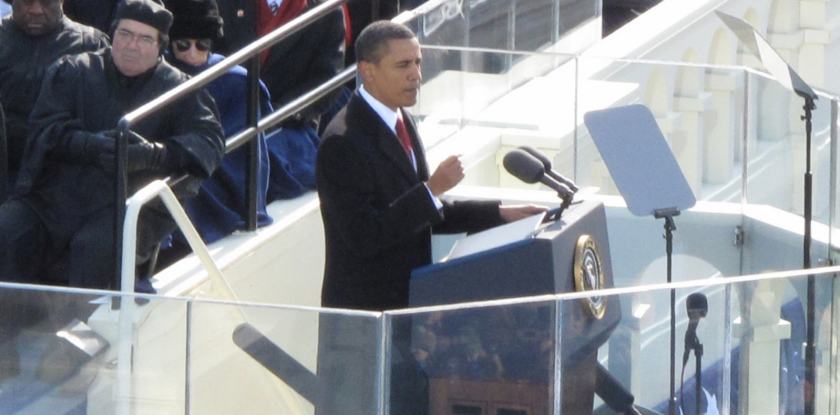
B.O. by Tullycast
- guardian.co.uk, Wednesday 17 December 2008 01.19 GMT
The outgoing US vice-president, Dick Cheney, last night gave an unapologetic assessment of his eight years in office, defending the invasion of Iraq, the US prison camp at Guantánamo Bay, secret wiretapping and the extreme interrogation method known as waterboarding.
In his first television interview since the presidential election in November, Cheney displayed no regrets and gave no ground to his many critics within America and around the world. He summed up his record by saying: “I think, given the circumstances we’ve had to deal with, we’ve done pretty well.”
He told ABC News he stood by the most controversial policies of the Bush administration, and urged president-elect Barack Obama to think hard before undoing them. Asked about the use of torture on terror suspects, he replied: “We don’t do torture. We never have. It’s not something this administration subscribes to.”
Later in the same interview, Cheney was asked whether the use of waterboarding in the interrogation of the alleged mastermind of the September 11 attacks, Khaled Sheikh Mohammed, had been appropriate. He replied: “I do.”
Waterboarding is a technique that induces the sensation of drowning, and is widely regarded as a form of torture. It was used on three high-level al-Qaida suspects, including Mohammed, but has since been banned by the US.
Cheney was chosen in 2000 by George Bush to be his vice-president; he did not put his own name forward for the job. He has since turned into one of the most divisive and reviled vice-presidents in US history, amassing to his office enormous powers and devising a stream of controversial policies.
Despite the vitriol he has attracted, and Bush’s historically low approval rating of just 29%, Cheney was still able to joke about his term in the White House.
He referred to a comment from Hillary Clinton likening him to the Star Wars character Darth Vader. “I asked my wife about that, if that didn’t bother her. She said, no, it humanises you.”
But his lack of any introspection over the decisions made under his watch – in contrast to Bush who recently said he had been sorry about the false intelligence over Iraq – will renew Cheney’s reputation as a combatant and uncompromising vice-president.
Though no weapons of mass destruction were ever found, he insisted that Saddam Hussein had had the capability to produce them.
“He had the technology, he had the people. This was a bad actor and the country’s better off, the world’s better off with Saddam gone. We made the right decision,” he said.
On Guantánamo, he challenged the incoming Obama administration to think hard about what he claimed were the “hardcore” detainees still being held at the Cuban base.
“What are you going to do with those prisoners?” he said, adding: “I don’t know any other nation in the world that would do what we’ve done in terms of taking care of people who are avowed enemies.”
He also defended the use of secret wiretapping of suspects that was carried out without court warrant.
“It’s worked. It’s been successful. It was legal from the very beginning.”
Given the role of hate-figure that Cheney has acquired over the years among the American left, many US liberals will be dismayed to hear him say that he largely approves of the cabinet put together by the president-elect.
He praised the decision to keep Robert Gates as defence secretary as “excellent” and predicted that General Jim Jones would be “very, very effective” as national security adviser.
He even complimented his old adversary, Hillary Clinton, Obama’s choice as secretary of state, saying “she’s tough, she’s smart, she works very hard and she may turn out to be just what President Obama needs.”
Cheney has 34 days left in office. This will be his fourth transition out of government and back to private life. He said he was not ready to retire yet, but did want to spend more time with his family. “Got some rivers I want to face. Maybe write a book. I haven’t decided yet.”

Dec. 15, 2008 —
In an exclusive interview Monday with ABC News, Vice President Dick Cheney issued an unapologetic defense of the Bush administration’s anti-terror policies, including the use of waterboarding, and said the prison at Guantanamo Bay should remain open as long as there’s a war on terror.
In his first exit interview and first television interview since the November election, Cheney held fast to his views on coercing information out of alleged terrorists, saying waterboarding was an appropriate means of getting information from Khalid Sheikh Mohammed, the alleged mastermind behind the Sept. 11 terrorist attacks.
Cheney resisted those who say the Bush administration has overstepped its bounds on torture, saying national intelligence is an art, not a science.
“On the question of so-called torture, we don’t do torture,” Cheney told ABC News. “We never have. It’s not something that this administration subscribes to.
“I think those who allege that we’ve been involved in torture, or that somehow we violated the Constitution or laws with the terrorist surveillance program, simply don’t know what they’re talking about.”
Cheney was also asked whether he authorized the tactics used against Khalid Sheikh Mohammed.
“I was aware of the program, certainly, and involved in helping get the process cleared, as the agency in effect came in and wanted to know what they could and couldn’t do,” Cheney said. “And they talked to me, as well as others, to explain what they wanted to do. And I supported it.”
“There was a period of time there, three or four years ago, when about half of everything we knew about al Qaeda came from that one source,” he added. “So, it’s been a remarkably successful effort. I think the results speak for themselves.”
Cheney also said the Sept. 11 terrorist attacks most certainly became “a prime motivation” in shaping his time in office.
“Have I changed?” Cheney asked. “Well, not in the sense that I’ve gone through some fundamental psychological transition here but I have been since that day focused very much on what we needed to do to defend the nation and I think the policies we’ve recommended, the programs that we’ve undertaken have been good program. I think those have been sound decisions and if that’s what they mean by saying I’ve changed, I’m guilty.”
The outgoing vice president also disputed former Bush adviser Karl Rove’s recent comments about the decision to go to war in Iraq.
While discussing Bush’s legacy earlier this month, Rove said he did not believe the administration would have gone to war had intelligence revealed Saddam Hussein did not possess weapons of mass destruction.
“I disagree with that,” Cheney said Monday. “As I look at the intelligence with respect to Iraq, what they got wrong was that there weren’t any stockpiles.”
“What they found was that Saddam Hussein still had the capability to produce weapons of mass destruction. He had the technology, he had the people, he had the basic feed stock.”
Cheney added that, given Saddam Hussein’s capabilities, reputation and track record of brutality, “this was a bad actor and the country’s better off, the world’s better off with Saddam gone, and I think we made the right decision in spite of the fact that the original NIE was off in some of its major judgments.”
Cheney said the prison at Guantanamo Bay could be responsibly shut down only when the war on terror has ended. Asked when that might be, he added, “Well, nobody knows. Nobody can specify that.”
“A lot of people, including the president, expressed the view that they’d like to close Guantanamo,” he said. “I think everybody can say we wished there were no necessity for Guantanamo, but you have to be able to answer these other questions before you can do that responsibly.”
Cheney warned that prisoners released from Guantanamo could prove dangerous to the United States, adding that the problem of what to do with released prisoners had not yet been solved.
“If you release people that shouldn’t have been released — and that’s happened in some cases already — you end up with them back on the battlefield,” he said.
Cheney said the Guantanamo detainees have been “well treated.”
“I don’t know any other nation in the world that would do what we’ve done in terms of taking care of people who are avowed enemies, and many of whom still swear up and down that their only objective is to kill more Americans,” he said.
Read excerpts from Monday’s interview here.
ABC News’ Kate Barrett contributed to this report.
PAUL HARRIS
DEC 14 2008
After spending eight years at the helm of one of the most ideologically driven administrations in American history, George W. Bush is ending his presidency in characteristically aggressive fashion, with a swath of controversial measures designed to reward supporters and enrage opponents.
By the time he vacates the White House, he will have issued a record number of so-called ‘midnight regulations’ – so called because of the stealthy way they appear on the rule books – to undermine the administration of Barack Obama, many of which could take years to undo.
Dozens of new rules have already been introduced which critics say will diminish worker safety, pollute the environment, promote gun use and curtail abortion rights. Many rules promote the interests of large industries, such as coal mining or energy, which have energetically supported Bush during his two terms as president. More are expected this week.
America’s attention is focused on the fate of the beleaguered car industry, still seeking backing in Washington for a multi-billion-dollar bail-out. But behind the scenes, the ‘midnight’ rules are being rushed through with little fanfare and minimal media attention. None of them would be likely to appeal to the incoming Obama team.
The regulations cover a vast policy area, ranging from healthcare to car safety to civil liberties. Many are focused on the environment and seek to ease regulations that limit pollution or restrict harmful industrial practices, such as dumping strip-mining waste.
The Bush moves have outraged many watchdog groups. ‘The regulations we have seen so far have been pretty bad,’ said Matt Madia, a regulatory policy analyst at OMB Watch. ‘The effects of all this are going to be severe.’
Bush can pass the rules because of a loophole in US law allowing him to put last-minute regulations into the Code of Federal Regulations, rules that have the same force as law. He can carry out many of his political aims without needing to force new laws through Congress. Outgoing presidents often use the loophole in their last weeks in office, but Bush has done this far more than Bill Clinton or his father, George Bush sr. He is on track to issue more ‘midnight regulations’ than any other previous president.
Many of these are radical and appear to pay off big business allies of the Republican party. One rule will make it easier for coal companies to dump debris from strip mining into valleys and streams. The process is part of an environmentally damaging technique known as ‘mountain-top removal mining’. It involves literally removing the top of a mountain to excavate a coal seam and pouring the debris into a valley, which is then filled up with rock. The new rule will make that dumping easier.
Another midnight regulation will allow power companies to build coal-fired power stations nearer to national parks. Yet another regulation will allow coal-fired stations to increase their emissions without installing new anti-pollution equipment.
The Environmental Defence Fund has called the moves a ‘fire sale of epic size for coal’. Other environmental groups agree. ‘The only motivation for some of these rules is to benefit the business interests that the Bush administration has served,’ said Ed Hopkins, a director of environmental quality at the Sierra Club. A case in point would seem to be a rule that opens up millions of acres of land to oil shale extraction, which environmental groups say is highly pollutant.
There is a long list of other new regulations that have gone onto the books. One lengthens the number of hours that truck drivers can drive without rest. Another surrenders government control of rerouting the rail transport of hazardous materials around densely populated areas and gives it to the rail companies.
One more chips away at the protection of endangered species. Gun control is also weakened by allowing loaded and concealed guns to be carried in national parks. Abortion rights are hit by allowing healthcare workers to cite religious or moral grounds for opting out of carrying out certain medical procedures.
A common theme is shifting regulation of industry from government to the industries themselves, essentially promoting self-regulation. One rule transfers assessment of the impact of ocean-fishing away from federal inspectors to advisory groups linked to the fishing industry. Another allows factory farms to self-regulate disposal of pollutant run-off.
The White House denies it is sabotaging the new administration. It says many of the moves have been openly flagged for months. The spate of rules is going to be hard for Obama to quickly overcome. By issuing them early in the ‘lame duck’ period of office, the Bush administration has mostly dodged 30- or 60-day time limits that would have made undoing them relatively straightforward.
Obama’s team will have to go through a more lengthy process of reversing them, as it is forced to open them to a period of public consulting. That means that undoing the damage could take months or even years, especially if corporations go to the courts to prevent changes.
At the same time, the Obama team will have a huge agenda on its plate as it inherits the economic crisis. Nevertheless, anti-midnight regulation groups are lobbying Obama’s transition team to make sure Bush’s new rules are changed as soon as possible. ‘They are aware of this. The transition team has a list of things they want to undo,’ said Madia.
In the spring of 2007 a tiny military contractor with a slender track record went shopping for a precious Beltway commodity.
The company, Defense Solutions, sought the services of a retired general with national stature, someone who could open doors at the highest levels of government and help it win a huge prize: the right to supply Iraq with thousands of armored vehicles.
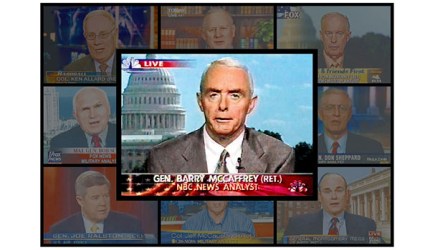
Access like this does not come cheap, but it was an opportunity potentially worth billions in sales, and Defense Solutions soon found its man. The company signed Barry R. McCaffrey, a retired four-star Army general and military analyst for NBC News, to a consulting contract starting June 15, 2007.
Four days later the general swung into action. He sent a personal note and 15-page briefing packet to David H. Petraeus, the commanding general in Iraq, strongly recommending Defense Solutions and its offer to supply Iraq with 5,000 armored vehicles from Eastern Europe. “No other proposal is quicker, less costly, or more certain to succeed,” he said.
Thus, within days of hiring General McCaffrey, the Defense Solutions sales pitch was in the hands of the American commander with the greatest influence over Iraq’s expanding military.
“That’s what I pay him for,” Timothy D. Ringgold, chief executive of Defense Solutions, said in an interview.


 The New York Herald Sun