George W. Bush

Bill Maher | Sean Penn, Garry Shandling and Harold Ford Jr. | Part One
401k, ABC, ABC News, Abrams, Addington, AEI, Ari Fleisher, bailout, Baker Botts, Banks, Bechtel, Beltway Groupthink, Beltway Journalism, Bin Laden, Blackwater, Bozell, Broadcatching, Brown and Root, Buffett, Byron York, Campbell Brown, Carlyle Group, Charlie Gibson, Chevy Chase Club, CIA, Cokie Roberts, Colin Powell, Condi Rice, Credit, Credit Default Swaps, Dan Rather, Dan Senor, Dana Perino, David Brooks, David Iglesias, Dick Cheney, Dow Jones, Duke Zeiberts, Equity Market, FBI, Feith, Finance, FISA, Fournier, George Stephanopoulos, George Tenet, George W. Bush, George Will, Gonzalez, Grey, Grover Nordquist, Guantanamo, Halliburton, Hannity, Hedge Funds, Hume, Iran, Iraq, Jeff Gannon, Jeff Guckert, Joe Biden, Joe Klein, John Yoo, Joseph Wilson, Judith Miller, Justice Department, K Street, Karen Hughes, Karl Rove, Katrina, Kellog, Kristol, Lee Atwater, Lehman. AIG, Libby, Limbaugh, Lobbyists, Malkin, Maria Bartiromo, Mary Mapes, Matalin, Matt Cooper, Matt Drudge, Medved, Meet The Press, Money Market, New York Herald Sun, New York Times, NSA, O'Reilly, Patriot Act, Perle, PNAC, Politico, Politics, Prager, Retail Investors, Rich Lowry, Rick Sanchez, Robert Luskin, Robert Novak, Roger Ailes, Rupert Murdoch, Saddam, Sarah Palin, Scott McClellan, Smerconish, Stock Market, terrorism, The Palm, The Plank, Tim Russert, Tony snow, Torture, Tullycast, Valerie Plame, Viveca Novak, Wall Street, Washington D.C., Watergate, William Kristol, Wolfowitz, Youtube
Bill Maher's RealTime | Tony Snow Confuses "Voter" and "Election" Fraud
401k, ABC, ABC News, Abrams, Addington, Ari Fleisher, bailout, Baker Botts, Banks, Bechtel, Beltway Groupthink, Beltway Journalism, Bin Laden, Blackwater, Bozell, Broadcatching, Brown and Root, Buffett, Byron York, Campbell Brown, Carlyle Group, Charlie Gibson, Chevy Chase Club, CIA, Cokie Roberts, Colin Powell, Condi Rice, Credit, Credit Default Swaps, Dan Rather, Dan Senor, Dana Perino, David Brooks, David Iglesias, Dick Cheney, Dow Jones, Duke Zeiberts, Equity Market, FBI, Feith, Finance, FISA, Fournier, George Stephanopoulos, George Tenet, George W. Bush, George Will, Gonzalez, Grey, Grover Nordquist, Guantanamo, Halliburton, Hannity, Hedge Funds, Hume, Iran, Iraq, Joe Biden, Joe Klein, John Yoo, Joseph Wilson, Judith Miller, Justice Department, K Street, Karen Hughes, Karl Rove, Katrina, Kellog, Kristol, Lee Atwater, Lehman. AIG, Libby, Limbaugh, Lobbyists, Malkin, Maria Bartiromo, Mary Mapes, Matalin, Matt Cooper, Matt Drudge, Medved, Meet The Press, Money Market, New York Herald Sun, New York Times, NSA, O'Reilly, Patriot Act, Perle, PNAC, Politico, Politics, Prager, Retail Investors, Rich Lowry, Rick Sanchez, Robert Luskin, Robert Novak, Roger Ailes, Rupert Murdoch, Saddam, Sarah Palin, Scott McClellan, Smerconish, Stock Market, terrorism, The Palm, The Plank, Tim Russert, Tony snow, Torture, Tullycast, Valerie Plame, Viveca Novak, Wall Street, Washington D.C., Watergate, William Kristol, Wolfowitz, Youtube
Sean Penn, Garry Shandling and Harold Ford | Bill Maher
401k, ABC, ABC News, Abrams, Addington, Ari Fleisher, bailout, Baker Botts, Banks, Bechtel, Beltway Groupthink, Beltway Journalism, Bin Laden, Blackwater, Bozell, Broadcatching, Brown and Root, Buffett, Byron York, Campbell Brown, Carlyle Group, Charlie Gibson, Chevy Chase Club, CIA, Cokie Roberts, Colin Powell, Condi Rice, Credit, Credit Default Swaps, Dan Rather, Dan Senor, Dana Perino, David Brooks, David Iglesias, Dick Cheney, Dow Jones, Duke Zeiberts, Equity Market, FBI, Feith, Finance, FISA, Fournier, George Stephanopoulos, George Tenet, George W. Bush, George Will, Gonzalez, Grey, Grover Nordquist, Guantanamo, Halliburton, Hannity, Hedge Funds, Hume, Iran, Iraq, Joe Biden, Joe Klein, John Yoo, Joseph Wilson, Judith Miller, Justice Department, K Street, Karen Hughes, Karl Rove, Katrina, Kellog, Kristol, Lee Atwater, Lehman. AIG, Libby, Limbaugh, Lobbyists, Malkin, Maria Bartiromo, Mary Mapes, Matalin, Matt Cooper, Matt Drudge, Medved, Meet The Press, Money Market, New York Herald Sun, New York Times, NSA, O'Reilly, Patriot Act, Perle, PNAC, Politico, Politics, Prager, Retail Investors, Rich Lowry, Rick Sanchez, Robert Luskin, Robert Novak, Roger Ailes, Rupert Murdoch, Saddam, Sarah Palin, Scott McClellan, Smerconish, Stock Market, terrorism, The Palm, The Plank, Tim Russert, Tony snow, Torture, Tullycast, Valerie Plame, Viveca Novak, Wall Street, Washington D.C., Watergate, William Kristol, Wolfowitz, YoutubeFirst Broadcatched :: May 2007
Bill Maher With Ron Paul
401k, ABC, ABC News, Abrams, Addington, Ari Fleisher, bailout, Baker Botts, Banks, Bechtel, Beltway Groupthink, Beltway Journalism, Bin Laden, Blackwater, Bozell, Broadcatching, Brown and Root, Buffett, Byron York, Campbell Brown, Carlyle Group, Charlie Gibson, Chevy Chase Club, CIA, Cokie Roberts, Colin Powell, Condi Rice, Credit, Credit Default Swaps, Dan Rather, Dan Senor, Dana Perino, David Brooks, David Iglesias, Dick Cheney, Dow Jones, Duke Zeiberts, Equity Market, FBI, Feith, Finance, FISA, Fournier, George Stephanopoulos, George Tenet, George W. Bush, George Will, Gonzalez, Grey, Grover Nordquist, Guantanamo, Halliburton, Hannity, Hedge Funds, Hume, Iran, Iraq, Joe Biden, Joe Klein, John Yoo, Joseph Wilson, Judith Miller, Justice Department, Karen Hughes, Karl Rove, Katrina, Kellog, Kristol, Lee Atwater, Lehman. AIG, Libby, Limbaugh, Malkin, Maria Bartiromo, Mary Mapes, Matalin, Matt Cooper, Matt Drudge, Medved, Meet The Press, Money Market, New York Times, NSA, O'Reilly, Patriot Act, Perle, PNAC, Politico, Politics, Prager, Retail Investors, Rich Lowry, Rick Sanchez, Robert Luskin, Robert Novak, Roger Ailes, Rupert Murdoch, Saddam, Sarah Palin, Scott McClellan, Smerconish, Stock Market, terrorism, The Palm, The Plank, Tim Russert, Tony snow, Torture, Tullycast, Valerie Plame, Viveca Novak, Wall Street, Washington D.C., Watergate, William Kristol, Wolfowitz, Youtube
The End of The Ownership Society
Banking, Broadcatching, Credit Default Swaps, George W. Bush, Hedge Funds, Lehman, Ownership Society, Politics, Wall Street
End of the ‘Ownership Society’
From the magazine issue dated Oct 20, 2008
Remember the ownership society? President George W. Bush championed the concept when he was running for re-election in 2004, envisioning a world in which every American family owned a house and a stock portfolio, and government stayed out of the way of the American Dream.
These families were, of course, conservative, or at a minimum traditional and nuclear, consisting of a heterosexual married couple and at least two kids living in a stand-alone home with a yard, a car or two and a multimedia room with a flat-screen television. The latter was a new addition to this 21st-century simulacrum of the 1950s “Leave It to Beaver” idyll. But the dream was the same.
Such a country would be more stable, Bush argued, and more prosperous. “America is a stronger country every single time a family moves into a home of their own,” he said in October 2004. To achieve his vision, Bush pushed new policies encouraging homeownership, like the “zero-down-payment initiative,” which was much as it sounds—a government-sponsored program that allowed people to get mortgages without a down payment. More exotic mortgages followed, including ones with no monthly payments for the first two years. Other mortgages required no documentation other than the say-so of the borrower. Absurd though these all were, they paled in comparison to the financial innovations that grew out of the mortgages—derivatives built on other derivatives, packaged and repackaged until no one could identify what they contained and how much they were, in fact, worth.
As we know by now, these instruments have brought the global financial system, improbably, to the brink of collapse. And as financial strains drive husbands and wives apart, Bush’s ownership ideology may end up having the same effect on the stable nuclear families conservatives so badly wanted to foster.
The dream of a better society through homeownership didn’t originate with George W. Bush. It’s as American as Manifest Destiny. The Homestead Act in 1862 offered acres to anyone willing to brave the Western frontier. During Reconstruction, freed slaves were promised “40 acres and a mule.” And after World War II, with Levittown and its cousins, affordable homes were a reward of victory. But until very recently, those hopes and dreams were connected to actual income and gainful employment. No longer.
The giddiness of the Bush years built on the promise of the New Economy era, a promise perfectly encapsulated by a 1999 billboard advertising a shiny new subdivision in Scroggins, Texas, filled with homes that most of their owners couldn’t really afford: YES, YOU CAN HAVE IT ALL! That dream took a sharp hit with the collapse of the Internet stock bubble in 2000-2001 and then with 9/11, both of which destroyed billions of dollars of wealth. But it came roaring back in 2002, encouraged by Bush’s post-9/11 exhortation that Americans could do their patriotic duty by going shopping and paying lower taxes, even as government spending exploded. Shop they did, and homes they bought.
The spree wasn’t confined to the United States. Britain has its own version of the ownership society, which received a boost from Margaret Thatcher, who promoted “a property-owning democracy” that her Labour successors, Tony Blair and Gordon Brown, endorsed. Blair liked to talk of building a “stakeholder economy” with a big role for the ordinary property-owning citizen. More recently, Brown has spoken of creating a “homeowning, asset-owning, wealth-owning democracy.” Millions were happy to buy into the vision. Tenants of government-owned properties gladly took up Thatcher’s offer to sell them their homes at knockdown prices. More than 70 percent of Britons now own their homes, compared with 40 percent of Germans and 50 percent of French.
In Britain as in the United States, the vision was about more than owning a home. It was about being a better person. With a home came traditional values, an appreciation of hard work, prudent living, civic-mindedness, patriotism and ultimately a more stable society. Or so the rhetoric went.
But eventually, it all went sour. By the turn of the century, the proliferation of easy credit and universal stock ownership combined to create anything but a conservative society of thrift. Average household debt levels are now higher in Britain than in any other major country in the developed world. In the United States, the shift away from corporate pensions to 401(k) retirement accounts plunged millions more into the equity markets and loosened the traditional connection between companies and workers, which was one element of that 1950s dream that conservatives like Bush conveniently forgot. The ownership society of the 1950s was anchored by a labor movement that made sure that workers received something resembling their share—remember Truman’s Fair Deal? The deal for the past eight years has been fair to merchants of capital, and then some. But to the tens of millions on the receiving rather than originating end of those mortgages, fairness has been in short supply.
No, this can’t be reduced to a swindle. We all bear some burden for the current morass. You can’t peddle what people don’t want to buy, and for a while it seemed a decent trade-off: Wall Street got rich, and Main Street got homes. The easy terms—and that is putting it lightly—of mortgages gave many a chance to own a home who never would have qualified for a mortgage in years past. But it also gave others the option to buy, sell and flip. Every speculator a home? That wasn’t supposed to be part of the equation.
The irony is that more homeownership and stock ownership has actually weakened traditional bonds. For the past decade, as homeownership went up, marriages continued to fail. As a percentage of the population, fewer people are getting married now than 10 years ago. Single-parent homes are on the rise. So is unemployment, which has increased to 6.1 percent, up from 4.5 percent in 2000. With foreclosures now running at more than 300,000 a month, and stock portfolios and retirement savings shrinking with the global-equity sell-off, there has been a notable increase in demand for mental-health services—which is a problem, given that many health-care plans, the ones left to the private sector, cover only a few visits. Studies have also shown a link between difficult economic straits and declining health and higher mortality. And as the editor and writer Tina Brown, a sharp tracker of social trends, recently said at NEWSWEEK’s Women & Leadership conference, “I think the financial crisis is going to put a lot of marriages under great stress. There really isn’t enough to go around, and there are choices to be made. When men lose their job they frequently feel a great loss of manly self-confidence, and that has great impact on a marriage.”
The final referendum on the ownership society will be the November election. The rhetoric of both parties and candidates for president suggests that regardless of who wins, the vision of the past eight years is being rejected in favor of hunkering down, paying off debt, regulating the anarchic world of credit and derivatives, and unraveling systemic knots that have assumed Gordian complexity. As Barack Obama recently said, “in Washington they call this the ownership society, but what it really means is, you’re on your own.”
This crisis will pass, eventually, and on the other side there will still be global electronic exchanges and computer-enhanced models; there will still be mortgages; and there will still be a deep cultural yearning for a place of one’s own. There may be less froth and more discipline in the coming years—combined with reduced circumstances and less money. Lean times are their own source of hopes and desires, and drive people to find new ways to satisfy old yearnings. There may be more prudent ways to create a world where families are stable and living in their own homes. But the gap between that dream and messy reality isn’t likely to close any time soon. Let’s hope that we have learned something about how much we can have and how quickly. For Americans in particular, that would be a real revolution.
Karabell is president of RiverTwice Research and senior adviser for Business for Social Responsibility.
Did PBS bury controversial torture documentary under pressure from Bush administration?
Abu Graib, Dick Cheney, Election 2008, George W. Bush, Guantanamo, Johh Yoo, John Ashcroft, PBS, Politics, TortureTHINK PROGRESS
Scott Horton reports today that PBS may have refused to nationally air a controversial documentary on the use of torture by the U.S. government in order to protect its funding. Previously, the Bush administration threatened to cut PBS’s funding after it aired Bush’s War, a Frontline special critical of the war in Iraq:
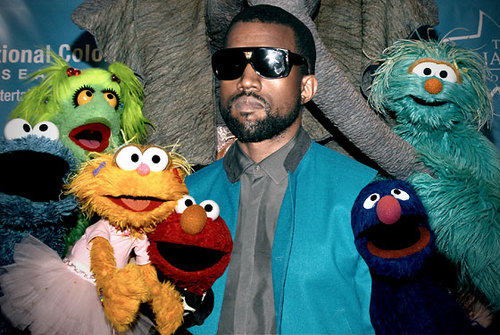
On Thursday evening WNET in New York will air an important new documentary by Emmy and Dupont Award winning producer Sherry Jones entitled “Torturing Democracy.” It appears on WNET and several other affiliates independently because PBS would not run the show. […]
According to producer Sherry Jones, PBS told her that “no time slot could be found for the documentary before January 21, 2009″ — the day after George W. Bush and Dick Cheney leave office.
Watch a clip from Torturing Democracy here.
Mr. Rove's Wild Ride
Ari Fleisher, Atta, Bababooey, Baghdad, Balackwater USA, Barack Obama, Bechtel, Bill Kristol, Broadcatching, Bush Doctrine, Carlyle Group, Charles Krauthammer, Contractors, Dan Senor, Dick Cheney, Douglas Feith, Elliot Abrams, George W. Bush, George Will, GOP, Haditha, Halliburton, Iran, Iraq, Irving Kristol, Joe Biden, John McCain, John Tully, Joseph Wilson, Karl Rove, Kellog Brown and Root, Patraeus, Paul Bremer, Paul Wolfowitz, PNAC, Ramadi, Republican, Richard Perle, Rove+Poerpoint, Sarah Palin, Scott McCllelan, Security Council, Sen. Robert Byrd, Shinseki, Tom Daschle, Valerie Plame, War On TerrorismBY John Tully
October 8 2002
The Los Angeles Sun—
Politics is not a pretty thing.
Look no further than this week in Washington D. C. Former Vice-president Albert Gore Jr. finally brought up the huge marsupial in the room. Criminy! folks, that’s gonna’ wake the whole herd up mate!
Senate Leader Tom Daschle, who seemed to have stashed his opinions in a lock box this summer finally blew his top on the Senate floor denouncing President Bush’s comment at a recent fundraiser that the “Senate” is more interested in “special interests” than in the Security Of Americans. That very same fundraiser pushed the President past Bill Clinton’s record of $126 million raised in one year and it’s only the last week of September.
Stepping right up to the plate this week was a small group of Senators who have been all too quiet this summer with any dissent of this administration’s dual War On Terrorism and Iraq. In fact the debate on war had bipassed “if” and went straight through to “when” and “who’s with us” by the time Mr. Gore finally cleared his throat Monday in San Francisco. Actual questions were raised about our effectiveness in toppling Saddam and how to proceed post-war in Iraq among others.
Sen. Robert Byrd paced and shook with disdain as he read Bush’s remarks from the newspaper on the senate floor. Sen. Daschle’s voice broke as he defended his colleagues, spoke of members who have served in the military and demanded an apology from the President. He also spoke of not politicizing the nation’s debate. It was a classic case of “too little,too late”
Back in June an internal G.O.P. playbook, authored by White House political strategist Karl Rove got into the hands of the opposition. The Powerpoint presentation suggested Republican candidates play up the “War” to keep the political dialogue on their side of the fence.The relative silence of the Democrats this summer only strengthened the resolve of the true hawks in the administration and a bipartisan resolution for war will almost definitely be passed by both houses. For GOP candidates however, the strategy might not pay off.
A new poll released this week shows that while the majority of Americans are for action against Iraq, three out of five want our allies to sign on. Colin Powell would like to go back to the Security Council soon with a joint resolution from the United States Congress and it looks as if he will have it. Unfortunately for the Republicans, this momentary truce focuses the debate back onto the domestic front where, as usual, it is the Economy…stupid.
Crikey! The bugger just ate his own heed!
Politics is not a pretty creature.

The Sarah Palin Way | Bill Maher, Naomi Klein, Andrew Sullivan and will i am
9/11, Barack Obama, Bin Laden, Broadcatching, Election 2008, George W. Bush, Lehman Brothers, Merrill Lynch, Morgan Stanley, Obama, Politics, Real Time, Tullycast, Youtube
 ::
::  ::
::  ::
::  ::
::  ::
::  ::
::  ::
::  ::
::  ::
::  ::
::

 The New York Herald Sun