Part One | Cramer Vs. Stewart | Unedited
Vodpod videos no longer available.

Just weeks ago, the federal government extended $20 billion to Bank of America to keep it afloat, bringing its total in federal bailout dollars received to $45 billion. ABC News reports, however, that the bank managed to scrounge up millions of dollars to be an NFL sponsor and for “a five day carnival-like” Super Bowl party just outside the stadium:
The event — known as the NFL Experience — was 850,000 square feet of sports games and interactive entertainment attractions for football fans and was blanketed in Bank of America logos and marketing calls to sign up for football-themed banking products. […]
The bank refused to tell ABC News how much it is spending as an NFL corporate sponsor, but insiders have put the figure at close to $10 million. The NFL Experience was on top of that and was inked last summer, according to the bank.
The NFL said it was a “multi-million dollar” event and that it was also spending money to put on the event. A Super Bowl insider said the tents alone cost over $800,000.
The Huffington Post notes that this is the latest in a series of bailed-out banks that continue to spend lavishly on sports sponsorships.
THINK PROGRESS DEC 12, 2008
Last night, the Senate failed to approve the auto rescue package, voting 52-35 in favor of proceeding on the bill — just eight short of the 60 votes that were needed. Over on the Wonk Room, Dan Weiss takes a look at the 20 senators who voted for the Wall Street bailout but voted against the auto rescue last night (as well as the 10 others who skipped the vote last night, but voted for the financial bailout):
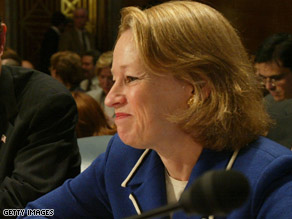
New SEC Chief Mary Schapiro/Getty
| Yes to TARP, No to auto | Yes to TARP, Absent for auto |
| Sen. Max Baucus (D-MT) Sen. Robert Bennett (R-UT) Sen. Richard Burr (R-NC) Sen. Saxby Chambliss (R-GA) Sen. Tom Coburn (R-OK) Sen. Norm Coleman (R-MN) Sen. Bob Corker (R-TN) Sen. John Ensign (R-NV) Sen. Chuck Grassley (R-IA) Sen. Judd Gregg (R-NH) Sen. Orrin Hatch (R-UT) Sen. Kay Hutchison (R-TX) Sen. John Isakson (R-GA) Sen. Jon Kyl (R-AZ) Sen. Blanche Lincoln (D-AR) Sen. Mel Martinez (R-FL) Sen. John McCain (R-AZ) Sen. Mitch McConnell (R-KY) Sen. Lisa Murkowski (R-AK) Sen. John Thune (R-SD) |
Sen. Lamar Alexander (R-TN) Sen. Joe Biden (D-DE) Sen. John Cornyn (R-TX) Sen. Larry Craig (R-ID) Sen. Lindsey Graham (R-SC) Sen. Chuck Hagel (R-NE) Sen. John Kerry (D-MA) Sen. Gordon Smith (R-OR) Sen.Ted Stevens (R-AK) Sen. John Sununu (R-NH) |
Biden was tending to transition duties, while Kerry was in Poznan, Poland, participating in U.N. climate change talks. Alexander was home recovering from surgery. Why did these other Senators feel auto workers weren’t as deserving as Wall Street? We’d like to know. If you see statements from them, please let us know by email or in the comments section.

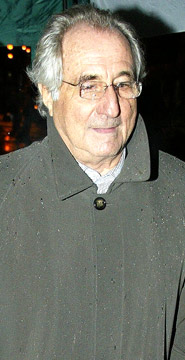
The epicenter of what may be the largest Ponzi scheme in history was the 17th floor of the Lipstick Building, an oval red-granite building rising 34 floors above Third Avenue in Midtown Manhattan.
A busy stock-trading operation occupied the 19th floor, and the computers and paperwork filled the 18th floor of Bernard L. Madoff Investment Securities.
But the 17th floor was Bernie Madoff’s sanctum, occupied by fewer than two dozen staff members and rarely visited by other employees. They called it the “hedge fund” floor, but U.S. prosecutors now say the work Madoff did there was actually a fraud scheme whose losses Madoff himself estimates at $50 billion.
The tally of reported losses climbed through the weekend to nearly $20 billion, with a giant Spanish bank, Banco Santander, reporting on Sunday that clients of one of its Swiss subsidiaries have lost $3 billion. Some of the biggest losers were members of the Palm Beach Country Club, where many of Madoff’s wealthy clients were recruited.
The list of prominent fraud victims grew as well. According to a person familiar with the business of the real estate and publishing magnate Mort Zuckerman, he is also on a list of victims that already included the owners of the New York Mets, a former owner of the Philadelphia Eagles and the chairman of GMAC.
And the 17th floor is now an occupied zone, as investigators and forensic auditors try to piece together what Madoff did with the billions entrusted to him by individuals, banks and hedge funds around the world.
So far, only Madoff, the firm’s 70-year-old founder, has been arrested in the scandal. He is free on a $10 million bond and cannot travel far outside the New York area.
But a question still dominates the investigation: How one person could have pulled off such a far-reaching, long-running fraud, carrying out all the simple practical chores the scheme required, like producing monthly statements, annual tax statements, trade confirmations and bank transfers.
Firms managing money on Madoff’s scale would typically have hundreds of people involved in these administrative tasks. Prosecutors say he claims to have acted entirely alone.
“Our task is to find the records and follow the money,” said Alexander Vasilescu, a lawyer in the New York office of the Securities and Exchange Commission. As of Sunday night, he said, investigators could not shed much light on the fraud or its scale. “We do not dispute his number we just have not calculated how he made it,” he said.
Scrutiny is also falling on the many banks and money managers who helped steer clients to Madoff and now say they are among his victims.
While many investors were friends or met Madoff at country clubs or on charitable boards, even more had entrusted their money to professional advisory firms that, in turn, handed it on to Madoff for a fee.
Investors are now questioning whether these paid advisers were diligent enough in investigating Madoff to ensure that their money was safe. Where those advisers work for big institutions like Banco Santander, investors will most likely look to them, rather than to the remnants of Madoff’s firm, for restitution.
Santander may face $3.1 billion in losses through its Optimal Investment Services, a Geneva-based fund of hedge funds that is owned by the bank. At the end of 2007, Optimal had 6 billion euros, or $8 billion, under management, according to the bank’s annual report which would mean that its Madoff investments were a substantial part of Optimal’s portfolio.
A spokesman for Santander declined to comment on the case.
Other Swiss institutions, including Banque Bénédict Hentsch and Neue Privat Bank, acknowledged being at risk, with Hentsch confirming about $48 million in exposure.
BNP Paribas said it had not invested directly in the Madoff funds but had 350 million euros, or about $500 million, at risk through trades and loans to hedge funds. And the private Swiss bank Reichmuth said it had 385 million Swiss francs, or $327 million, in potential losses. HSBC, one of the world’s largest banks, also said it had made loans to institutions that invested in Madoff but did not disclose the size of its potential losses.
Losses of this scale simply do not seem to fit into the intimate business that Madoff operated in New York.
With just over 200 employees, it was tight-knit and friendly, according to current and former employees. Madoff was gregarious and empathetic, known for visiting sick employees in their hospitals and hosting warmly generous staff parties.
By the elevated standards of Wall Street, the Madoff firm did not pay exceptionally well, but it was loyal to employees even in bad times. Madoff’s family filled the senior positions, but his was not the only family at the firm generations of employees had worked for Madoff.
Even before Madoff collapsed, some employees were mystified by the 17th floor. In recent regulatory filings, Madoff claimed to manage $17 billion for clients a number that would normally occupy a staff of at least 200 employees, far more than the 20 or so who worked on 17.
One Madoff employee said he and other workers assumed that Madoff must have a separate office elsewhere to oversee his client accounts.
Nevertheless, Madoff attracted and held the trust of companies that prided themselves on their diligent investigation of investment managers.
One of them was Walter Noel Jr., who struck up a business relationship with Madoff 20 years ago that helped earn his investment firm, the Fairfield Greenwich Group, millions of dollars in fees.
Indeed, over time, one Fairfield’s strongest selling points for its largest fund was its access to Madoff.
But now, Noel and Fairfield are the biggest known losers in the scandal, facing potential losses of $7.5 billion, more than half its assets.
Jeffrey Tucker, a Fairfield co-founder and former U.S. regulator, said in a statement posted on the firm’s Web site: “We have worked with Madoff for nearly 20 years, investing alongside our clients. We had no indication that we and many other firms and private investors were the victims of such a highly sophisticated, massive fraudulent scheme.”
The huge loss comes at a time when the hedge fund industry has already been wounded by the volatile markets. Several weeks ago, Fairfield had halted investor redemptions at two of its other funds, citing the tough market conditions as dozens of hedge funds have done. The firm reported a drop of $2 billion in assets between September and November.
Fairfield was founded in 1983 by Noel, the former head of international private banking at Chemical Bank, and Tucker, a former Securities and Exchange Commission official. It grew dramatically over the years, attracting investors in Europe, Latin America and Asia.
Noel first met Madoff in the 1980s, and Fairfield’s fortunes grew along with the returns Madoff reported. The two men were very different: Madoff hailed from eastern Queens and was tied closely to the Jewish community, while Noel, a native of Tennessee, moved in the Greenwich social scene with his wife, Monica.
“Walter was always really confident in Bernie and the strategy he employed,” said one hedge fund manager who declined to be named because for fear of jeopardizing his relationship with Noel.
“He was a person of superb ethics, and this has to cut him to the quick,” said George Ball, a former executive at E. F. Hutton and Prudential-Bache Securities who knows Noel.
Fairfield touted its investigative skills. On its Web site, the firm claimed to investigate hedge fund managers for six to 12 months before investing. As part of the process, a team of examiners conducted personal background checks, audited brokerage records and trading reports and interviewed hedge fund executives and compliance officials.
In 2001, Madoff called Fairfield and invited the firm to inspect his books after two news reports questioned the validity of his returns, according to a person close to Fairfield. Outside auditors hired to inspect Madoff’s operations concluded that “everything checked out,” this person said.
“FGG performed comprehensive and conscientious due diligence and risk monitoring,” Marc Kasowitz, a lawyer for Fairfield, said in a statement. “FGG like so many other Madoff clients was a victim of a highly-sophisticated massive fraud that escaped the detection of top institutional and private investors, industry organizations, auditors, examiners, and regulatory authorities.”
Now, Fairfield is seeking to recover what it can from Madoff.
“It is our intention to aggressively pursue the recovery of all assets related to Bernard L. Madoff Investment Securities,” Tucker said in a statement.
Working alongside the U.S. investigators on Madoff’s 17th floor, staffers for Lee Richards 3d, the court-appointed receiver for the firm, are trying to determine what parts of the firm can keep operating to preserve assets for investors.
A hotline number had been posted on the company Web site, madoff.com, but on Sunday night, Richards said that there was little reason to call.
“We don’t have anything to report to investors at this time,” he said. “We are doing everything we can to protect the assets of the Madoff entities that are subject to the receivership, and to learn what we can about the operations of those entities.”
Stephen Foley (From New York)
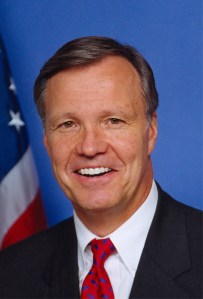 CHRIS COX
Investors around the world are counting the spiralling cost of the biggest fraud in history, a $50bn scam that has ensnared billionaire businessmen and tiny charities alike and whose tentacles have stretched further and deeper than anyone imagined.
The fallout from the arrest of the Wall Street grandee Bernard Madoff was continuing to grow last night, as institution after institution detailed the extent of their possible losses, and the victims in the UK were headlined by HSBC and the Royal Bank of Scotland, which is majority-owned by the British Government.
A charity set up by the Hollywood director Steven Spielberg was among those revealed to be among the victims, along with a foundation set up by Mort Zuckerman, one of the richest media and property magnates in the United States, dozens of Jewish organisations, sports team owners and a New Jersey senator.
But the biggest confessions were coming from Wall Street, from the City of London and from the headquarters of European banks and from banks around the world. They have poured billions of dollars into Mr Madoff’s too-good-to-be-true investment fund, which appeared to post double-digit annual returns come rain or shine.
RBS said that it could take a hit of £400m if American authorities find there is nothing left of the money Mr Madoff had pretended to be investing for many years. HSBC, Britain’s largest bank, said a “small number” of its clients had exposure totalling $1bn in Mr Madoff’s funds.
The Spanish bank Santander, which owns Abbey and the savings business of Bradford & Bingley in the UK, could be on the hook for $3.1bn. Japan’s Nomura said it has hundreds of millions of dollars at risk. City analysts said that even banks who invested only on behalf of clients could end up on the hook, because clients are almost certain to sue for bad advice.
Mr Madoff confessed last week that his business was “all one great big lie”. The investment returns were fake, and he had been paying old clients with money from new ones. In its conception, the scam is a classic. In its size, it is breathtaking, eclipsing anything seen before. He personally estimated the losses at $50bn, according to the FBI, and as investors owned up to their exposure yesterday that did not seem impossible. For 48 years, until Thursday morning, Mr Madoff was one of Wall Street’s best-respected investment managers, able to harvest money from a vast network of contacts and to trade on his name as a former chairman of the Nasdaq stock exchange.
His arrest has further shaken confidence in the barely regulated hedge fund industry, which is already suffering some of the worst times in its short history. Mr Madoff – who is now on a $10m bail and under orders not to leave the New York area – was able to operate his fraud under the noses of regulators for many years.
Mort Zuckerman, the owner of the New York Daily News and one of the 200 richest Americans, said that one of the managers of his charitable trust had been so taken by Mr Madoff that he invested $9bn with him, including all the money from Mr Zuckerman’s trust. “These are astonishing numbers to be placed with one fund manager,” he said. “I think we have another break in whatever level confidence needs to exist in money markets.”
Nicola Horlick, the British fund manager known as Superwoman for juggling her high-flying City career with bringing up five children, turned her fire on US regulators. Her Bramdean Alternatives investment fund had put 9 per cent – about £10m – with Mr Madoff. She told BBC Radio: “This is the biggest financial scandal, probably in the history of the markets.”

By Jesse Westbrook and John Tucker
Dec. 16 (Bloomberg) — Bernard Madoff’s financial records were “utterly unreliable” and will take six months to sort out, said Stephen Harbeck, president of the Securities Investor Protection Corp.
“There are some assets, but I have no idea what the relationships of the assets available are to the claims against them,” Harbeck said on Bloomberg Television. “The records are utterly unreliable on this case.”
His comments came as Bank Medici AG of Austria became the latest lender to reveal a loss from Madoff’s alleged $50 billion fraud. Two funds at the Viennese bank, 75 percent owned by Chairman Sonja Kohn, invested $2.1 billion entirely in Madoff’s firm, the bank said today. It joined institutions and wealthy individuals from Tokyo to Paris. New York’s Yeshiva University lost as much as $140 million, the student newspaper said.
U.S. Senate Banking Committee Chairman Christopher Dodd, meantime, told the Securities and Exchange Commission to explain how it failed to detect the “giant Ponzi scheme.”
Dodd, a Connecticut Democrat, “is seeking more information from the SEC about this case,” Kate Szostak, the senator’s spokeswoman, said in a statement late yesterday. “Senator Dodd is concerned not only about the people caught up in this reported scheme who may have been misled, but how such a massive fraud could have gone undetected.”
2005 SEC Review
Madoff, 70, was arrested Dec. 11 after he told his sons that Bernard L. Madoff Investment Securities LLC was a “giant Ponzi scheme,” the SEC said. Clients facing losses range from a Fairfield, Connecticut, pension fund to hedge funds and New York Mets owner Fred Wilpon’s Sterling Equities Inc.
The SEC hadn’t inspected Madoff’s investment advisory business since he registered the firm with the agency in September 2006, two people familiar with the matter said. The SEC tries to inspect advisers at least every five years and to scrutinize new firms in their first year of registration, former agency officials and securities lawyers said. Harbeck’s SIPC is liquidating the firm.
SEC examiners reviewed Madoff’s brokerage business in 2005 after an investment manager, writing to the agency, and press reports questioned the validity of his investment returns. The SEC’s enforcement division completed an investigation involving the company last year without bringing a claim.
Peter Madoff Subpoenaed
One of Madoff’s sons, Peter Madoff, was today subpoenaed by Massachusetts Secretary of State William Galvin, according to a copy of a court filing. The son was chief compliance officer at Madoff’s firm, the filing said. Galvin is also seeking documents from Marcia Beth Cohn, chief compliance officer of Cohmad Securities Corp., located at the same address as Madoff’s firm, the filing said.
Galvin became involved after Tremont Group Holdings Inc., a hedge-fund firm owned by Massachusetts Mutual Life Insurance Co., revealed that it had $3.3 billion invested with Madoff. The investment amounted to more than half Tremont’s total assets, a person familiar with the matter said.
The SEC was already under fire before Madoff’s alleged fraud came to light. The collapses of investment banks Bear Stearns Cos. and Lehman Brothers Holdings Inc. this year tarnished the SEC’s reputation and lawmakers such as Dodd and Senator Charles Grassley, an Iowa Republican, have questioned its vigilance in enforcing securities laws.
SEC spokesman John Nester didn’t return a phone call and e- mail seeking comment.
Separately, Madoff made $182,250 in campaign donations since 1993 to federal candidates, the political parties, and securities industry’s political action committee, according to the Center for Responsive Politics. He gave $100,000 to the Democratic Senatorial Campaign Committee, including $25,000 in September. He contributed to both Democratic and Republican members of Congress.
Sunday, December 7, 2008
Washington —
Detroit automakers are in line behind governors who are in line behind banks, seeking emergency aid from Washington. Nearly $8 trillion in federal commitments is already out the door, and half of the $700 billion October rescue package has been spent. The economic downturn is accelerating. And nobody is really in charge.
Among a lame-duck Bush administration, a lame-duck Congress, and a president-elect, Barack Obama, who has no legal authority to act and is reluctant to get entangled with the Bush team, Washington’s political vacuum has left policy adrift at the most critical economic period in a generation.
 Three of the most storied companies in U.S. economic history – General Motors, Chrysler and Ford – face possible bankruptcy. With GM threatening to topple by the end of this month, House Speaker Nancy Pelosi reached a compromise with the Bush administration on a temporary loan for less than half the $34 billion the automakers wanted. It is aimed at keeping GM and Chrysler alive until the Obama administration takes office. Ford said it could survive without loans so long as the other car makers avoid bankruptcies that would disrupt shared supply chains.
Horrendous job losses in November – 533,000, not including 422,000 who left the workforce – exceeded the gloomiest forecasts. Economists warn that failures in Detroit will intensify the contraction, but at the same time say $34 billion in emergency loans may not save the automakers anyway.
Nobody in Washington wants the automakers to fail, fearing the fallout on the rest of the economy, which is now in the kind of decline that no one under 30 has ever experienced.
“The economy is now locked in a vicious downward spiral,” wrote Nigel Gault, chief economist of economic forecaster IHS Global Insight. The problems have spread globally, greatly magnifying the danger of a long and painful downturn.
A big part of the problem is that no one really knows what to do.
“The world is dealing with an unprecedented series of economic events,” said Joseph Grundfest, a professor of law and business at Stanford University and co-director of the Rock Center on Corporate Governance. “Anybody who stands up and says, ‘Look, this is what you should be doing,’ not only lacks humility, but also lacks a real appreciation of the intellectual difficulty of these circumstances. Because if the answer was so clearly obvious, everybody would have it.”
Pelosi backed off her insistence that the Bush administration bail out the automakers from the $700 billion bank rescue fund, agreeing to tap $25 billion already allocated to the automakers to build green cars. The first $350 billion of the bank fund is almost gone. Congress would have to vote to release the second half, and both parties are so furious with the way the administration has handled the bank rescue that they have warned Treasury Secretary Henry Paulson not to bother asking for more.
“I am through with giving this crowd money to play with,” Senate Banking Committee chairman Chris Dodd, D-Conn., said Thursday, a sentiment echoed by House Republican leader John Boehner.
President Bush, engaged mainly in a series of retrospective speeches and interviews on his legacy, nonetheless forced Pelosi to back off the bank fund Friday. After years of fighting Detroit on fuel-economy standards, Pelosi had resisted using money intended to retool the automakers. Bush said he was worried about giving tax dollars to “companies that may not survive.” Commerce Secretary Carlos Gutierrez warned that allowing Detroit to tap the bank rescue fund would only invite other industries to do the same.
As Congress plunged through two days of inconclusive hearings on Detroit, Obama remained noncommittal. His “one-president-at-a-time” line so irked House Financial Services chairman Barney Frank, D-Mass., that he let loose one of his signature retorts: “I’m afraid that overstates the number of presidents we have,” Frank said. Obama has “got to remedy that situation.”
Obama responded with a presidential-style radio address Saturday, promising the biggest public investment in infrastructure since the federal interstate highways were built in the 1950s, along with all-out efforts to retrofit public buildings for energy efficiency, modernize school buildings, and expand broadband networks, including helping doctors and hospitals switch to electronic medical records. All are part of a huge fiscal stimulus program, with more to come, that he promised would create 2.5 million jobs and save money over the long haul.
“We won’t just throw money at the problem,” Obama said. “We’ll measure progress by the reforms we make and the results we achieve – by the jobs we create, by the energy we save, by whether America is more competitive in the world.”
The colossal bank bailouts, and the way Paulson has managed them, have rendered Paulson effectively powerless. Both parties, under his dire urgings and at great political peril, passed the unpopular $700 billion bank rescue a month before the election. Paulson told them he had a plan. Now they feel betrayed.
Paulson has run through $350 billion veering from one strategy to another. The money may indeed have prevented a banking collapse, but it has not unglued credit markets as much as expected. His rescue of banking giant Citigroup came under fire for its lack of transparency, generous terms and taxpayer assumption of close to $300 billion in debt.
“The value of these measures thus far has been to stave off a total meltdown, which we flirted with,” said Robert Shapiro, former undersecretary of commerce for economic affairs in the Clinton administration and now head of Democratic think tank and advocacy group NDN’s globalization initiative. Shapiro argued, however, as do many Democrats, that Paulson has failed to tackle the underlying problem of housing foreclosures that is causing banks to rein in lending.
Nor has the administration explained to the public the difference between bailing out banks and bailing out automakers, said Bruce Bartlett, a former Treasury official in the George H.W. Bush administration. That has led to confusion about why anyone is getting bailed out.
In addition, “the theory underlying the bailout has changed over time,” Bartlett said. “The $700 billion number appears to have been picked out of thin air. I never saw a rationale for it.”
The Fed has taken further radical steps to inject liquidity into the banking system and guarantee loans, $8 trillion worth by some estimates. Presumably not all the assets it has backed will sour.
The markets have judged some steps effective, Grundfest said. These include buying mortgage debt from Fannie Mae and Freddie Mac, which lowered mortgage interest rates; injecting capital into banks, which prevented them from imploding; and backstopping federal money market funds to stop a panic.
“But the reality is the effects are not large enough,” said Grundfest. “There is a massive global repricing of certain assets. It’s real estate values coming down not just in the United States but around the world, and a massive de-leveraging, not just in the United States but around the world.”
The consequences include widening recession, unemployment and foreclosures.
“Part of the unfortunate reality is that if real estate prices are going to re-equilibrate to a lower level that is significantly lower than the peak, it is mathematically impossible to have that happen without having homeowners and lenders lose a lot of wealth,” Grundfest said. “To the extent that people think government policy can prevent that from happening, the only way you can do that is by having the government say, ‘OK, you lenders and homeowners, you won’t lose the wealth, we the government will lose the wealth.’ And that means that all the rest of us will lose the wealth. But the wealth will be lost.”
There is little disagreement that the failure of the Detroit automakers would pose a heavy burden on the economy as autoworkers lose their jobs and suppliers, auto dealerships and other businesses supported by the automakers fail. But these are different from the systemic effects of a widespread banking panic on the whole economy.
House of cards
Banks loan out far more money than they keep in deposits, roughly $9 in loans for every $1 in deposits. This is what some describe as an intentional house of cards. The system works fine in normal times to expand credit to consumers and businesses.
But if confidence in a bank collapses, and all the depositors demand their money at the same time, even a healthy bank will inevitably fail. This is known as a bank run, made famous in the Jimmy Stewart movie “It’s a Wonderful Life,” often shown at Christmas.
Panic mode
When there is a general collapse in confidence, and depositors rush to draw their money out of many banks at the same time, the entire financial system can fail. As depositors demand their money, banks call in their loans and sell their assets, and yet still cannot pay all their depositors.
Asset values are driven to fire-sale prices. Credit shrinks dramatically. The contraction is every bit as powerful as the expansion of credit that occurred when the bank initially leveraged its deposits into a much larger 9-to-1 portfolio of loans. This reverse process is known as “de-leveraging.”
When this happens to many banks at the same time, as happened in the Great Depression, the credit contraction can bring down the rest of the economy.
Tight credit
The U.S. financial system came quite close to a 1929 abyss in mid-September, which led Congress to pass a $700 billion rescue plan. Even so, bank credit remains sharply constricted and asset prices depressed.
After the Great Depression, the federal government put in place the Federal Deposit Insurance Corp. to protect depositors in a bank run and prevent panic from developing in the first place. (In the current crisis, the FDIC raised its protection level from $100,000 to $250,000 in deposits.)
– Carolyn Lochhead
E-mail Carolyn Lochhead at clochhead@sfchronicle.com.
In the spring of 2007 a tiny military contractor with a slender track record went shopping for a precious Beltway commodity.
The company, Defense Solutions, sought the services of a retired general with national stature, someone who could open doors at the highest levels of government and help it win a huge prize: the right to supply Iraq with thousands of armored vehicles.
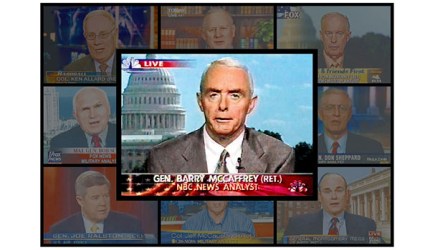
Access like this does not come cheap, but it was an opportunity potentially worth billions in sales, and Defense Solutions soon found its man. The company signed Barry R. McCaffrey, a retired four-star Army general and military analyst for NBC News, to a consulting contract starting June 15, 2007.
Four days later the general swung into action. He sent a personal note and 15-page briefing packet to David H. Petraeus, the commanding general in Iraq, strongly recommending Defense Solutions and its offer to supply Iraq with 5,000 armored vehicles from Eastern Europe. “No other proposal is quicker, less costly, or more certain to succeed,” he said.
Thus, within days of hiring General McCaffrey, the Defense Solutions sales pitch was in the hands of the American commander with the greatest influence over Iraq’s expanding military.
“That’s what I pay him for,” Timothy D. Ringgold, chief executive of Defense Solutions, said in an interview.
Part Two

 The New York Herald Sun