From One Politico to Another

Access Journalism, The D.C. Press Corpse, The Troops

Caroline Palmer

Broadcasting and Cable

February 15, 2007

Mike Allen, chief political correspondent for Politico.com, the new online/print publication from TV station/cable news channel owner Allbritton, got a plug from an affable President George W. Bush.

In the President’s press conference Wednesday, he stopped Allen, former Time magazine White House correspondent, in mid train of thought to train a spotlight on his new digs.

Following is the transcript from of the exchange.

THe PRESIDENT: Michael. Michael, who do you work for? (Laughter.)

Q Mr. President, I work for Politico.com.

THE PRESIDENT: Pardon me? Politico.com?

Q Yes, sir. Today. (Laughter.)

THE PRESIDENT: You want a moment to explain to the American people exactly what — (laughter.)

Q Mr. President, thank you for the question. (Laughter.)

THE PRESIDENT: Quit being so evasive.

Q You should read it.

THE PRESIDENT: Is it good? You like it?

Q David Gregory —

THE PRESIDENT: David Gregory likes it. I can see the making of a testimonial. (Laughter.) Anyway, go ahead, please.

Not surprisingly, the Web site did indeed turn the shout-out into a plug, running the video on its home page.

High Fructose Corn Syrup Trying To Change Name To "Corn Sugar"

High Fructose Corn Syrup

NEW YORK – The makers of high fructose corn syrup want to sweeten its image with a new name: corn sugar.

The Corn Refiners Association applied Tuesday to the federal government for permission to use the name on food labels. The group hopes a new name will ease confusion about the sweetener, which is used in soft drinks, bread, cereal and other products.

Americans’ consumption of corn syrup has fallen to a 20-year low on consumer concerns that it is more harmful or more likely to cause obesity than ordinary sugar, perceptions for which there is little scientific evidence.

However, some scientists have linked consumption of full-calorie soda — the vast majority of which is sweetened with high fructose corn syrup — to obesity.


There’s a new online marketing campaign at http://www.cornsugar.com and on television. Two new commercials try to alleviate shopper confusion, showing people who say they now understand that “whether it’s corn sugar or cane sugar, your body can’t tell the difference. Sugar is sugar.”

Renaming products has succeeded before. For example, low eurcic acid rapeseed oil became much more popular after becoming “canola oil” in 1988. Prunes tried to shed a stodgy image by becoming “dried plums” in 2000.

The new name would help people understand the sweetener, said Audrae Erickson, president of the Washington-based group.

“It has been highly disparaged and highly misunderstood,” she said. She declined to say how much the campaign costs.

Sugar and high fructose corn syrup are nutritionally the same, and there’s no evidence that the sweetener is any worse for the body than sugar, said Michael Jacobson, executive director of the Center for Science in the Public Interest. The bottom line is people should consume less of all sugars, Jacobson said.

“Soda pop sweetened with sugar is every bit as conducive to obesity as soda pop sweetened with high fructose corn syrup,” he said.

The American Medical Association says there’s not enough evidence yet to restrict the use of high fructose corn syrup, although it wants more research.

Still, Americans increasingly are blaming high fructose corn syrup and avoiding it. First lady Michelle Obama has said she does not want her daughters eating it.

Parents such as Joan Leib scan ingredient labels and will not buy anything with it. The mother of two in Somerville, Mass., has been avoiding the sweetener for about a year to reduce sweeteners in her family’s diet.

“I found it in things that you would never think needed it, or should have it,” said Leib, 36. “I found it in jars of pickles, in English muffins and bread. Why do we need extra sweeteners?”

Many companies are responding by removing it from their products. Last month, Sara Lee switched to sugar in two of its breads. Gatorade, Snapple and Hunt’s Ketchup very publicly switched to sugar in the past two years.

The average American ate 35.7 pounds of high fructose corn syrup last year, according to the U.S. Department of Agriculture. That’s down 21 percent from 45.4 pounds 10 years before.

Cane and beet sugar, meanwhile, have hovered around 44 pounds per person per year since the mid-1980s, after falling rapidly in the 1970s, when high fructose corn syrup — a cheaper alternative to sugar — gained favor with soft drink makers.

With sales falling in the U.S., the industry is growing in emerging markets like Mexico, and revenue has been steady at $3 billion to $4 billion a year, said Credit Suisse senior analyst Robert Moskow. There are five manufacturers in the U.S.: Archer Daniels Midland Inc., Corn Products International, Cargill, Roquette America, and Tate & Lyle.

Corn refiners say their new name better describes the sweetener.

“The name ‘corn sugar’ more accurately reflects the source of the food (corn), identifies the basic nature of the food (a sugar), and discloses the food’s function (a sweetener),” the petition said.

Will shoppers swallow the new name?

The public is skeptical, so the move will be met with criticism, said Tim Calkins, a marketing professor at Kellogg School of Management at Northwestern University.

“This isn’t all that much different from any of the negative brands trying to embrace new brand names,” he said, adding the change is similar to what ValuJet — whose name was tarnished by a deadly crash in 1996 — did when it bought AirTran’s fleet and took on its name.

“They’re not saying this is a healthy vitamin, or health product,” he said. “They’re just trying to move away from the negative associations.”

Christopher Dodd Still Trying To Block Elizabeth Warren

Broadcatching

Logo_post_b

Obama May Name Warren as Interim Consumer Agency Head

By Hans Nichols and Lorraine Woellert – Sep 14, 2010

President Barack Obama may appoint Elizabeth Warren, the Harvard law professor who scolded U.S. banks while overseeing their bailout, as the interim head of the new Consumer Financial Protection Bureau as early as this week, according to a person familiar with the matter.

An interim appointment could allow Obama to bypass a confirmation battle over Warren in the Senate, where Republicans have raised objections to her possible nomination.

Today, Senate Banking Committee Chairman Christopher Dodd said he was “not enthusiastic” about an interim appointment because it could jeopardize the future of the bureau by inviting retaliation by Congress that could cut off funding for the office.

“You could gut this before it even gets off ground,” Dodd, a Connecticut Democrat, told reporters. “None of us know what the outcome is going to be politically” in the congressional elections, said Dodd, whose committee would take the lead on confirmation of a permanent appointee.

An interim appointment “will be met with a lot of opposition,” Dodd said. “It’s a big job, an important job. You’ve got to build the support for that institutionally” with Congress. He has questioned whether Warren could win the votes for confirmation.

‘In the Mix’

The White House hasn’t publicly acknowledged the choice. White House spokesman Bill Burton said Warren is “obviously in the mix.” An interim appointment is “an option,” Burton said.


More  @ BLOOMBERG

San Bruno Pipeline Explosion Yet Another Example of Why Libertarians Are Truly Assholes

San Bruno Pipeline Explosion

By The Associated Press
Tuesday, September 14th, 2010

Pipeline explosion near San Francisco highlights dangers of gas infrastructure.
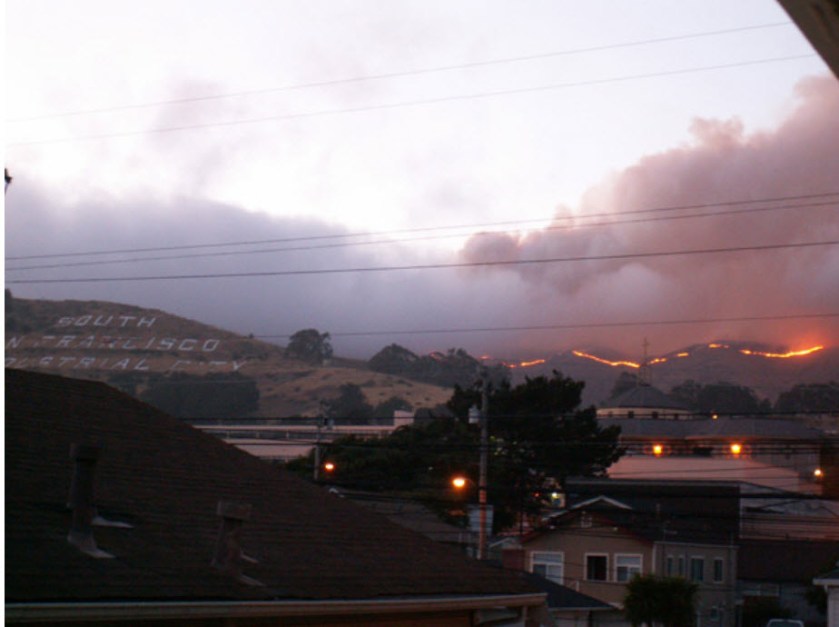

The tragic explosion of a gas pipeline in a San Francisco suburb has shed light on a problem usually kept underground: Communities have expanded over pipes built decades earlier when no one lived there.

Utilities have been under pressure for years to better inspect and replace aging gas pipes — many of them laid years before sprawling communities were erected around them — that now are at risk of leaking or erupting.

But the effort has fallen short. Critics say the regulatory system is ripe for problems because the government largely leaves it up to the companies to do inspections, and utilities are reluctant to spend the money necessary to properly fix and replace decrepit pipelines.

“If this was the FAA and air travel we were talking about, I wouldn’t get on a plane,” said Rick Kessler, a former congressional staffer specializing in pipeline safety issues who now works for the Pipeline Safety Trust, an advocacy group based in Bellingham, Wash.

Investigators are still trying to figure out how the pipeline in San Bruno ruptured and ignited a gigantic fireball that torched one home after another in the neighborhood, killing at least four people. Pacific Gas & Electric Co., the pipeline’s owner, said Monday it has set aside up to $100 million to help residents recover.

Experts say the California disaster epitomizes the risks that communities face with old gas lines. The pipe was more than 50 years old — right around the life expectancy for steel pipes. It was part of a transmission line that in one section had an “unacceptably high” risk of failure. And it was in a densely populated area.

The blast was the latest warning sign in a series of deadly infrastructure failures in recent years, including a bridge collapse in Minneapolis and a steam pipe explosion that tore open a Manhattan street in 2007. The steam pipe that ruptured was more than 80 years old.

The section of pipeline that ruptured was built in 1956, back when the neighborhood contained only a handful of homes. It is a scenario that National Transportation Safety Board vice chairman Christopher Hart has seen play out throughout the nation, as suburbs have expanded.

“That’s an issue we’re going to have to look on a bigger scale — situations in which pipes of some age were put in before the dense population arrived and now the dense population is right over the pipe,” he said.

Thousands of pipelines nationwide fit the same bill, and they frequently experience mishaps. Federal officials have recorded 2,840 significant gas pipeline accidents since 1990, more than a third causing deaths and significant injuries.

Hart said the tragedy in San Bruno could push other states to begin tougher inspections of their lines.

“It would surprise me if other states didn’t see this and learn from it and be proactive with it,” Hart said.

Congress passed a law in 2002 that required utilities for the first time to inspect pipelines that run through heavily populated areas. In the first five years, more than 3,000 problems were identified — a figure Weimer said underscores the precarious pipeline system.

Even when inspections are done and problems found, Kessler said, there is no requirement for companies to say if or what kind of repairs were made. And Weimer added industry lobbyists have since pushed to relax that provision of the law so inspections could occur once a decade or once every 15 years.

Other critics complain that the pipeline plans are drafted in secret with little opportunity for the public to speak out about the process.

The Pipeline and Hazardous Materials Safety Administration is the federal regulatory arm that enforces rules for the safe operation of the nation’s pipeline system, and has direct authority over interstate pipelines. Most state public utility agencies have adopted the federal rules and carry out inspections and enforcement of pipelines running inside state boundaries.

But the system often relies on the pipeline operators like PG&E to survey their own gas lines and to decide which pipelines are high risk.

The American Gas Association disputes the notion that it cuts any corners and says the industry is subjected to stringent state and federal regulations.

“Safety is unequivocally the No. 1 priority for the natural gas transmission and distribution industry and always will be,” spokesman Chris Hogan said. “The industry spends billions each year to ensure the safety and reliability of the natural gas infrastructure.”

California regulators say current rules are written in a way that relies on industry to report problems and set timetables for repair.

“We’re set up to provide an incentive and a deterrent and to make sure they follow the rules, but we generally avoid telling them how to run their system,” said Julie Halligan, deputy director for consumer protection and safety at the California Public Utilities Commission. “They can’t endlessly defer things and get away with it, because we’ll be looking after the fact to see what they’ve done.”

The challenge of ensuring pipeline safety is compounded by the sheer enormity of the nation’s natural gas network. The federal pipeline agency says the U.S. has more than 2 million miles of pipelines — enough to circle the earth about 100 times.

The agency has only about 100 federal inspectors nationwide to ensure compliance, meaning there is no guarantee violators will be caught. “When you look at two-and-a-half million miles of pipeline with 100 inspectors, it’s not reassuring,” Weimer said. “To a grand degree the industry inspects and polices themselves.”

Potential safety threats have grown as the pipeline network has expanded and age takes its toll on existing infrastructure. More than 60 percent of the nation’s gas transmission lines are 40 years old or older.

Most of them are made of steel, with older varieties prone to corrosion. The more problematic pipes are made of cast-iron. A few places in Pennsylvania still had wooden gas pipes as of last year, according to officials there.

Pipelines in heavily populated locations like San Bruno fall into a category the industry refers to as “high consequence areas.”

Those areas contain about 7 percent of the 300,000 miles of gas transmission lines in the country, or roughly 21,000 miles of pipeline. The category has nothing to do with the safety of pipelines, and was created to put the greatest emphasis on the most populous regions.

Industry watchdogs have criticized utilities for not being willing to spend the money necessary to avoid explosions like the one in California. The cost to replace lengthy stretches of pipelines can exceed $30 million.

“They (PG&E) will prioritize and put off work to maintain their level of earnings,” said Bill Marcus, a California attorney whose firm consults nationally with consumer protection agencies and nonprofits on gas rate cases. “To some extent that’s not bad, but it is concerning when those decisions endanger public health or the environment.”

PG&E said it has spent more than $100 million to improve its gas system in recent years, and routinely surveys its 5,724 miles of transmission and 42,142 miles of distribution lines for leaks. The utility speeded up surveys of its distribution lines in 2008 and expects to have completed checks in December, it said.

PG&E President Chris Johns said the pipe that ruptured was inspected twice in the past year — once for corrosion and once for leaks — and the checks turned up no problems.

A section of pipe connected to the line that exploded was built in 1948, and flagged as a problem by PG&E in a memo. PG&E submitted paperwork to regulators that said the section was within “the top 100 highest risk line sections” in the utility’s service territory, the document shows.

The fact that it’s in an urbanized area that didn’t exist when the pipe was built is emblematic of a bigger problem nationwide, experts say.

“People have been waiting for a while for this type of disaster to happen because of expanded construction near pipeline right of ways without adequate prevention,” said Paul Blackburn, a public interest lawyer in Vermillion, S.D.

___

Associated Press writer Matthew Brown in Billings, Mont., contributed to this report.

Source: AP News

North Korea Making Cash Money Selling Videogames To Fox

North Korea

RAW STORY

By Stephen C. Webster
Monday, September 6th, 2010

North Korea, one of the poorest and most politically isolated countries in the world, is undergoing something of an economic renaissance thanks to a growing software industry fueled in part by American media company News Corporation, a published report declared Monday.

Developers from the country’s General Federation of Science and Technology were responsible for creating the mobile phone games “Men in Black: Alien Assault” and “The Big Lebowski Bowling,” according to reporters Matthew Campbell and Bomi Lim, writing for Bloomberg.

Both games are based on films produced by 20th Century Fox, the movie arm of Rupert Murdoch’s international media empire. News Corp., which ultimately published both games under its Fox Mobile label, owns the Republican-leaning Fox News Channel.

Conducting business with North Korean firms is not illegal despite recent rounds of international sanctions over the country’s nuclear weapons program. “[Unless] they are linked to the arms trade,” Bloomberg noted, the business relationship is fair game.

The reporters’ scoop came from two executives at Nosotek Joint Venture Company, which specifically markets North Korean-developed software to clients around the world. In this case, the games were picked up by the Ojom unit of mobile games developer Jamba, which was sold to News Corp. in 2006 by digital content verification and infrastructure firm VeriSign.

Tony Blair Pelted With Eggs and Garbage at Book Signing in Dublin

Broadcatching, Downing Street Memos, Weapons of Mass Destruction

Russia Today has the video

Taxicab Plows Into Bicycle and Pedestrians in New York City's East Village

Broadcatching

Busy Saturday Night on First Avenue Turns Into a Nightmare; At Least Four Hurt

By John Tully

The New York Herald Sun

September 5, 2010 3:30 am

A possibly fatal accident involving a taxi, pedestrians and at least one bicyclist happened early this morning at the intersection of First Avenue and Third St. in New York City’s busy East Village.

According to one witness, a woman riding a bicycle was struck by the SUV-type taxicab, which ended up crashing through the window of The Bean coffee shop on that corner.

The victim was apparently trapped for some time under the vehicle and is now in critical condition at the hospital.

DEVELOPING…

UPDATE ONE

Jeremy Tanner with WPIX Channel 11 in New York is reporting that one victim, identity unknown has now been pronounced dead. Four others including the driver of the Taxi and his passenger are at Bellevue hospital.

UPDATE 2

The victim of the Taxi crash who was in the worst condition is now recovering from a broken neck and leg.

He did survive and the other 4 people involved in the incident are  also recovering from their assorted injuries.

Surprise Surprise, Halliburton Used Shell Companies To Get Contracts

Broadcatching

THE NEW YORK TIMES
by James Risen and Mark Mazzetti

WASHINGTON — Blackwater Worldwide created a web of more than 30 shell companies or subsidiaries in part to obtain millions of dollars in American government contracts after the security company came under intense criticism for reckless conduct in Iraq, according to Congressional investigators and former Blackwater officials.

While it is not clear how many of those businesses won contracts, at least three had deals with the United States military or the Central Intelligence Agency, according to former government and company officials. Since 2001, the intelligence agency has awarded up to $600 million in classified contracts to Blackwater and its affiliates, according to a United States government official.

The Senate Armed Services Committee this week released a chart that identified 31 affiliates of Blackwater, now known as Xe Services. The network was disclosed as part of a committee’s investigation into government contracting. The investigation revealed the lengths to which Blackwater went to continue winning contracts after Blackwater guards killed 17 Iraqi civilians in Baghdad in September 2007. That episode and other reports of abuses led to criminal and Congressional investigations, and cost the company its lucrative security contract with the State Department in Iraq.

The network of companies — which includes several businesses located in offshore tax havens — allowed Blackwater to obscure its involvement in government work from contracting officials or the public, and to assure a low profile for any of its classified activities, said former Blackwater officials, who, like the government officials, spoke only on condition of anonymity.

It's a Cruel, Cruel Summer For The Professional Left

The Professional Left

The rats are feasting and the brakes are squeaking here in the cruel epicenter of the Professional Left-NYC…

Add to FacebookAdd to DiggAdd to Del.icio.usAdd to StumbleuponAdd to RedditAdd to BlinklistAdd to TwitterAdd to TechnoratiAdd to Yahoo BuzzAdd to Newsvine

"I Don't Think Anybody Could Have Predicted That They Would Try to Use an Airplane as a Missile"

Mushroom Clouds

Greenwald tears down the “Who Coulda’ Thinked It…?”